 flip
flipEmmer Flatbread with Coriander
Emmer Flatbread with Coriander
Why this dish? Bread was the absolute center of Egyptian diet: dozens of shapes are known from tombs and funerary models. At Akhetaton, the royal bakeries supplied both the workers building Akhenaten's new capital and the palace table. It is the most everyday gesture of his life.
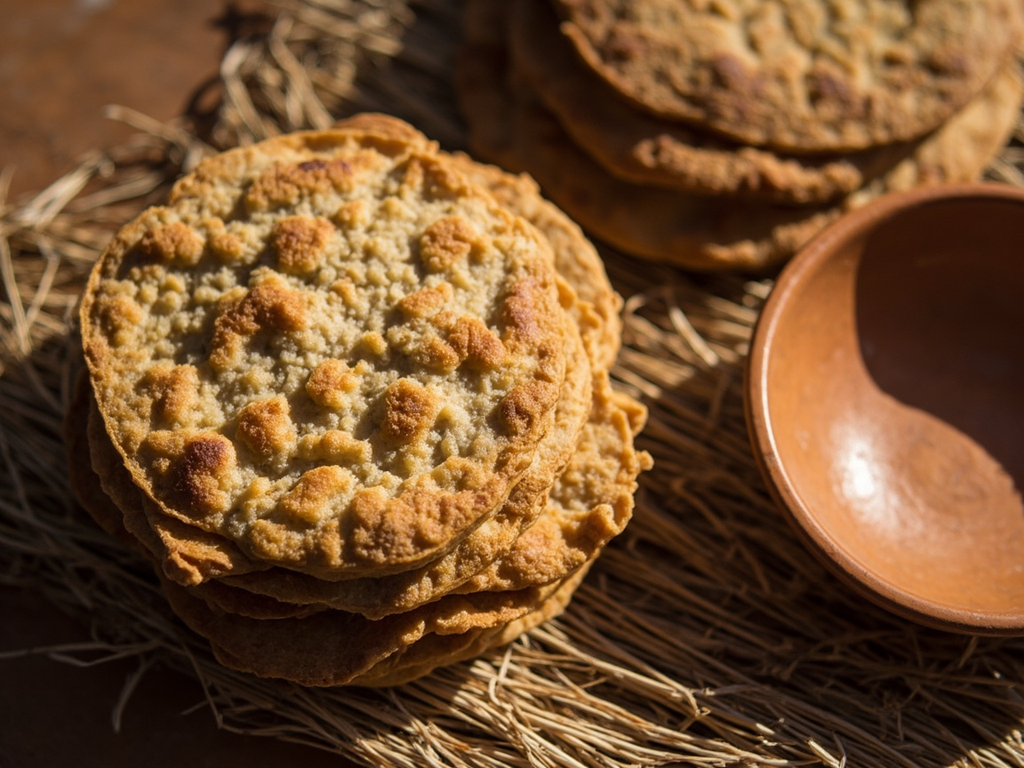
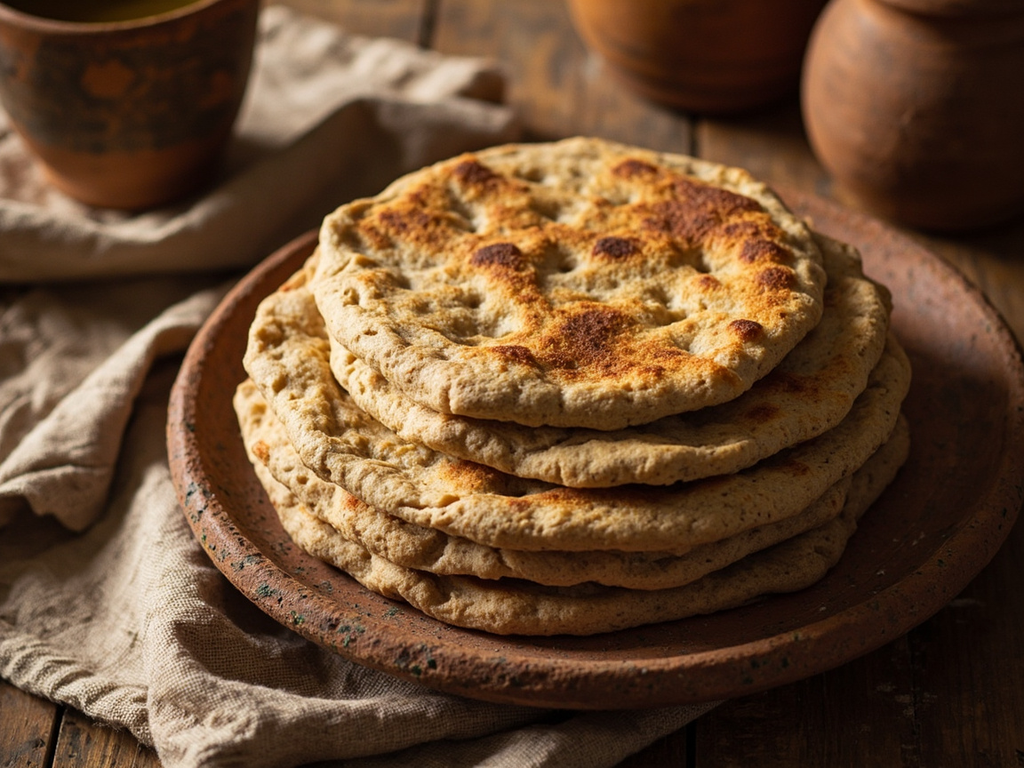
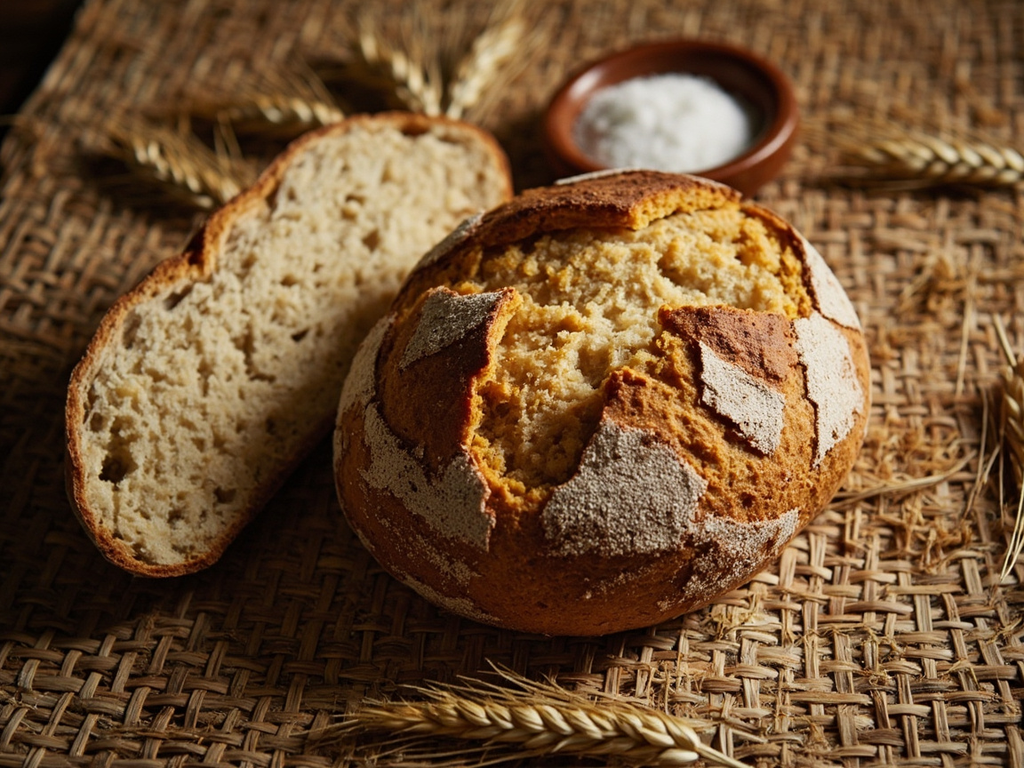
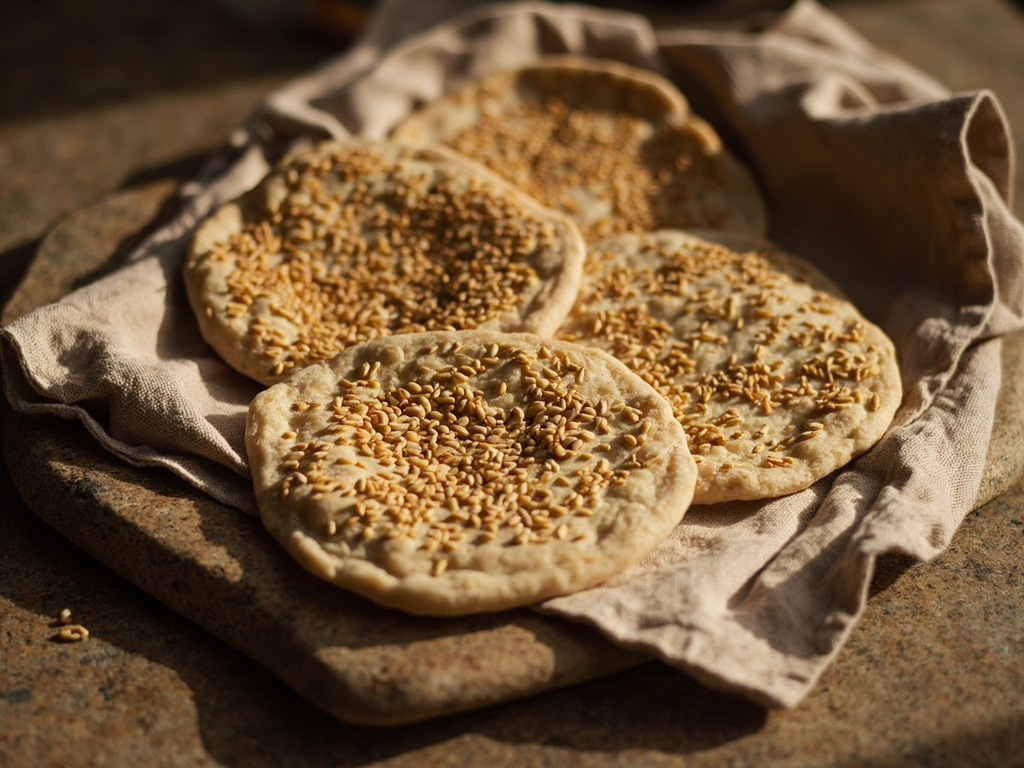
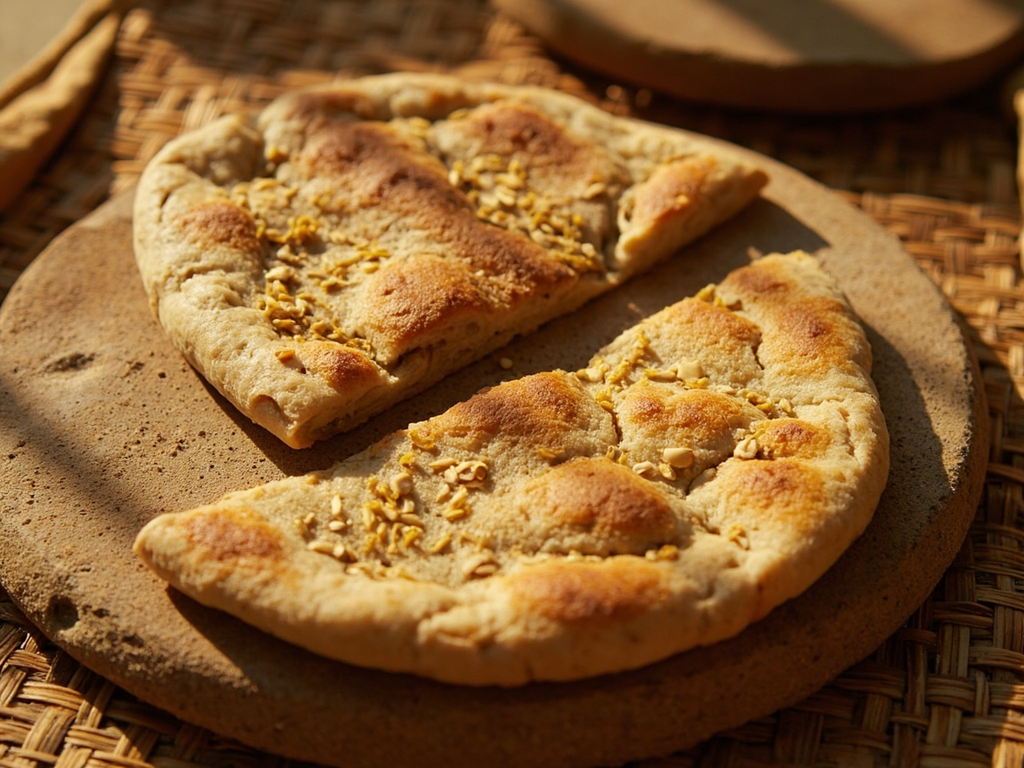
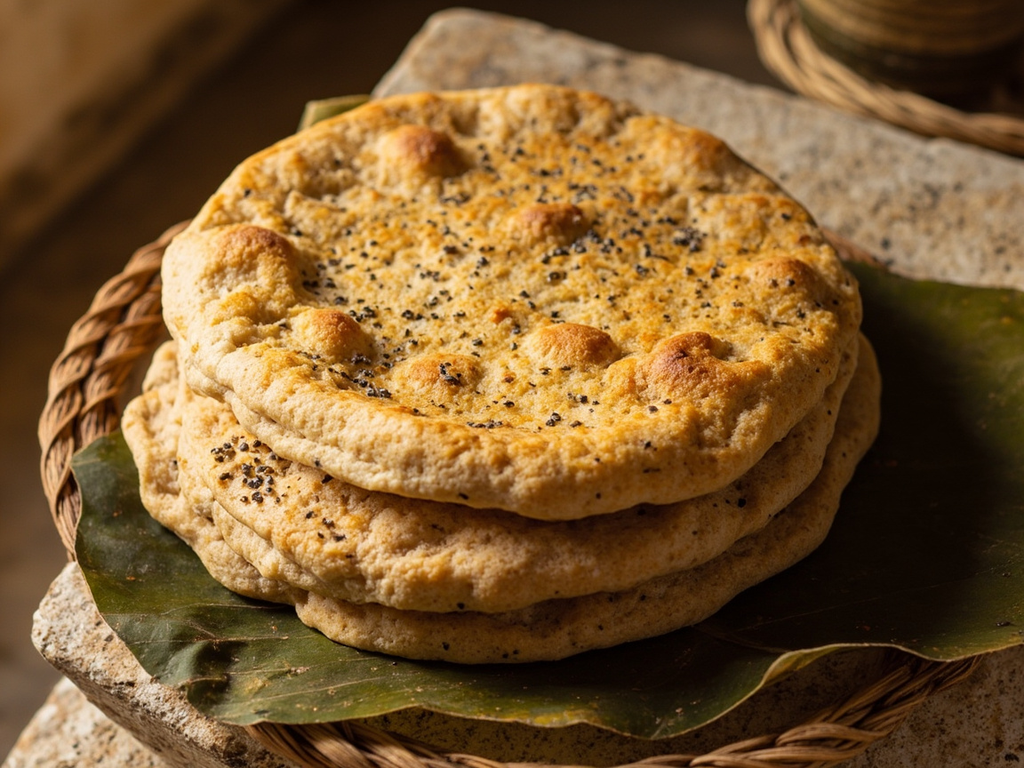
A dense flatbread of emmer (the pharaohs' wheat), barely leavened, perfumed with crushed coriander. The bread that was broken at all hours, dipped in beer, or topped with raw onion.
Draw near and watch the rising disk: it is Aten himself who swells the grain in my fields. On my table as on the stonecutter's, bread comes first—kneaded from the night, flattened on the hot stone, and sprinkled with a few crushed coriander seeds to gladden the nose. Break it with your hands, never with a knife, and dip it in sweet beer: so my fathers ate, so Akhenaten, beloved of Aten, eats.
- •Emmer flour (farro/spelt), coarse grind — a good basketful (base)
- •Warm Nile water — as needed (binder)
- •Yesterday's sourdough starter (soured dough) — a handful (light leavening)
- •Crushed coriander seeds — a generous pinch (flavor)
- •Desert salt — a little (seasoning)
Emmer Flatbread with Coriander
A dense flatbread of emmer (the pharaohs' wheat), barely leavened, perfumed with crushed coriander. The bread that was broken at all hours, dipped in beer, or topped with raw onion.
Why this dish? Bread was the absolute center of Egyptian diet: dozens of shapes are known from tombs and funerary models. At Akhetaton, the royal bakeries supplied both the workers building Akhenaten's new capital and the palace table. It is the most everyday gesture of his life.
Draw near and watch the rising disk: it is Aten himself who swells the grain in my fields. On my table as on the stonecutter's, bread comes first—kneaded from the night, flattened on the hot stone, and sprinkled with a few crushed coriander seeds to gladden the nose. Break it with your hands, never with a knife, and dip it in sweet beer: so my fathers ate, so Akhenaten, beloved of Aten, eats.
Ingredients (period version)
- Emmer flour (farro/spelt), coarse grind — a good basketful (base)
- Warm Nile water — as needed (binder)
- Yesterday's sourdough starter (soured dough) — a handful (light leavening)
- Crushed coriander seeds — a generous pinch (flavor)
- Desert salt — a little (seasoning)
Ingredients
- Spelt or einkorn flour — 400 g (base)
- Warm water — about 260 ml (binder)
- Sourdough starter (or 4 g baker's yeast) — 80 g (leavening)
- Toasted and crushed coriander seeds — 1 tsp (flavor)
- Salt — 1 tsp (seasoning)
Method
- Mix the flour, salt, and crushed coriander in a large bowl.
- Dissolve the starter in warm water, then pour over the flour. Knead for 8–10 minutes until you get a supple, slightly sticky dough.
- Cover with a cloth and let rise for 2–3 hours in a warm place (the dough won't double as much as modern bread; that's normal).
- Divide into balls, flatten into 1.5 cm thick rounds on parchment paper.
- Bake on a very hot stone or baking sheet at 250°C for 10–12 minutes, until the top is golden and cracked.
- Eat warm, broken by hand.
How it was made : Egyptians mainly used emmer, an ancient cereal difficult to hull. The lightly leavened dough was baked on hot slabs, against the walls of conical clay ovens, or in preheated ceramic molds. Sand and millstone fragments in the flour heavily wore down teeth—dental wear is a typical marker in mummies.
The contemporary twist : Serve as mini warm flatbreads stacked like construction bricks, a nod to the gigantic building site of Akhetaton that rose from the desert in a few years.
Sources : Pierre Tallet, Histoire de la cuisine et de la gastronomie égyptiennes (2003) · Delwen Samuel, « Bread Making and Social Interactions at the Amarna Workmen's Village », World Archaeology (1999)
Akhenaten · Charactorium