 flip
flipTa – the Soldier's Camp Bread, with Emmer and Coriander
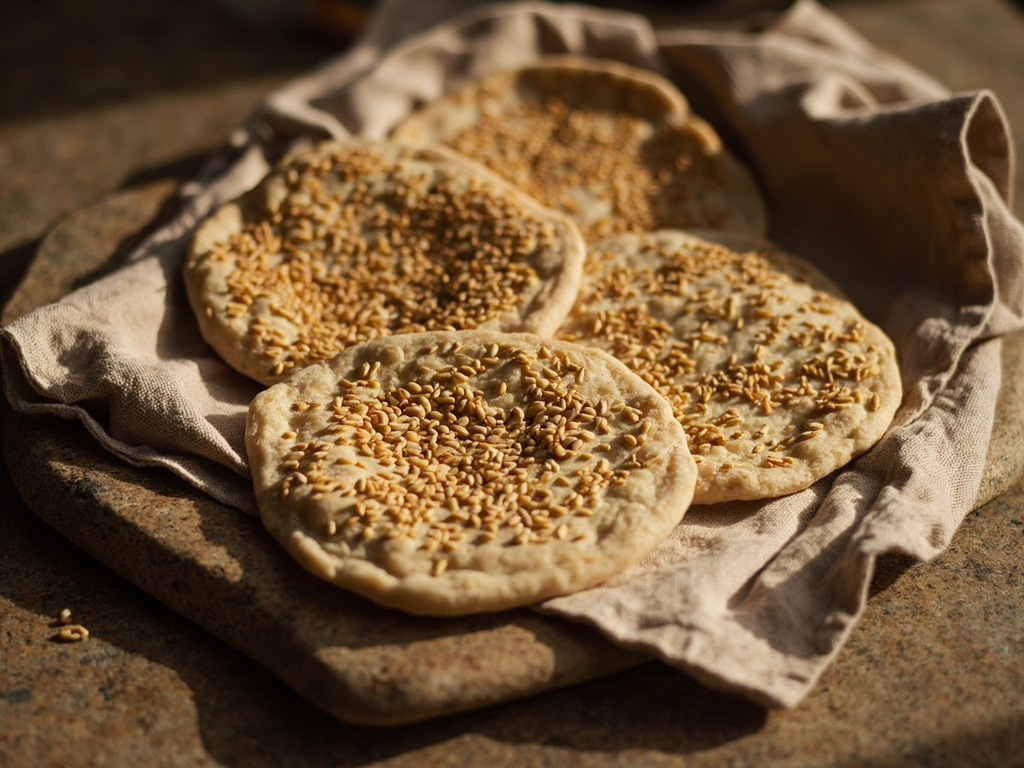
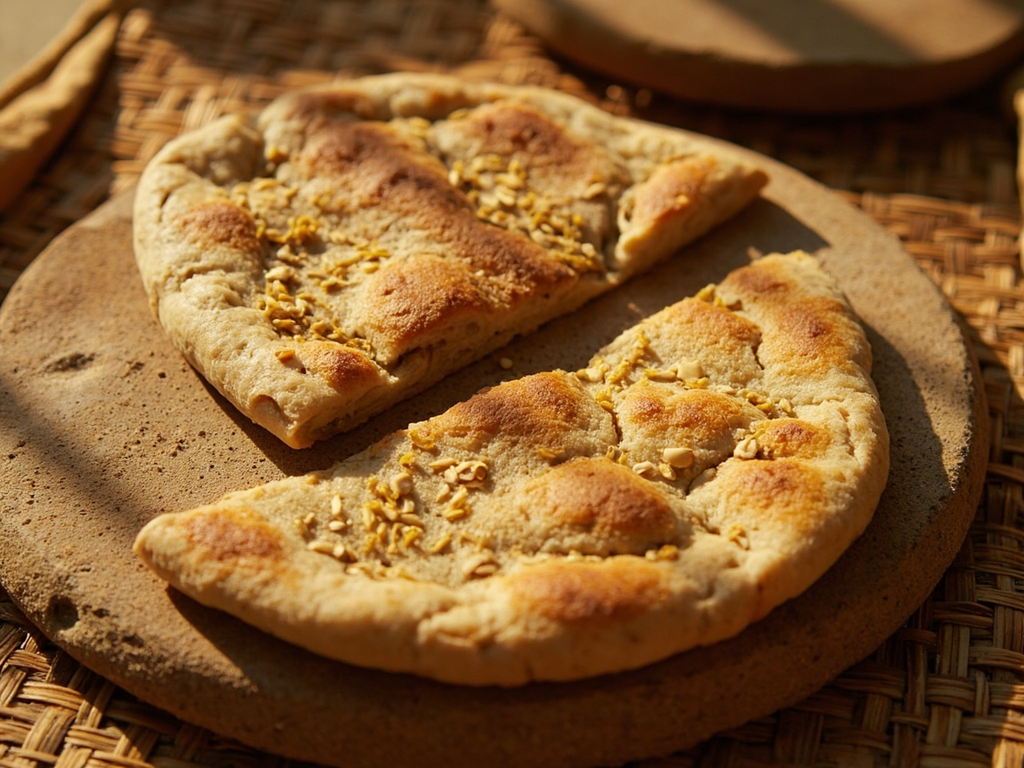
Ta – the Soldier's Camp Bread, with Emmer and Coriander
Why this dish? Before becoming pharaoh, Horemheb was a general: he ate the troops' bread. In Egypt, bread and beer were the basic ration issued to workers and soldiers—the very word for 'meal' was written with the bread sign. This dense, coriander-scented emmer bread is what nourished the men he commanded before ascending the throne.
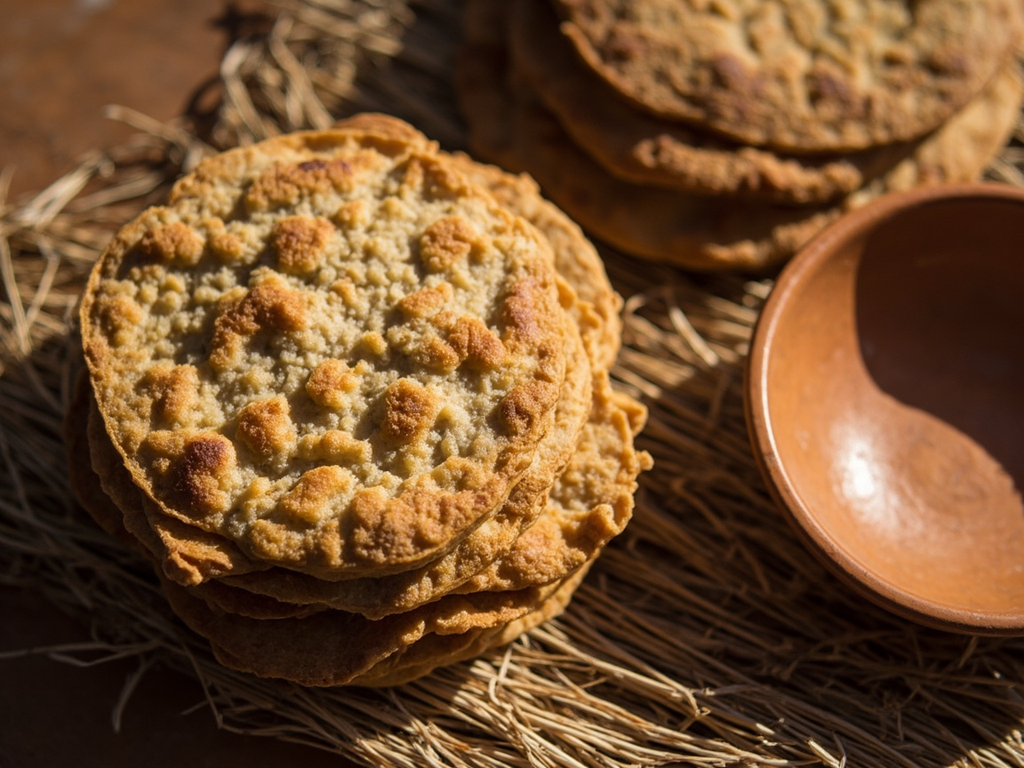
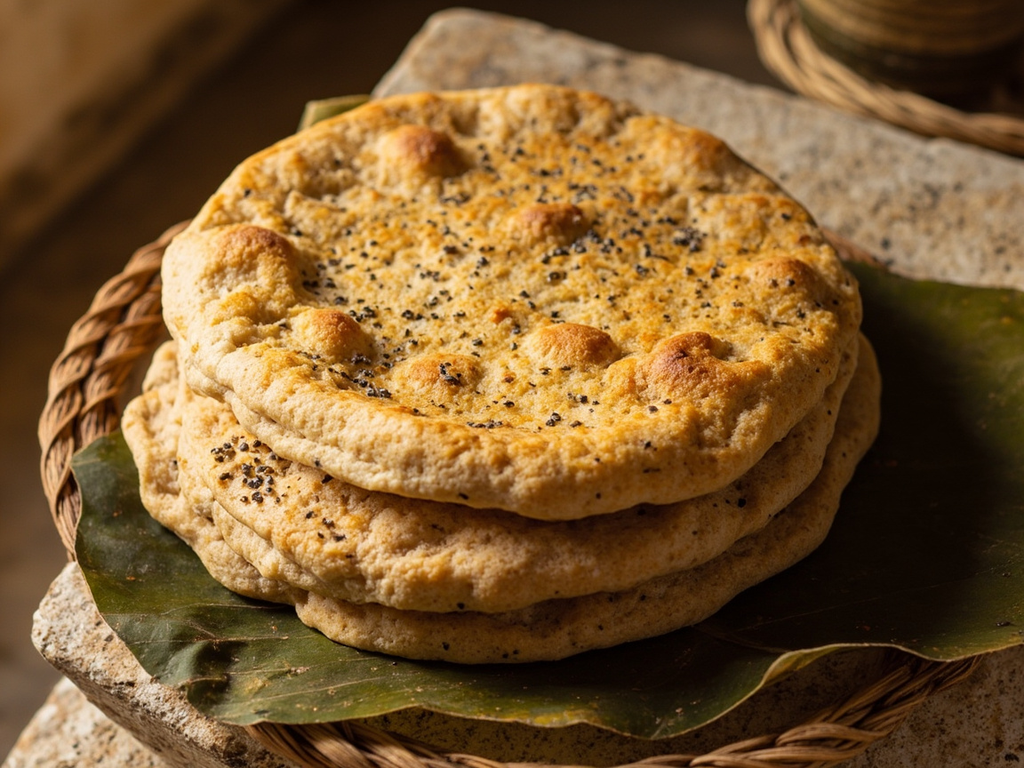
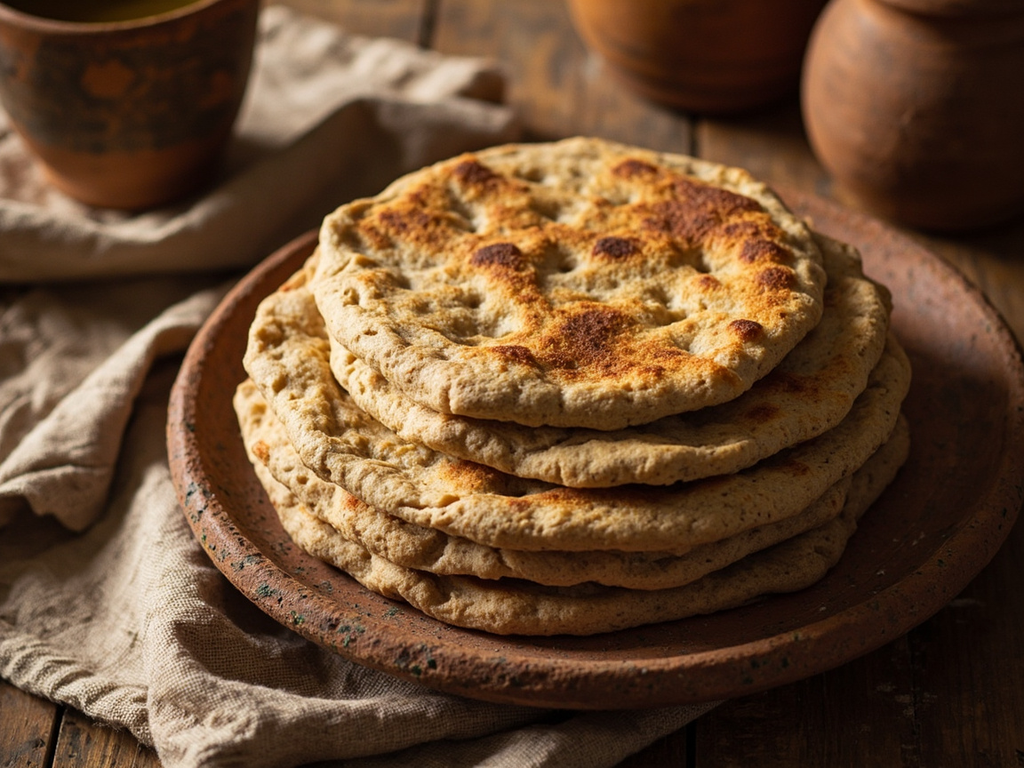
A thick flatbread of emmer wheat, with a rustic, slightly nutty flavor, studded with crushed coriander seeds. The daily bread of Egypt, from the work site to the palace—only the fineness of the flour changed according to rank.
Before I wore the blue crown, I shared this bread with my archers, squatting by the campfire. Break it with both hands, see the warmth escaping: a soldier who has his bread and his beer jug marches to the land of Kush without complaint. My mother used to crush the coriander seeds between two stones so they would release their scent into the dough. Eat it warm, scribe, and you will know what keeps a man upright under the sun of Amun.
- •Stone-ground emmer flour — a good measure (dough base)
- •Crushed coriander seeds — a handful (flavoring)
- •Filtered river water — as needed (binder)
- •Sourdough starter from the previous batch — a piece (fermentation)
- •Salt — a pinch (seasoning)
Ta – the Soldier's Camp Bread, with Emmer and Coriander
A thick flatbread of emmer wheat, with a rustic, slightly nutty flavor, studded with crushed coriander seeds. The daily bread of Egypt, from the work site to the palace—only the fineness of the flour changed according to rank.
Why this dish? Before becoming pharaoh, Horemheb was a general: he ate the troops' bread. In Egypt, bread and beer were the basic ration issued to workers and soldiers—the very word for 'meal' was written with the bread sign. This dense, coriander-scented emmer bread is what nourished the men he commanded before ascending the throne.
Before I wore the blue crown, I shared this bread with my archers, squatting by the campfire. Break it with both hands, see the warmth escaping: a soldier who has his bread and his beer jug marches to the land of Kush without complaint. My mother used to crush the coriander seeds between two stones so they would release their scent into the dough. Eat it warm, scribe, and you will know what keeps a man upright under the sun of Amun.
Ingredients (period version)
- Stone-ground emmer flour — a good measure (dough base)
- Crushed coriander seeds — a handful (flavoring)
- Filtered river water — as needed (binder)
- Sourdough starter from the previous batch — a piece (fermentation)
- Salt — a pinch (seasoning)
Ingredients
- Spelt or einkorn flour — 400 g (dough base)
- Coriander seeds — 1 tbsp (flavoring)
- Warm water — 260 ml (binder)
- Active sourdough starter (or 5 g baker's yeast) — 80 g (fermentation)
- Salt — 8 g (seasoning)
Method
- Coarsely crush the coriander seeds in a mortar to release aroma.
- Mix flour, salt, and coriander, then add water and starter. Knead 10 minutes until a supple dough forms.
- Let rise under a cloth for 3–4 hours (spelt rises less than wheat).
- Shape into a thick flatbread 3–4 cm high, let rest 30 minutes.
- Bake in a very hot oven (240°C) on a stone or baking sheet for 25–30 minutes, until golden and hollow-sounding.
How it was made : Emmer (and barley) was THE cereal of ancient Egypt; modern soft wheat did not yet exist in this form. Breads were baked in conical clay molds or against the walls of earthen ovens. Egyptians knew dozens of bread shapes, and analysis of mummies shows coriander was the king of aromatics.
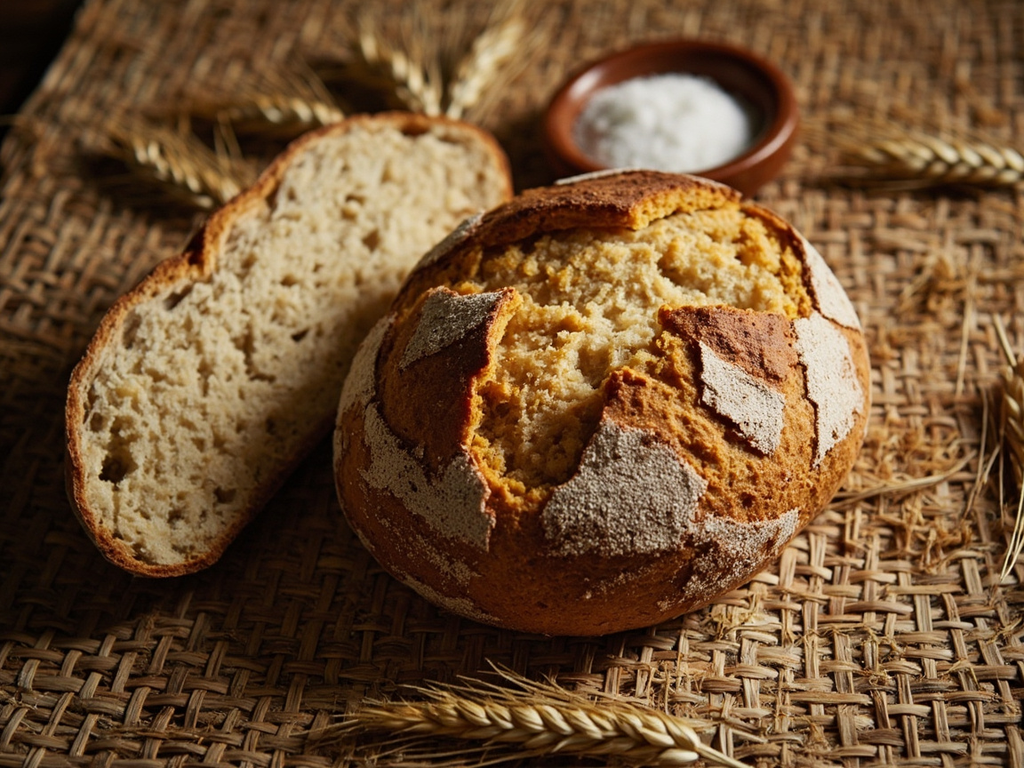
The contemporary twist : Served on a board with extra virgin olive oil and a pinch of fleur de sel, this spelt bread becomes strikingly contemporary in an 'ancient grains' bakery.
Sources : Pierre Tallet, Histoire de la cuisine et de la gastronomie égyptiennes · Delwen Samuel, 'Bread Making and Social Interactions at the Amarna Workmen's Village' (1999)
Horemheb · Charactorium