 flip
flipNukazuke — Rice Bran Pickles
Nukazuke — Rice Bran Pickles
Why this dish? In Hokusai's modest life, where meals were merely a "necessity to continue working," pickled vegetables were the constant garnish for the bowl of rice: always ready, effortlessly preserved in the rice bran bed that lived in a corner of the kitchen.
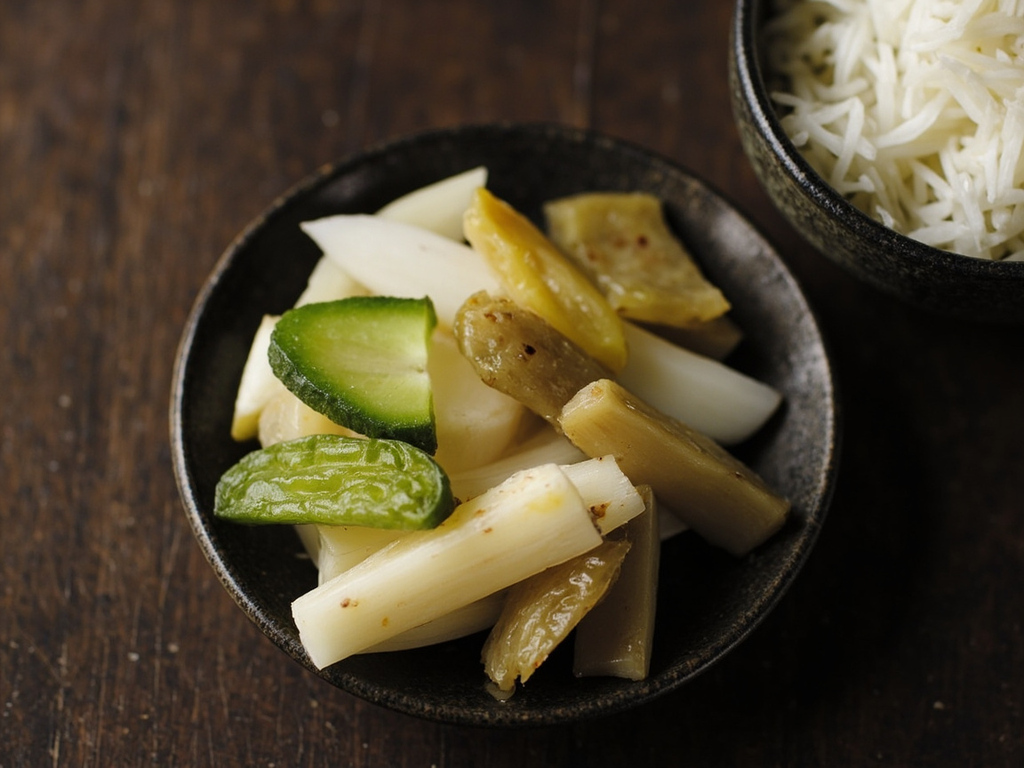
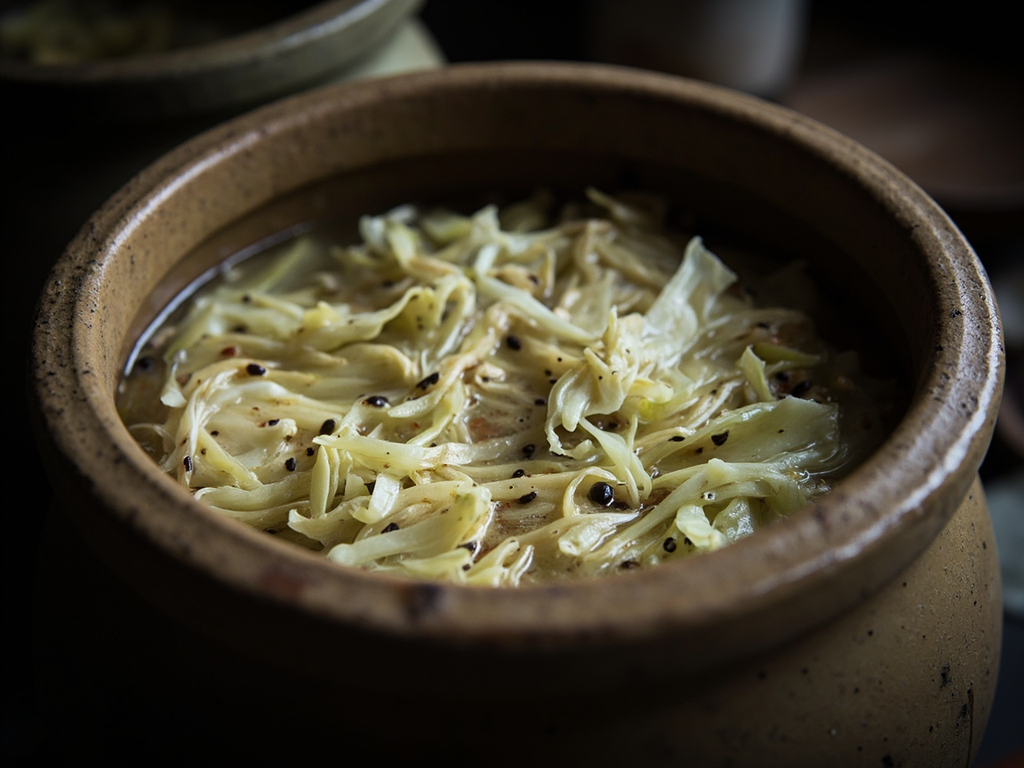
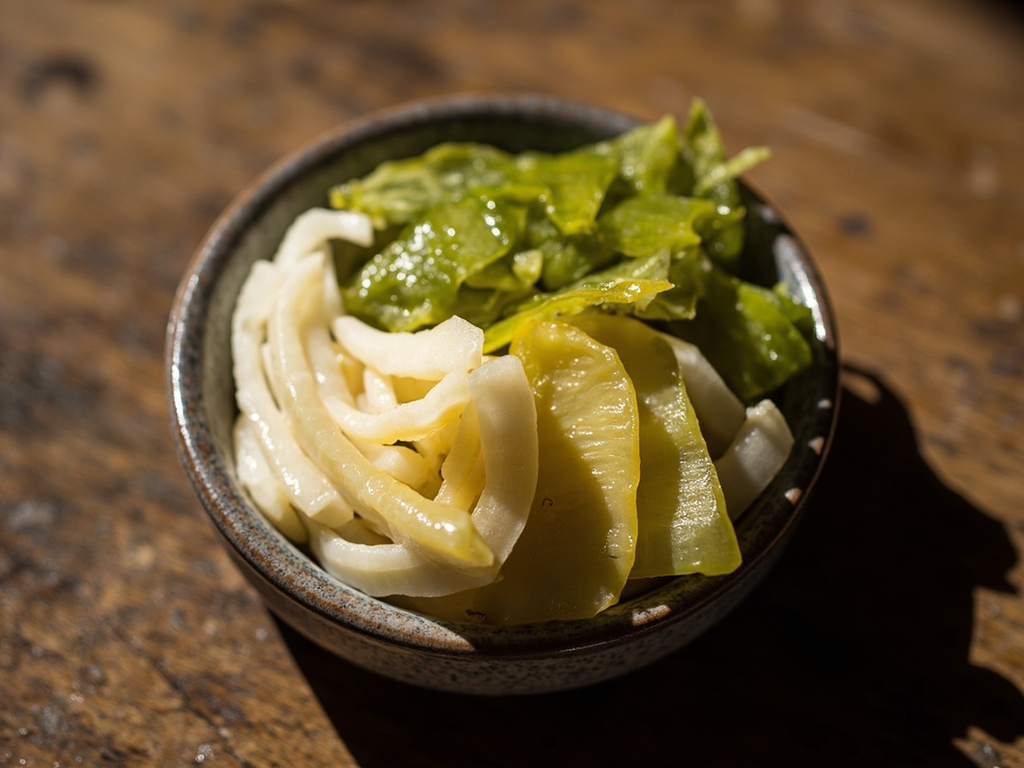
Cucumber, daikon, or turnip buried for a few hours in a fermented rice bran bed (nukadoko). They emerge crunchy, tangy, lightly salty, and deeply umami — the living side dish that never leaves the Edo table.
In a corner of every dwelling I have inhabited — and heaven knows how many I changed — slept a jar of rice bran that had to be stirred by hand each day, like petting an animal. You bury a cucumber, a turnip in the evening, and in the morning it comes out all crunchy and pungent. Nothing is wasted, everything is preserved: a poor man learns that even before he holds a brush. A bite of this turnip, a bite of rice, a sip of tea — and I am satisfied to draw until evening.
- •Rice bran (nuka) — enough to fill a jar (fermentation medium)
- •Salt — generously (preservation and flavor)
- •Water — enough for a moist paste (binder)
- •Kombu — a piece (umami for the bed)
- •Seasonal vegetables (cucumber, daikon, turnip) — according to appetite (vegetables to pickle)
Nukazuke — Rice Bran Pickles
Cucumber, daikon, or turnip buried for a few hours in a fermented rice bran bed (nukadoko). They emerge crunchy, tangy, lightly salty, and deeply umami — the living side dish that never leaves the Edo table.
Why this dish? In Hokusai's modest life, where meals were merely a "necessity to continue working," pickled vegetables were the constant garnish for the bowl of rice: always ready, effortlessly preserved in the rice bran bed that lived in a corner of the kitchen.
In a corner of every dwelling I have inhabited — and heaven knows how many I changed — slept a jar of rice bran that had to be stirred by hand each day, like petting an animal. You bury a cucumber, a turnip in the evening, and in the morning it comes out all crunchy and pungent. Nothing is wasted, everything is preserved: a poor man learns that even before he holds a brush. A bite of this turnip, a bite of rice, a sip of tea — and I am satisfied to draw until evening.
Ingredients (period version)
- Rice bran (nuka) — enough to fill a jar (fermentation medium)
- Salt — generously (preservation and flavor)
- Water — enough for a moist paste (binder)
- Kombu — a piece (umami for the bed)
- Seasonal vegetables (cucumber, daikon, turnip) — according to appetite (vegetables to pickle)
Ingredients
- Rice bran (nuka) — 1 kg (fermentation bed (nukadoko))
- Salt — 130 g (brine)
- Water — about 1 L (moisture)
- Kombu — 1 square (umami)
- Cucumber, daikon, or turnip — as desired (vegetables)
Method
- Prepare the nukadoko: mix rice bran, salt, and water until it forms a paste as moist as wet sand; add the kombu.
- "Mature" the bed for a week by burying vegetable peels in it, discarding and renewing them each day, stirring by hand morning and evening.
- Once the bed is tangy and fragrant, bury the washed vegetables entirely (cut daikon into thick sticks).
- Let ferment from a few hours (cucumber) to one or two days (daikon) depending on desired taste.
- Remove the vegetables, rinse off the bran under water, slice. Stir the bed by hand: it keeps and feeds indefinitely.
How it was made : The nukadoko was sometimes passed down over several generations in a family; it had to be "turned" by hand every day to aerate it, a daily gesture in Edo kitchens. Lactic ferments multiplied the acidity and enriched the rice with vitamins — preservation and nutritional care without knowing it.
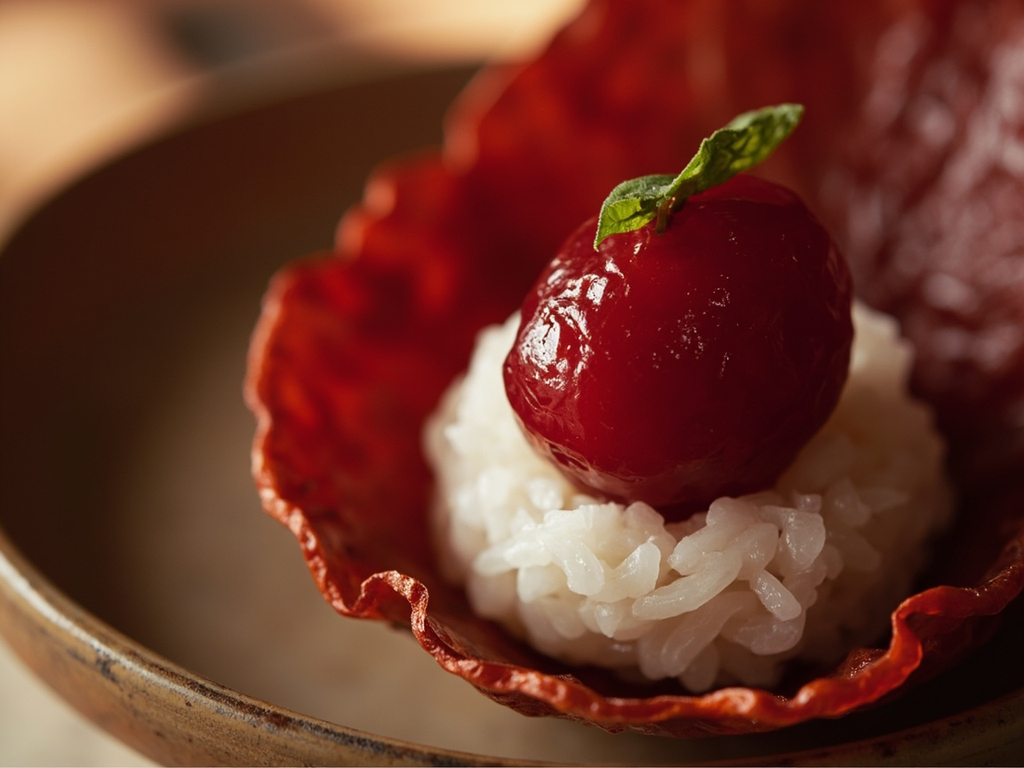
The contemporary twist : Arrange three slices of different colors (white daikon, turnip, green cucumber) in a fan, like the color bands of a nishiki-e print.
Sources : Eric C. Rath, Food and Fantasy in Early Modern Japan, University of California Press, 2010 · Naomichi Ishige, The History and Culture of Japanese Food, Kegan Paul, 2001
Hokusai · Charactorium