 flip
flipNew Yam of the First Fruits, Offered to Blolo
New Yam of the First Fruits, Offered to Blolo
Why this dish? The stories make Akwa Boni a figure who first eats the boiled yams of the first harvest, offered during ceremonies. Before anyone touches the new yam, a portion is presented to the ancestors: this act of offering connects her to the world of Blolo and the sacred heart of the country, Sakassou.
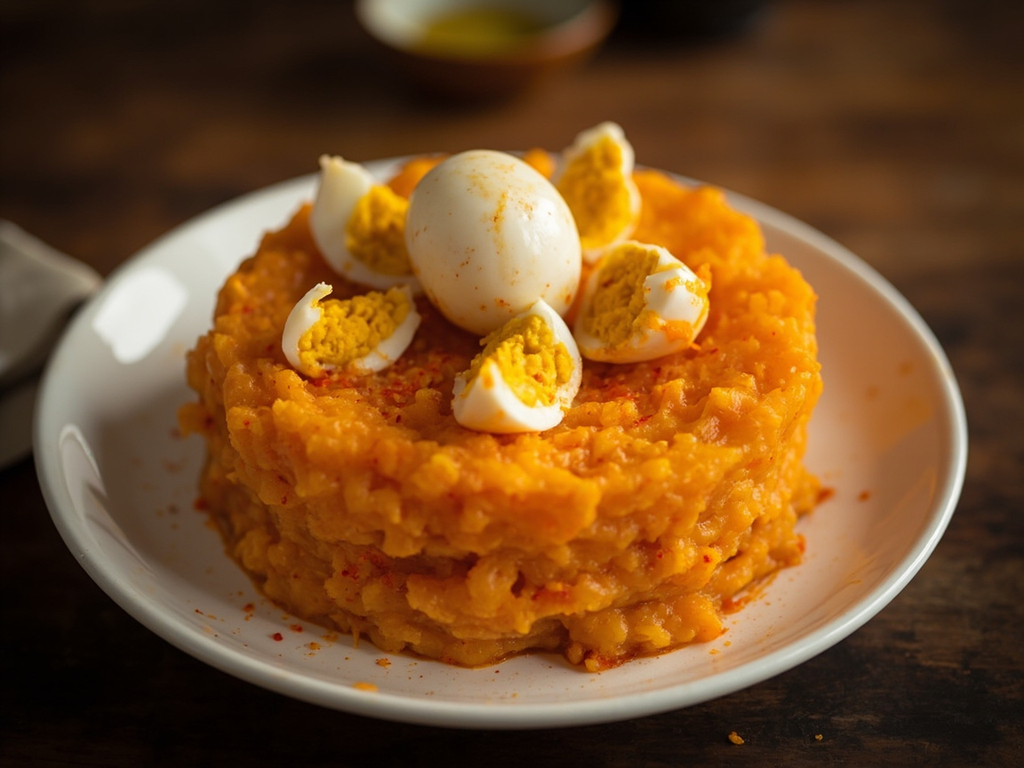
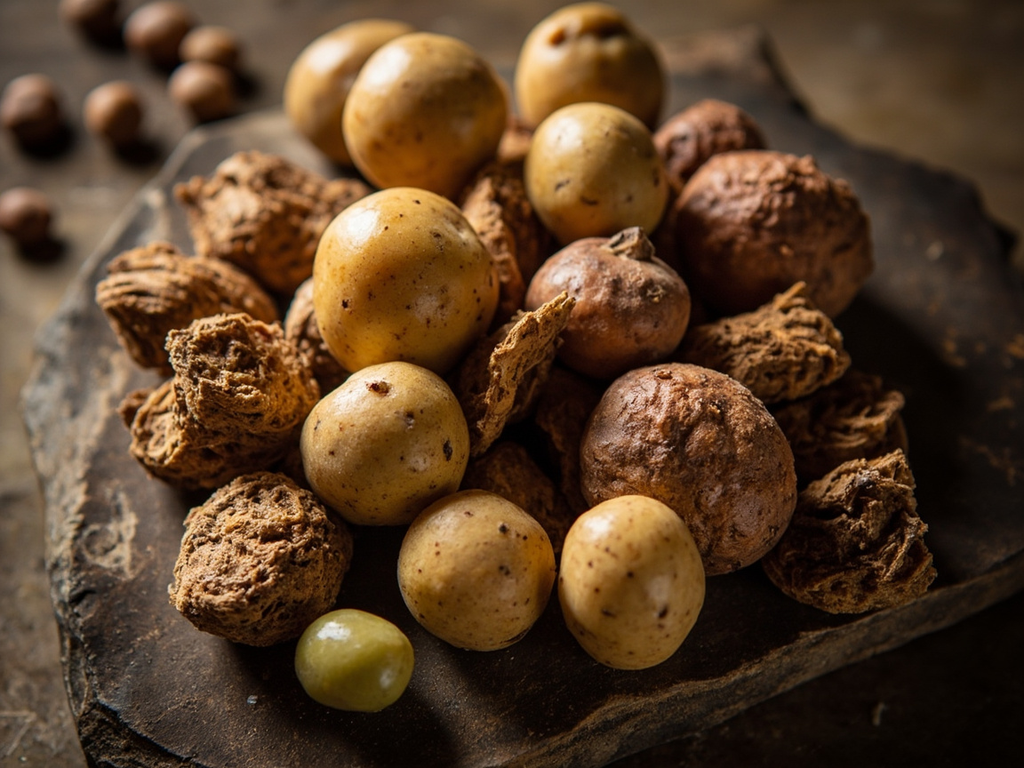
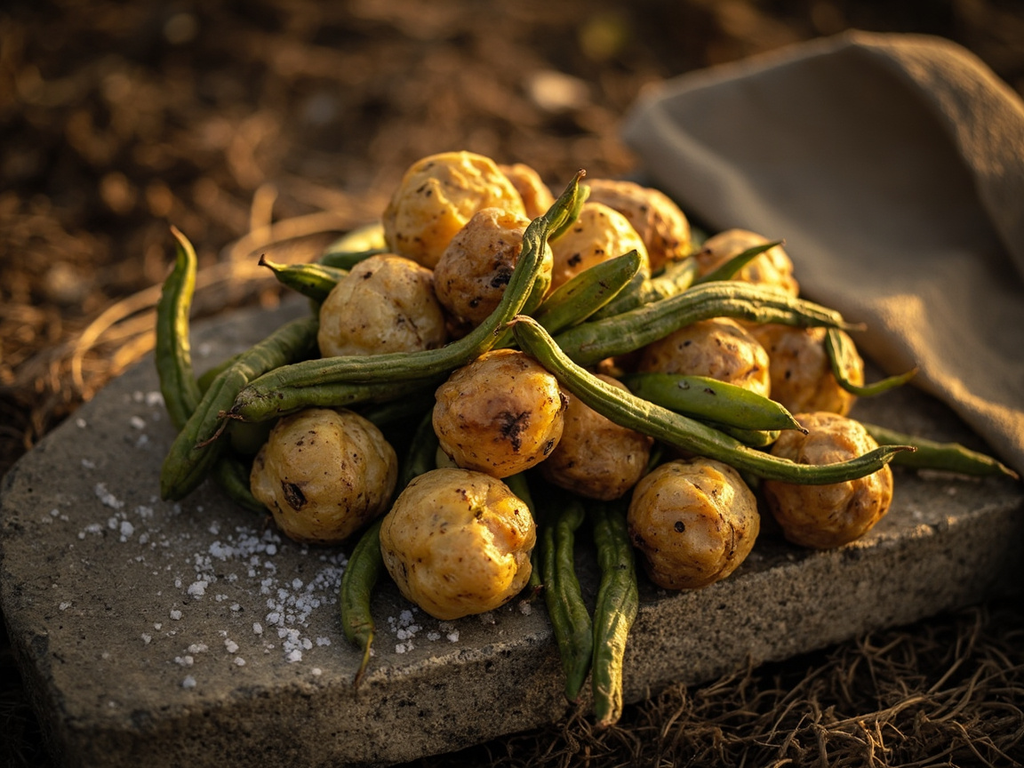
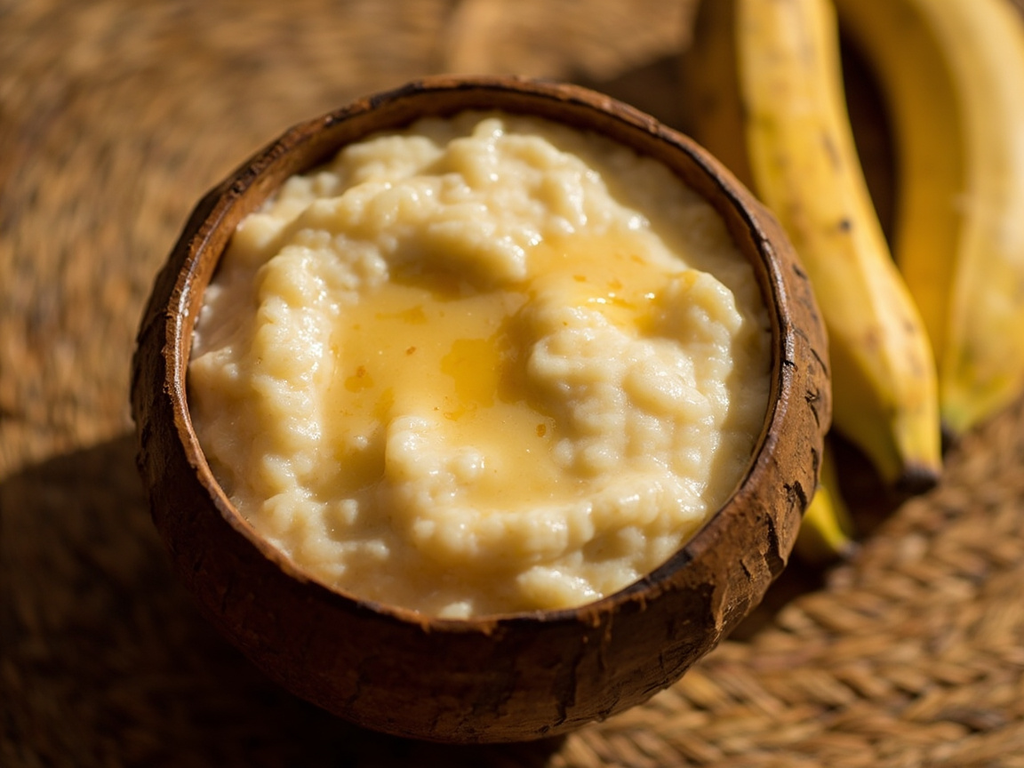
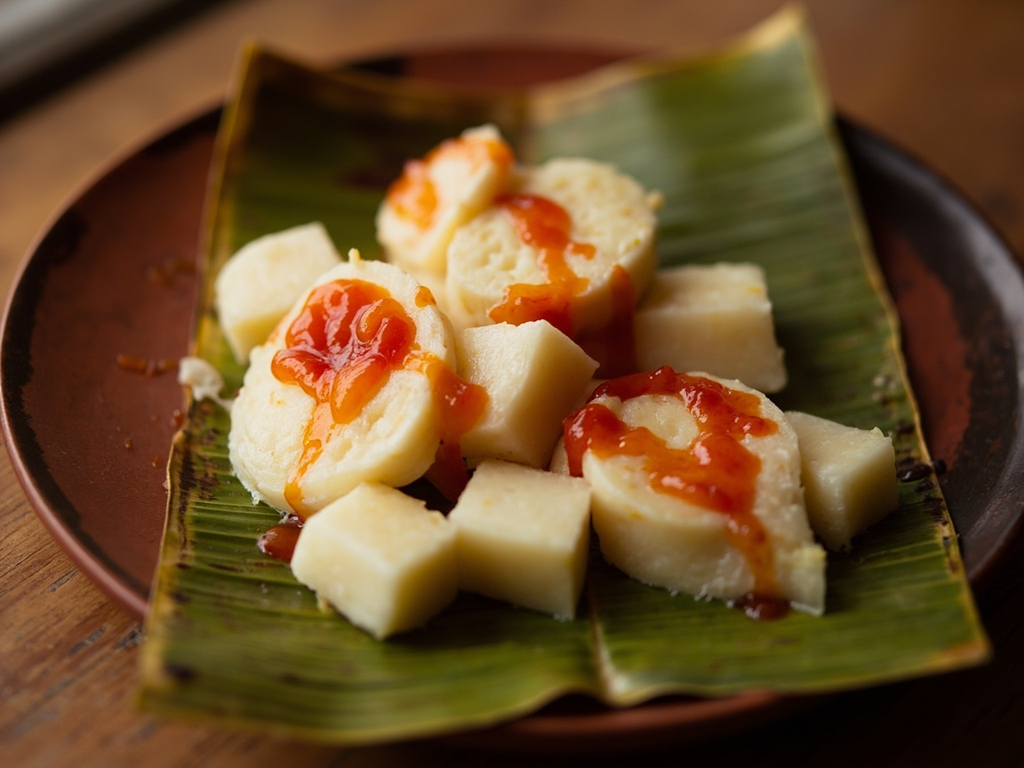
A simple white yam, boiled in spring water and presented naked on a leaf, sometimes drizzled with a thread of red palm oil. Nothing more: the purity of the first tuber is the tribute. A portion is set aside for the ancestors, the rest is shared.
Listen, child: before my mouth tastes the first yam of the year, I place it on the leaf for those of Blolo, for it is from them that the earth that nourishes us comes. You wash it, you lay it in the clear water of the spring, you wait until it yields under the finger — no further, too long a fire steals its soul. A drop of red oil, and there is the offering. He who eats before the ancestors eats alone, and he who eats alone impoverishes himself.
- •White yam of the first harvest — one fine tuber (sacred staple)
- •Spring water — enough to cover (cooking)
- •Red palm oil — a drizzle (anointing)
- •Earth salt (vegetable ash salt) — a pinch (seasoning)
New Yam of the First Fruits, Offered to Blolo
A simple white yam, boiled in spring water and presented naked on a leaf, sometimes drizzled with a thread of red palm oil. Nothing more: the purity of the first tuber is the tribute. A portion is set aside for the ancestors, the rest is shared.
Why this dish? The stories make Akwa Boni a figure who first eats the boiled yams of the first harvest, offered during ceremonies. Before anyone touches the new yam, a portion is presented to the ancestors: this act of offering connects her to the world of Blolo and the sacred heart of the country, Sakassou.
Listen, child: before my mouth tastes the first yam of the year, I place it on the leaf for those of Blolo, for it is from them that the earth that nourishes us comes. You wash it, you lay it in the clear water of the spring, you wait until it yields under the finger — no further, too long a fire steals its soul. A drop of red oil, and there is the offering. He who eats before the ancestors eats alone, and he who eats alone impoverishes himself.
Ingredients (period version)
- White yam of the first harvest — one fine tuber (sacred staple)
- Spring water — enough to cover (cooking)
- Red palm oil — a drizzle (anointing)
- Earth salt (vegetable ash salt) — a pinch (seasoning)
Ingredients
- White yam — 600 g (staple)
- Water — 1.5 L (cooking)
- Red palm oil (unrefined) — 1 tbsp (anointing)
- Salt — 1 tsp (seasoning)
Method
- Peel the yam and cut it into large, even chunks.
- Plunge them into cold salted water and bring to a simmer.
- Cook for 20–25 minutes, until a knife tip pierces the flesh without resistance.
- Drain, arrange the naked chunks on a banana leaf or earthenware plate.
- Drizzle with a thin stream of warmed red palm oil and serve immediately.
How it was made : In Baoulé country, the new yam festival marks the opening of the agricultural year: the harvest was not consumed before the ritual that reserved the first fruits for the ancestors and earth spirits. The yam was simply boiled in water over a three-stone hearth, and salt often came from leached plant ashes.
The contemporary twist : Serve the warm yam chunk on a large leaf, the palm oil forming shiny beads on top, like a minimalist offering — one ingredient, a thousand years of respect.
Akwa Boni · Charactorium