 flip
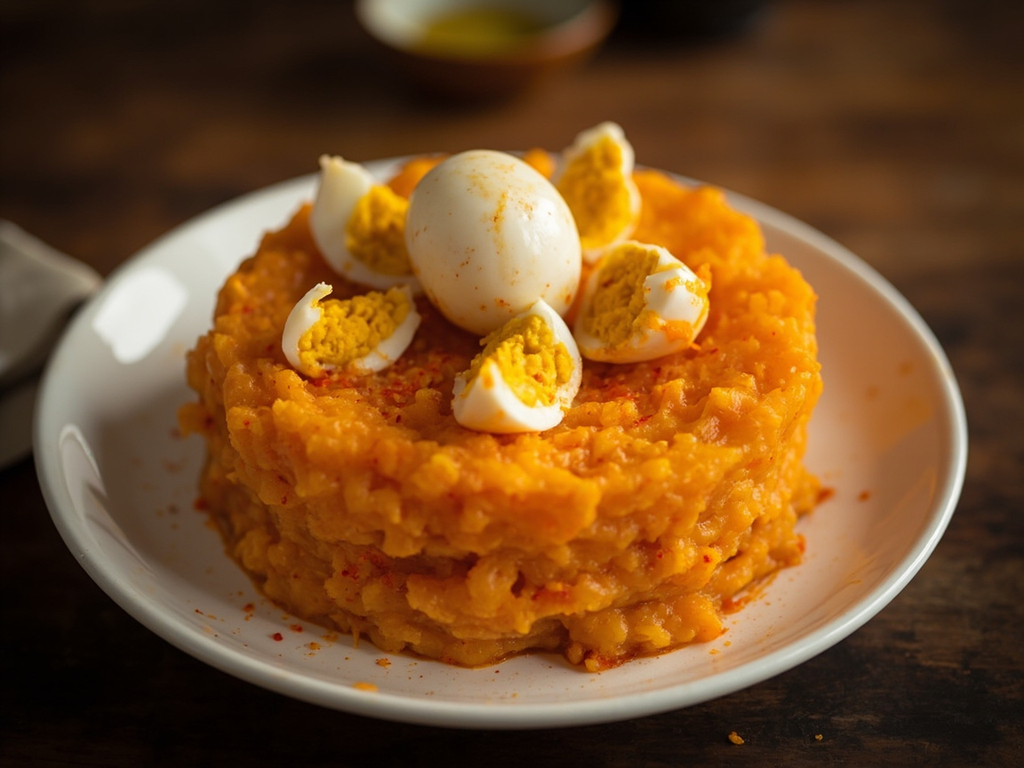
flipEto, yam pounded with palm oil and offering egg
Eto, yam pounded with palm oil and offering egg
Why this dish? The legend of Aura Pokou is entirely a story of offering and sacrifice on the banks of the Comoé River. Eto—yam pounded with palm oil and crowned with an egg—is the Akan food for great passages: births, blessings, homage to ancestors. Inspired by this rite (not a reproduction), it speaks of transmission, gift, and the memory of the child who does not return.
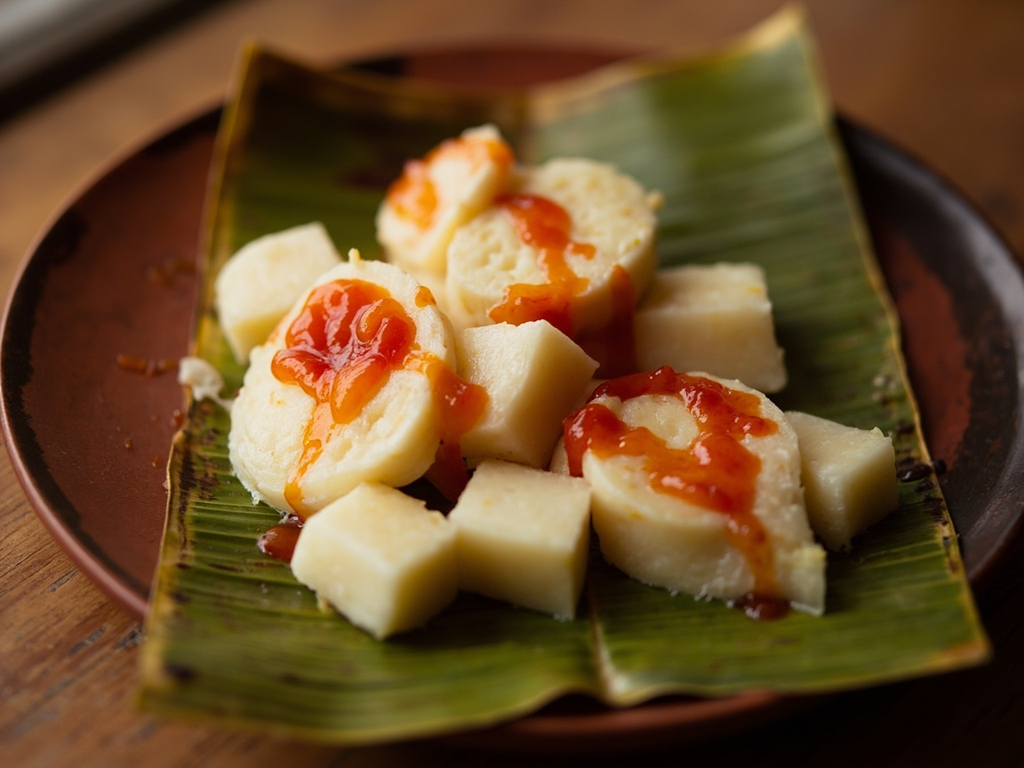
A golden yellow yam purée, mashed with red palm oil and onion, shaped into a mound and crowned with hard-boiled eggs. Soft, melting, deeply symbolic: it is shared to bless, thank, and remember.
There are dishes that feed not the belly but the bond. Pound the yam until velvety, mix in the red oil and the onion, shape it like a small hill and place the whole eggs on top, white and full like a promise. Offer a portion to the elders before touching it yourself. Let your hand tremble a little as you share it: one never forgets what had to be given to cross.
- •Yam — a few roots (base of the purée)
- •Red palm oil — a generous drizzle (color and ritual binder)
- •Eggs — as many as guests to honor (symbol of fullness)
- •Forest onion — one (mild aromatic)
- •Salt — a pinch (seasoning)
Eto, yam pounded with palm oil and offering egg
A golden yellow yam purée, mashed with red palm oil and onion, shaped into a mound and crowned with hard-boiled eggs. Soft, melting, deeply symbolic: it is shared to bless, thank, and remember.
Why this dish? The legend of Aura Pokou is entirely a story of offering and sacrifice on the banks of the Comoé River. Eto—yam pounded with palm oil and crowned with an egg—is the Akan food for great passages: births, blessings, homage to ancestors. Inspired by this rite (not a reproduction), it speaks of transmission, gift, and the memory of the child who does not return.
There are dishes that feed not the belly but the bond. Pound the yam until velvety, mix in the red oil and the onion, shape it like a small hill and place the whole eggs on top, white and full like a promise. Offer a portion to the elders before touching it yourself. Let your hand tremble a little as you share it: one never forgets what had to be given to cross.
Ingredients (period version)
- Yam — a few roots (base of the purée)
- Red palm oil — a generous drizzle (color and ritual binder)
- Eggs — as many as guests to honor (symbol of fullness)
- Forest onion — one (mild aromatic)
- Salt — a pinch (seasoning)
Ingredients
- Yam — 800 g (base of the purée)
- Red palm oil — 4 tbsp (color and binder)
- Eggs — 4 to 6 (symbolic garnish)
- Onion — 1 small, finely chopped (mild aromatic)
- Salt — to taste (seasoning)
Method
- Hard-boil the eggs (10 min in boiling water), peel and set aside.
- Peel the yam, cook in salted water until tender, then mash into a smooth purée.
- Gently warm the red palm oil with the chopped onion, then incorporate into the purée until evenly orange; season with salt.
- Shape the purée into a dome on a plate and crown with the hard-boiled eggs, whole or halved.
- Share, beginning by offering a portion as a sign of respect to elders or in memory of the absent.
How it was made : Eto (or oto) is a documented Akan ceremonial food, served during rites of passage, blessings, and homage to ancestors; the egg symbolizes fullness and the continuity of life. Yam and palm oil are fully indigenous ingredients, with no New World influence.
The contemporary twist : For a modern family table, you can serve the eto as individual small domes with a soft-boiled egg on top—keeping in mind that you are inspired by a sacred gesture without pretending to reenact it.
Aura Pokou · Charactorium