 flip
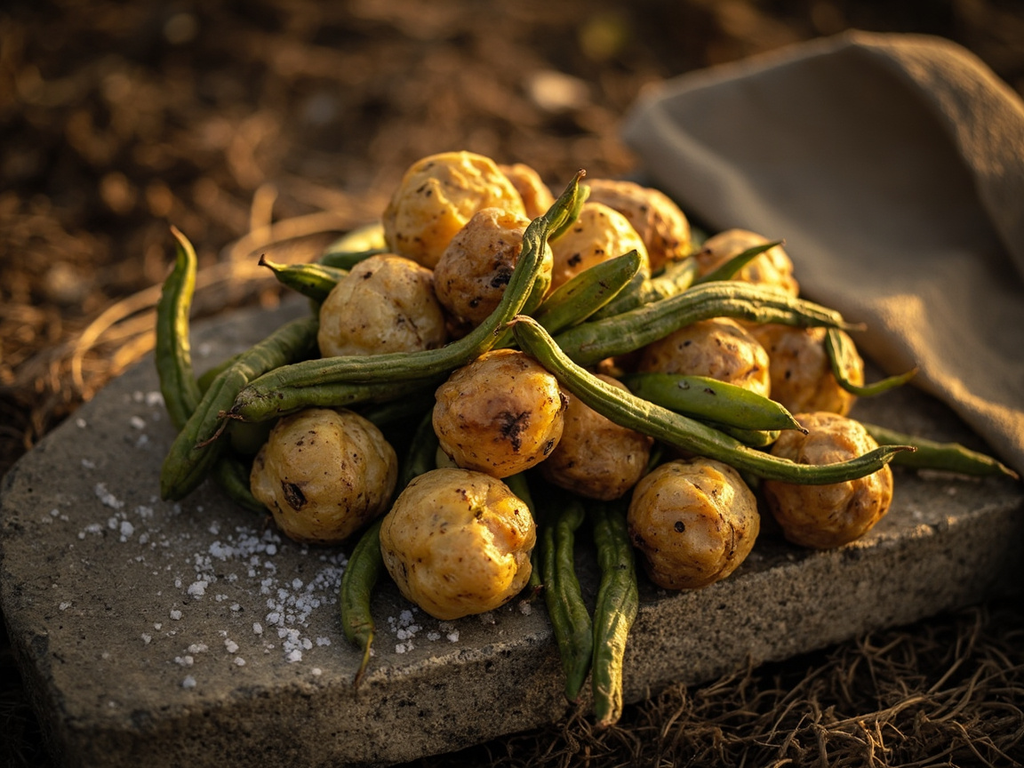
flipWatia, tubers baked in an earth oven (offering to Pachamama)
Watia, tubers baked in an earth oven (offering to Pachamama)
Why this dish? Pachamama is at the heart of the Aymara spirituality that Bartolina carries with her people — her ritual objects bear witness. Watia, cooking in an oven of heated earth clods, is an agricultural gesture that gives thanks to the Earth for its tubers. Inspired by (not a reproduction of) this living rite.
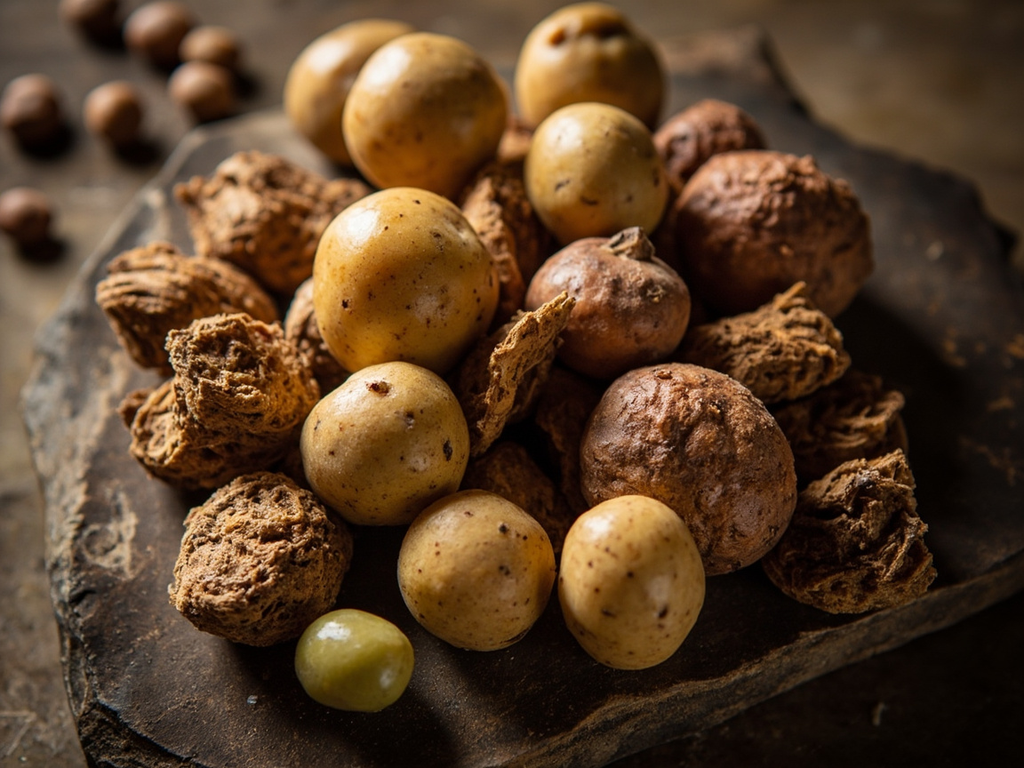
Potatoes, oca, and broad beans cooked buried in a small oven of burning earth clods, perfumed with soil and smoke. A simple, profound harvest dish shared in gratitude to the Earth.
When the harvest comes out of the ground, we do not eat before giving back. I build a small oven with the very clods from the field, I make it glow with fire, then I bury the papas and oca in its heat and close the earth over them. Pachamama cooks for us what she has given us — the first bite and a little coca leaf always go back to her, before mine.
- •Andean potatoes (multiple varieties) — an armful (main tuber)
- •Oca (Andean tuber) — a few (sweet-sour tuber)
- •Fresh broad beans (haba, ancient Andean origin post-introduction) — a handful (legume)
- •Andean rock salt — a pinch (seasoning)
- •Aromatic Andean herbs — a few sprigs (flavor)
Watia, tubers baked in an earth oven (offering to Pachamama)
Potatoes, oca, and broad beans cooked buried in a small oven of burning earth clods, perfumed with soil and smoke. A simple, profound harvest dish shared in gratitude to the Earth.
Why this dish? Pachamama is at the heart of the Aymara spirituality that Bartolina carries with her people — her ritual objects bear witness. Watia, cooking in an oven of heated earth clods, is an agricultural gesture that gives thanks to the Earth for its tubers. Inspired by (not a reproduction of) this living rite.
When the harvest comes out of the ground, we do not eat before giving back. I build a small oven with the very clods from the field, I make it glow with fire, then I bury the papas and oca in its heat and close the earth over them. Pachamama cooks for us what she has given us — the first bite and a little coca leaf always go back to her, before mine.
Ingredients (period version)
- Andean potatoes (multiple varieties) — an armful (main tuber)
- Oca (Andean tuber) — a few (sweet-sour tuber)
- Fresh broad beans (haba, ancient Andean origin post-introduction) — a handful (legume)
- Andean rock salt — a pinch (seasoning)
- Aromatic Andean herbs — a few sprigs (flavor)
Ingredients
- Assorted firm-fleshed potatoes — 800 g (main tuber)
- Sweet potato or oca if available — 300 g (sweet tuber)
- Fresh broad beans — 150 g (legume)
- Coarse salt — 1 tbsp (seasoning)
- Rosemary or oregano (if muña unavailable) — a few sprigs (smoky flavor)
Method
- To recreate the spirit of watia without an earth oven, preheat the oven to 220°C (425°F).
- Wash the tubers without peeling, arrange them on a baking sheet with the shelled broad beans.
- Salt generously, sprinkle with herbs, cover with foil to retain moisture at the start.
- Bake covered for 25 minutes, then uncovered for 20-25 minutes to caramelize the skins.
- For a smoky note, add a few minutes under the broiler or a pinch of smoked paprika.
- Serve on a shared platter, to be eaten by hand, symbolically reserving the first portion.
How it was made : Watia (or huatia) was cooked in a temporary oven of dry earth clods stacked in a dome, heated by fire until glowing; freshly harvested tubers were buried inside and the oven collapsed to steam-cook them. It was a harvest rite as much as a cooking method, linked to offerings to Pachamama.
The contemporary twist : Present the tubers split in half, crispy skin facing up, with a side of Andean herb salt — a plant-based, smoky 'table watia'.
Bartolina Sisa · Charactorium