 flip
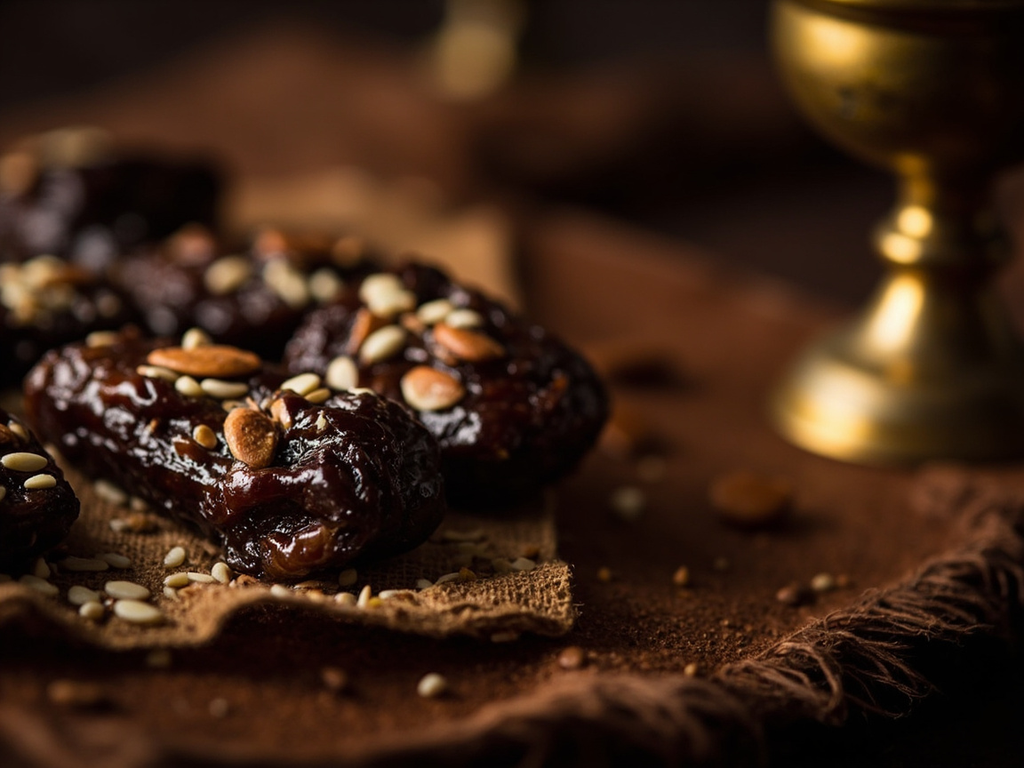
flipKhabîs of dates with almonds and sesame
Khabîs of dates with almonds and sesame
Why this dish? His life was divided between Amid, Cizre, Jazirat ibn ʿUmar, and Baghdad: a court engineer traveled with his plans and tools. A paste of dates and almonds, which keeps for days without spoiling and fits in a pouch, is exactly the kind of dense, energy-packed snack carried on the roads of the Jazira.
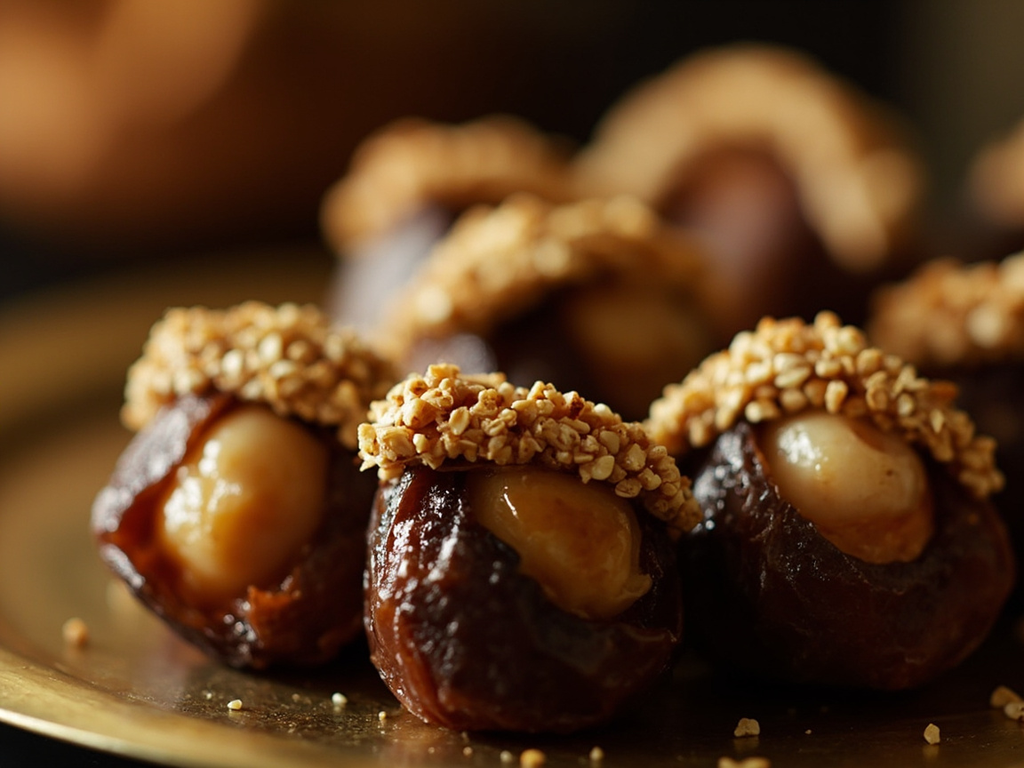
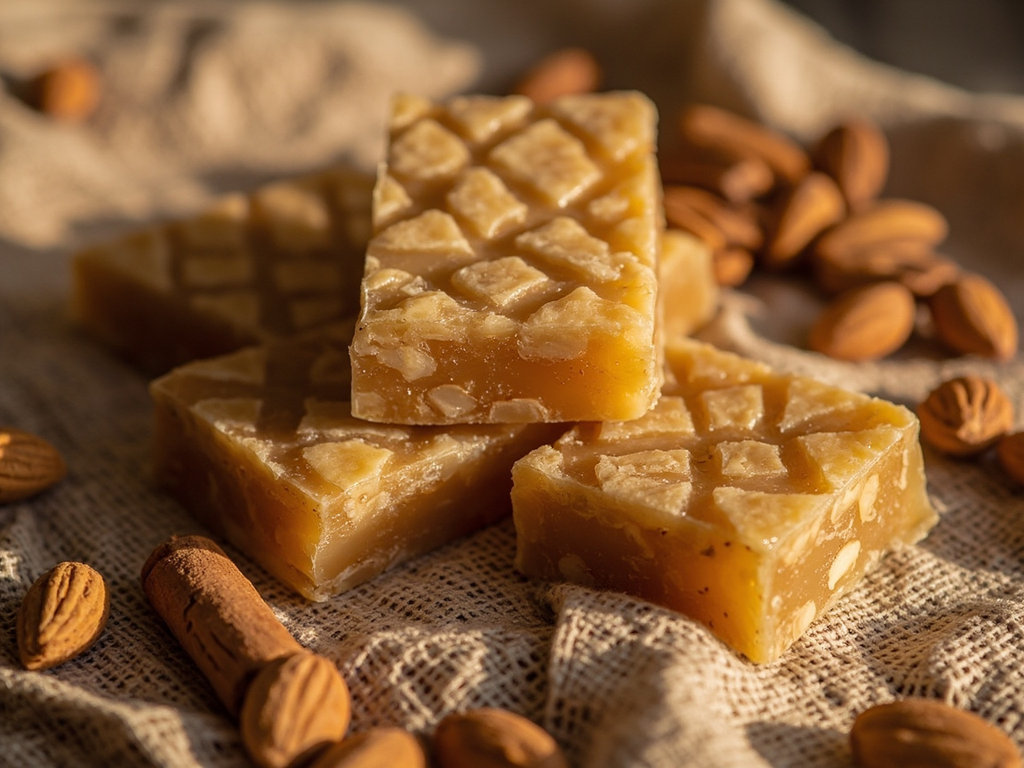
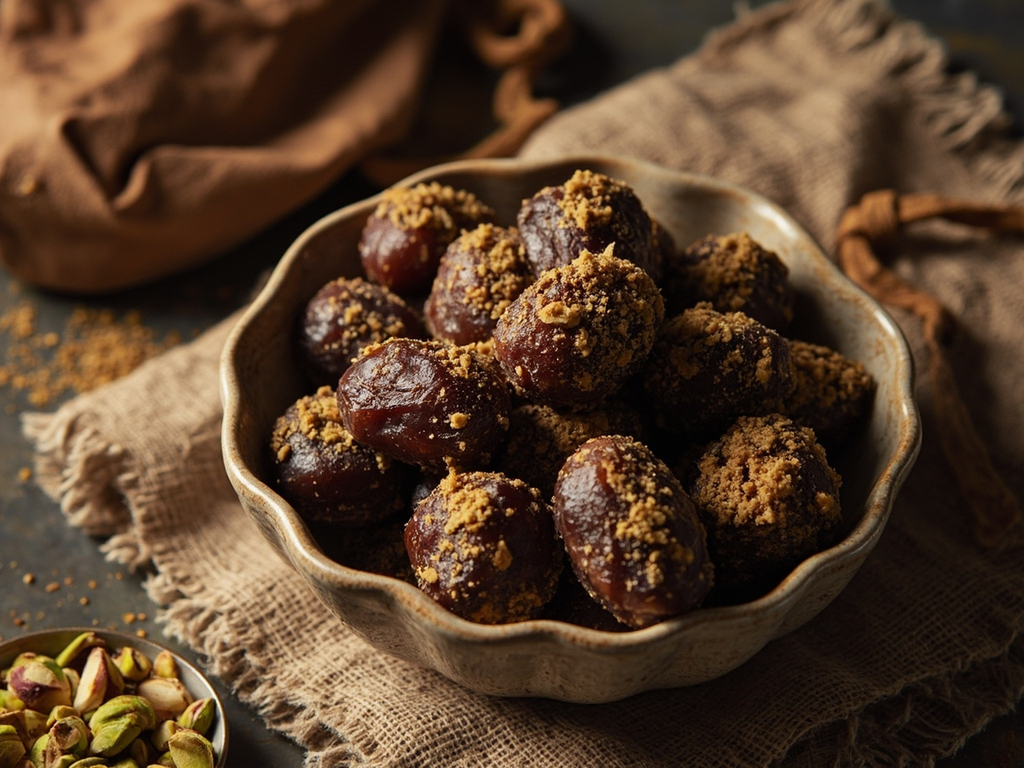
A thick, shiny paste of mashed dates, bound with clarified butter and toasted semolina, perfumed with cinnamon and rose water, studded with almonds and sesame. Cut into firm bites, it travels without fear of heat and restores strength in an instant.
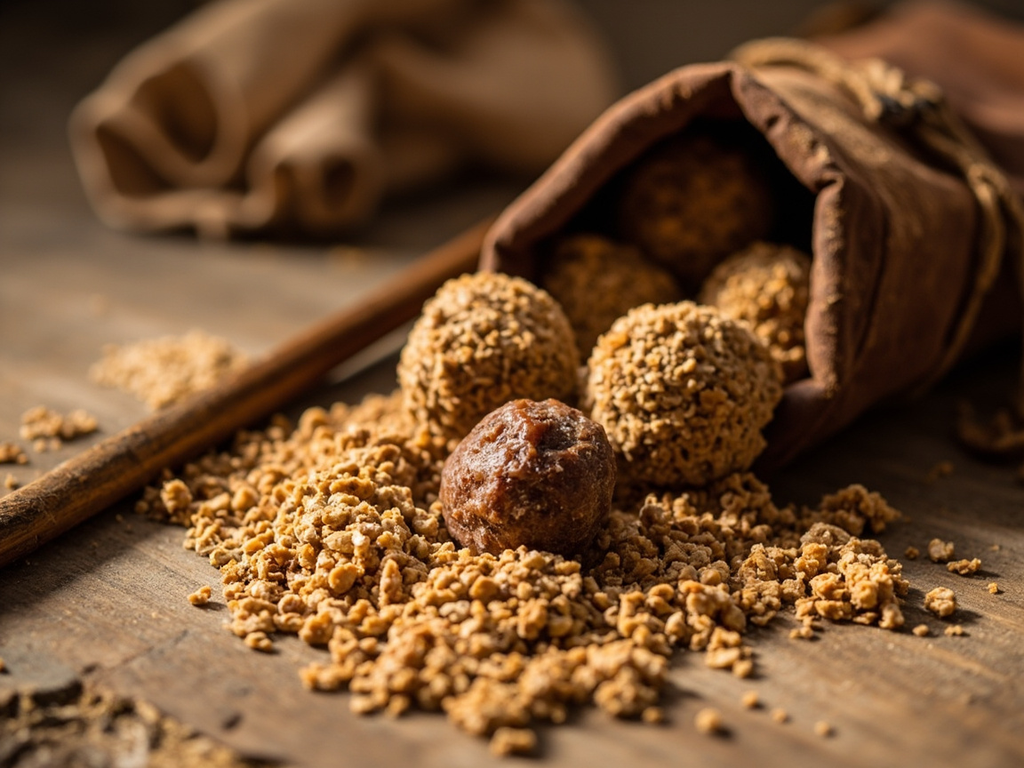
On the roads leading from Cizre to Baghdad, one does not bother with pots. I carried, wrapped in a cloth, this pressed date bread: it keeps for days without turning, and a single bite restores the legs of the exhausted traveler. Mash the dates well and bind them with toasted semolina until the paste pulls away from the bottom — like a material poured into a mold, it must take its shape and keep it. A little rose water, almonds for crunch, and the road seems shorter.
- •Ripe pitted dates — a large amount (sweet base, energy)
- •Toasted wheat semolina — enough to bind (binder that travels well)
- •Clarified butter (samn) — at discretion (binder and preservation)
- •Almonds and sesame seeds — a handful (crunch)
- •Cinnamon and rose water — to perfume (spice and fragrance)
Khabîs of dates with almonds and sesame
A thick, shiny paste of mashed dates, bound with clarified butter and toasted semolina, perfumed with cinnamon and rose water, studded with almonds and sesame. Cut into firm bites, it travels without fear of heat and restores strength in an instant.
Why this dish? His life was divided between Amid, Cizre, Jazirat ibn ʿUmar, and Baghdad: a court engineer traveled with his plans and tools. A paste of dates and almonds, which keeps for days without spoiling and fits in a pouch, is exactly the kind of dense, energy-packed snack carried on the roads of the Jazira.
On the roads leading from Cizre to Baghdad, one does not bother with pots. I carried, wrapped in a cloth, this pressed date bread: it keeps for days without turning, and a single bite restores the legs of the exhausted traveler. Mash the dates well and bind them with toasted semolina until the paste pulls away from the bottom — like a material poured into a mold, it must take its shape and keep it. A little rose water, almonds for crunch, and the road seems shorter.
Ingredients (period version)
- Ripe pitted dates — a large amount (sweet base, energy)
- Toasted wheat semolina — enough to bind (binder that travels well)
- Clarified butter (samn) — at discretion (binder and preservation)
- Almonds and sesame seeds — a handful (crunch)
- Cinnamon and rose water — to perfume (spice and fragrance)
Ingredients
- Soft pitted dates — 400 g (sweet base)
- Fine wheat semolina — 80 g (binder)
- Clarified butter (ghee) or butter — 60 g (binder and preservation)
- Blanched almonds — 60 g (crunch)
- Sesame seeds — 2 tbsp (crunch and finish)
- Ground cinnamon — 1 tsp (signature spice)
- Rose water — 1 tbsp (fragrance)
Method
- Toast the semolina dry in a pan until golden and nutty; set aside.
- Lightly toast the almonds and sesame; chop the almonds.
- Melt the clarified butter, add the mashed dates, and work over low heat into a smooth paste.
- Stir in the toasted semolina, cinnamon, and rose water; mix until the paste pulls away from the edges.
- Add half the almonds, spread the paste 2 cm thick in a dish, press, sprinkle with the remaining almonds and sesame.
- Let firm up, cut into diamonds or cubes; keeps for several days wrapped.
How it was made : Khabîs in medieval Arab cuisine refers to a whole family of thick sweet pastes made of dates, semolina, or starch bound with clarified butter and perfumed. Dense in sugar and fat, these preparations kept well and accompanied travelers and caravans. It is labeled 'reconstitution' because the exact proportions are here reconstructed from attested family recipes.
The contemporary twist : Cut the khabîs into regular hexagonal pieces like gears, glaze with a veil of sesame, and present them aligned like parts of a mechanism ready to assemble.
Sources : Charles Perry (trans.), Medieval Arab Cookery, Prospect Books, 2001 · Nawal Nasrallah, Annals of the Caliphs' Kitchens: Ibn Sayyār al-Warrāq's Tenth-Century Baghdadi Cookbook, Brill, 2007
Al-Jazari · Charactorium