 flip
flipSharâb al-ward — rose syrup (julâb)
Sharâb al-ward — rose syrup (julâb)
Why this dish? The anchor describes it: at the Artuqid court, meals were accompanied by rose-water-scented sherbet, a common luxury in 12th-century Islamic palaces. This rose syrup diluted with fresh water is precisely the courtly drink al-Jazari knew between courses.
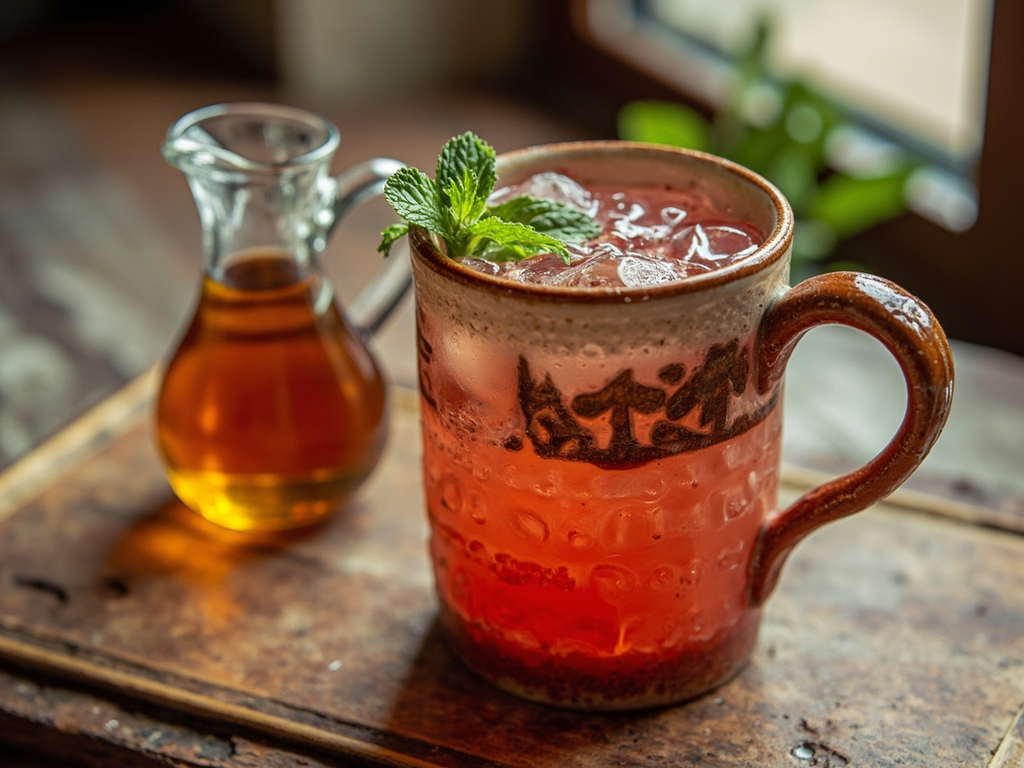
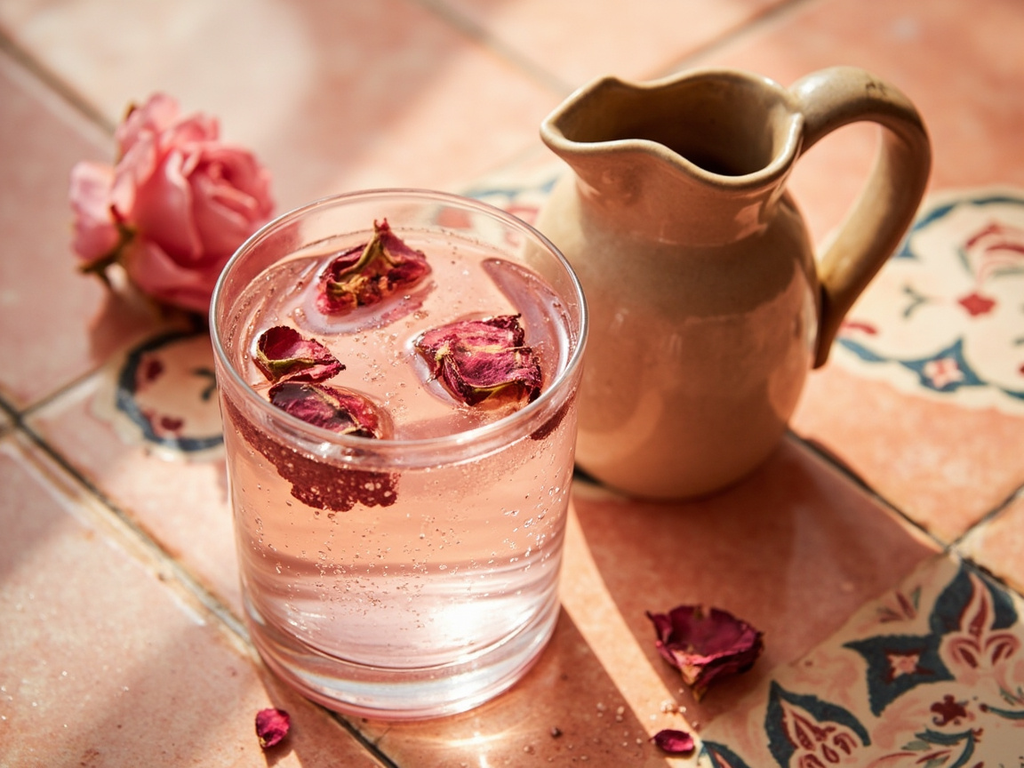
A thick, translucent syrup of deep pink, made from infused rose petals, sugar, and a touch of lemon, diluted with fresh water for a refreshing and fragrant drink. The simple luxury of a Mesopotamian palace in the heart of summer.
When the heat of the Jazira overwhelmed the workshop and the brass burned the fingers, a goblet of this rose syrup lengthened with cistern water was brought to me. Pour one measure of syrup for four measures of water — no more, or you drown the perfume, as you drown a gear by oiling it too much. Breathe the rose first, then drink: this is how the palaces of princes tame the summer. A mint leaf on top, and the heart cools.
- •Perfumed rose petals — two good handfuls (signature aroma)
- •Sugar (or honey) — generous parts (syrup, preservation)
- •Rose water — a dash (aroma reinforcement)
- •Lemon juice or verjuice — a few drops (acidic touch, fixes color)
Sharâb al-ward — rose syrup (julâb)
A thick, translucent syrup of deep pink, made from infused rose petals, sugar, and a touch of lemon, diluted with fresh water for a refreshing and fragrant drink. The simple luxury of a Mesopotamian palace in the heart of summer.
Why this dish? The anchor describes it: at the Artuqid court, meals were accompanied by rose-water-scented sherbet, a common luxury in 12th-century Islamic palaces. This rose syrup diluted with fresh water is precisely the courtly drink al-Jazari knew between courses.
When the heat of the Jazira overwhelmed the workshop and the brass burned the fingers, a goblet of this rose syrup lengthened with cistern water was brought to me. Pour one measure of syrup for four measures of water — no more, or you drown the perfume, as you drown a gear by oiling it too much. Breathe the rose first, then drink: this is how the palaces of princes tame the summer. A mint leaf on top, and the heart cools.
Ingredients (period version)
- Perfumed rose petals — two good handfuls (signature aroma)
- Sugar (or honey) — generous parts (syrup, preservation)
- Rose water — a dash (aroma reinforcement)
- Lemon juice or verjuice — a few drops (acidic touch, fixes color)
Ingredients
- Edible unsprayed rose petals (or culinary dried roses) — 30 g dried / 2 handfuls fresh (signature aroma)
- Sugar — 400 g (syrup)
- Water — 500 ml (infusion)
- Rose water — 1 tbsp (aroma reinforcement)
- Lemon juice — 2 tbsp (acidity and color)
Method
- Heat the water and infuse the petals off the heat for 1 hour, covered; strain.
- Return the infusion to the heat with the sugar, dissolve, and let reduce for 15 minutes into a light syrup.
- Add the lemon juice (the color turns pink) and, off the heat, the rose water.
- Let cool and bottle; keep refrigerated.
- To serve: 1 part syrup to 4 parts fresh water, ice and mint as desired.
How it was made : Perfumed syrups (sharâb, whence the word 'syrup') and julâb (from Persian gul-âb, rose water) were at the heart of medieval pharmacy and table. Syrups of rose, violet, tamarind, or pomegranate were prepared, both refreshing and considered good for digestion. Sugar, then a luxury product refined in Mesopotamia and Egypt, made it a courtly drink.
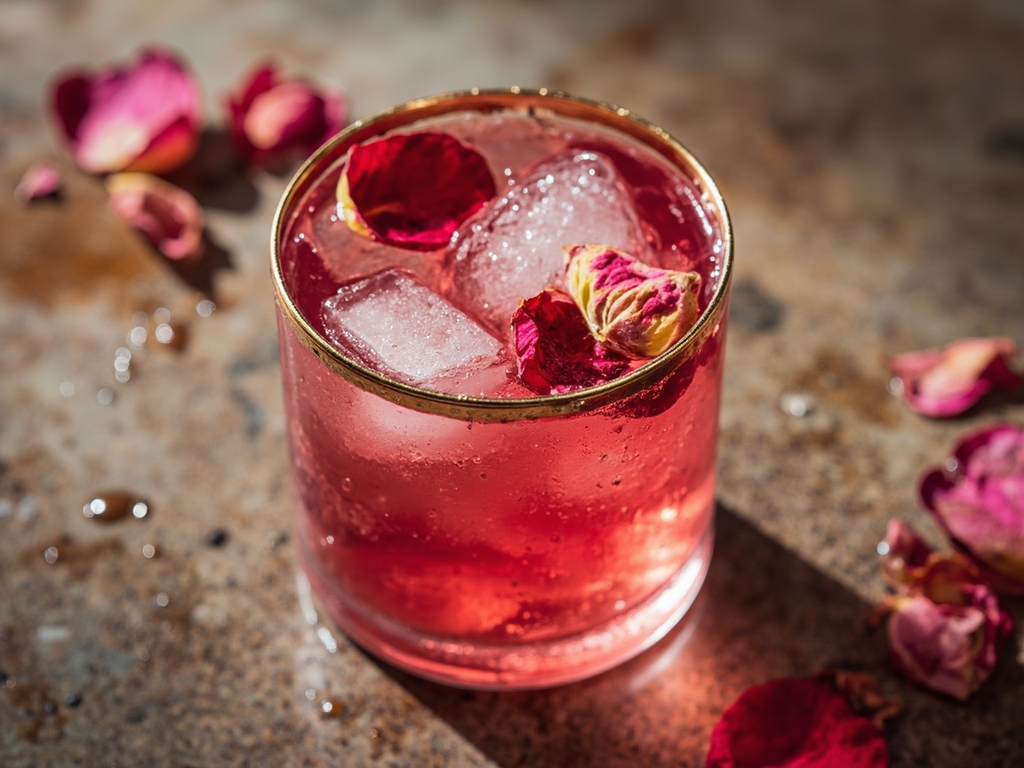
The contemporary twist : Serve as a sparkling 'sharbat': rose syrup topped with sparkling water, ice, and a squeeze of lemon, in a glass reminiscent of worked brass.
Sources : Nawal Nasrallah, Annals of the Caliphs' Kitchens: Ibn Sayyār al-Warrāq's Tenth-Century Baghdadi Cookbook, Brill, 2007 · Lilia Zaouali, L'Islam à table. Du Moyen Âge à nos jours, La Découverte, 2007
Al-Jazari · Charactorium