 flip
flipKhorasanian harisa
Khorasanian harisa
Why this dish? Harisa is the quintessential festive dish of Khorasan. In Tirmidh, it was prepared for Ramadan nights and occasions when the scholarly community gathered. Al-Tirmidhi, who fasted abundantly, broke his fast with this rich and restorative dish.
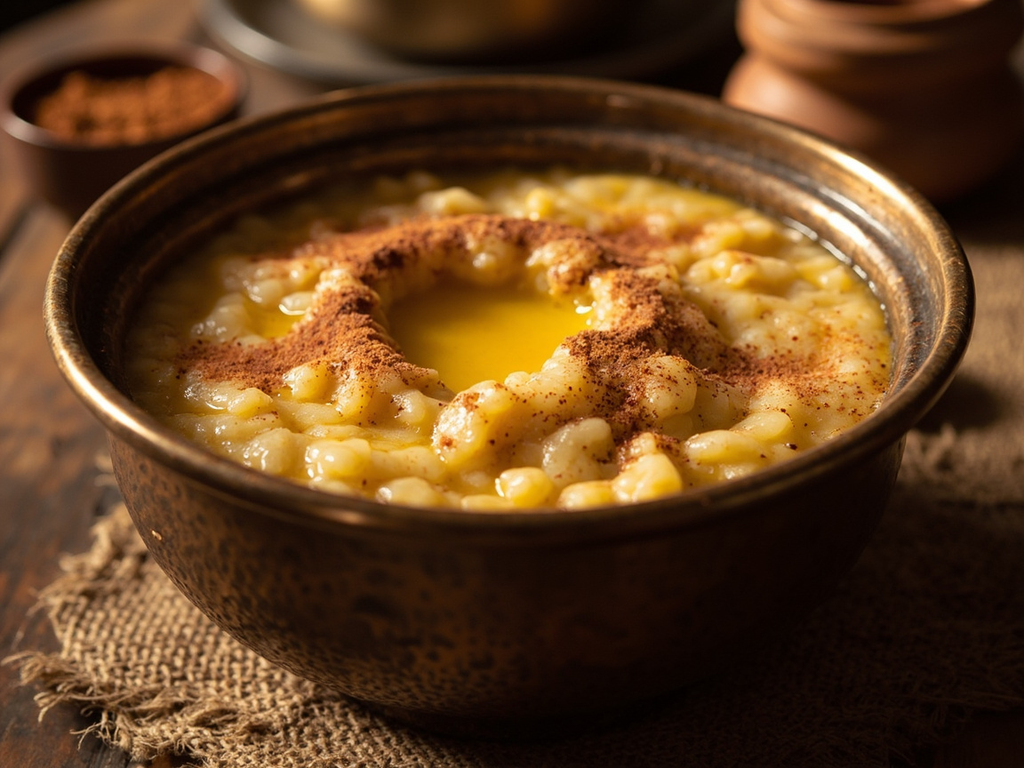
A thick porridge of cracked wheat slowly cooked with lamb until it forms a creamy purée, perfumed with cinnamon and served with melted butter. An ancient comfort dish, shared during evening gatherings and celebrations.
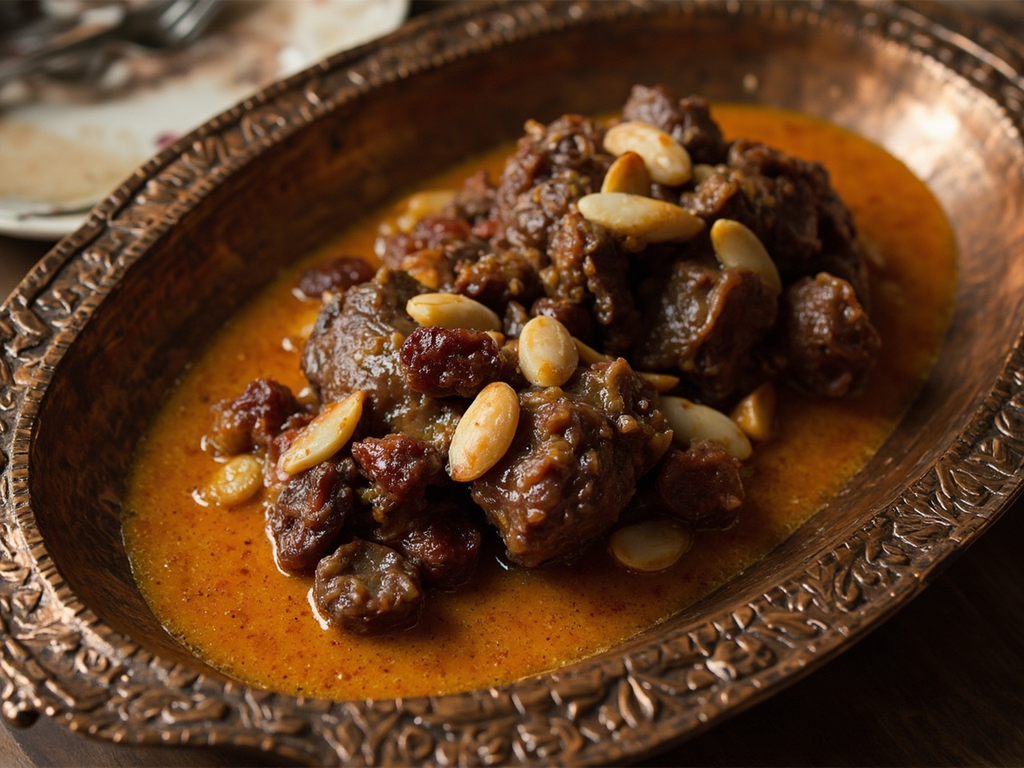
When we gathered in Nishapur at our masters' homes during the blessed nights of Ramadan, harisa was brought in a large copper dish. The wheat and meat had cooked together all night, so long that one could no longer distinguish the one from the other. We made a well in the center to pour the melted butter, and each took his share with a piece of bread. This dish warms the body of the exhausted traveler and strengthens the one who sets out again at dawn. There is in this patient cooking a lesson for the collector of traditions: nothing good comes without perseverance.
- •Whole husked wheat — Two large handfuls (Grain base)
- •Lamb (shoulder or shank) — A fine piece (Meat)
- •Cinnamon stick — One stick (Main aromatic)
- •Clarified butter (samn) — A good piece (Finishing)
- •Salt — To taste (Seasoning)
- •Ground cumin — A pinch (Spice)
Khorasanian harisa
A thick porridge of cracked wheat slowly cooked with lamb until it forms a creamy purée, perfumed with cinnamon and served with melted butter. An ancient comfort dish, shared during evening gatherings and celebrations.
Why this dish? Harisa is the quintessential festive dish of Khorasan. In Tirmidh, it was prepared for Ramadan nights and occasions when the scholarly community gathered. Al-Tirmidhi, who fasted abundantly, broke his fast with this rich and restorative dish.
When we gathered in Nishapur at our masters' homes during the blessed nights of Ramadan, harisa was brought in a large copper dish. The wheat and meat had cooked together all night, so long that one could no longer distinguish the one from the other. We made a well in the center to pour the melted butter, and each took his share with a piece of bread. This dish warms the body of the exhausted traveler and strengthens the one who sets out again at dawn. There is in this patient cooking a lesson for the collector of traditions: nothing good comes without perseverance.
Ingredients (period version)
- Whole husked wheat — Two large handfuls (Grain base)
- Lamb (shoulder or shank) — A fine piece (Meat)
- Cinnamon stick — One stick (Main aromatic)
- Clarified butter (samn) — A good piece (Finishing)
- Salt — To taste (Seasoning)
- Ground cumin — A pinch (Spice)
Ingredients
- Coarse cracked wheat (large bulgur or pearl wheat) — 300 g (Grain base)
- Boneless lamb shoulder — 400 g (Meat)
- Cinnamon stick — 1 stick (Main aromatic)
- Ground cinnamon — 1/2 tsp (Finishing)
- Clarified butter (ghee) — 60 g (Finishing)
- Salt — 1 tsp (Seasoning)
- Ground cumin — 1/2 tsp (Spice)
- Water — 2 litres (Cooking)
Method
- The night before, soak the cracked wheat in cold water for at least 8 hours.
- Cut the lamb into large chunks. Place in a large pot with the drained wheat, cinnamon stick, cumin, and salt. Cover with water.
- Bring to a boil, skim, then reduce to the lowest heat. Cook covered for 3 to 4 hours, stirring regularly, adding water if needed.
- When the wheat is completely broken down and the meat shreds at a touch, remove the cinnamon stick. Mash and beat vigorously with a wooden spoon (or partially blend) to obtain a thick, fibrous purée.
- Serve in a deep dish, make a well in the center, pour the melted ghee into it, and sprinkle with ground cinnamon.
How it was made : Harisa is one of the oldest and best-documented dishes of medieval Islamic cuisine. Al-Warrâq gives a detailed recipe. In Khorasan, it was cooked all night in large cauldrons for religious gatherings. Whole wheat required very long pounding and cooking — hence the practice of night shifts to watch the fire.
The contemporary twist : Serve in individual terracotta bowls with a drizzle of browned ghee and a few pomegranate seeds for color.
Sources : Ibn Sayyâr al-Warrâq, Kitâb al-Tabîkh (10th century), chapter on harisa · Charles Perry, A Baghdad Cookery Book (translation of al-Baghdâdî's Kitâb al-Tabîkh, 13th century), Prospect Books, 2005
Al-Tirmidhi · Charactorium