 flip
flipKhushknanaj with dates and walnuts
Khushknanaj with dates and walnuts
Why this dish? Khushknanaj — literally "dry bread" in Persian — were the road biscuits of Khorasanian travelers. Al-Tirmidhi, who spent years on the road between Tirmidh, Baghdad, and Mecca, carried these pastries stuffed with dates and walnuts in his travel bag, next to his scrolls of hadiths.
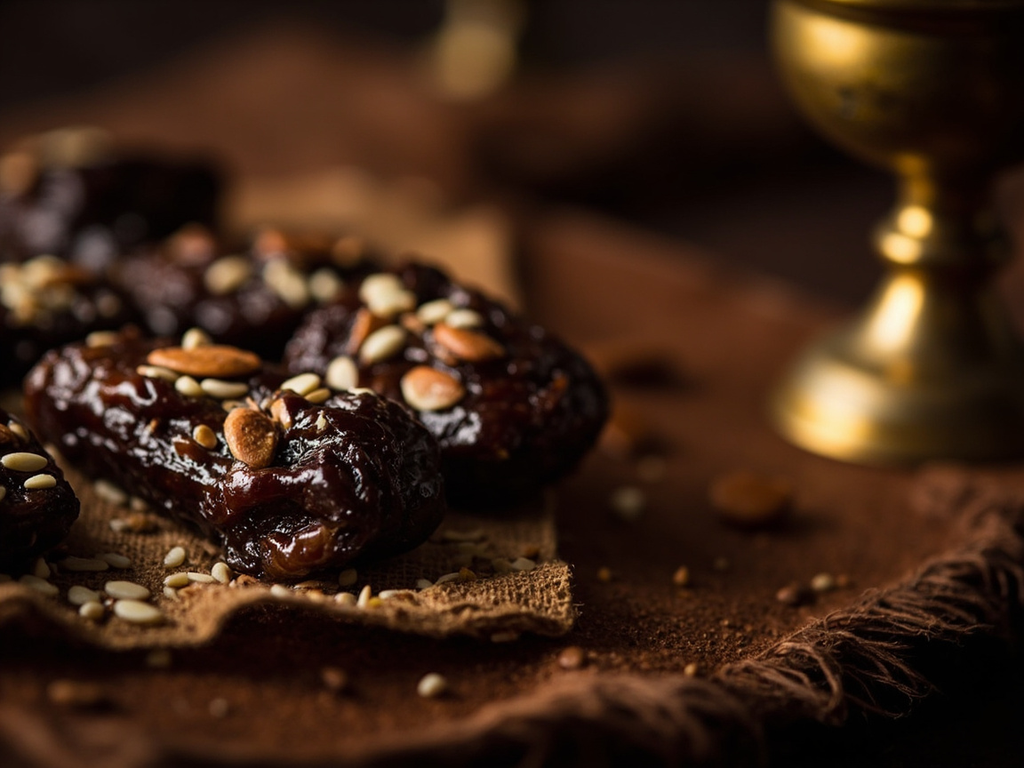
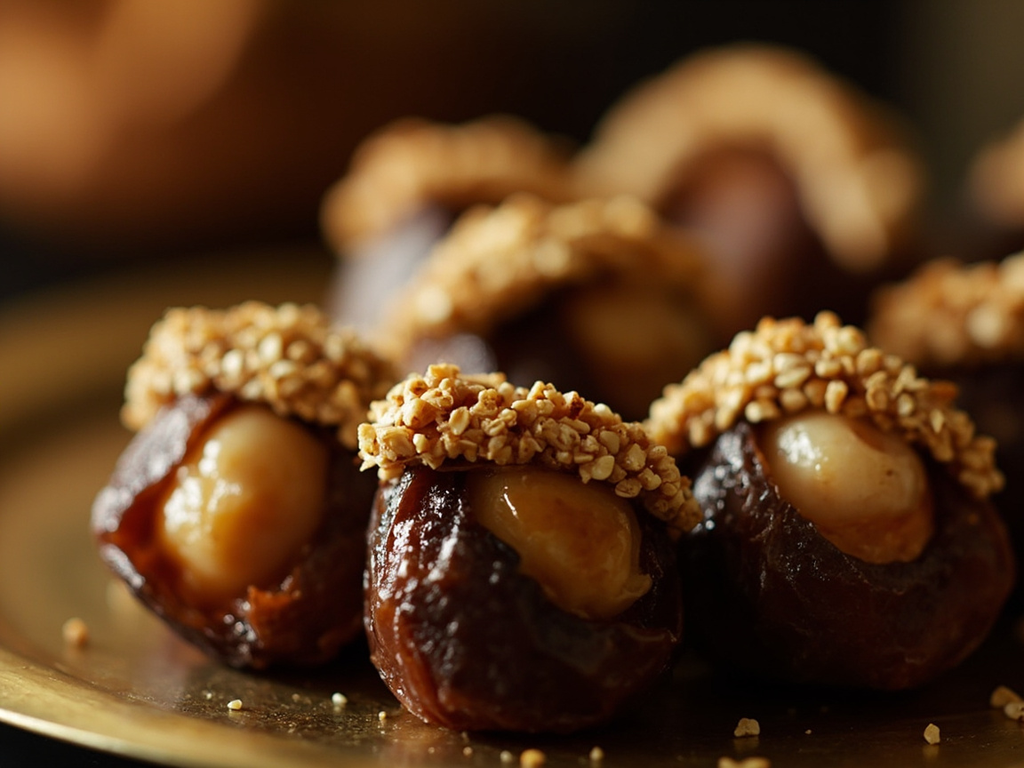
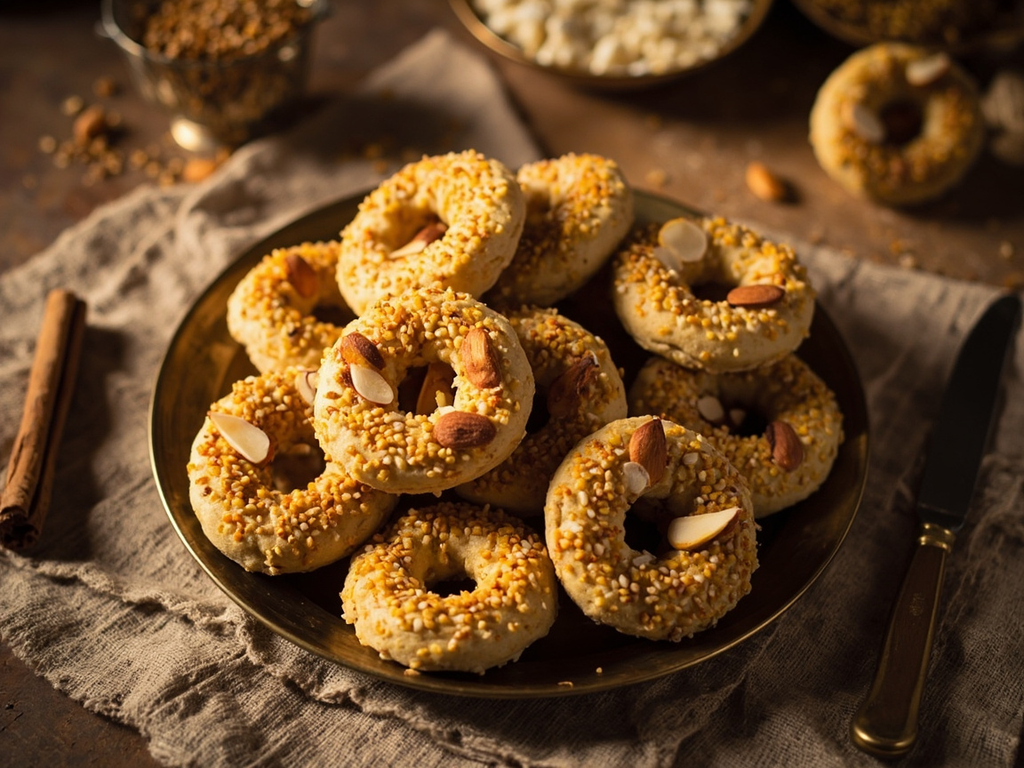
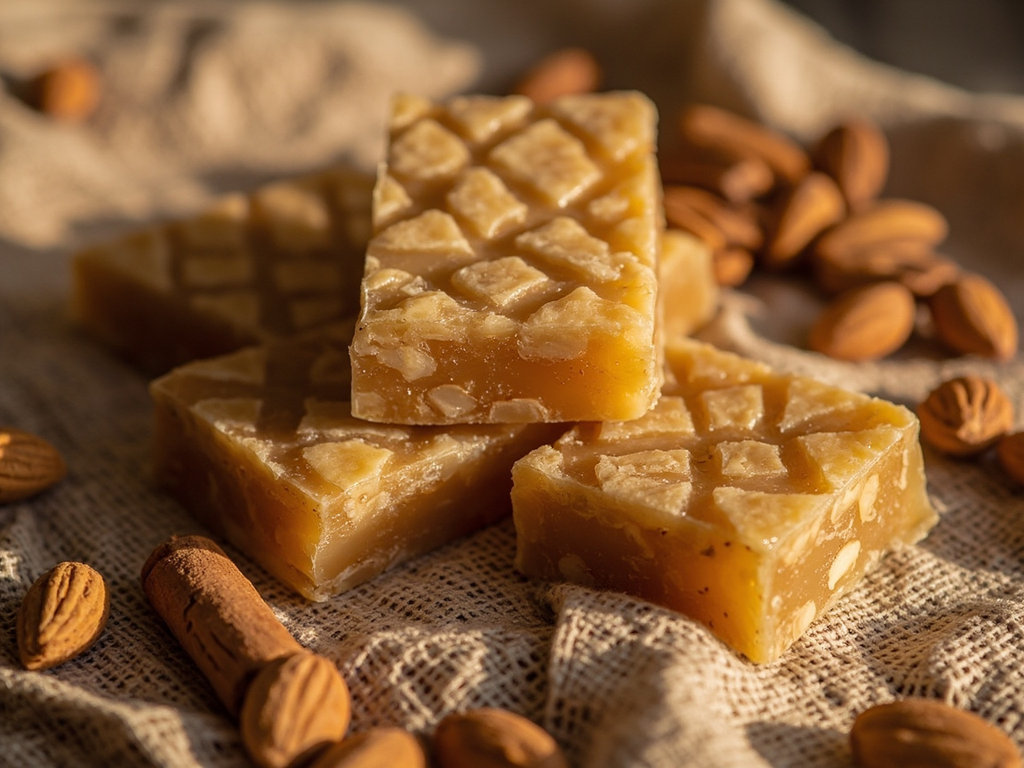
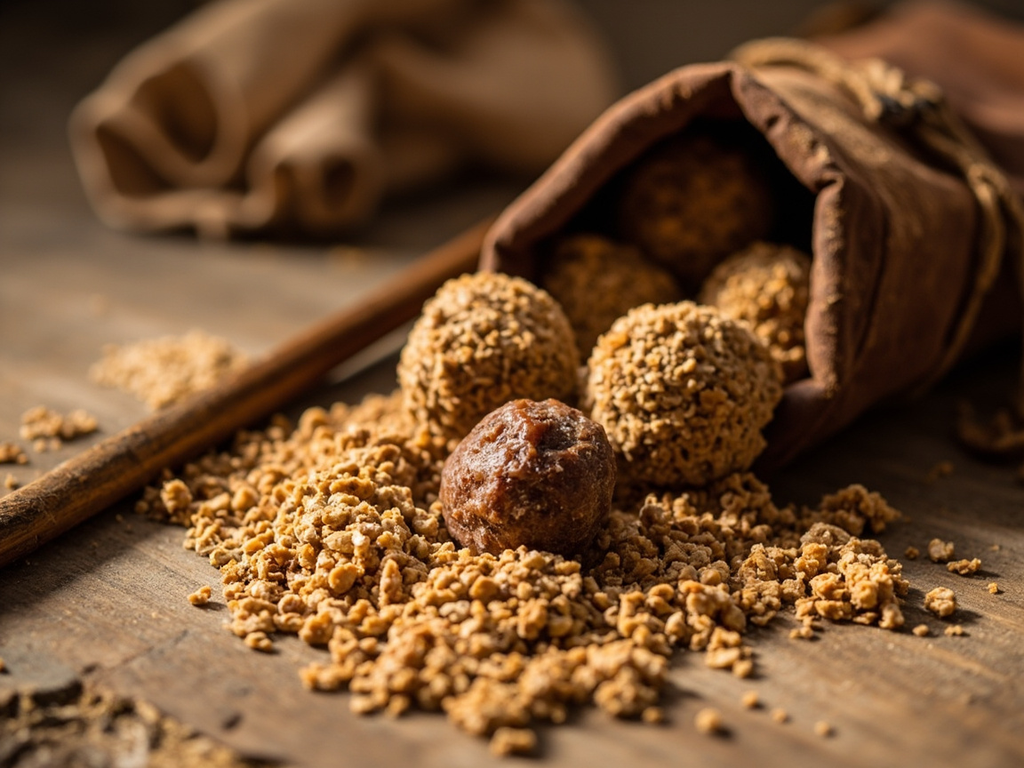
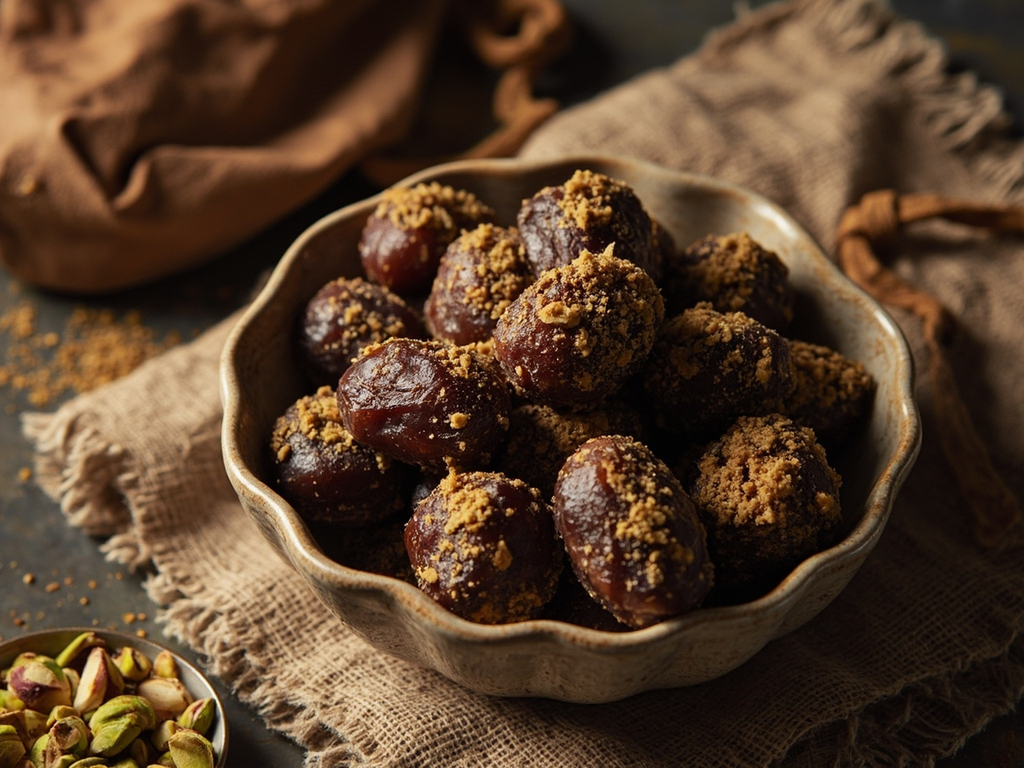
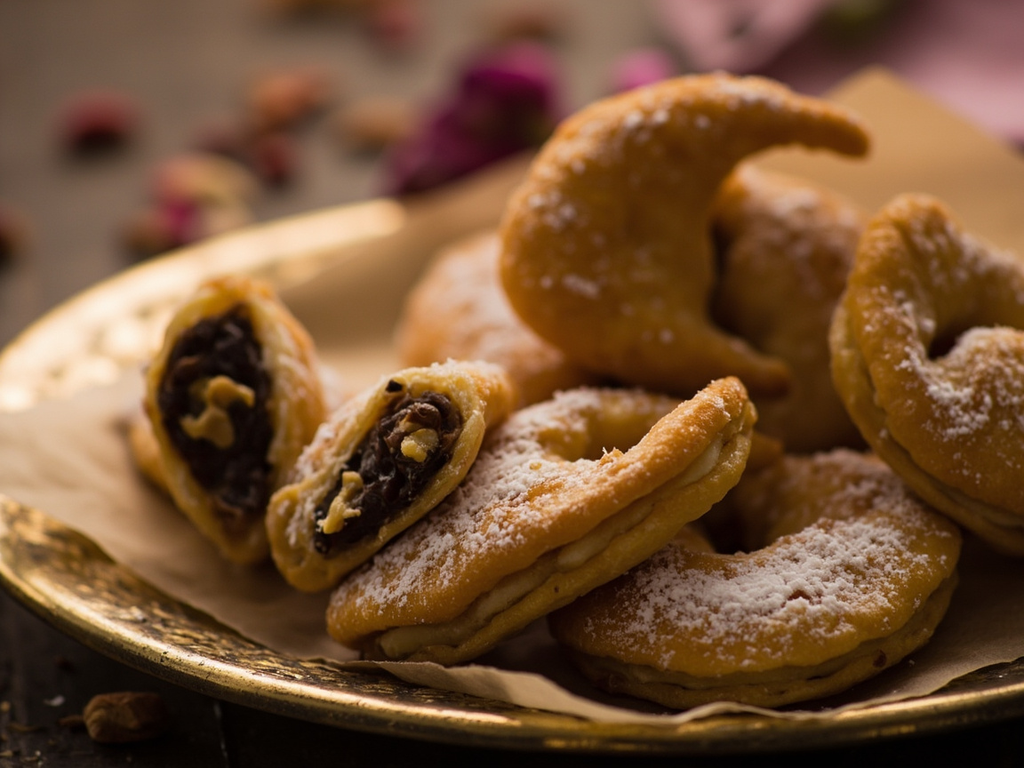
Small butter pastry turnovers filled with a mixture of pounded dates, crushed walnuts, and cinnamon. Compact, nourishing, and durable — the ideal pastry for the medieval traveler.
Before every departure to collect hadiths, my mother — may God have mercy on her — would prepare these khushknanaj and pack them in a cloth at the bottom of my bag, next to my juz'. They keep for days without losing their flavor, and when hunger overtakes you on the road between Nishapur and Bugh, you take one out, break it, and the sweetness of the date gives you strength to record the next hadith. They are a travel provision, and the best provision, as it is said in the Book, is piety — but khushknanaj comes right after.
- •Fine wheat flour — Two large handfuls (Dough)
- •Clarified butter (samn) — A good piece (Dough binder)
- •Pitted dates — Two handfuls (Sweet filling)
- •Crushed walnuts — A handful (Crunchy filling)
- •Ground cinnamon — A pinch (Spice)
- •Rose water — A few drops (Aroma)
- •Honey — A drizzle (Glaze)
Khushknanaj with dates and walnuts
Small butter pastry turnovers filled with a mixture of pounded dates, crushed walnuts, and cinnamon. Compact, nourishing, and durable — the ideal pastry for the medieval traveler.
Why this dish? Khushknanaj — literally "dry bread" in Persian — were the road biscuits of Khorasanian travelers. Al-Tirmidhi, who spent years on the road between Tirmidh, Baghdad, and Mecca, carried these pastries stuffed with dates and walnuts in his travel bag, next to his scrolls of hadiths.
Before every departure to collect hadiths, my mother — may God have mercy on her — would prepare these khushknanaj and pack them in a cloth at the bottom of my bag, next to my juz'. They keep for days without losing their flavor, and when hunger overtakes you on the road between Nishapur and Bugh, you take one out, break it, and the sweetness of the date gives you strength to record the next hadith. They are a travel provision, and the best provision, as it is said in the Book, is piety — but khushknanaj comes right after.
Ingredients (period version)
- Fine wheat flour — Two large handfuls (Dough)
- Clarified butter (samn) — A good piece (Dough binder)
- Pitted dates — Two handfuls (Sweet filling)
- Crushed walnuts — A handful (Crunchy filling)
- Ground cinnamon — A pinch (Spice)
- Rose water — A few drops (Aroma)
- Honey — A drizzle (Glaze)
Ingredients
- All-purpose flour — 250 g (Dough)
- Softened unsalted butter — 100 g (Dough binder)
- Pitted Medjool dates — 200 g (Sweet filling)
- Walnut halves — 80 g (Crunchy filling)
- Ground cinnamon — 1 tsp (Spice)
- Rose water — 1 tbsp (Aroma)
- Liquid honey — 2 tbsp (Glaze)
- Cold water — 3–4 tbsp (Binder)
- Salt — 1 pinch (Flavor enhancer)
Method
- Prepare the filling: finely chop the dates and walnuts, mix with cinnamon and rose water to form a sticky paste. Set aside.
- Prepare the dough: rub the flour with butter and salt until crumbly. Add cold water spoon by spoon until a soft dough forms. Rest for 30 minutes in the fridge.
- Roll out the dough to 3 mm thickness. Cut 8 cm rounds.
- Place a heaped teaspoon of filling in the center of each round. Fold into a half-moon and seal the edges with a fork.
- Arrange on a baking sheet. Bake at 180 °C for 20–25 minutes until golden.
- Brush with warm honey as soon as they come out of the oven. Let cool completely — they keep for several days in an airtight container.
How it was made : Khushknanaj is attested in the Kitâb al-Tabîkh by al-Warrâq and by al-Baghdâdî (13th century). It is a Persian borrowing (khushk = dry, nân = bread) that entered Abbasid cuisine. They were baked in earthen ovens (tannûr) and carried for long journeys across the dâr al-islâm, wrapped in cloth.
The contemporary twist : Shape the turnovers into crescent moons and dust with icing sugar mixed with cinnamon for a maamoul-inspired look.
Sources : Al-Baghdâdî, Kitâb al-Tabîkh (13th century), trans. Charles Perry, A Baghdad Cookery Book, Prospect Books, 2005 · Nawal Nasrallah, Annals of the Caliph's Kitchens, Brill, 2007
Al-Tirmidhi · Charactorium