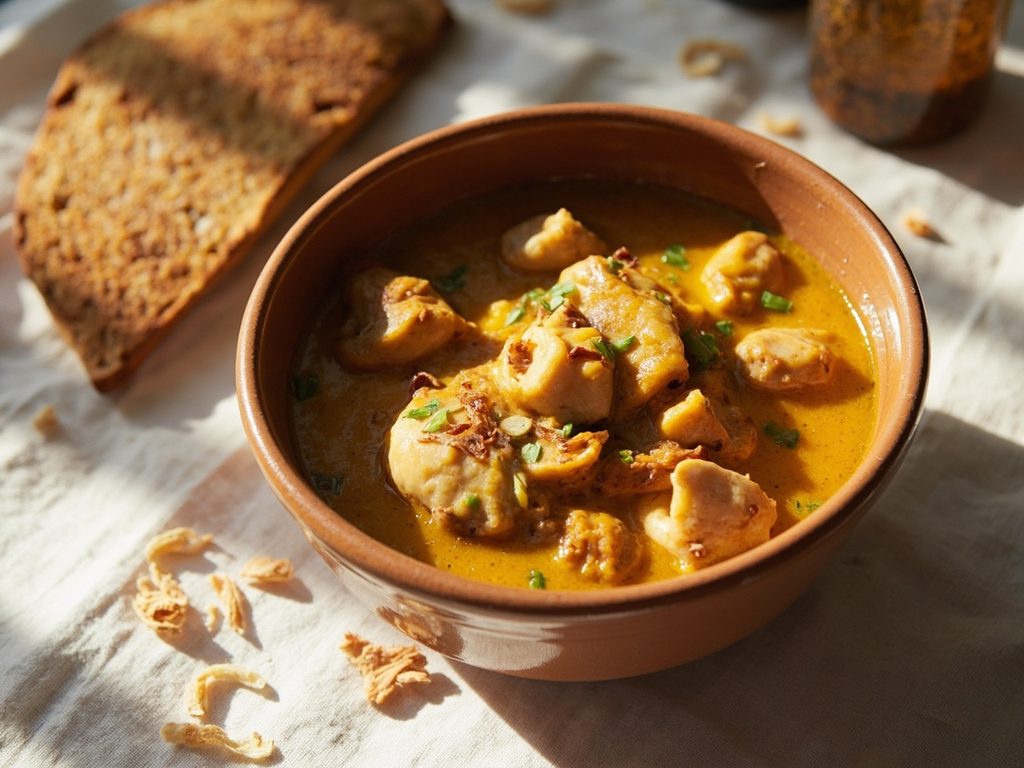
Tharid with lamb and chickpeas
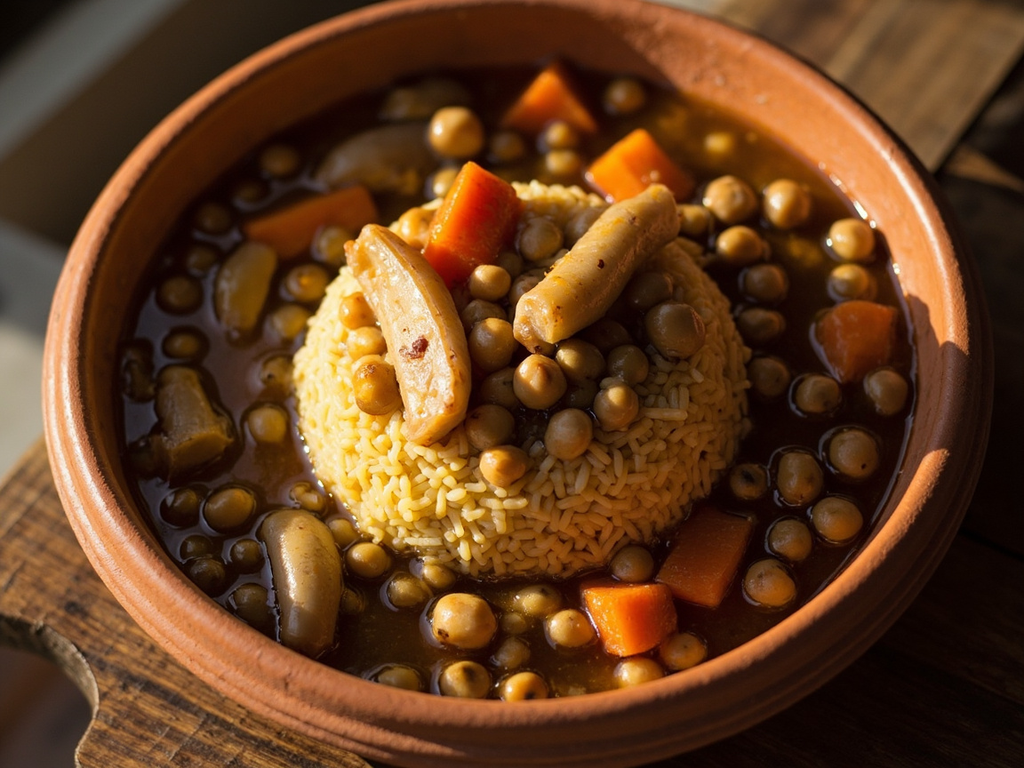
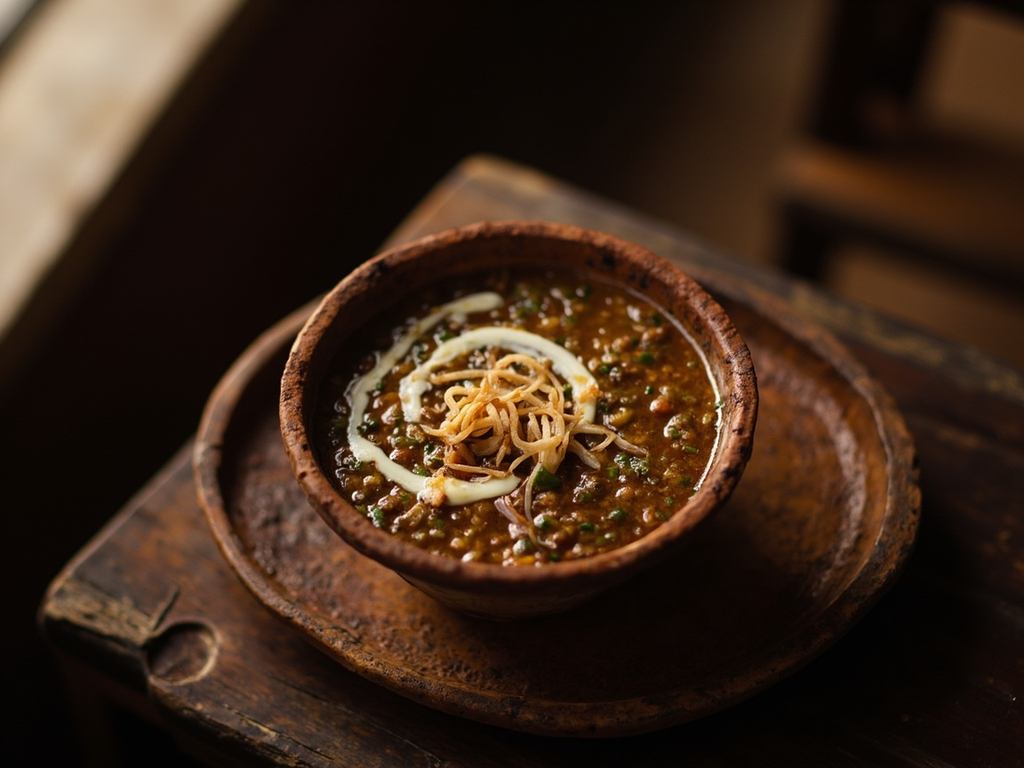
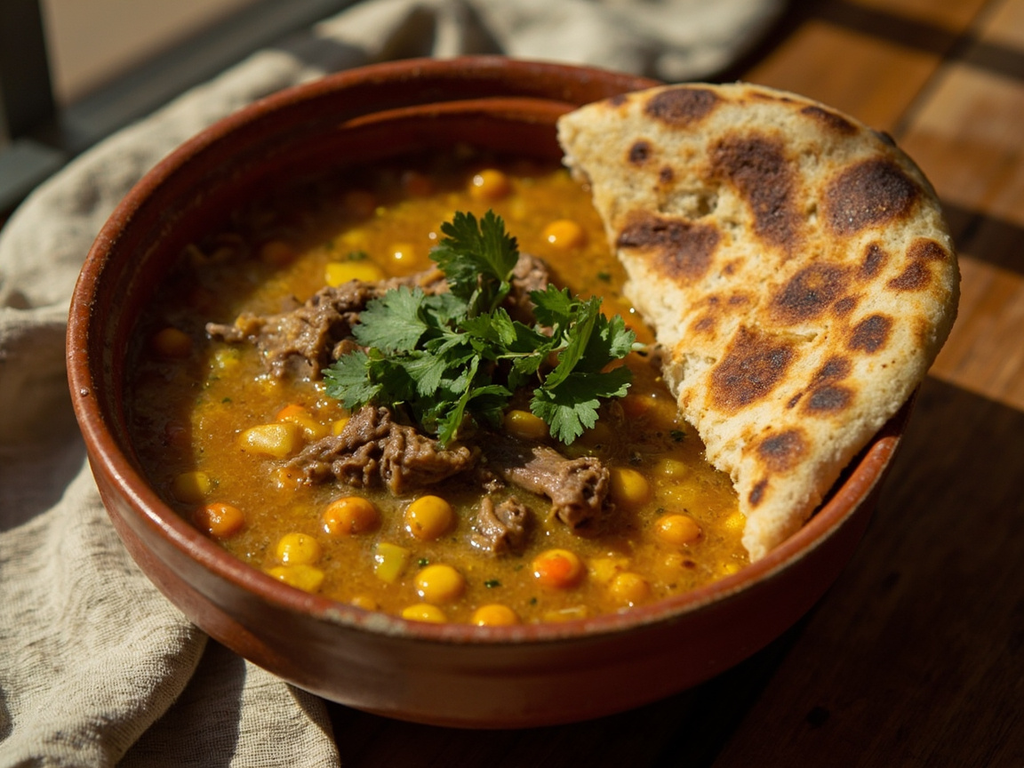
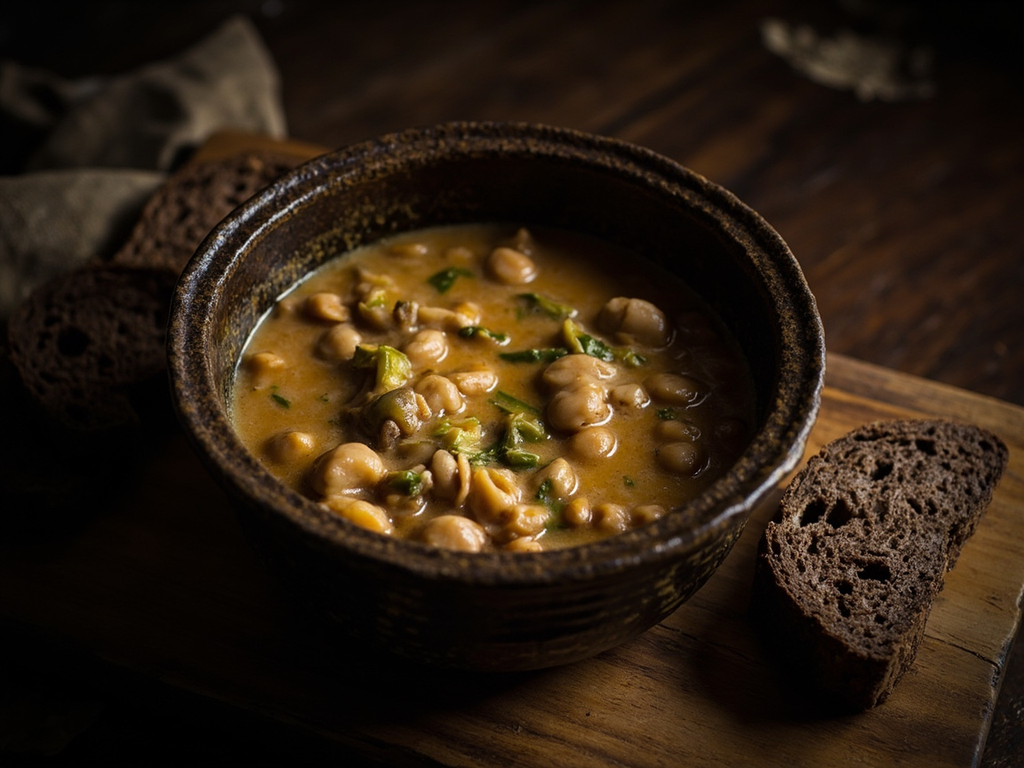
Flatbread crumbled into a lamb broth perfumed with coriander and cumin, enriched with tender chickpeas. A humble, nourishing dish prepared throughout the medieval Islamic world.
Flatbread crumbled into a lamb broth perfumed with coriander and cumin, enriched with tender chickpeas. A humble, nourishing dish prepared throughout the medieval Islamic world.
Know, O seeker of understanding, that tharid is the lord of dishes, just as Aisha — may God be pleased with her — is the most eminent among women. Thus said the Prophet, peace be upon him, and I have reported this hadith in my Jâmi'. When I returned to Tirmidh after months on the road, my family would set before me a bowl of this bread soaked in lamb broth, and the fatigue of travel would vanish. You crumble yesterday's bread, pour the hot broth over it, and eat with your right hand, starting from the edges of the dish. It is a dish of both poor and king, and therein lies its nobility.
- •Stale flatbread (nan or ruqâq) — Two loaves (Base of the dish)
- •Lamb shoulder — A good piece (Meat and broth)
- •Dried chickpeas, soaked — Two handfuls (Legume)
- •Onion — One, sliced (Aromatic base)
- •Ground dried coriander — A generous pinch (Main spice)
- •Ground cumin — A pinch (Spice)
- •Salt — To taste (Seasoning)
- •Sheep's tail fat (alya) — A piece (Fat)
- •Fresh coriander — A handful (Garnish)
Tharid with lamb and chickpeas
Flatbread crumbled into a lamb broth perfumed with coriander and cumin, enriched with tender chickpeas. A humble, nourishing dish prepared throughout the medieval Islamic world.
Why this dish? Tharid — crumbled bread topped with meat broth — is the dish that prophetic tradition names as the Prophet's favorite. For a hadith compiler like al-Tirmidhi, eating it was as much an act of piety as a meal. It was the daily staple of Khorasanian scholars traveling or at home.
Know, O seeker of understanding, that tharid is the lord of dishes, just as Aisha — may God be pleased with her — is the most eminent among women. Thus said the Prophet, peace be upon him, and I have reported this hadith in my Jâmi'. When I returned to Tirmidh after months on the road, my family would set before me a bowl of this bread soaked in lamb broth, and the fatigue of travel would vanish. You crumble yesterday's bread, pour the hot broth over it, and eat with your right hand, starting from the edges of the dish. It is a dish of both poor and king, and therein lies its nobility.
Ingredients (period version)
- Stale flatbread (nan or ruqâq) — Two loaves (Base of the dish)
- Lamb shoulder — A good piece (Meat and broth)
- Dried chickpeas, soaked — Two handfuls (Legume)
- Onion — One, sliced (Aromatic base)
- Ground dried coriander — A generous pinch (Main spice)
- Ground cumin — A pinch (Spice)
- Salt — To taste (Seasoning)
- Sheep's tail fat (alya) — A piece (Fat)
- Fresh coriander — A handful (Garnish)
Ingredients
- Stale pita or naan bread — 2 large (Base of the dish)
- Bone-in lamb shoulder — 500 g (Meat and broth)
- Canned chickpeas, drained — 250 g (Legume)
- Yellow onion — 1 large (Aromatic base)
- Ground coriander — 1 tbsp (Main spice)
- Ground cumin — 1 tsp (Spice)
- Salt — To taste (Seasoning)
- Olive oil or ghee — 2 tbsp (Fat)
- Fresh coriander — 1 bunch (Garnish)
- Water — 1.5 litres (Broth)
Method
- Sauté the sliced onion in ghee until golden.
- Add the lamb shoulder, sear on each side, then cover with water. Add ground coriander, cumin, and salt. Bring to a boil, skim, then simmer covered for 1 hour 30 minutes.
- Add the drained chickpeas and cook for another 20 minutes until the meat falls off the bone.
- Tear the bread into pieces in a large deep dish.
- Remove the meat, shred it roughly. Pour the hot broth over the bread, let it soak for 5 minutes.
- Arrange the meat and chickpeas on the soaked bread, drizzle with a final ladle of broth, and scatter fresh coriander on top.
How it was made : Tharid is attested from the first centuries of Islam. The Kitâb al-Tabîkh by Ibn Sayyâr al-Warrâq (10th century) gives several variations. They used very thin bread (ruqâq) and sheep's tail fat. Al-Tirmidhi himself reports in his Jâmi' the hadith on tharid's superiority among dishes.
The contemporary twist : Serve in an earthenware bowl with a drizzle of sumac-spiked olive oil on top, arranging the chickpeas in a ring.
Sources : Ibn Sayyâr al-Warrâq, Kitâb al-Tabîkh (10th century), trans. Nawal Nasrallah, Annals of the Caliph's Kitchens, Brill, 2007 · Al-Tirmidhi, Jâmi' al-Tirmidhi, Book of Foods (Kitâb al-At'ima), hadith no. 1834
Al-Tirmidhi · Charactorium