 flip
flipRussian Tea in a Glass, Jam in the Mouth
Russian Tea in a Glass, Jam in the Mouth
Why this dish? Born in the Russian Empire, Sabin returned to Moscow and Leningrad in the late 1950s to conduct mass trials of his oral vaccine with Soviet virologists. Tea drunk from a glass in its metal holder (podstakannik), sweetened with a spoonful of jam, is the common drink of his native culture and those long working meetings.
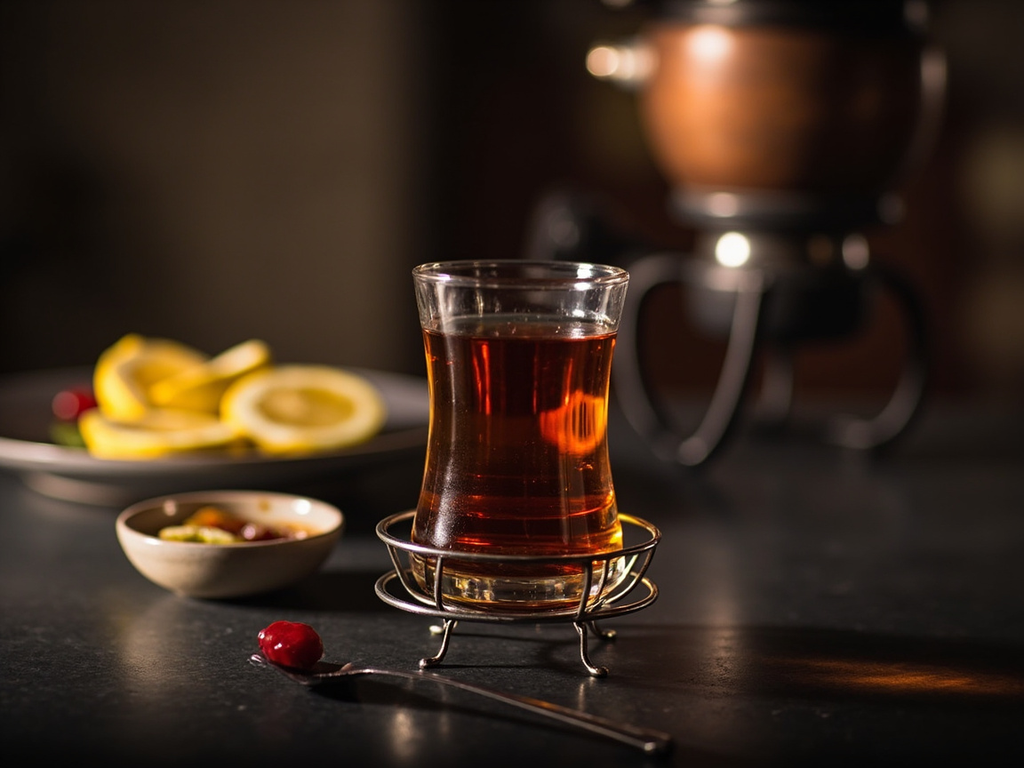
A strong black tea served very hot in a metal-rimmed glass, sweetened not with melted sugar but with a spoonful of jam kept in the mouth—'Russian style'. Bitterness of tea, fruity sweetness that follows.
In Moscow, during our trials, meetings stretched on and tea never left us. They served it as in my childhood: very strong, almost black, in a burning glass held by its metal rim. Here is the custom I love—you do not sweeten the glass; you slip a dab of jam under your tongue and drink the bitter tea over it. Sweetness and bitterness meet in the mouth, and for a sip, you find again the country where you were born.
- •Black tea leaves — strong (concentrated infusion (zavarka))
- •Boiling water — as needed (dilution)
- •Sour cherry or strawberry jam — a spoonful (sweetness served separately)
Russian Tea in a Glass, Jam in the Mouth
A strong black tea served very hot in a metal-rimmed glass, sweetened not with melted sugar but with a spoonful of jam kept in the mouth—'Russian style'. Bitterness of tea, fruity sweetness that follows.
Why this dish? Born in the Russian Empire, Sabin returned to Moscow and Leningrad in the late 1950s to conduct mass trials of his oral vaccine with Soviet virologists. Tea drunk from a glass in its metal holder (podstakannik), sweetened with a spoonful of jam, is the common drink of his native culture and those long working meetings.
In Moscow, during our trials, meetings stretched on and tea never left us. They served it as in my childhood: very strong, almost black, in a burning glass held by its metal rim. Here is the custom I love—you do not sweeten the glass; you slip a dab of jam under your tongue and drink the bitter tea over it. Sweetness and bitterness meet in the mouth, and for a sip, you find again the country where you were born.
Ingredients (period version)
- Black tea leaves — strong (concentrated infusion (zavarka))
- Boiling water — as needed (dilution)
- Sour cherry or strawberry jam — a spoonful (sweetness served separately)
Ingredients
- Black tea leaves (Russian Caravan or Assam) — 2 tsp (concentrated infusion (zavarka))
- Filtered water — 1 small teapot + additional boiling water (infusion then dilution)
- Sour cherry (vishnia) or strawberry jam — 1 tsp per glass (sweetness served separately)
- Lemon slice — optional (acidity, aroma)
Method
- Prepare a very concentrated infusion (zavarka): 2 tsp of tea in a small teapot, cover with a little boiling water, steep 5 minutes.
- Pour a base of this strong infusion into each glass (ideally metal-rimmed), then top with boiling water to desired strength.
- Do not sweeten the tea. Serve a spoonful of jam on the side.
- Drink Russian style: take a small dab of jam in your mouth, then a sip of hot bitter tea over it. Optionally add a lemon slice.
How it was made : In the Russian Empire and among Eastern European Jews, tea was prepared with a samovar: an ultra-concentrated infusion (zavarka) diluted with hot water, served in glasses held by a metal podstakannik. Drinking tea 'vprikusku'—with a piece of sugar or a spoonful of jam held in the mouth rather than dissolved—was common practice among ordinary people.
The contemporary twist : Serve the jam in a small dish placed on the glass's saucer, in a 'tea-fruit pairing' style: each guest doses their sweetness as they wish.
Sources : Darra Goldstein, A Taste of Russia, Russian Information Services, 1999 · Claudia Roden, The Book of Jewish Food, Knopf, 1996
Albert Sabin · Charactorium