 flip
flipOatcakes (Travel Oatcakes)
Oatcakes (Travel Oatcakes)
Why this dish? Dry and sturdy, oatcakes have accompanied Scots on their travels for centuries. Bell, an indefatigable walker and surveyor of the hills of Baddeck where he conducted his kite and aviation experiments, appreciated this bread that keeps for days without going stale.
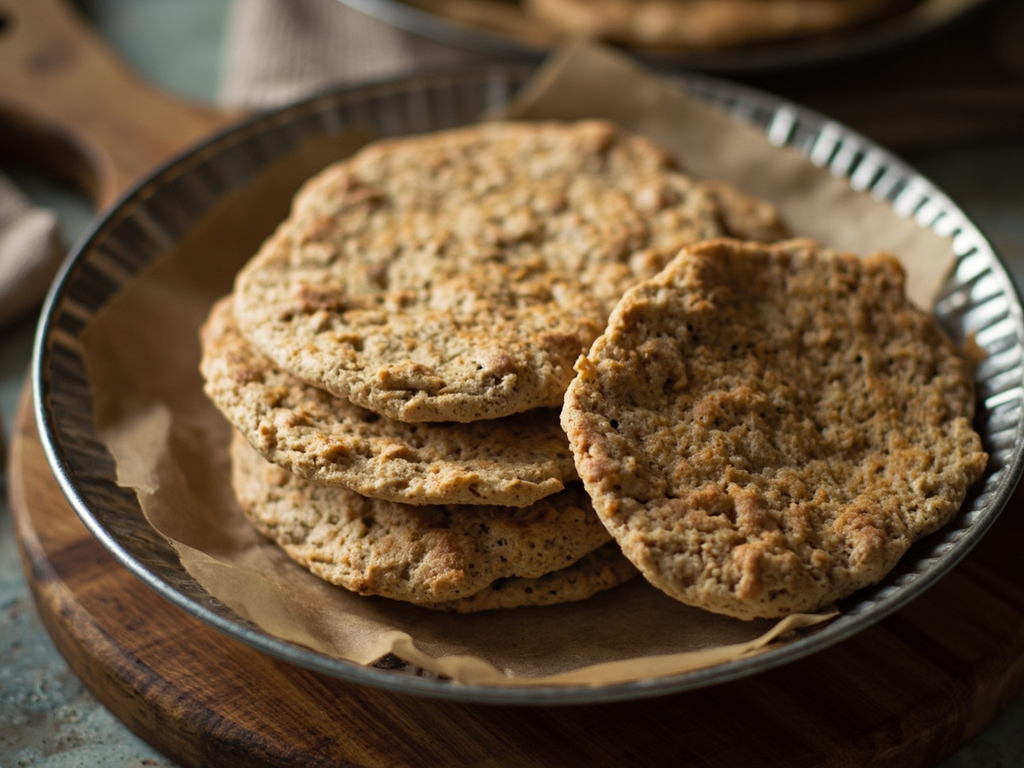
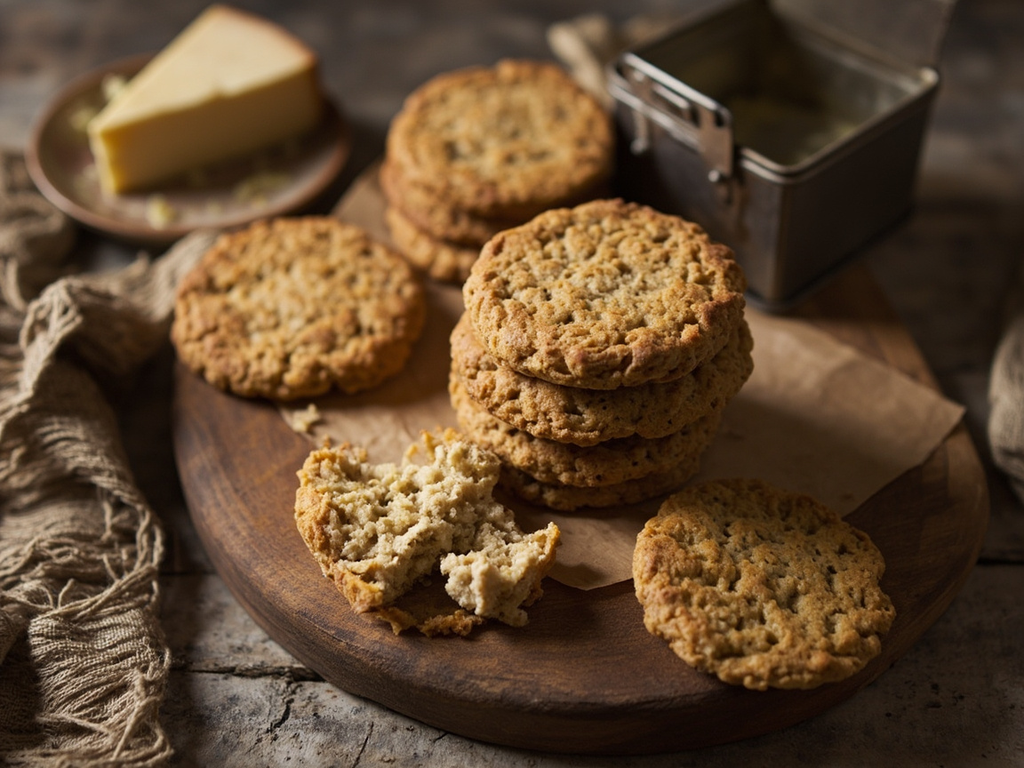
Thin oat biscuits baked until crisp, lightly salted, that keep for a long time in a tin. Eaten with cheese, butter, or jam — or alone, on the trail.
Here is the faithful companion of any mountain excursion, my friend! A tin box filled with oatcakes, and you can walk for hours studying the wind and the flight of birds without fear of hunger. They are quickly kneaded with hot water, for oats wait for no one, then baked on the griddle until they curl and harden. With a piece of local cheese, that's all a man needs who prefers to think rather than sit long at table.
- •Fine oatmeal — two cups (base)
- •Lard or melted butter — one spoonful (binder)
- •Hot water — as needed (dough)
- •Salt — a pinch (seasoning)
- •Bicarbonate of soda — a pinch (lightness)
Oatcakes (Travel Oatcakes)
Thin oat biscuits baked until crisp, lightly salted, that keep for a long time in a tin. Eaten with cheese, butter, or jam — or alone, on the trail.
Why this dish? Dry and sturdy, oatcakes have accompanied Scots on their travels for centuries. Bell, an indefatigable walker and surveyor of the hills of Baddeck where he conducted his kite and aviation experiments, appreciated this bread that keeps for days without going stale.
Here is the faithful companion of any mountain excursion, my friend! A tin box filled with oatcakes, and you can walk for hours studying the wind and the flight of birds without fear of hunger. They are quickly kneaded with hot water, for oats wait for no one, then baked on the griddle until they curl and harden. With a piece of local cheese, that's all a man needs who prefers to think rather than sit long at table.
Ingredients (period version)
- Fine oatmeal — two cups (base)
- Lard or melted butter — one spoonful (binder)
- Hot water — as needed (dough)
- Salt — a pinch (seasoning)
- Bicarbonate of soda — a pinch (lightness)
Ingredients
- Finely ground rolled oats (or oat flour) — 200 g (base)
- Melted butter — 30 g (binder)
- Hot water — 60 to 80 ml (dough)
- Salt — 1/2 tsp (seasoning)
- Bicarbonate of soda — 1 pinch (lightness)
Method
- Mix the oatmeal, salt, and bicarbonate of soda in a bowl.
- Add the melted butter, then gradually add the hot water to form a soft dough that can be worked quickly (it stiffens as it cools).
- Roll out thinly on a surface dusted with oatmeal, cut into triangles ('farls') or rounds.
- Cook on a dry hot griddle (or in the oven at 180°C) for 12 to 15 minutes, until the edges curl and the oatcakes are dry and firm.
- Cool completely on a wire rack before storing in an airtight tin.
How it was made : Oatcakes were traditionally baked on a 'girdle', a cast-iron plate suspended over the fire, then dried standing in front of the hearth. Low in moisture, they kept for weeks — a staple ration for shepherds, soldiers, and travelers of the Highlands.
The contemporary twist : Sprinkled with seeds (linseed, pumpkin) and served with a Scottish blue cheese, they make a very elegant contemporary appetizer board.
Sources : F. Marian McNeill, The Scots Kitchen (1929) · Catherine Brown, Scottish Cookery (1985)
Alexander Graham Bell · Charactorium