 flip
flipYorkshire Oatcake (Havercake), Keeping Oat Flatbread
Yorkshire Oatcake (Havercake), Keeping Oat Flatbread
Why this dish? Wheat bread was expensive and scarce in the Pennines; modest Yorkshire families like that of Pastor Brontë lived on these fine oat flatbreads, which were dried on a rack suspended from the ceiling.
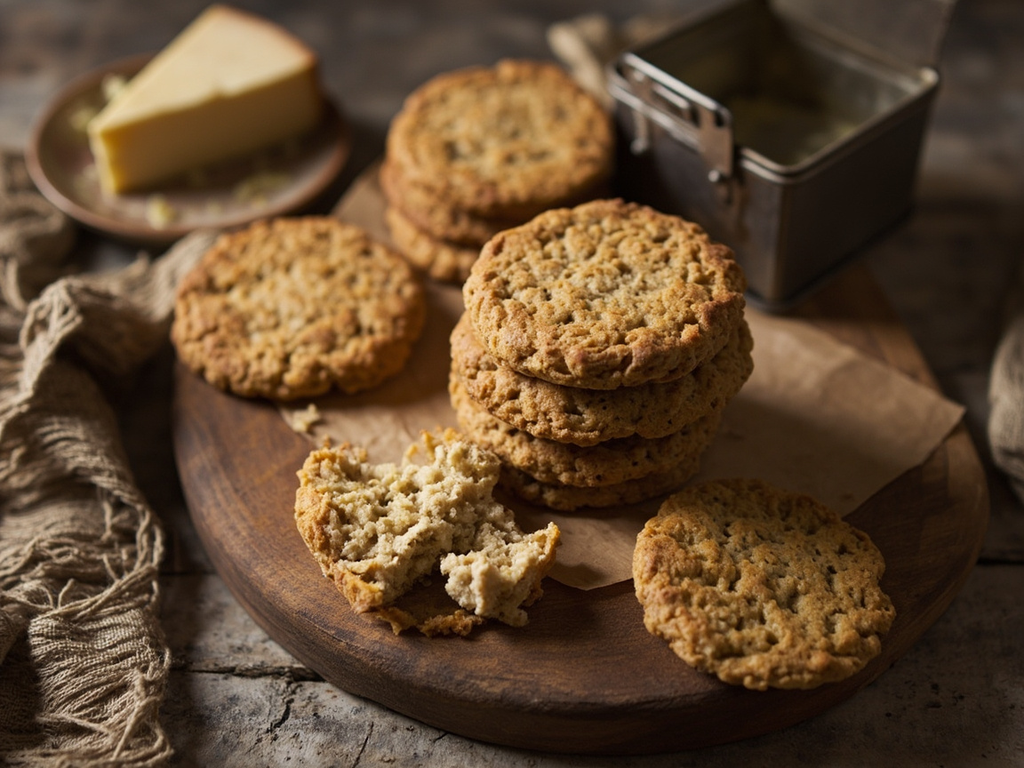
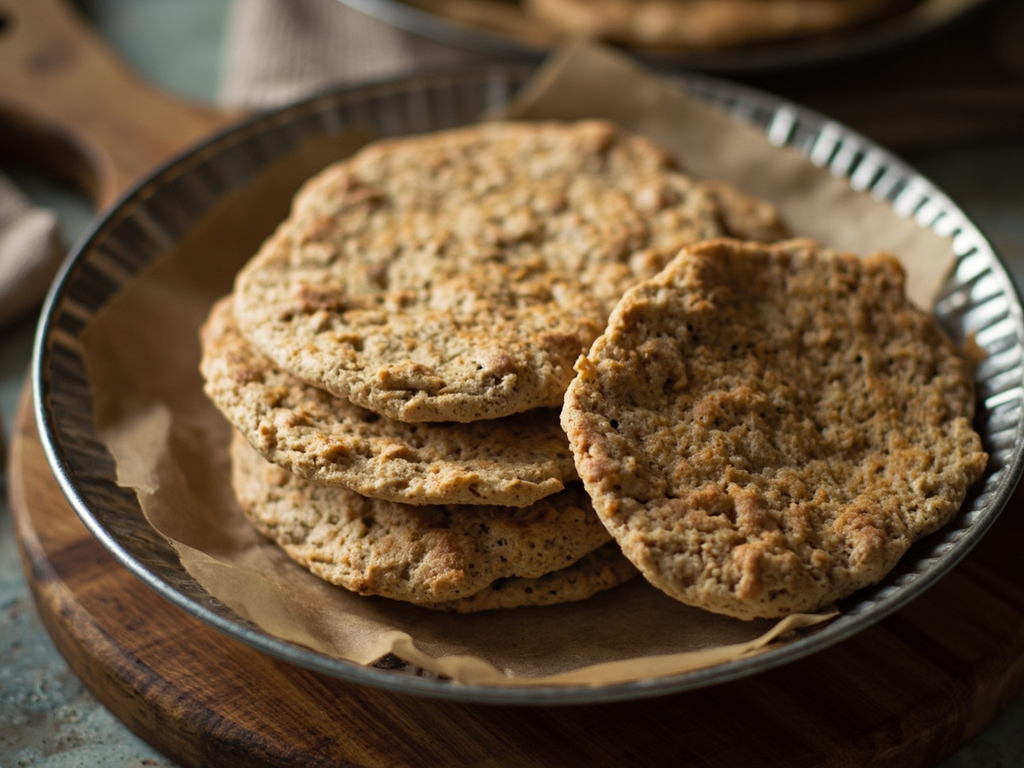
A soft, tangy flatbread made from a fermented oat batter and cooked on a hot griddle. Pliable on the day it is made, it dries and keeps for weeks, ready to be reheated or spread with butter.
Here is our true bread, we folk of the hills — not the wheat of the towns, but hardy oats. I would mix the oatmeal into a thin batter and leave it to sour overnight near the hearth, until it smelled of good leaven; then I poured it onto the heated griddle. Afterwards, they were hung on the rack and dried there, stiff as parchment, patiently waiting to be revived with a little warmth. Frugal, you say? We simply called it living.
- •Oatmeal (fine grind) — two full bowls (base)
- •Sourdough starter or brewer's yeast — a little (fermentation)
- •Warm water — enough for a thin batter (binding)
- •Salt — a pinch (seasoning)
Yorkshire Oatcake (Havercake), Keeping Oat Flatbread
A soft, tangy flatbread made from a fermented oat batter and cooked on a hot griddle. Pliable on the day it is made, it dries and keeps for weeks, ready to be reheated or spread with butter.
Why this dish? Wheat bread was expensive and scarce in the Pennines; modest Yorkshire families like that of Pastor Brontë lived on these fine oat flatbreads, which were dried on a rack suspended from the ceiling.
Here is our true bread, we folk of the hills — not the wheat of the towns, but hardy oats. I would mix the oatmeal into a thin batter and leave it to sour overnight near the hearth, until it smelled of good leaven; then I poured it onto the heated griddle. Afterwards, they were hung on the rack and dried there, stiff as parchment, patiently waiting to be revived with a little warmth. Frugal, you say? We simply called it living.
Ingredients (period version)
- Oatmeal (fine grind) — two full bowls (base)
- Sourdough starter or brewer's yeast — a little (fermentation)
- Warm water — enough for a thin batter (binding)
- Salt — a pinch (seasoning)
Ingredients
- Oat flour — 200 g (base)
- Wheat flour — 50 g (suppleness)
- Baker's yeast — 5 g (fermentation)
- Warm water — 350 ml (binding)
- Salt — 1 tsp (seasoning)
Method
- Mix the flours, salt, and yeast. Gradually add the warm water to obtain a fluid batter, like thick crêpe batter.
- Cover and let ferment for 1 to 2 hours at room temperature: the batter should foam and smell slightly of sourdough.
- Heat a griddle or cast-iron pan dry over medium-high heat.
- Pour a ladleful of batter and spread it thinly. Cook until the surface is pitted with bubbles and the underside is golden, then flip briefly.
- Eat warm, or let dry on a rack for storage; simply reheat the oatcake before buttering.
How it was made : These oatcakes ("haverbread") were hung on a wooden rack fixed to the kitchen ceiling, called the "bread creel", where they dried and kept for weeks. Reheated, they became edible again and accompanied cheese, butter, or broth.
The contemporary twist : Served folded like a wrap around a farmhouse Yorkshire cheddar and a dash of pickle — the oatcake as Pennine street food.
Charlotte Brontë · Charactorium