 flip
flipGulyásleves — The Herdsmen's Goulash Soup
Gulyásleves — The Herdsmen's Goulash Soup
Why this dish? Korda was born in 1893 in Pusztatúrpásztó, on the Great Hungarian Plain, the son of a steward. Gulyásleves, born from the cauldrons of the gulyás (herdsmen of the puszta), is the taste of that rural childhood that no London dinner ever erased.
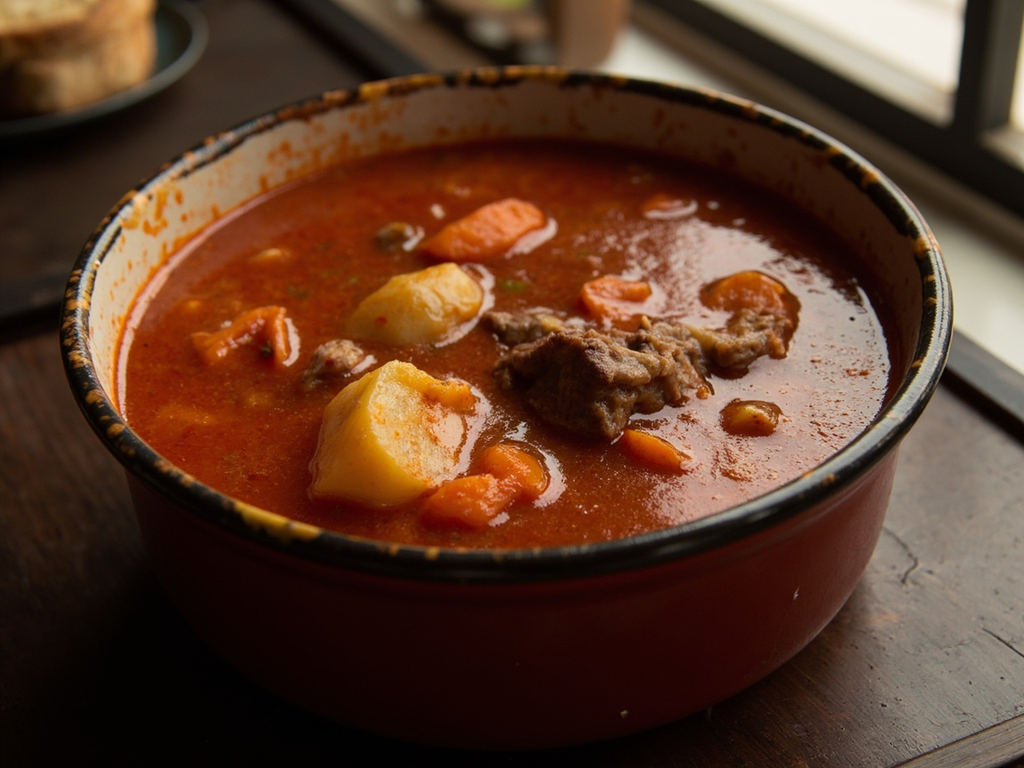
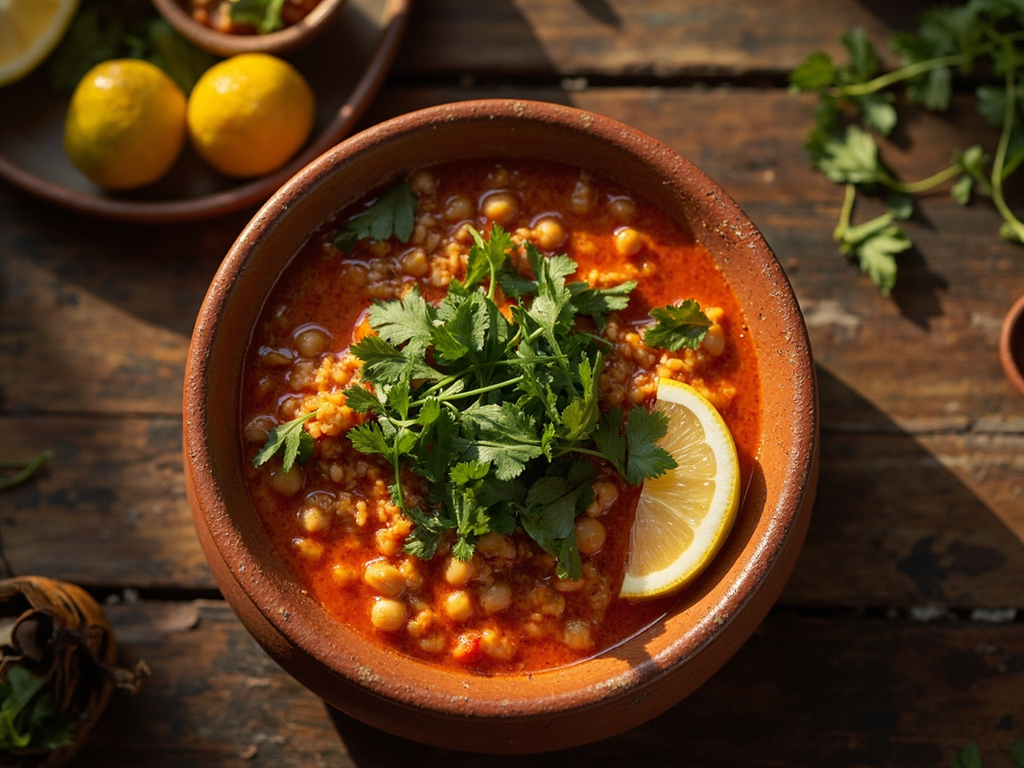
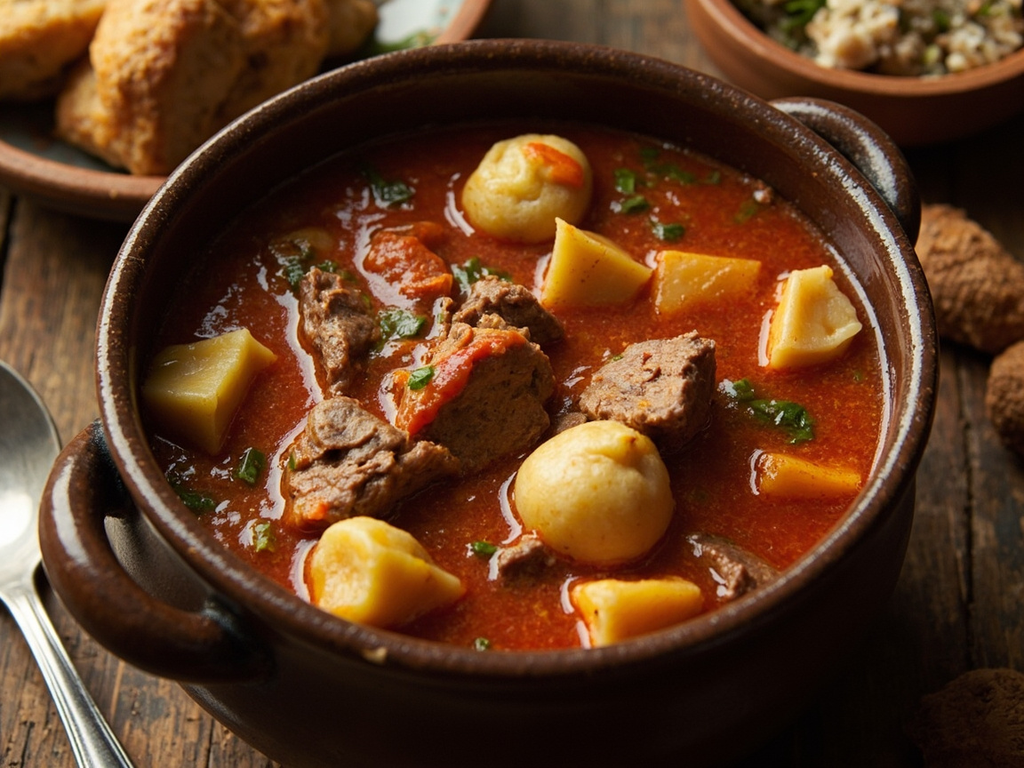
A robust soup of beef simmered with paprika, scented with caraway and garlic, with potato cubes and tiny pinched pasta (csipetke) floating in it. More liquid than a stew: in Hungary, 'goulash' is first and foremost a soup.
You see, they take me for a man of grand restaurants, and it's true, I sign my contracts there. But the soup I prefer is that of the herdsmen back home, on the plain. My dear, the secret lies in one gesture: you take the cauldron off the fire before throwing in the paprika, otherwise it burns and turns bitter—and burnt paprika is like an actor who overacts, it spoils the whole scene. You let it simmer slowly, without rushing, for patience is the first virtue, at the stove as in the studio.
- •Beef chuck — a good piece (stew meat)
- •Onions — as much as the meat (melting base)
- •Lard — a large spoonful (cooking fat)
- •Sweet Szeged paprika — generously (color and aroma)
- •Caraway seeds — a pinch (signature flavor)
- •Garlic — a few cloves (aromatic)
- •Potatoes — a few (garnish)
- •Csipetke (pinched egg-flour pasta) — a handful (small pasta)
Gulyásleves — The Herdsmen's Goulash Soup
A robust soup of beef simmered with paprika, scented with caraway and garlic, with potato cubes and tiny pinched pasta (csipetke) floating in it. More liquid than a stew: in Hungary, 'goulash' is first and foremost a soup.
Why this dish? Korda was born in 1893 in Pusztatúrpásztó, on the Great Hungarian Plain, the son of a steward. Gulyásleves, born from the cauldrons of the gulyás (herdsmen of the puszta), is the taste of that rural childhood that no London dinner ever erased.
You see, they take me for a man of grand restaurants, and it's true, I sign my contracts there. But the soup I prefer is that of the herdsmen back home, on the plain. My dear, the secret lies in one gesture: you take the cauldron off the fire before throwing in the paprika, otherwise it burns and turns bitter—and burnt paprika is like an actor who overacts, it spoils the whole scene. You let it simmer slowly, without rushing, for patience is the first virtue, at the stove as in the studio.
Ingredients (period version)
- Beef chuck — a good piece (stew meat)
- Onions — as much as the meat (melting base)
- Lard — a large spoonful (cooking fat)
- Sweet Szeged paprika — generously (color and aroma)
- Caraway seeds — a pinch (signature flavor)
- Garlic — a few cloves (aromatic)
- Potatoes — a few (garnish)
- Csipetke (pinched egg-flour pasta) — a handful (small pasta)
Ingredients
- Beef chuck or shoulder — 600 g cubed (stew meat)
- Onions — 500 g sliced (melting base)
- Lard (or oil) — 2 tbsp (fat)
- Sweet paprika — 2 heaped tbsp (color and flavor)
- Caraway seeds — 1 tsp (flavor)
- Garlic — 3 cloves (aromatic)
- Potatoes — 3 medium, cubed (garnish)
- Flour + 1 egg — 100 g + 1 (homemade csipetke)
- Water or broth — 2 liters (liquid)
Method
- Fry the onions in lard over low heat until golden, without browning too much.
- Remove the pot from the heat, add the paprika and stir immediately for 10 seconds to infuse without burning.
- Return to the heat, add the cubed beef, crushed garlic, caraway, and salt; cover with water and simmer covered for 1.5 to 2 hours.
- Add the potatoes and enough water to reach a soupy consistency; continue for 20 minutes.
- Prepare the csipetke by pinching off small bits of egg-flour dough; drop them into the simmering soup 5 minutes before the end.
- Adjust seasoning and serve piping hot in deep bowls.
How it was made : On the puszta, herdsmen cooked dried meat and onion in a cauldron (bogrács) hung over a wood fire, thinning it with river water. The dish moved from the fields to bourgeois tables in the 19th century, becoming a national symbol as modern Hungarian identity was born.
The contemporary twist : Served in small bowls as an amuse-bouche for a 'silent film' dinner, with a drizzle of sour cream drawn like film stock.
Sources : Károly Gundel, Hungarian Cookery Book · George Lang, The Cuisine of Hungary (1971)
Alexander Korda · Charactorium