 flip
flipNasi Goreng
Nasi Goreng
Why this dish? Agnez Mo cites it as the dish she joyfully returns to every time she's back in Jakarta. Born from resourcefulness — recycling leftover rice to avoid waste — nasi goreng is the morning reflex of every Indonesian family, from the street-side kaki lima to a star's kitchen.
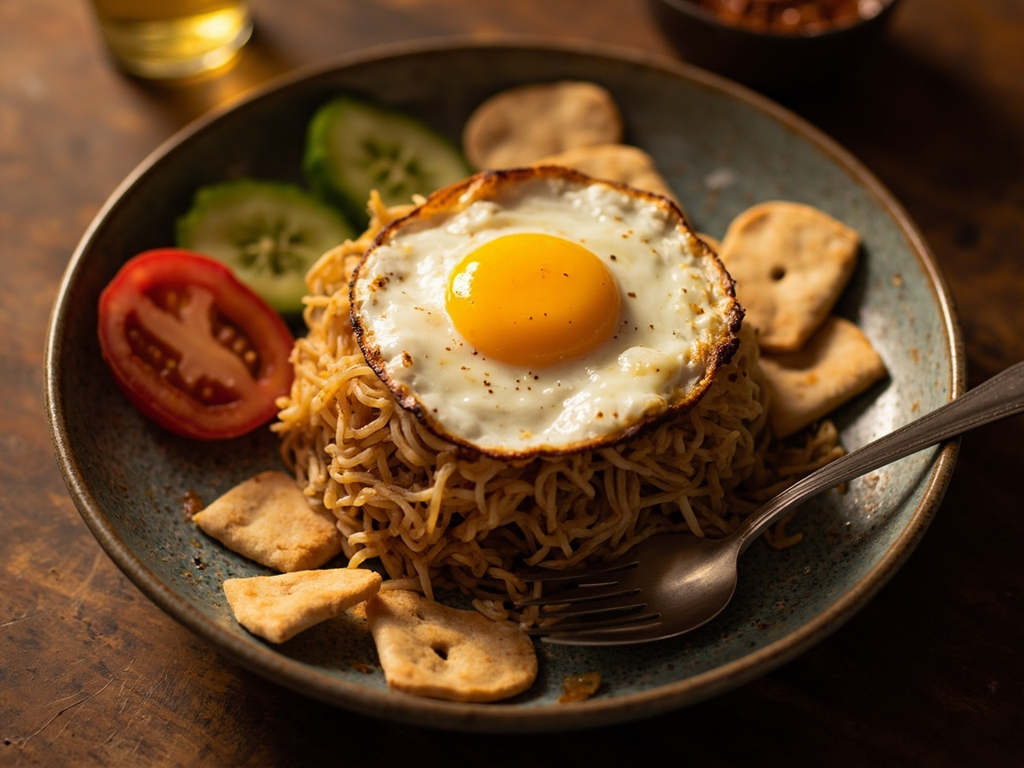
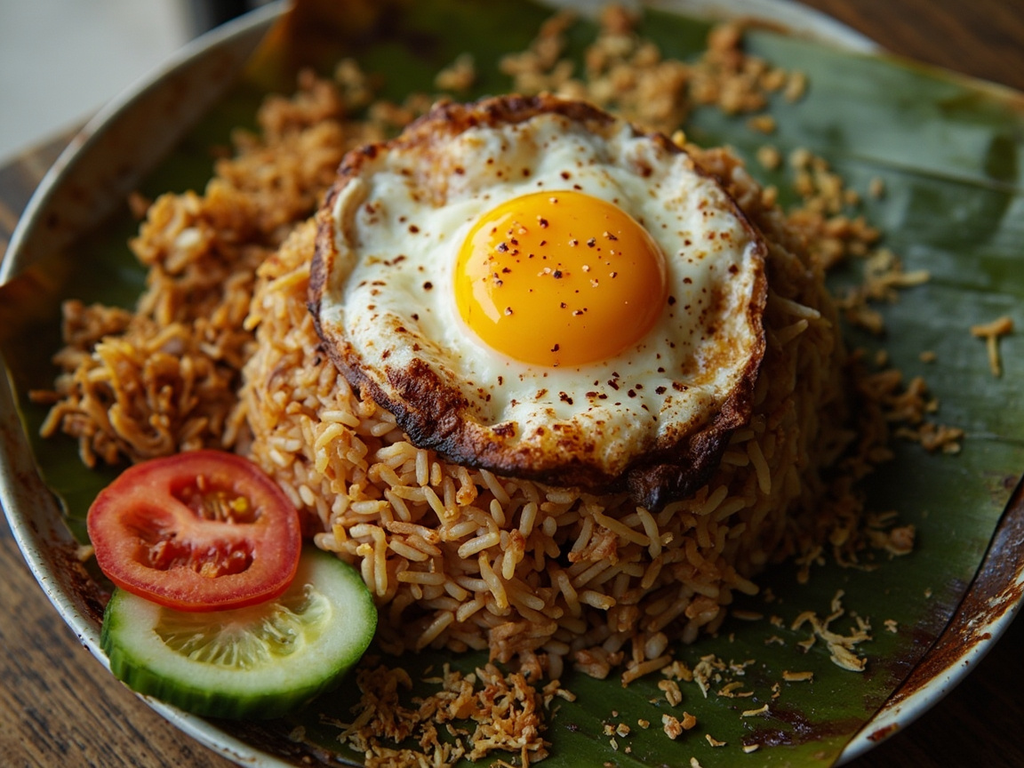
Day-old rice stir-fried over high heat with a paste of aromatics, bound with kecap manis (sweet thick soy sauce) which colors it a caramel brown, and crowned with a fried egg with crispy edges. Salty, smoky, comforting.
Honestly, wherever I am in the world — LA, New York, on tour — this is THE thing that brings me home. The secret is day-old rice, never fresh, otherwise it gets sticky, trust me. My family used to make it for breakfast, we'd throw everything into the wok, an egg crispy on the edges, a good dose of sambal, and there you go. You eat it standing in the kitchen, and suddenly you're back in Jakarta. That's Indonesian comfort food.
- •Day-old white rice — two bowls (base, cooled to avoid sticking)
- •Shallots and garlic — a handful (pounded bumbu)
- •Terasi (shrimp paste) — a pea-sized piece (fermented umami)
- •Red chilies — according to courage (heat)
- •Kecap manis (sweet soy sauce) — a few dashes (color and sweet roundness)
- •Eggs — one per person (topping)
- •Oil — a drizzle (wok cooking)
Nasi Goreng
Day-old rice stir-fried over high heat with a paste of aromatics, bound with kecap manis (sweet thick soy sauce) which colors it a caramel brown, and crowned with a fried egg with crispy edges. Salty, smoky, comforting.
Why this dish? Agnez Mo cites it as the dish she joyfully returns to every time she's back in Jakarta. Born from resourcefulness — recycling leftover rice to avoid waste — nasi goreng is the morning reflex of every Indonesian family, from the street-side kaki lima to a star's kitchen.
Honestly, wherever I am in the world — LA, New York, on tour — this is THE thing that brings me home. The secret is day-old rice, never fresh, otherwise it gets sticky, trust me. My family used to make it for breakfast, we'd throw everything into the wok, an egg crispy on the edges, a good dose of sambal, and there you go. You eat it standing in the kitchen, and suddenly you're back in Jakarta. That's Indonesian comfort food.
Ingredients (period version)
- Day-old white rice — two bowls (base, cooled to avoid sticking)
- Shallots and garlic — a handful (pounded bumbu)
- Terasi (shrimp paste) — a pea-sized piece (fermented umami)
- Red chilies — according to courage (heat)
- Kecap manis (sweet soy sauce) — a few dashes (color and sweet roundness)
- Eggs — one per person (topping)
- Oil — a drizzle (wok cooking)
Ingredients
- Long-grain rice, cooked the day before and refrigerated — 300 g (≈ 2 bowls) (base)
- Shallots — 3 (bumbu)
- Garlic cloves — 3 (bumbu)
- Terasi — 1/2 tsp (umami)
- Fresh red chilies — 1 to 2 (spice)
- Kecap manis — 2 tbsp (sweet-salty seasoning)
- Light soy sauce — 1 tsp (salt)
- Eggs — 2 (topping)
- Neutral oil — 2 tbsp (cooking)
- Cucumber and tomato — a few slices (freshness on the side)
Method
- Pound shallots, garlic, chili and terasi into a coarse paste (or blend).
- Heat oil in a wok over high heat, fry the paste for 2 minutes until fragrant.
- Add cold rice, break up the grains, stir-fry while stirring constantly.
- Pour in kecap manis and light soy sauce, mix until evenly colored.
- Keep warm, fry eggs separately until crispy-edged.
- Mound the rice on a plate, top with egg, serve with cucumber and tomato.
How it was made : Fried rice is a legacy of Chinese migrations to the archipelago, Indonesianized by kecap manis (itself a fusion of Chinese soy sauce and Javanese palm sugar) and local terasi. Without refrigerators, recycling day-old rice was an anti-waste necessity before becoming a texture secret.
The contemporary twist : The 'star' version: grilled chicken strips, crispy fried shallots (bawang goreng) and a saté skewer planted in the rice mound, as served in Jakarta's chic warung.
Agnez Mo · Charactorium