 flip
flipGrechnevaya Kasha (Roasted Buckwheat Porridge)
Grechnevaya Kasha (Roasted Buckwheat Porridge)
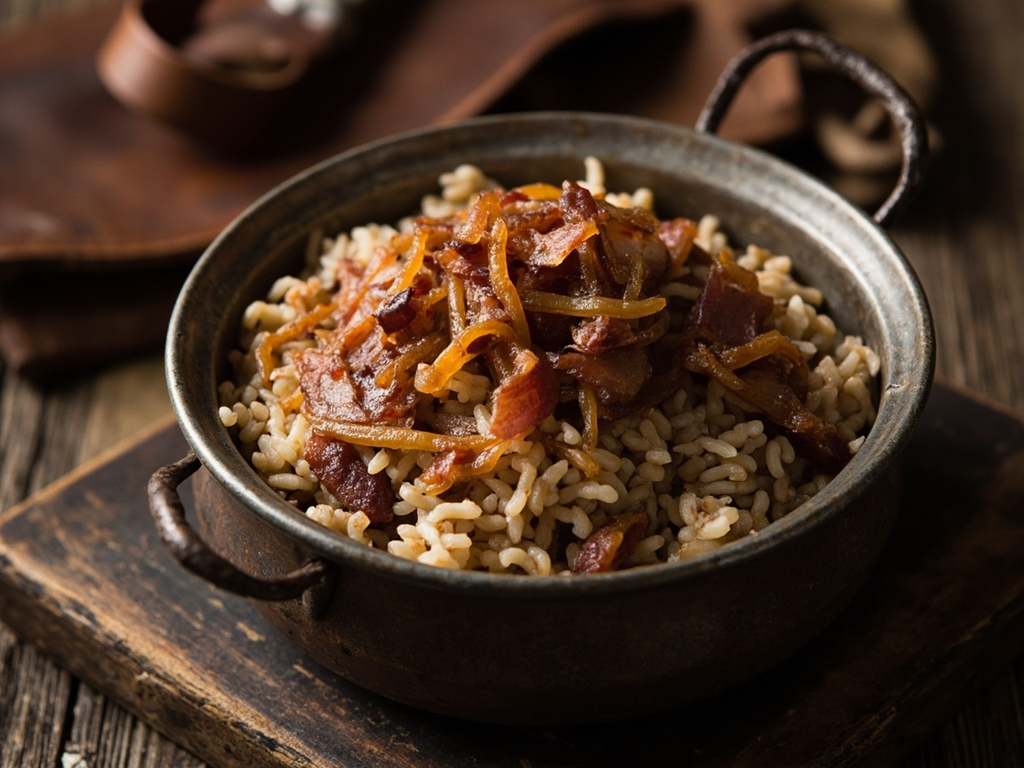
Why this dish? Buckwheat porridge is explicitly mentioned in Kollontai's attested diet. Compact, dry, easy to store and reheat, it was the ideal viaticum for a diplomat and revolutionary always on the move, from Stockholm to Oslo to Mexico.
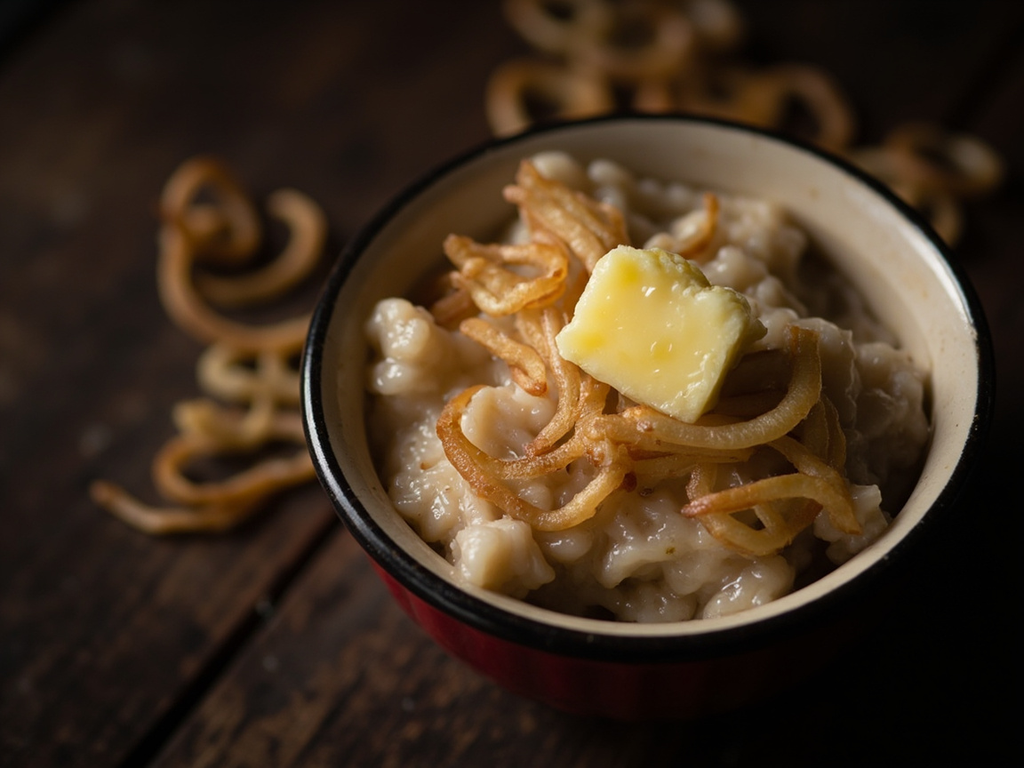
A porridge of roasted buckwheat grains, cooked covered until they swell while remaining separate. The toasty, almost nutty flavor makes it the comfort food of all Russia, from peasant to people's commissar.
Buckwheat, you see, is the grain that never betrays. In my diplomat's suitcases, among the coded telegrams, I could always slip a pouch of grechka — it travels, it keeps, it satisfies. First you roast it to awaken its soul, then you let it swell gently under the lid, without tormenting it. A knob of butter, and it's the meal of a free woman who answers to no court kitchen.
- •Buckwheat groats (grechka) — a large bowl (base)
- •Egg — one (coating the grains (old option))
- •Water or broth — twice the grain (cooking)
- •Butter — a good knob (richness)
- •Salt — to taste (seasoning)
Grechnevaya Kasha (Roasted Buckwheat Porridge)
A porridge of roasted buckwheat grains, cooked covered until they swell while remaining separate. The toasty, almost nutty flavor makes it the comfort food of all Russia, from peasant to people's commissar.
Why this dish? Buckwheat porridge is explicitly mentioned in Kollontai's attested diet. Compact, dry, easy to store and reheat, it was the ideal viaticum for a diplomat and revolutionary always on the move, from Stockholm to Oslo to Mexico.
Buckwheat, you see, is the grain that never betrays. In my diplomat's suitcases, among the coded telegrams, I could always slip a pouch of grechka — it travels, it keeps, it satisfies. First you roast it to awaken its soul, then you let it swell gently under the lid, without tormenting it. A knob of butter, and it's the meal of a free woman who answers to no court kitchen.
Ingredients (period version)
- Buckwheat groats (grechka) — a large bowl (base)
- Egg — one (coating the grains (old option))
- Water or broth — twice the grain (cooking)
- Butter — a good knob (richness)
- Salt — to taste (seasoning)
Ingredients
- Roasted buckwheat (kasha) — 200 g (base)
- Water or vegetable broth — 400 ml (cooking)
- Butter — 30 g (richness)
- Onion — 1, sliced and golden (optional) (aromatic)
- Salt — 1 tsp (seasoning)
Method
- If the buckwheat is not already roasted, dry-toast it in a saucepan until it smells nutty.
- Pour boiling salted water or broth over the grain (always twice the volume).
- Cover, reduce heat to minimum, and cook for 15-18 minutes without stirring, until absorbed.
- Turn off the heat, add the butter, let rest covered for 10 minutes so the grains swell.
- Fluff with a fork; add golden onion if desired.
- Serve hot as a side or alone, with leftover shchi.
How it was made : In peasant cooking, grains were sometimes coated with beaten egg before cooking to keep them well separated, then the kasha was finished in the Russian oven for hours. Buckwheat, grown on poor soils, was the democratic cereal par excellence.
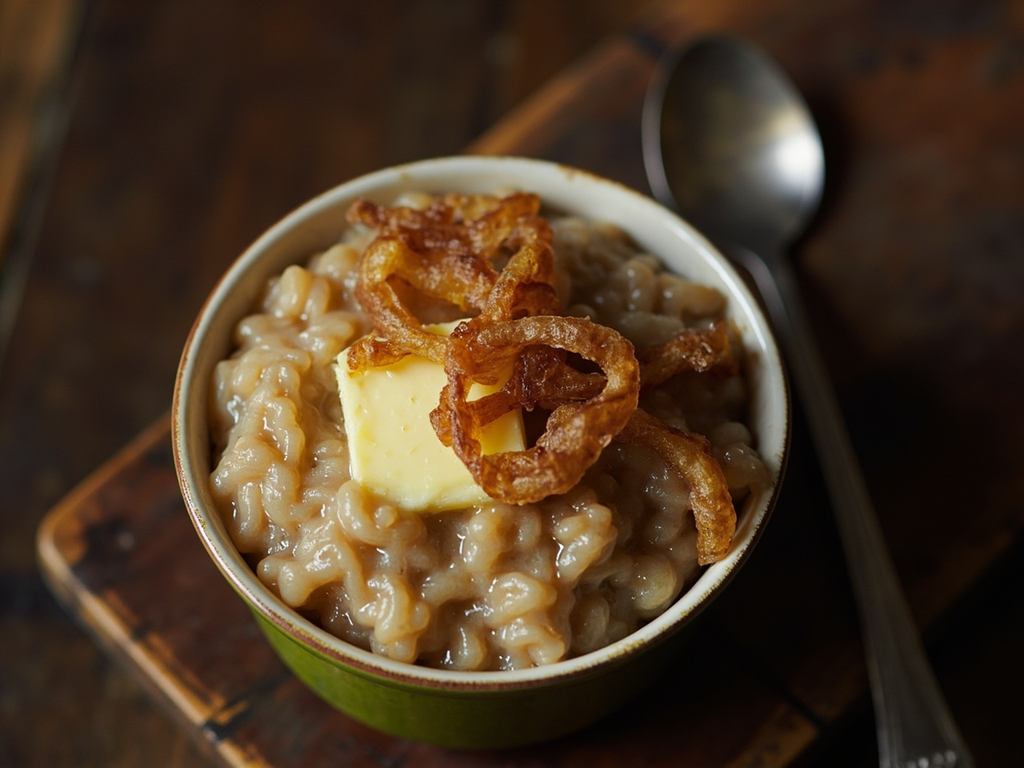
The contemporary twist : Press the warm kasha into a ring mold for a neat dome, crowned with crispy onions and a soft-boiled egg — the « traveler's grechka » in travelogue style.
Sources : William Pokhlebkin, The Art of Russian Cuisine · Alexandra Kollontai, Autobiography of a Sexually Emancipated Woman
Alexandra Kollontai · Charactorium