 flip
flipBuckwheat kasha with butter (everyday and travel dish)
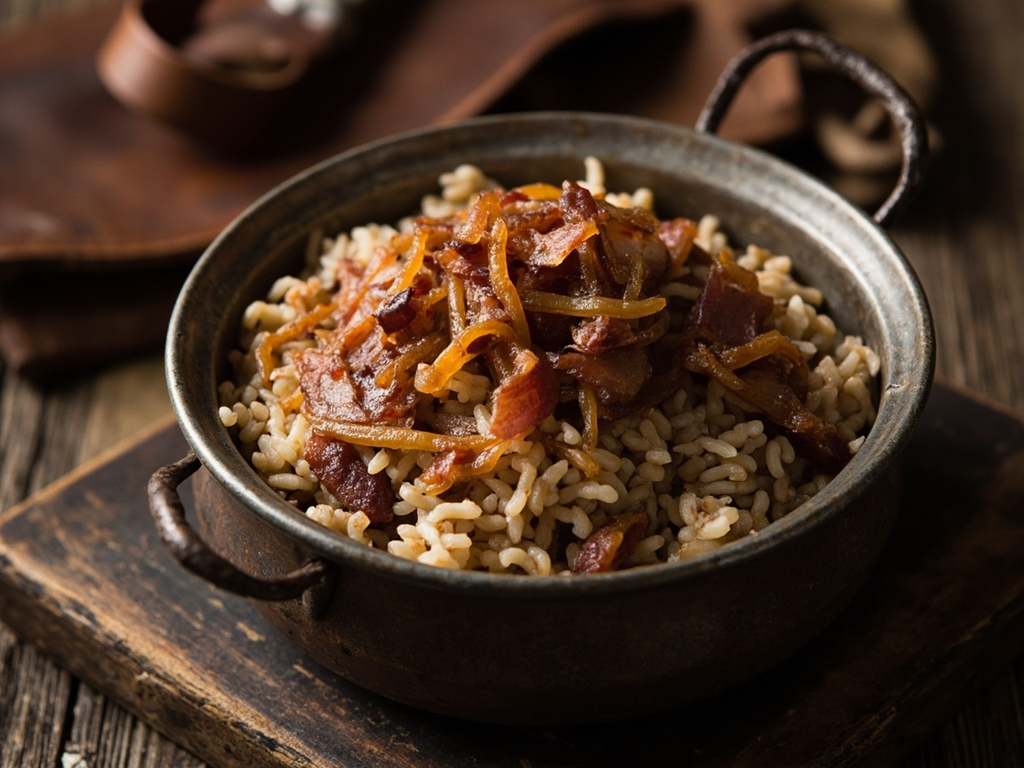
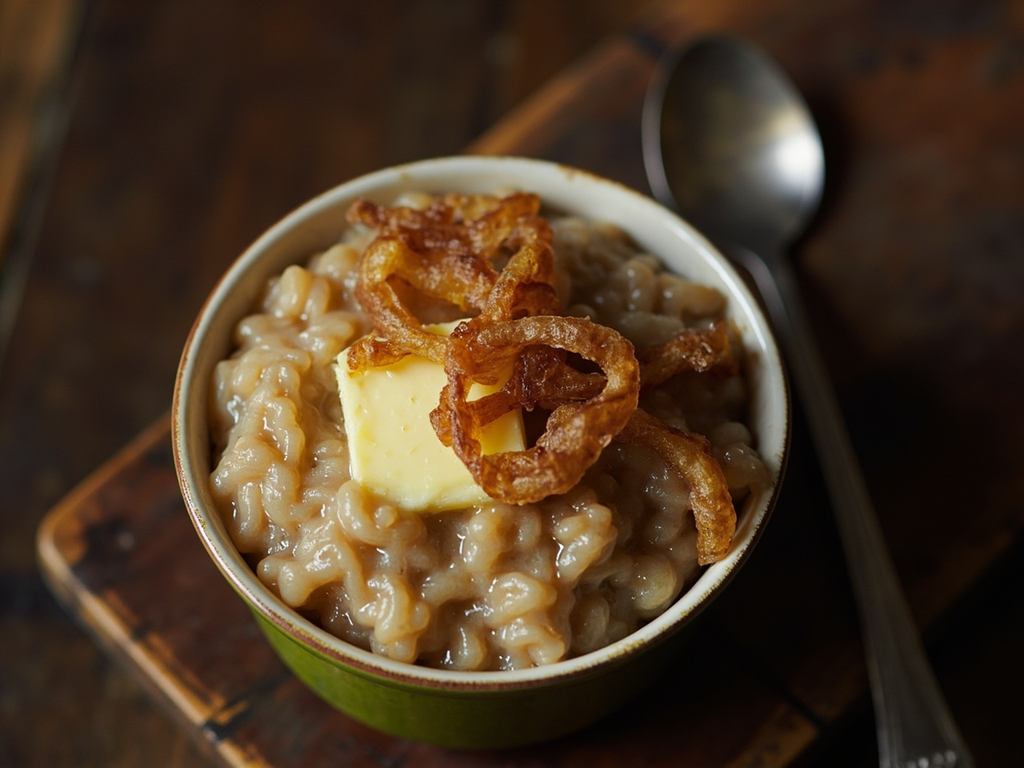
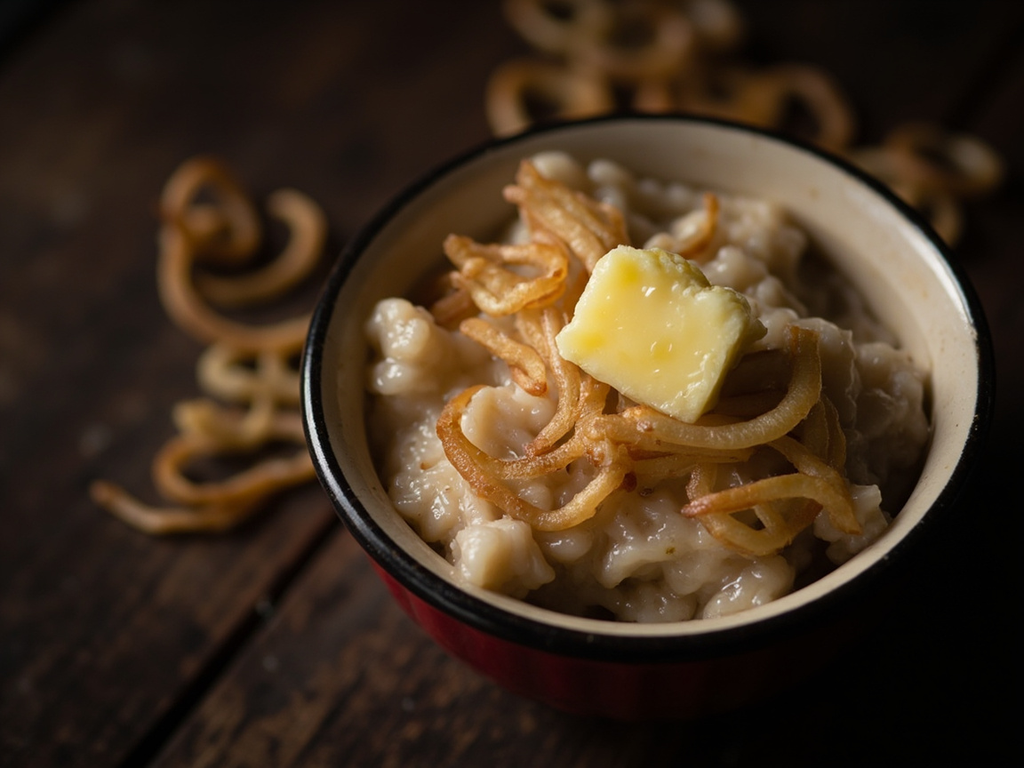
Buckwheat kasha with butter (everyday and travel dish)
Why this dish? “Shchi and kasha are our food,” says the Russian proverb. Borodin, who traveled young to Heidelberg and Pisa for his chemical research, knew this nourishing buckwheat porridge, easy to carry and reheat, a staple of daily Russian life across all social classes.
A porridge of toasted buckwheat groats, plumped in water and bound with butter, nourishing and nutty. The cereal comfort of Russia, from cradle to journey.
When I was a young scientist on the roads of Germany and Italy, running from lab to lab, it was my country's kasha I missed most. Nothing simpler, and yet: toast the buckwheat in a pan until it smells like hazelnuts, then let it swell slowly, and a big knob of butter melted on top. You eat it hot in the morning, cold on the road, warm in the evening — it holds your body better than a long speech. A Russian without his kasha, believe me, is an orchestra without the basses.
- •Buckwheat groats (grechka) — a bowlful (base cereal)
- •Water or broth — double the amount (cooking liquid)
- •Butter — generously (richness and binder)
- •Salt — to taste (seasoning)
Buckwheat kasha with butter (everyday and travel dish)
A porridge of toasted buckwheat groats, plumped in water and bound with butter, nourishing and nutty. The cereal comfort of Russia, from cradle to journey.
Why this dish? “Shchi and kasha are our food,” says the Russian proverb. Borodin, who traveled young to Heidelberg and Pisa for his chemical research, knew this nourishing buckwheat porridge, easy to carry and reheat, a staple of daily Russian life across all social classes.
When I was a young scientist on the roads of Germany and Italy, running from lab to lab, it was my country's kasha I missed most. Nothing simpler, and yet: toast the buckwheat in a pan until it smells like hazelnuts, then let it swell slowly, and a big knob of butter melted on top. You eat it hot in the morning, cold on the road, warm in the evening — it holds your body better than a long speech. A Russian without his kasha, believe me, is an orchestra without the basses.
Ingredients (period version)
- Buckwheat groats (grechka) — a bowlful (base cereal)
- Water or broth — double the amount (cooking liquid)
- Butter — generously (richness and binder)
- Salt — to taste (seasoning)
Ingredients
- Toasted buckwheat (kasha) — 200 g (base cereal)
- Water or vegetable broth — 400 ml (cooking liquid)
- Butter — 40 g (richness and binder)
- Salt — 1 teaspoon (seasoning)
- Onion (optional) — 1 (garnish)
Method
- Toast the buckwheat dry in a pan for 3 to 4 minutes until fragrant (skip if already toasted).
- Pour the buckwheat into a saucepan, cover with boiling salted water or broth.
- Cover and cook over very low heat for 15 to 18 minutes without stirring, until liquid is fully absorbed.
- Remove from heat, let steam for 5 minutes covered.
- Add butter, fluff with a fork. Garnish with golden onions for a heartier dish.
- Serve hot; keeps and reheats perfectly for travel.
How it was made : Traditionally, kasha was cooked in the Russian oven, in a cast-iron pot, resulting in a texture halfway between steamed and confit. Kasha could be made from buckwheat, millet, barley or oats depending on region and season; buckwheat remained the most beloved.
The contemporary twist : Press the warm kasha into a cookie cutter and pan-fry into a crispy golden patty — the “travel kasha” reinvented as street food.
Sources : Pohlebin V., History of Russian Cuisine · Russian proverbs and food customs of the 19th century
Alexander Borodin · Charactorium