 flip
flipGrechnevaya Kasha — Buckwheat Porridge with Butter
Grechnevaya Kasha — Buckwheat Porridge with Butter
Why this dish? In exile at Mikhailovskoye, far from the salons of St. Petersburg, Pushkin made do with simple fare: lard, baked apples, and buckwheat kasha. This humble porridge was his companion during his years of rural seclusion, where he wrote much of *Eugene Onegin*.
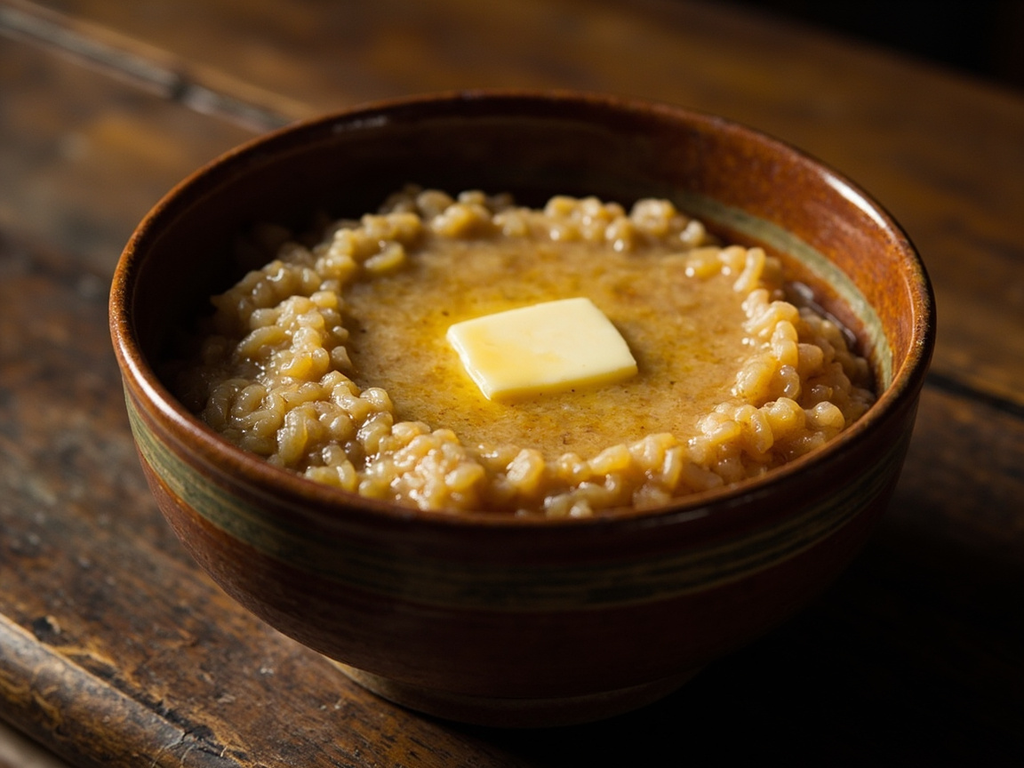
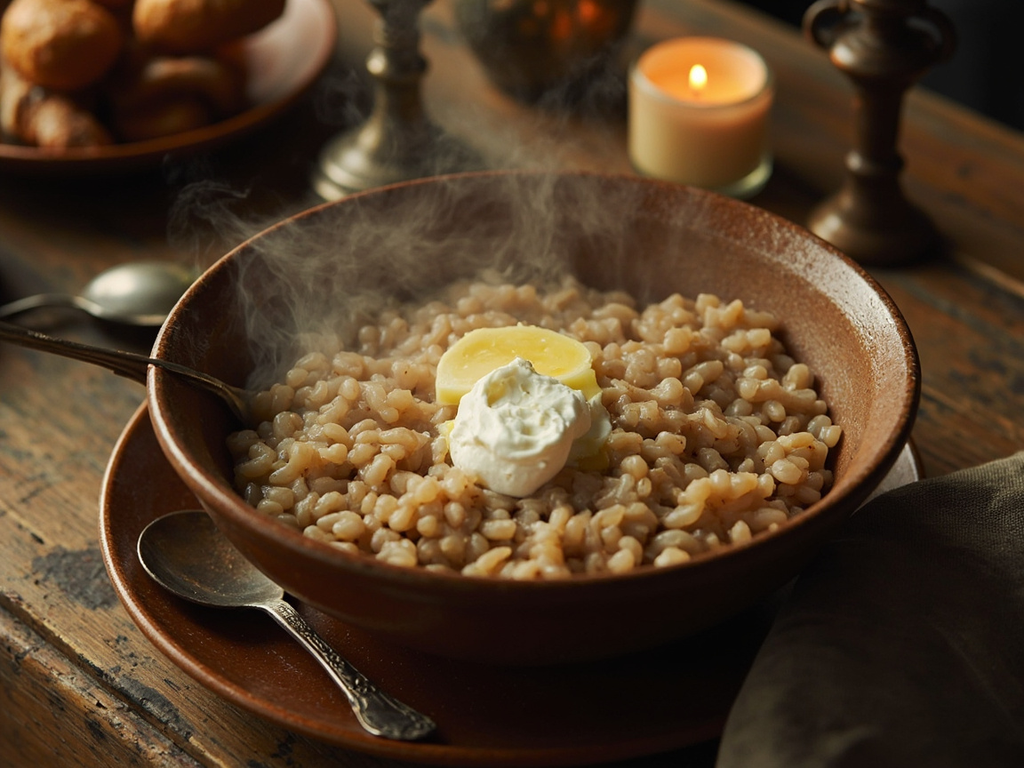
Toasted buckwheat groats simmered in water, finished with a knob of butter: a humble, comforting dish that fed both peasants and the table of an exiled poet. Served plain in the morning or with mushrooms and onion in the evening.
Believe me, friend: when exile drove me far from the noise of balls, it was this buckwheat porridge that kept me company. My old nanny would toast it until it smelled of hazelnuts, then drown it in a golden butter that still sings in my memory. A steaming bowl, a candle, my pen — and the whole world could forget me. There is no Parisian feast that equals this simplicity on a Russian winter morning.
- •Buckwheat groats (grechka) — a large bowl (base)
- •Butter — a good knob (fat)
- •Spring water — twice the grain (cooking liquid)
- •Salt — a pinch (seasoning)
- •Egg (master's kitchen style) — 1 (coating for grains, optional)
Grechnevaya Kasha — Buckwheat Porridge with Butter
Toasted buckwheat groats simmered in water, finished with a knob of butter: a humble, comforting dish that fed both peasants and the table of an exiled poet. Served plain in the morning or with mushrooms and onion in the evening.
Why this dish? In exile at Mikhailovskoye, far from the salons of St. Petersburg, Pushkin made do with simple fare: lard, baked apples, and buckwheat kasha. This humble porridge was his companion during his years of rural seclusion, where he wrote much of *Eugene Onegin*.
Believe me, friend: when exile drove me far from the noise of balls, it was this buckwheat porridge that kept me company. My old nanny would toast it until it smelled of hazelnuts, then drown it in a golden butter that still sings in my memory. A steaming bowl, a candle, my pen — and the whole world could forget me. There is no Parisian feast that equals this simplicity on a Russian winter morning.
Ingredients (period version)
- Buckwheat groats (grechka) — a large bowl (base)
- Butter — a good knob (fat)
- Spring water — twice the grain (cooking liquid)
- Salt — a pinch (seasoning)
- Egg (master's kitchen style) — 1 (coating for grains, optional)
Ingredients
- Buckwheat groats (kasha) — 200 g (base)
- Water — 400 ml (cooking liquid)
- Butter — 40 g (fat)
- Salt — 1 tsp (seasoning)
- Button mushrooms and onion (evening version) — 150 g + 1 (savory garnish)
Method
- Toast the buckwheat in a dry skillet for 3-4 minutes until it smells nutty.
- Pour in boiling salted water, cover, and simmer over very low heat for 15 minutes without stirring, until all liquid is absorbed.
- Let rest covered for 5 minutes, then uncover and fluff with a fork, incorporating the butter.
- For the evening version: sauté onion and mushrooms in butter and mix into the kasha.
- Serve piping hot, optionally with a spoonful of smetana.
How it was made : Kasha was the quintessential Russian dish, from peasant to tsar — a proverb says you cannot be friends until you have eaten a *pood* of salt and a pot of kasha together. In grand houses, raw groats were sometimes coated with beaten egg before drying, so each grain stayed separate during cooking.
The contemporary twist : A drizzle of toasted hazelnut oil at serving doubles the nutty aroma of the grain — a nod to the scent that made it so charming.
Sources : Elena Molokhovets, *Подарок молодым хозяйкам* (*A Gift to Young Housewives*), 1861 · A. Pushkin, *Eugene Onegin* — evocations of country life
Alexander Pushkin · Charactorium