 flip
flipSour Cabbage Shchi
Sour Cabbage Shchi
Why this dish? Shchi is THE Russian national soup, present on every table, from peasant huts to the homes of the petty nobility. Chekhov, the son of a modest Taganrog grocer who became a landowner at Melikhovo, ate this dish all his life: 'Where there is shchi, look for us,' says the Russian proverb he knew by heart.
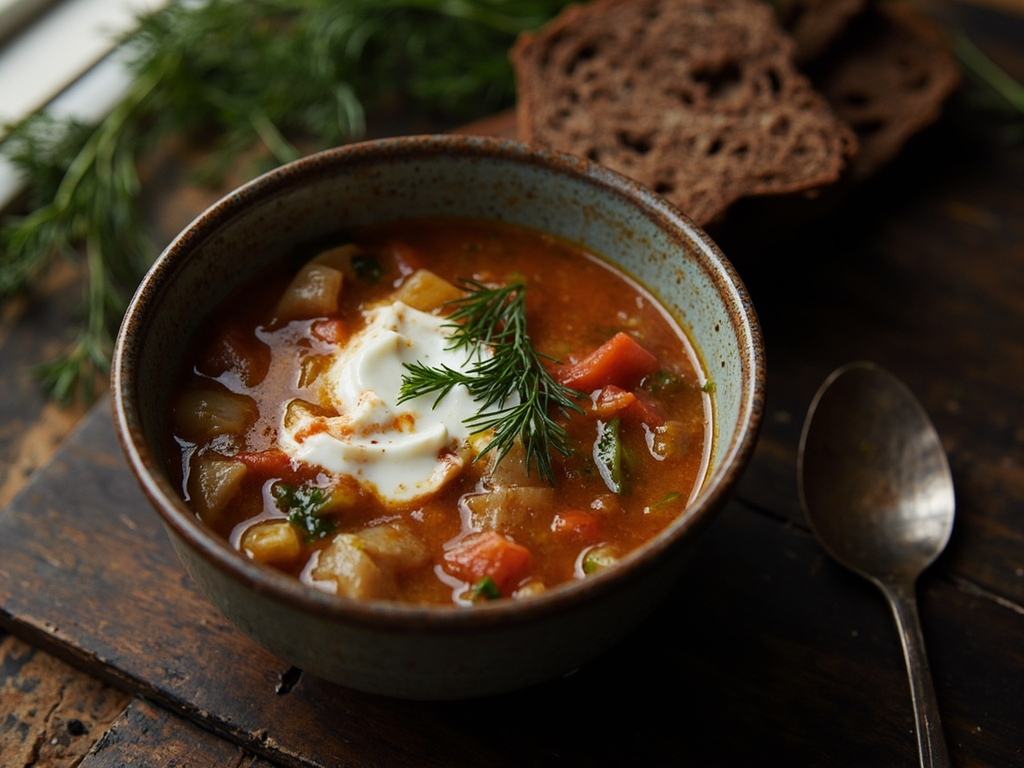
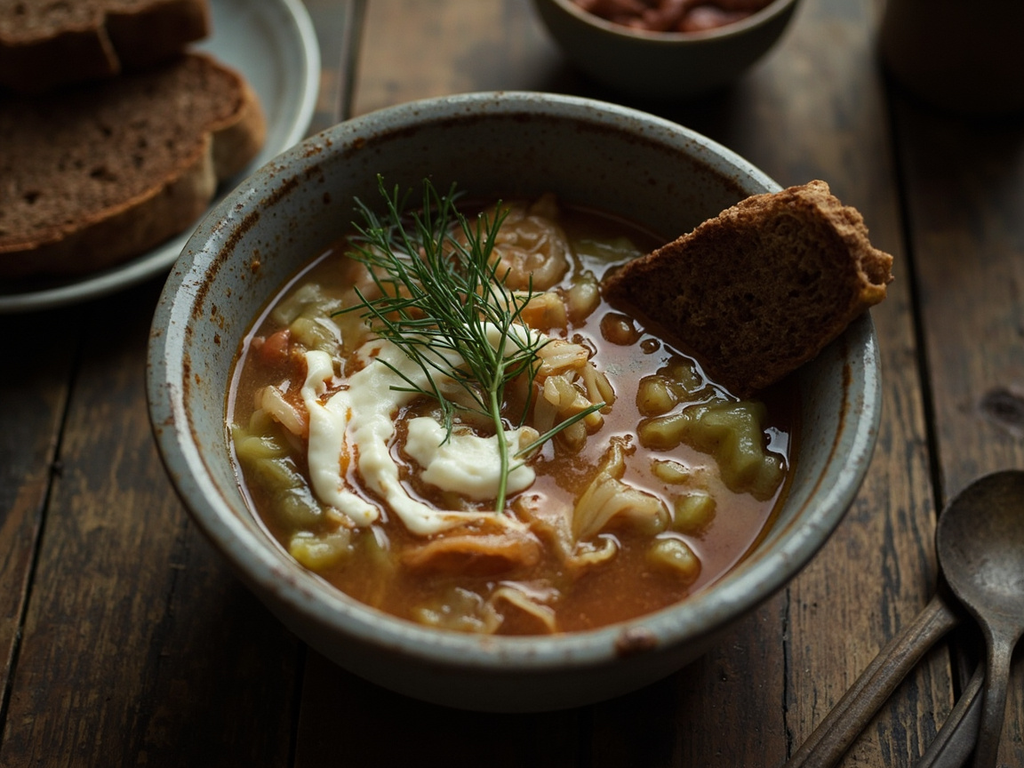
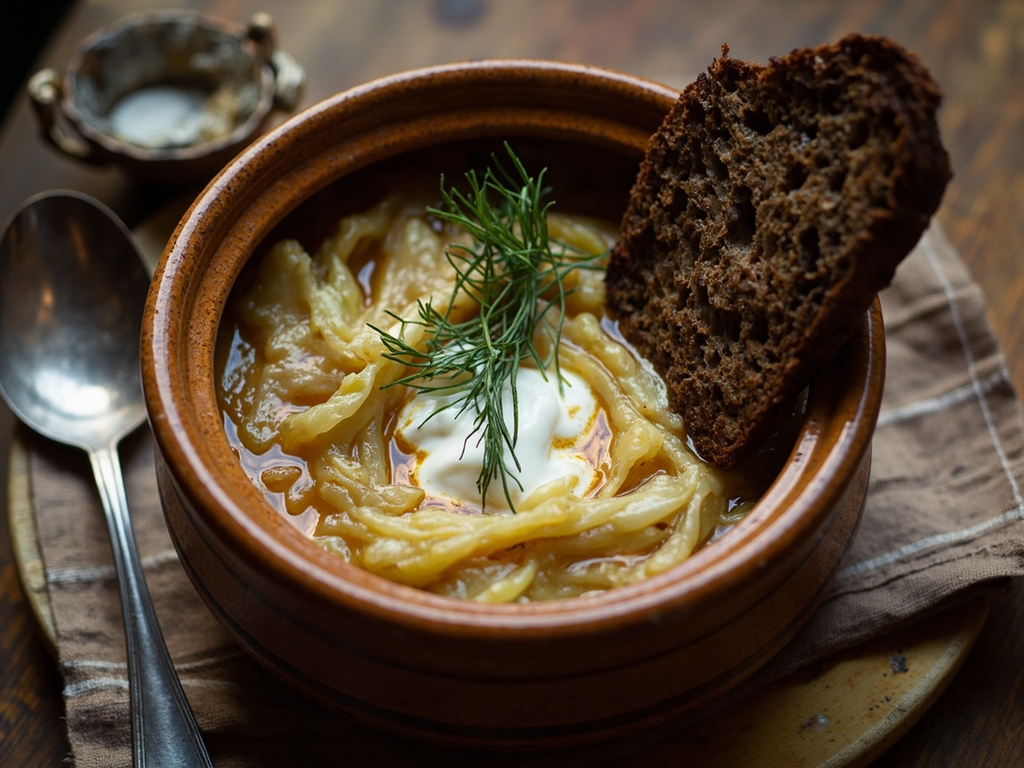
A deep and comforting soup of long-simmered fermented cabbage with a piece of beef and root vegetables. The acidity of the sour cabbage enlivens the broth; it is served piping hot, topped with a spoonful of sour cream and accompanied by a slice of black bread.
You see, for us shchi is not a dish, it's a habit of the Russian soul—it's served to the peasant as well as to the country doctor that I am. My mother would let it languish for hours on the stove, and the longer it waited, the better it became; the next day it was better than the day before—that's the whole philosophy. Add a good spoonful of smetana, a hunk of black bread, and believe me, the Melikhovo winter will seem shorter. It's simple, it's sour, it's honest—as a thing must be to truly nourish.
- •Fermented cabbage (Russian sauerkraut) — a full bowl (sour base)
- •Beef brisket or chuck — a nice piece (broth and meat)
- •Onion — one large (aromatic)
- •Carrot and parsley root — to taste (aromatic roots)
- •Bay leaf, peppercorns — a few (seasoning)
- •Sour cream (smetana) — for serving (binding)
- •Dark rye bread — as accompaniment (accompaniment)
Sour Cabbage Shchi
A deep and comforting soup of long-simmered fermented cabbage with a piece of beef and root vegetables. The acidity of the sour cabbage enlivens the broth; it is served piping hot, topped with a spoonful of sour cream and accompanied by a slice of black bread.
Why this dish? Shchi is THE Russian national soup, present on every table, from peasant huts to the homes of the petty nobility. Chekhov, the son of a modest Taganrog grocer who became a landowner at Melikhovo, ate this dish all his life: 'Where there is shchi, look for us,' says the Russian proverb he knew by heart.
You see, for us shchi is not a dish, it's a habit of the Russian soul—it's served to the peasant as well as to the country doctor that I am. My mother would let it languish for hours on the stove, and the longer it waited, the better it became; the next day it was better than the day before—that's the whole philosophy. Add a good spoonful of smetana, a hunk of black bread, and believe me, the Melikhovo winter will seem shorter. It's simple, it's sour, it's honest—as a thing must be to truly nourish.
Ingredients (period version)
- Fermented cabbage (Russian sauerkraut) — a full bowl (sour base)
- Beef brisket or chuck — a nice piece (broth and meat)
- Onion — one large (aromatic)
- Carrot and parsley root — to taste (aromatic roots)
- Bay leaf, peppercorns — a few (seasoning)
- Sour cream (smetana) — for serving (binding)
- Dark rye bread — as accompaniment (accompaniment)
Ingredients
- Raw sauerkraut (lacto-fermented cabbage) — 400 g, lightly rinsed (sour base)
- Beef chuck — 500 g (broth and meat)
- Onion — 1 large (aromatic)
- Carrot — 1 (root)
- Potato — 2 medium (mild thickener (19th-century usage))
- Bay leaf — 2 leaves (seasoning)
- Black peppercorns — 6 (seasoning)
- Thick crème fraîche — 4 tbsp (binding at serving)
- Fresh dill — a few sprigs (finishing)
Method
- Cover the chuck with cold water, bring gently to a simmer and skim. Add onion, carrot, bay leaf and pepper, then cook for 1 h 30 at a gentle boil.
- Remove the meat, cut it into pieces and strain the broth if desired.
- Add the sauerkraut (rinsed if too sour) to the broth and simmer covered for 40 min.
- Add the potatoes in wedges and continue for 20 min, until everything is tender.
- Return the meat, adjust salt. Let rest off the heat: shchi is better after a night.
- Serve very hot with a spoonful of crème fraîche, dill and black bread.
How it was made : Shchi was cooked in the Russian earthenware stove (pechka) at declining heat all day, which gave the cabbage a melting sweetness impossible to achieve over a high flame. Poor families made a 'fasting' shchi without meat during the many Orthodox fast days; they even kept frozen blocks of shchi in winter to reheat as needed.
The contemporary twist : Serve it in a raw earthenware bowl with the cream swirled in a spiral and a few crushed juniper berries—a nod to the northern forests.
Sources : Elena Molokhovets, A Gift to Young Housewives (Подарок молодым хозяйкам), 1861 · William Pokhlebkin, History of Russian Cuisine
Anton Chekhov · Charactorium