 flip
flipCamp rice with fish and sambal belacan
Camp rice with fish and sambal belacan
Why this dish? Wallace writes that in Malaysia he shared local food — rice, fish and vegetables — sometimes for weeks at a time in remote villages where he hunted his specimens. This nasi lauk was his naturalist's daily fare, the meal that kept him going between net expeditions.
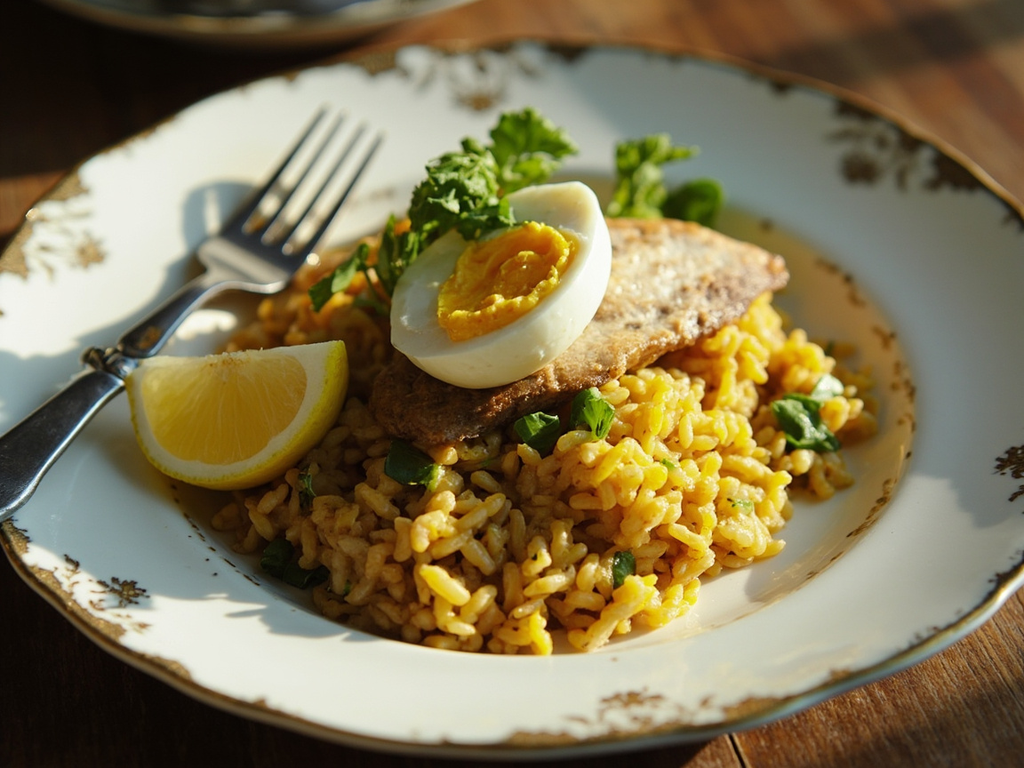
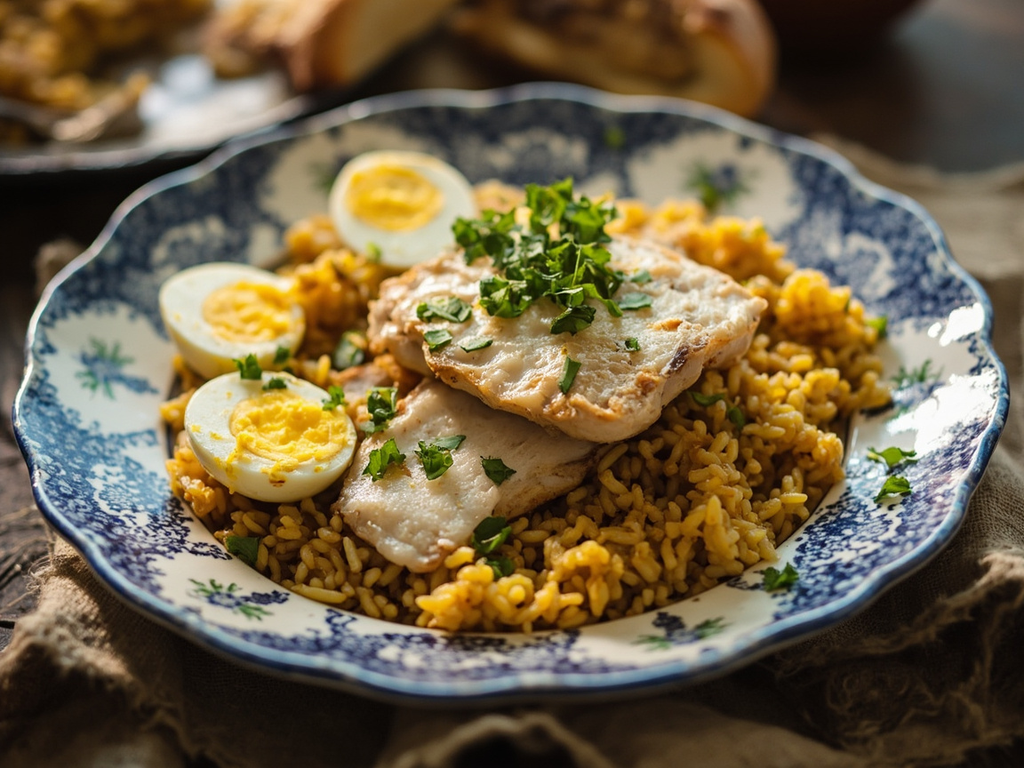
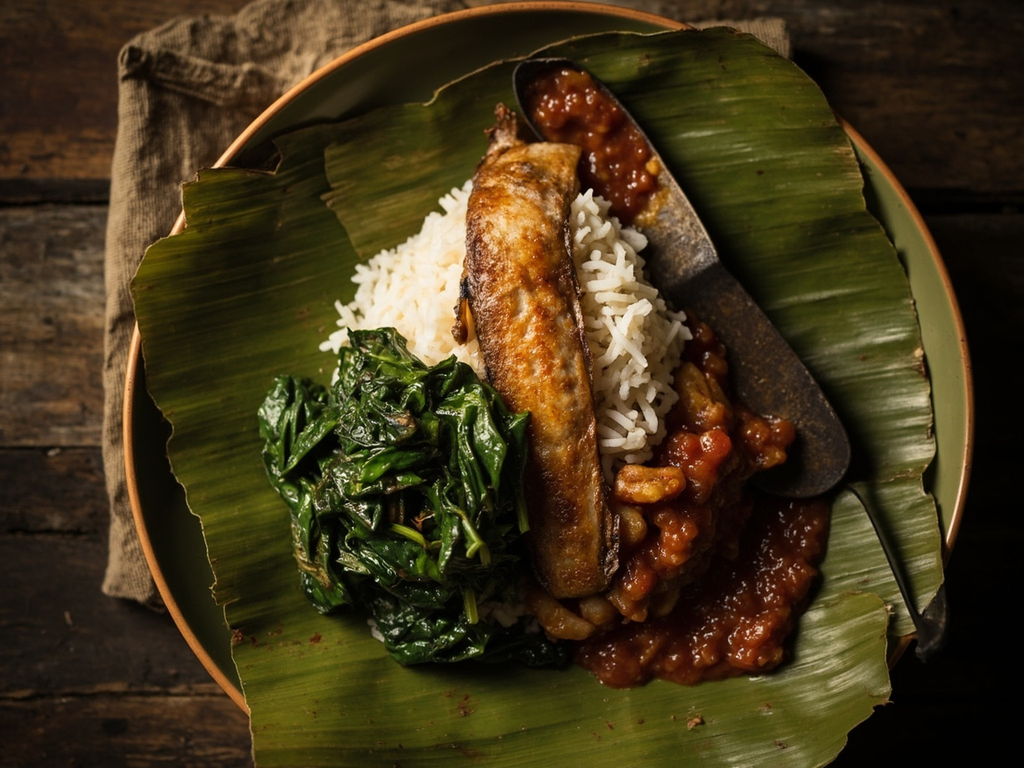
A dome of steaming white rice, a piece of pan-fried fish, some stir-fried green vegetables, and a spoonful of sambal belacan, that fermented shrimp and chili paste that wakes everything up. Salty, deep, spicy: the quintessential working meal.
I confess I quickly adapted to the Malay table and found it excellent for my health. They served me rice in a pyramid, and all around small dishes: a river fish, sautéed green leaves, and that brown paste they call belacan, whose smell frightens the Englishman and delights the discerning palate. I learned to eat with my fingers, in the local fashion, and I can assure you that after a day spent with net in hand under the sun, no London dish would have seemed more comforting.
- •White rice — a large measure (base)
- •River or sea fish — 1 per diner (protein)
- •Belacan (fermented shrimp paste) — a small block (umami)
- •Fresh chilies — a few (spiciness)
- •Lime — 1 (acidity)
- •Local green leaves (kangkung) — a bunch (vegetable)
Camp rice with fish and sambal belacan
A dome of steaming white rice, a piece of pan-fried fish, some stir-fried green vegetables, and a spoonful of sambal belacan, that fermented shrimp and chili paste that wakes everything up. Salty, deep, spicy: the quintessential working meal.
Why this dish? Wallace writes that in Malaysia he shared local food — rice, fish and vegetables — sometimes for weeks at a time in remote villages where he hunted his specimens. This nasi lauk was his naturalist's daily fare, the meal that kept him going between net expeditions.
I confess I quickly adapted to the Malay table and found it excellent for my health. They served me rice in a pyramid, and all around small dishes: a river fish, sautéed green leaves, and that brown paste they call belacan, whose smell frightens the Englishman and delights the discerning palate. I learned to eat with my fingers, in the local fashion, and I can assure you that after a day spent with net in hand under the sun, no London dish would have seemed more comforting.
Ingredients (period version)
- White rice — a large measure (base)
- River or sea fish — 1 per diner (protein)
- Belacan (fermented shrimp paste) — a small block (umami)
- Fresh chilies — a few (spiciness)
- Lime — 1 (acidity)
- Local green leaves (kangkung) — a bunch (vegetable)
Ingredients
- Long-grain fragrant rice — 300 g (raw) (base)
- Mackerel or sea bream fillets — 4 (protein)
- Shrimp paste (belacan or terasi) — 1 tsp (umami)
- Fresh red chilies — 2 (spiciness)
- Lime — 1 (acidity)
- Water spinach or spinach — 300 g (vegetable)
- Shallot and garlic — 2 + 2 cloves (aromatics)
- Neutral oil — 3 tbsp (cooking)
Method
- Cook the rice in water until fluffy and keep warm.
- Prepare the sambal: dry-roast the shrimp paste for 1 minute to awaken its aroma, then pound it with the chilies, a little shallot, and lime juice.
- Sear the fish fillets in a hot pan, skin crispy, 3-4 minutes.
- Quickly stir-fry the greens with garlic in a drizzle of oil, just wilted.
- Plate a dome of rice, arrange fish and greens around, and a spoonful of sambal on the side. Eat by composing each bite.
How it was made : In the villages where Wallace stayed, cooking was done over a wood fire, rice in a cast-iron pot or bamboo tube, fish grilled on embers. Belacan, dried and fermented in the sun, kept for months and accompanied every meal: it was the salt and umami of tropical daily life.
The contemporary twist : Serve everything in a single bowl like a market nasi campur, with a lime wedge placed on the rice.
Sources : Alfred Russel Wallace, The Malay Archipelago (1869)
Alfred Russel Wallace · Charactorium