 flip
flipBlack Bread Kvas
Black Bread Kvas
Why this dish? Kvas, the national drink made from fermented rye bread, quenched the thirst of the entire USSR, sold in summer by the ladle from large yellow tankers on Moscow streets. Slightly sour and fizzy, it is the rye aftertaste that connects Schnittke's Russian daily life to the sourness of the German bread of his childhood.
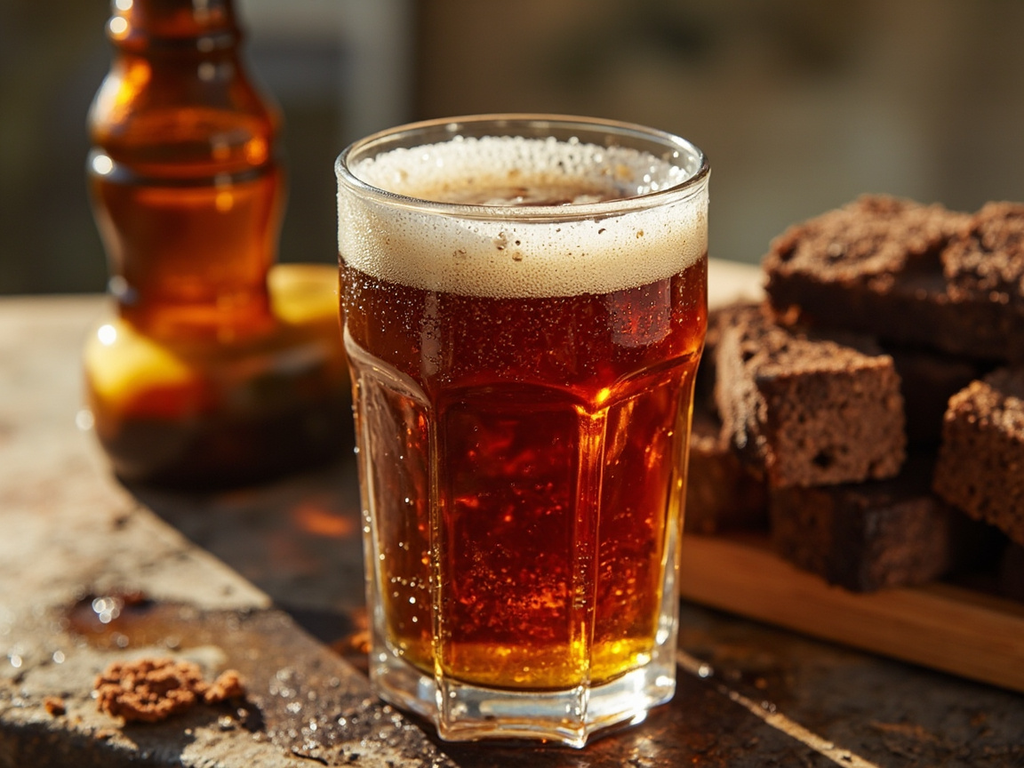
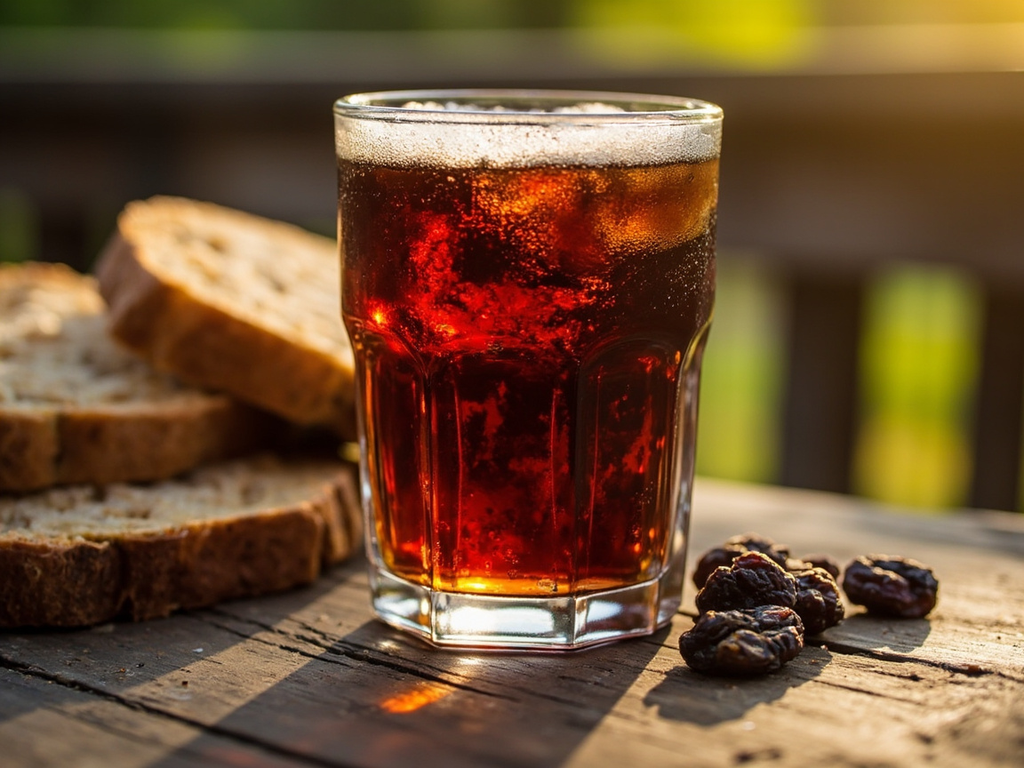
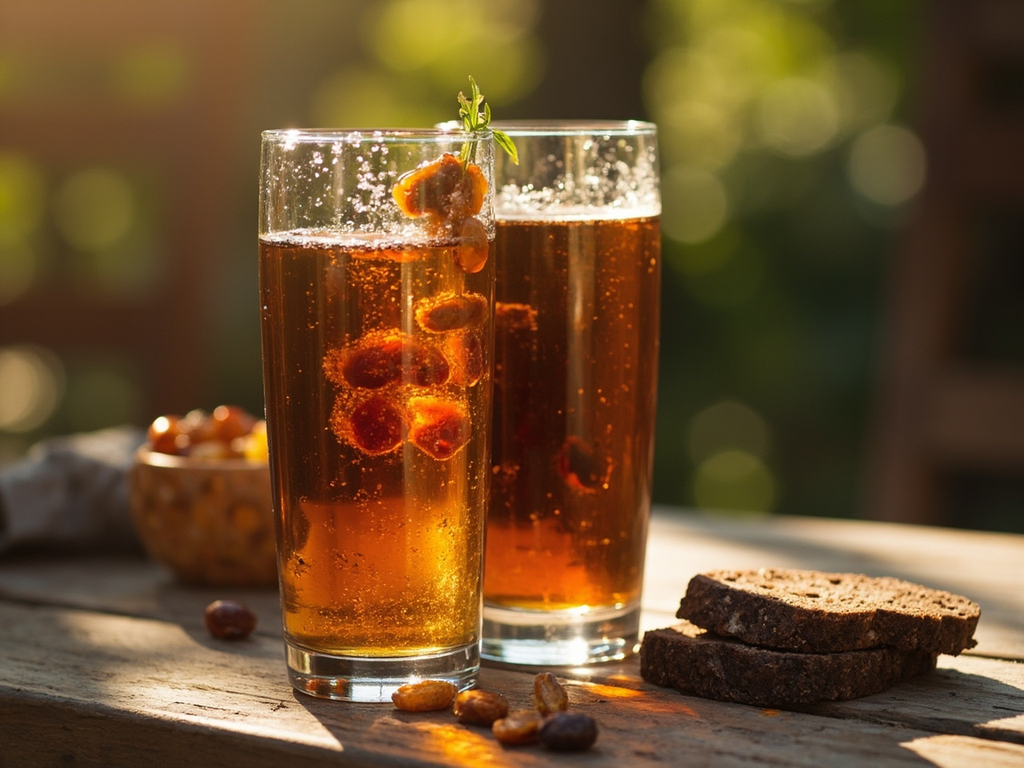
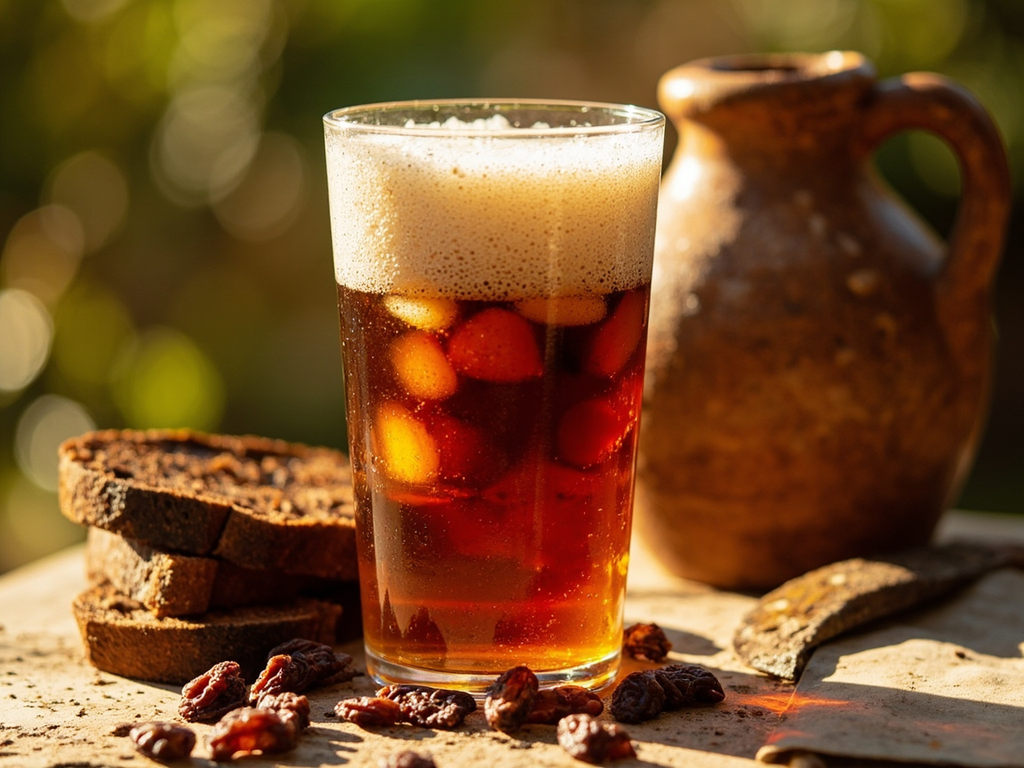
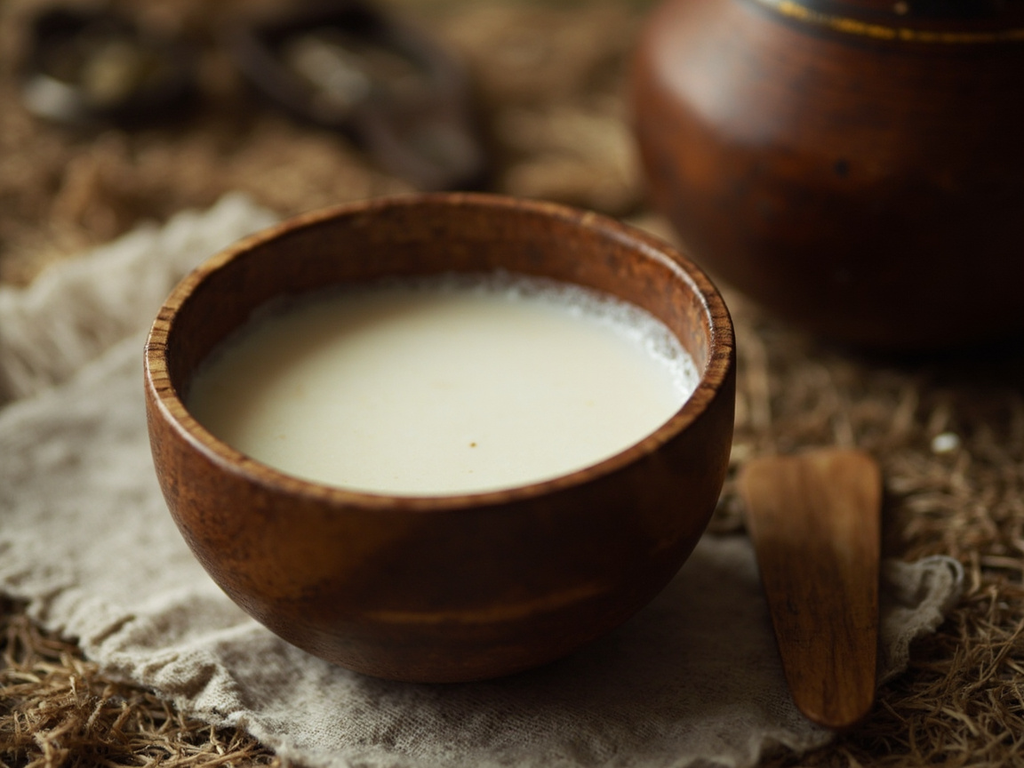
A brown, lightly fizzy, barely sweet and delicately sour drink, made by fermenting toasted rye bread with water, a little sugar, and a few raisins.
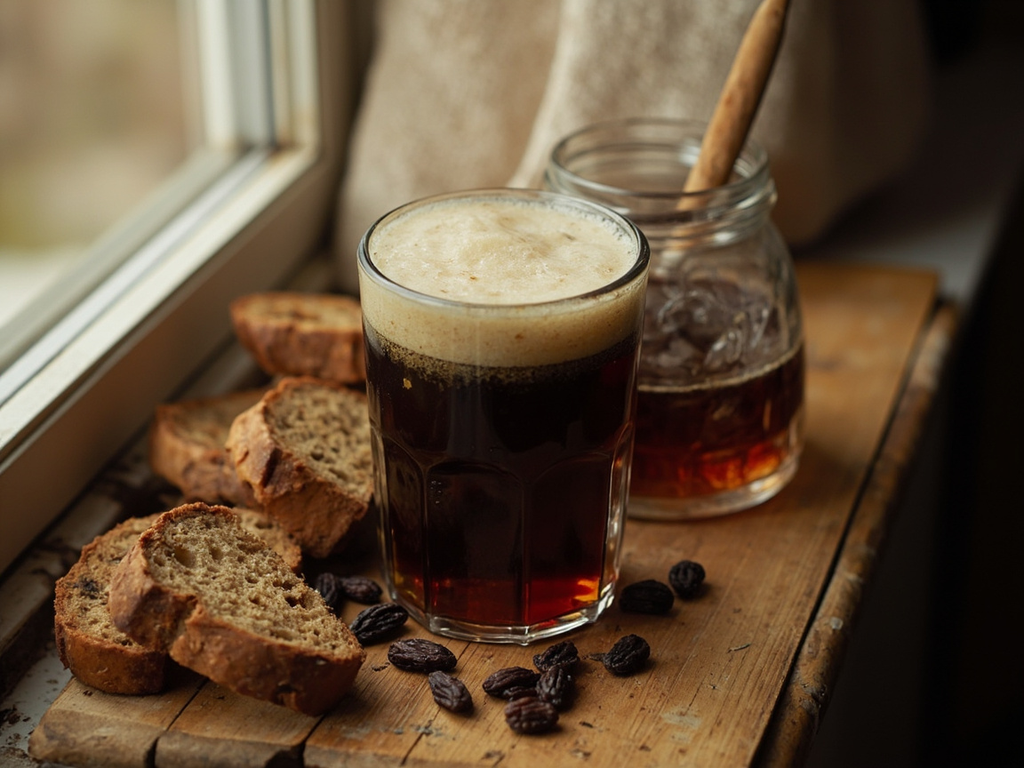
In summer, in Moscow, we queued in front of the big yellow tankers for a glass of kvas ladled out—but the best was still the one you made at home, in a jar on the windowsill. You toast some black bread crusts, pour boiling water over them, a little sugar, a handful of raisins, and you let time work for you for two days. It's sour, it's alive, it pricks a little: the very taste of rye, which follows me from Russian bread to the bread of my German childhood.
- •Stale rye bread (black bread) — several slices (fermentable base)
- •Water — a large jarful (medium)
- •Sugar or honey — a few spoonfuls (feeds fermentation)
- •Raisins — a handful (natural starter, fizz)
Black Bread Kvas
A brown, lightly fizzy, barely sweet and delicately sour drink, made by fermenting toasted rye bread with water, a little sugar, and a few raisins.
Why this dish? Kvas, the national drink made from fermented rye bread, quenched the thirst of the entire USSR, sold in summer by the ladle from large yellow tankers on Moscow streets. Slightly sour and fizzy, it is the rye aftertaste that connects Schnittke's Russian daily life to the sourness of the German bread of his childhood.
In summer, in Moscow, we queued in front of the big yellow tankers for a glass of kvas ladled out—but the best was still the one you made at home, in a jar on the windowsill. You toast some black bread crusts, pour boiling water over them, a little sugar, a handful of raisins, and you let time work for you for two days. It's sour, it's alive, it pricks a little: the very taste of rye, which follows me from Russian bread to the bread of my German childhood.
Ingredients (period version)
- Stale rye bread (black bread) — several slices (fermentable base)
- Water — a large jarful (medium)
- Sugar or honey — a few spoonfuls (feeds fermentation)
- Raisins — a handful (natural starter, fizz)
Ingredients
- Whole rye bread — 200 g (base)
- Water — 2 liters (medium)
- Sugar — 80 g (fermentation)
- Active dry yeast — 2 g (optional, speeds up) (ferment)
- Raisins — about 10 (natural fizz)
Method
- Cut bread into slices and toast in the oven until very dark (without burning): this gives color and flavor.
- Put toasted bread in a large jar, cover with boiling water, let steep 4-6 hours, then strain.
- To the warm liquid, add sugar, optional yeast, and raisins.
- Cover with a cloth and let ferment at room temperature for 1-2 days, until tangy and fizzy.
- Strain, bottle tightly, refrigerate overnight, then serve very cold.
How it was made : Kvas has been attested in Russia since the Middle Ages; in the Soviet era, it was industrially produced and distributed on the street by mobile tankers. Every family had its own homemade version, more or less strong, on the windowsill.
The contemporary twist : Flavor at bottling time with a few mint leaves or a squeeze of lemon juice for a refreshing summer kvas.
Alfred Schnittke · Charactorium