 flip
flipGretchka with Mushrooms (Toasted Buckwheat, Russian Style)
Gretchka with Mushrooms (Toasted Buckwheat, Russian Style)
Why this dish? Buckwheat, gretchka, is the staple food of everyday Soviet life: cheap, nourishing, always there when the shelves were bare. It's the dish of the queues and communal kitchens that Schnittke knew as a student and later as a professor at the Moscow Conservatory.
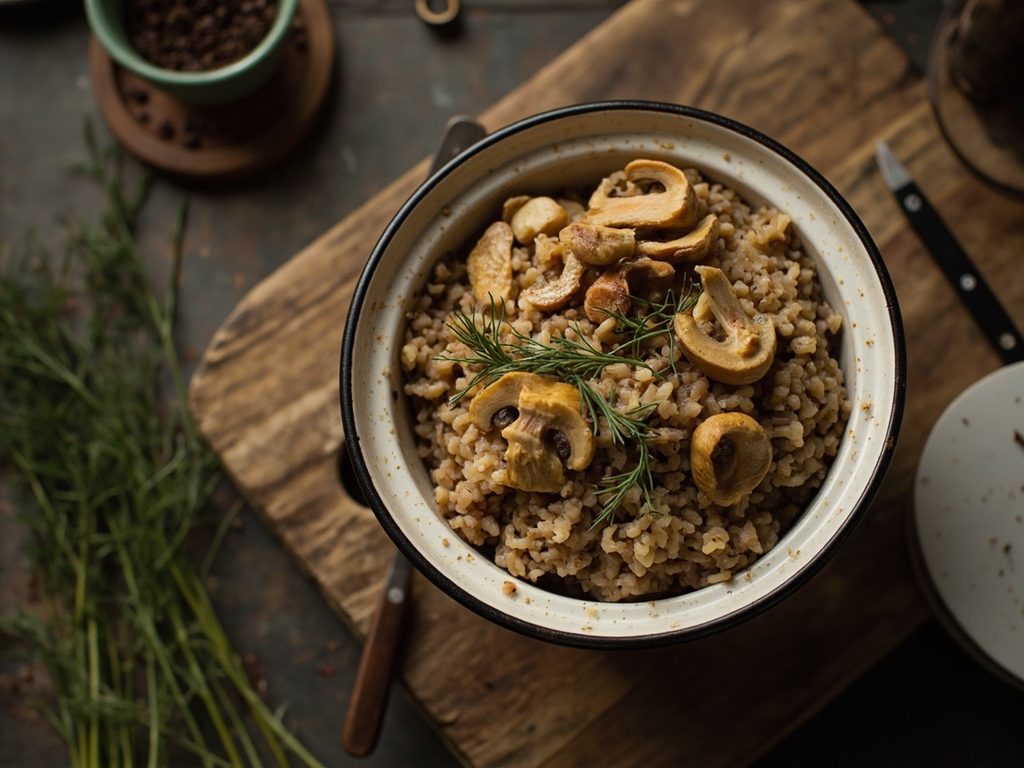
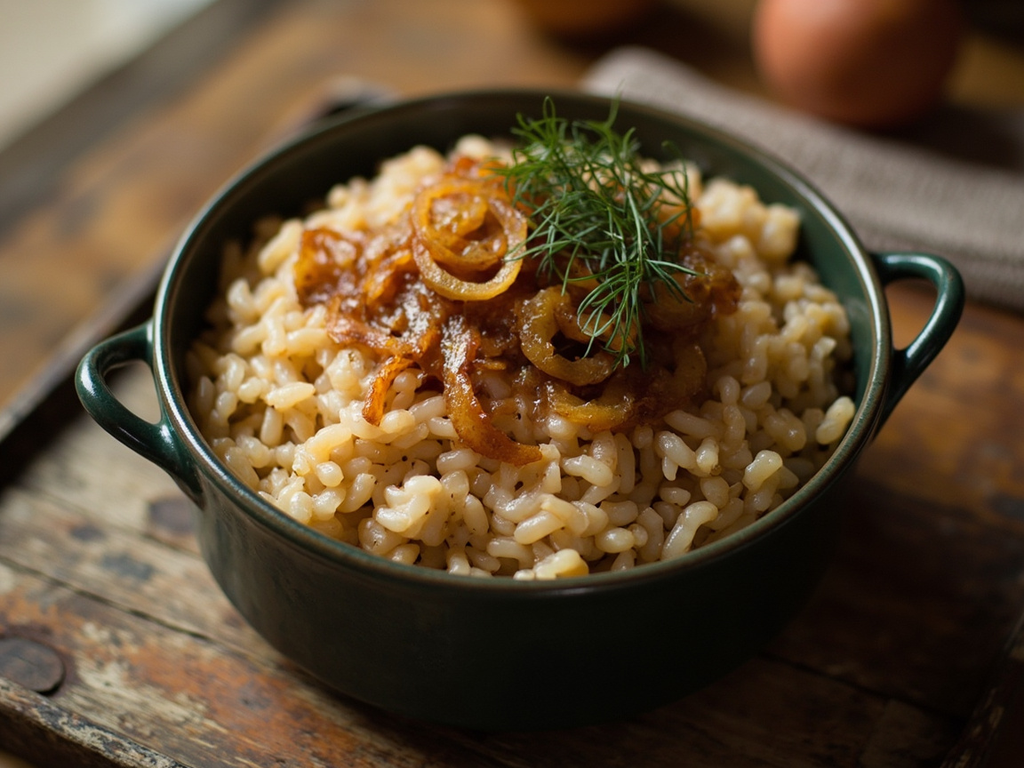
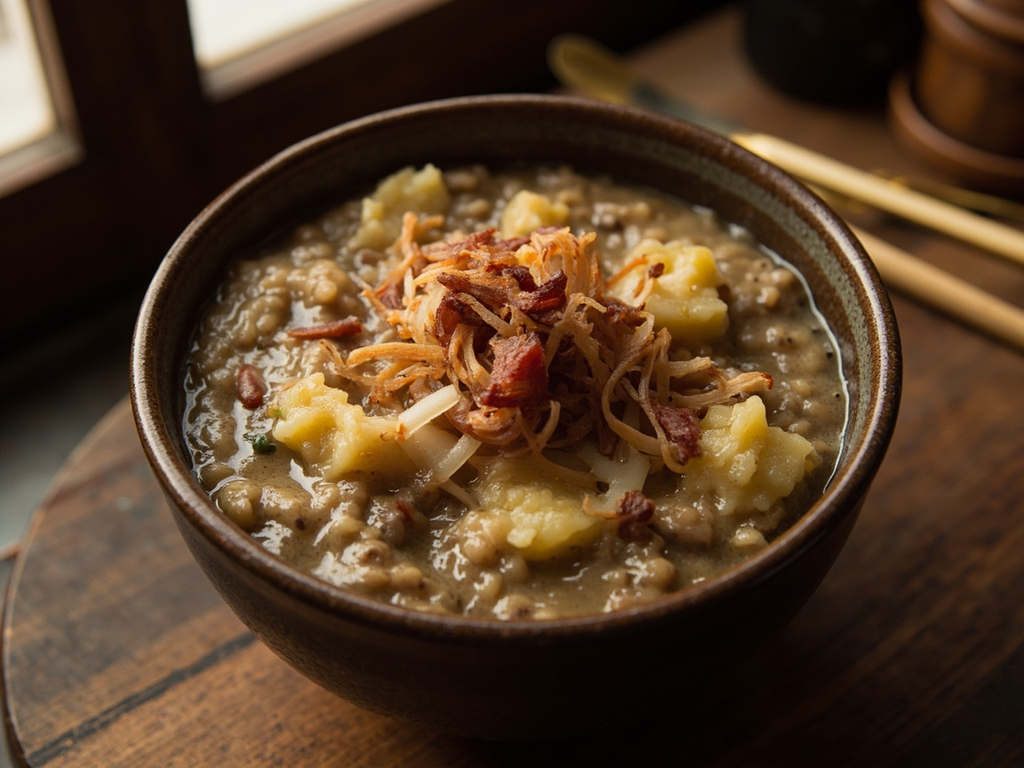
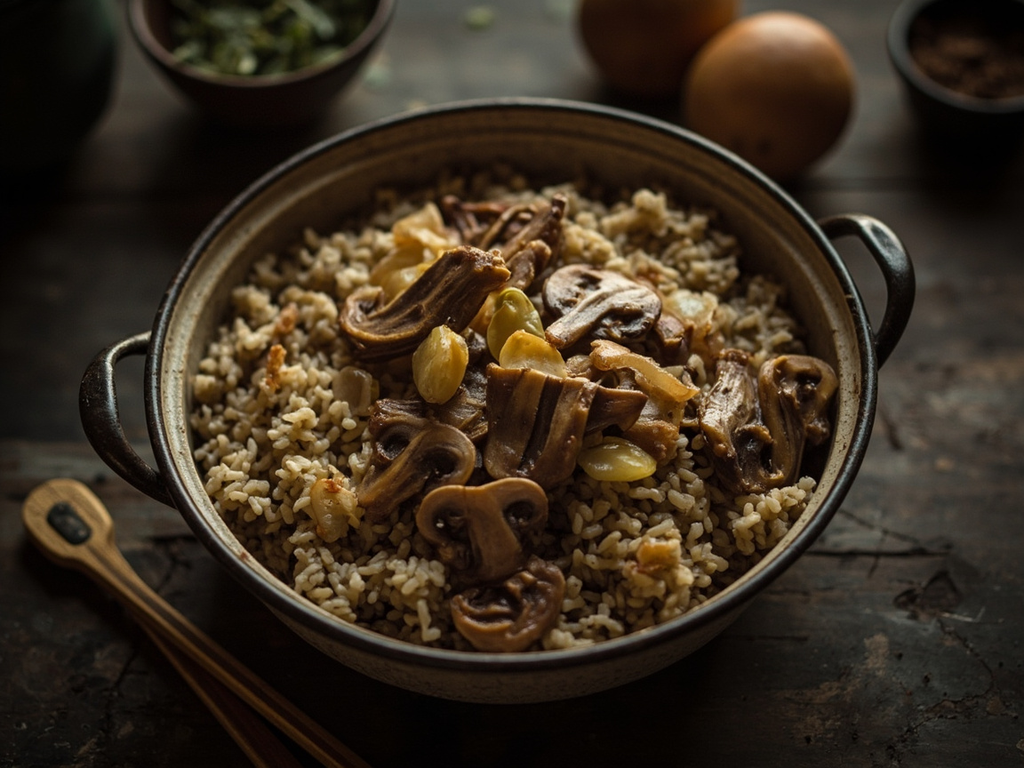
Toasted buckwheat groats, plumped in water until tender and fluffy, bound with butter and lifted by mushrooms and golden onions. A brown, earthy, comforting dish that sticks to the ribs.
In Moscow, you didn't choose your dinner: you took what there was, and there was always gretchka. My mother, who spoke German before Russian, would dry-toast it in the pan to wake up its nutty smell before adding water—a small gesture that changes everything. You add the mushrooms, the onion fried golden in butter, and this poor man's dish suddenly becomes rich, almost grave. I've always thought that simple material, well treated, carries further than rare material badly written.
- •Buckwheat (gretchka) — one large bowl (grain base)
- •Forest mushrooms (cep, or rehydrated dried mushrooms) — a generous handful (umami, forest aroma)
- •Onion — 1 large (aromatic base)
- •Butter — a good knob (binding, richness)
- •Salt — to taste (seasoning)
Gretchka with Mushrooms (Toasted Buckwheat, Russian Style)
Toasted buckwheat groats, plumped in water until tender and fluffy, bound with butter and lifted by mushrooms and golden onions. A brown, earthy, comforting dish that sticks to the ribs.
Why this dish? Buckwheat, gretchka, is the staple food of everyday Soviet life: cheap, nourishing, always there when the shelves were bare. It's the dish of the queues and communal kitchens that Schnittke knew as a student and later as a professor at the Moscow Conservatory.
In Moscow, you didn't choose your dinner: you took what there was, and there was always gretchka. My mother, who spoke German before Russian, would dry-toast it in the pan to wake up its nutty smell before adding water—a small gesture that changes everything. You add the mushrooms, the onion fried golden in butter, and this poor man's dish suddenly becomes rich, almost grave. I've always thought that simple material, well treated, carries further than rare material badly written.
Ingredients (period version)
- Buckwheat (gretchka) — one large bowl (grain base)
- Forest mushrooms (cep, or rehydrated dried mushrooms) — a generous handful (umami, forest aroma)
- Onion — 1 large (aromatic base)
- Butter — a good knob (binding, richness)
- Salt — to taste (seasoning)
Ingredients
- Toasted buckwheat (kasha) — 200 g (grain base)
- Button mushrooms or mixed forest mushrooms — 250 g (umami)
- Dried mushrooms (ceps) — 10 g, rehydrated (flavor concentrate)
- Onion — 1 large (aromatic base)
- Butter — 40 g (binding)
- Water or broth — 400 ml (cooking liquid)
- Salt, pepper — to taste (seasoning)
Method
- If the buckwheat is not already toasted, dry-toast it in a pan for 3-4 minutes until it smells nutty.
- Pour in hot water or broth (twice the volume of buckwheat), add salt, cover and cook over low heat for 15-18 minutes without stirring, until the liquid is absorbed.
- Meanwhile, sauté the sliced onion in butter until golden, add the fresh mushrooms and rehydrated dried mushrooms, cook until the water evaporates.
- Let the buckwheat rest covered off the heat for 5 minutes, then fluff with a fork.
- Mix buckwheat and mushrooms, adjust salt, add a knob of fresh butter when serving.
How it was made : In communal kitchens (kommunalka) and canteens, buckwheat was often cooked in water alone, butter and mushrooms being occasional luxuries. The grains were toasted to extract maximum flavor with minimum ingredients—a typical economy of means of the era.
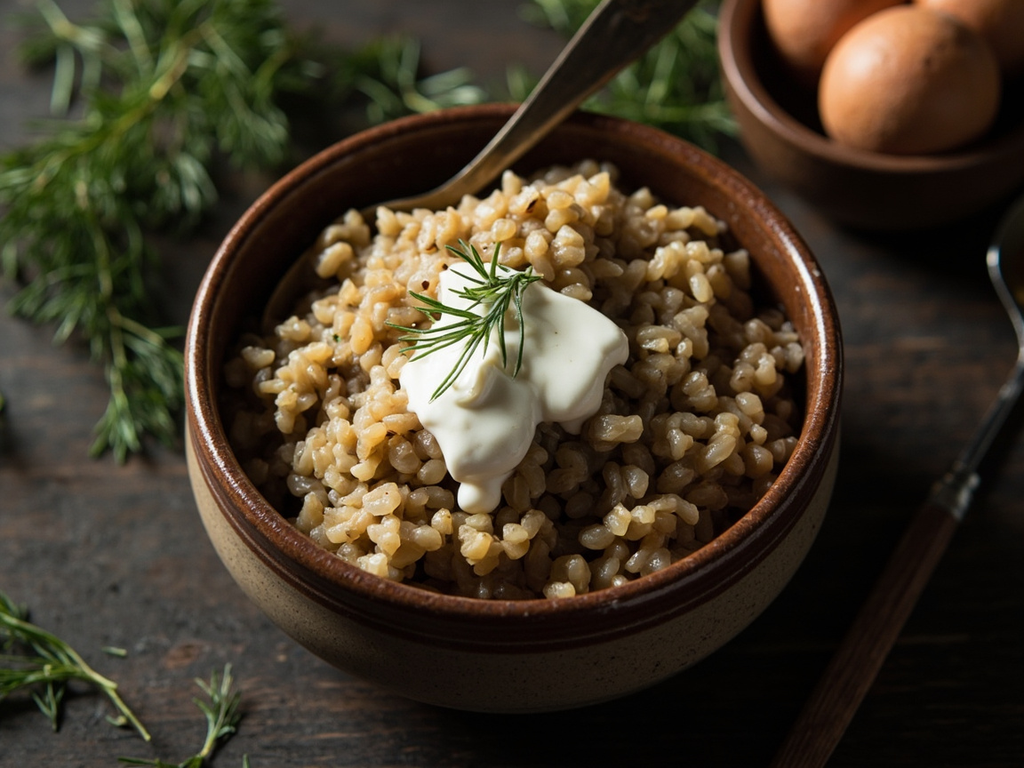
The contemporary twist : Serve as a 'kasha bowl' with a soft-boiled egg and fresh herbs: the scarcity dish becomes a bistro plate.
Alfred Schnittke · Charactorium