 flip
flipGrechnevaya Kasha (Buckwheat Porridge)
Grechnevaya Kasha (Buckwheat Porridge)
Why this dish? Toasted buckwheat is the staple of ordinary Russian food, and the anchor of the character sheet explicitly mentions *kasha* among Akhmatova's foods. In rationed Leningrad, after her expulsion from the Union of Writers in 1946, it was this kind of simple porridge, shared with loyal friends, that sustained her.
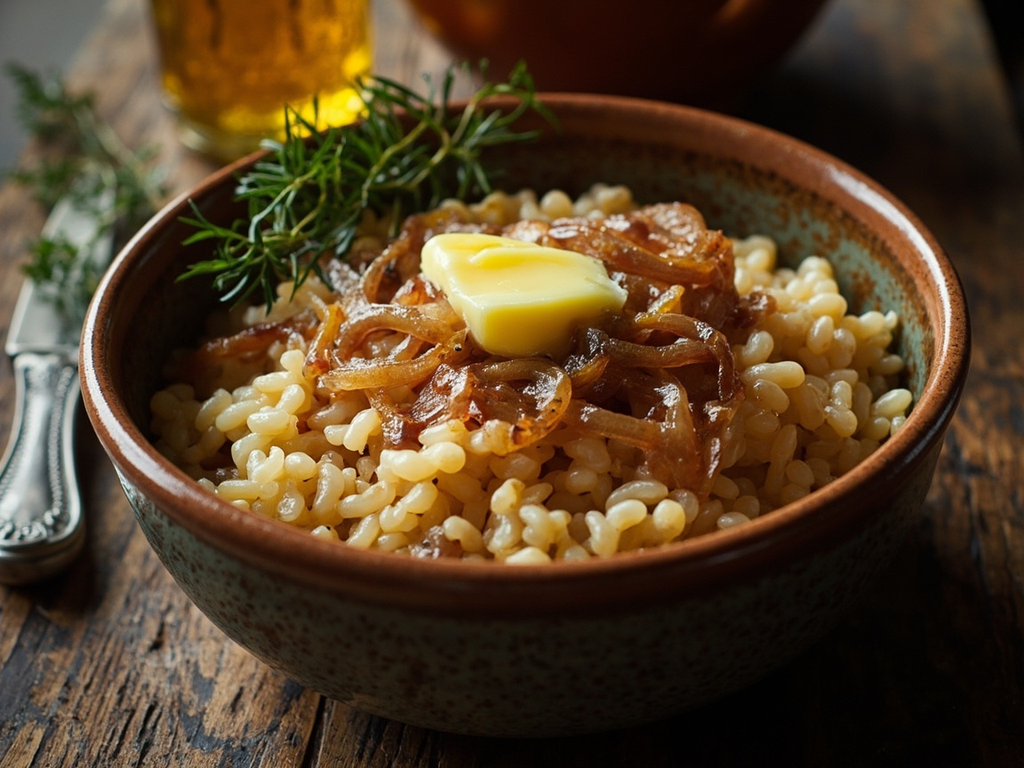
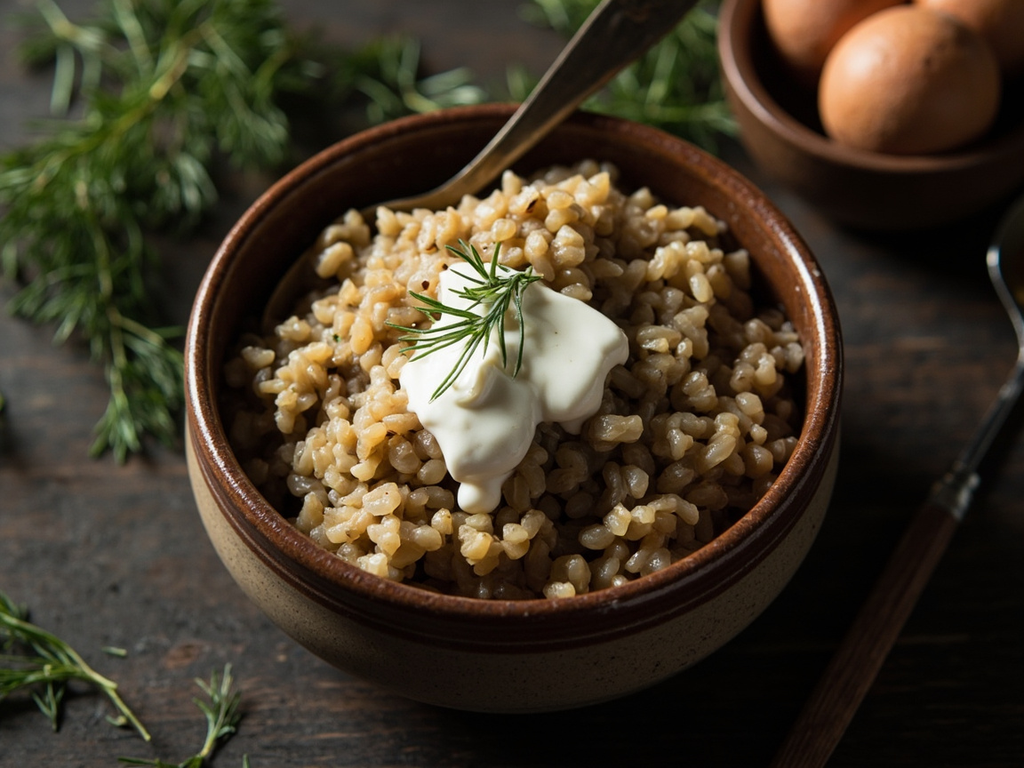
A porridge of toasted buckwheat groats, swollen in water or broth, enriched with a knob of butter and a spoonful of *smetana*. Rustic, comforting, infinitely Russian: the dish that fills the belly and the heart when everything else is lacking.
You see, they say *kasha* is our mother to all, and it's true even when the larder is bare. First I would toast the buckwheat dry, until the nutty smell filled the room — that's the whole secret, don't burn it. Then boiling water, the lid, and you wait in silence, as you wait for a letter. A sliver of butter if Providence allowed, a tear of *smetana*, and you give thanks. In Leningrad, believe me, a bowl of steaming *gretchka* was worth all the feasts of yore.
- •Buckwheat groats (gretchka) — a large bowl (base grain)
- •Water or broth — twice the buckwheat (cooking liquid)
- •Butter — as available (fat, binder)
- •Smetana (sour cream) — a spoonful (garnish)
- •Salt — a pinch (seasoning)
Grechnevaya Kasha (Buckwheat Porridge)
A porridge of toasted buckwheat groats, swollen in water or broth, enriched with a knob of butter and a spoonful of *smetana*. Rustic, comforting, infinitely Russian: the dish that fills the belly and the heart when everything else is lacking.
Why this dish? Toasted buckwheat is the staple of ordinary Russian food, and the anchor of the character sheet explicitly mentions *kasha* among Akhmatova's foods. In rationed Leningrad, after her expulsion from the Union of Writers in 1946, it was this kind of simple porridge, shared with loyal friends, that sustained her.
You see, they say *kasha* is our mother to all, and it's true even when the larder is bare. First I would toast the buckwheat dry, until the nutty smell filled the room — that's the whole secret, don't burn it. Then boiling water, the lid, and you wait in silence, as you wait for a letter. A sliver of butter if Providence allowed, a tear of *smetana*, and you give thanks. In Leningrad, believe me, a bowl of steaming *gretchka* was worth all the feasts of yore.
Ingredients (period version)
- Buckwheat groats (gretchka) — a large bowl (base grain)
- Water or broth — twice the buckwheat (cooking liquid)
- Butter — as available (fat, binder)
- Smetana (sour cream) — a spoonful (garnish)
- Salt — a pinch (seasoning)
Ingredients
- Toasted buckwheat (kasha) — 200 g (base grain)
- Water or vegetable broth — 400 ml (cooking liquid)
- Butter — 30 g (fat, binder)
- Sour cream (smetana) — 2 tbsp (garnish)
- Salt — 1/2 tsp (seasoning)
- Fresh dill — a few sprigs (freshness (optional))
Method
- Toast the buckwheat dry in a heavy-bottomed saucepan over medium heat for 3–4 minutes, until it smells nutty (do not burn it).
- Pour boiling salted water or broth over the buckwheat (watch for splashes).
- Cover, reduce heat to low, and let absorb for 15–18 minutes without stirring, until the liquid is absorbed.
- Remove from heat, add the butter, cover, and let rest for 5 minutes so the grains plump up.
- Fluff with a fork, serve hot, crowned with a spoonful of *smetana* and a little dill.
How it was made : Traditionally, *kasha* cooked slowly in the Russian earthenware stove (*pechka*), smoldering for hours in a clay pot, which gave it incomparable tenderness. It was eaten at breakfast and supper alike, sweetened with milk for children or salty and fatty for adults.
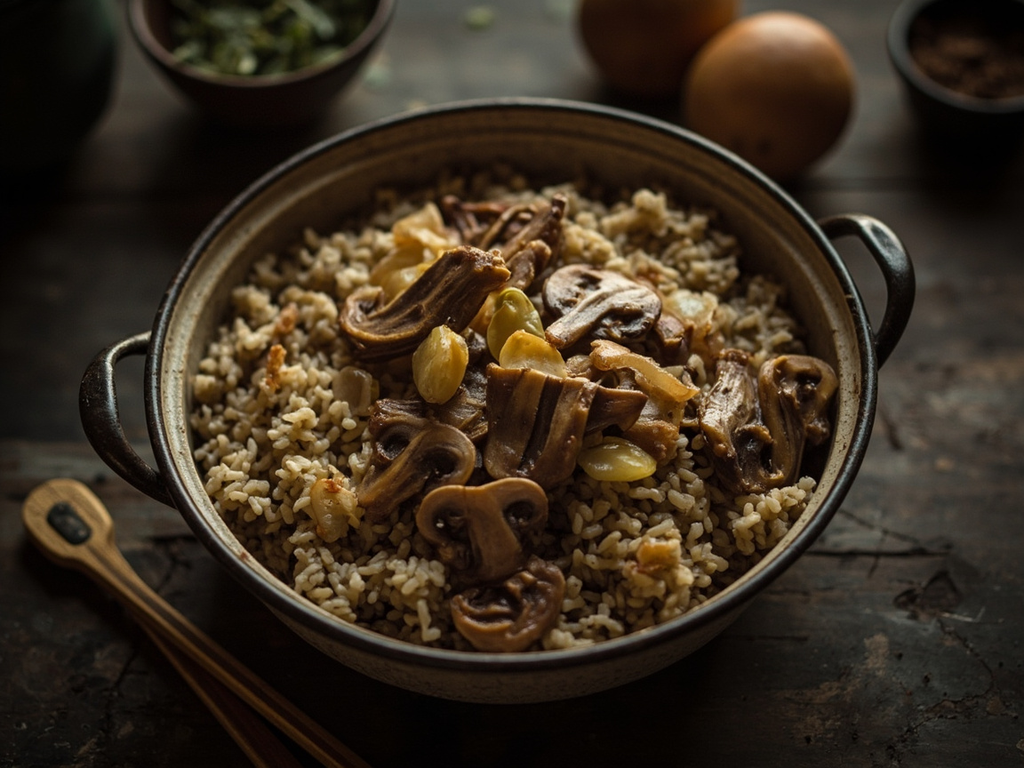
The contemporary twist : For a literary table twist, serve the *kasha* in a dome with a soft-boiled egg oozing in the center and a shower of dill — the "poet's kasha."
Sources : Elena Molokhovets, A Gift to Young Housewives, 1861 · Darra Goldstein, A Taste of Russia, 1983 · Anya von Bremzen, Mastering the Art of Soviet Cooking, 2013
Anna Akhmatova · Charactorium