 flip
flipGreen porray of leeks and chard
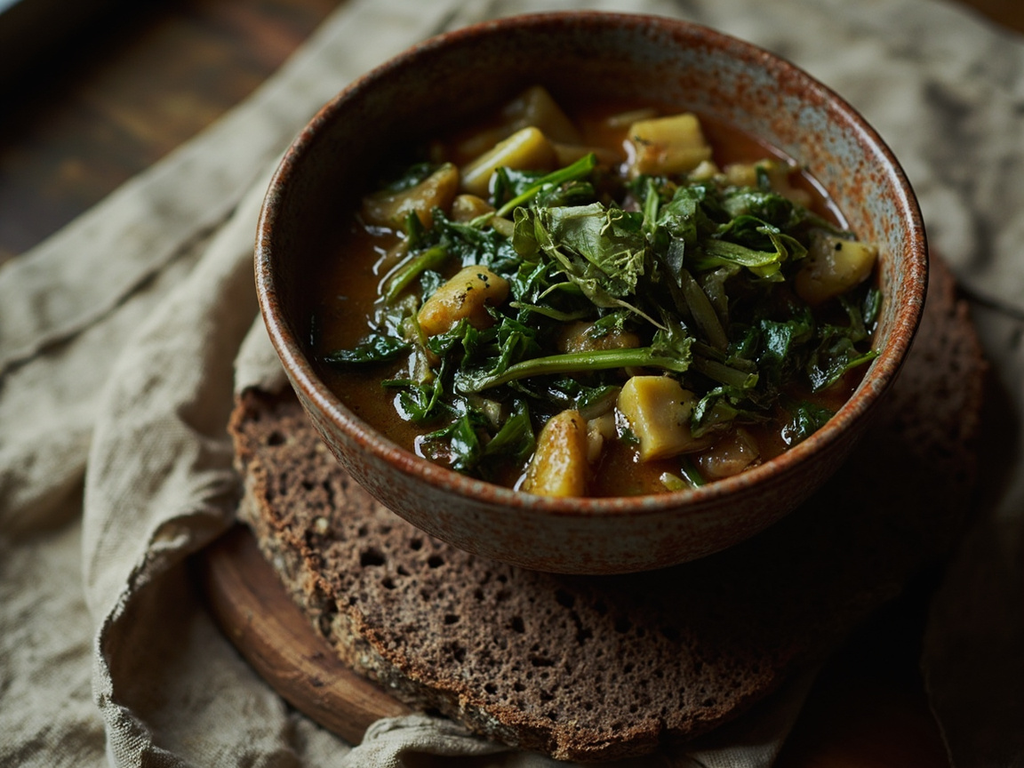
Green porray of leeks and chard
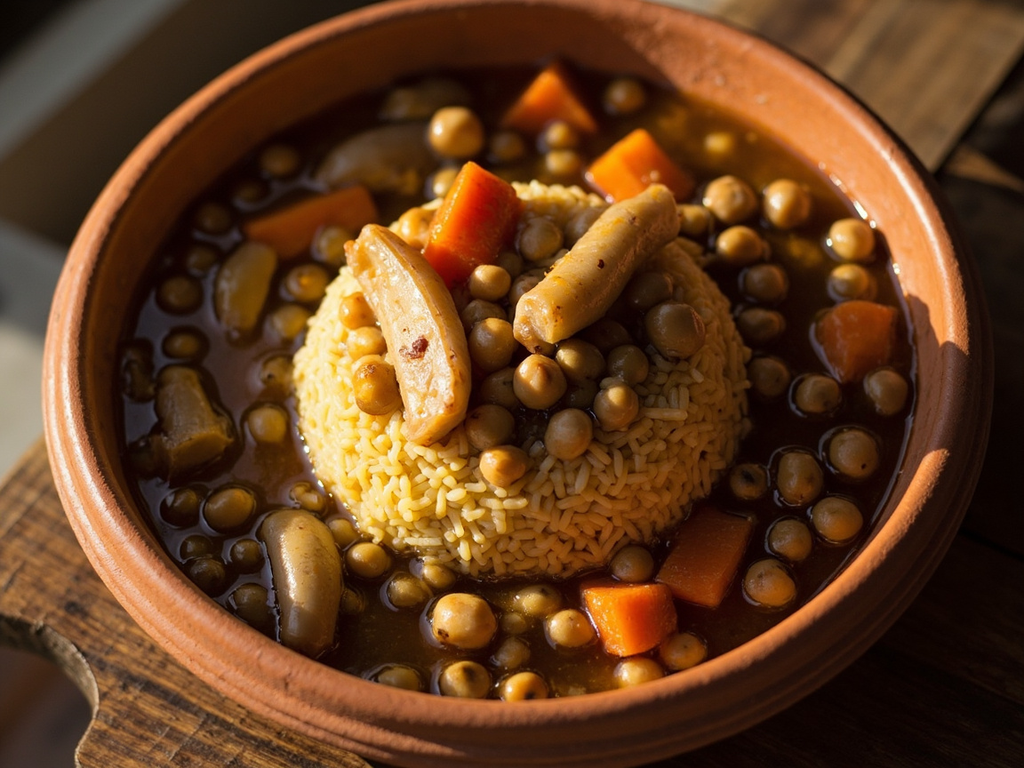
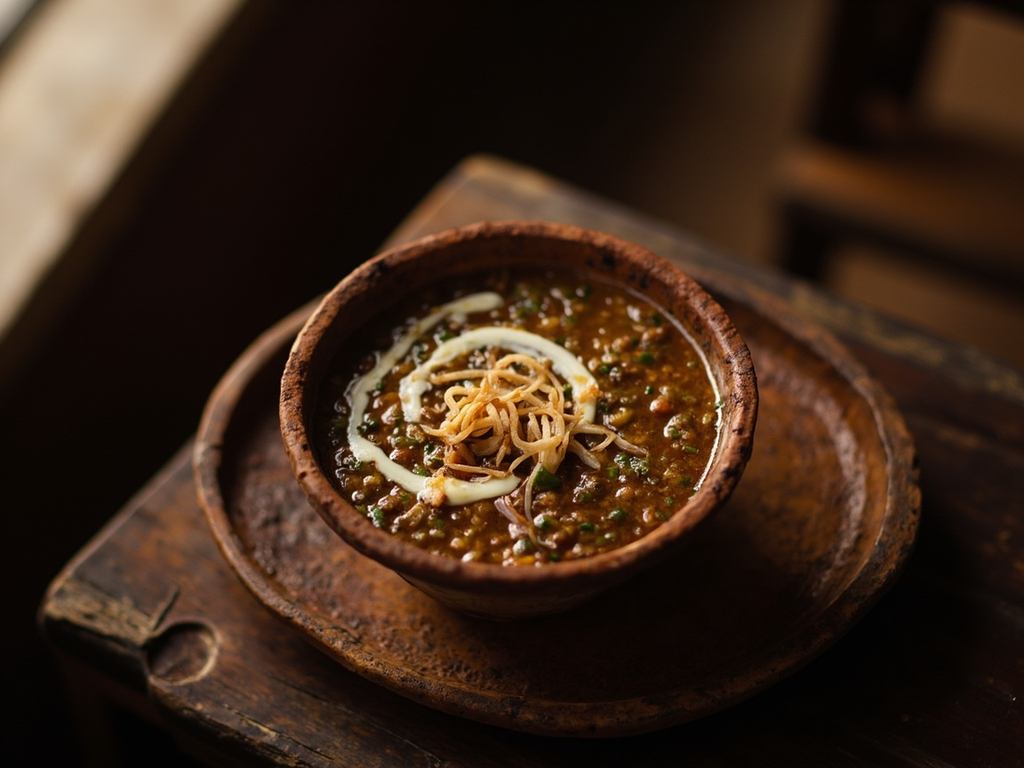
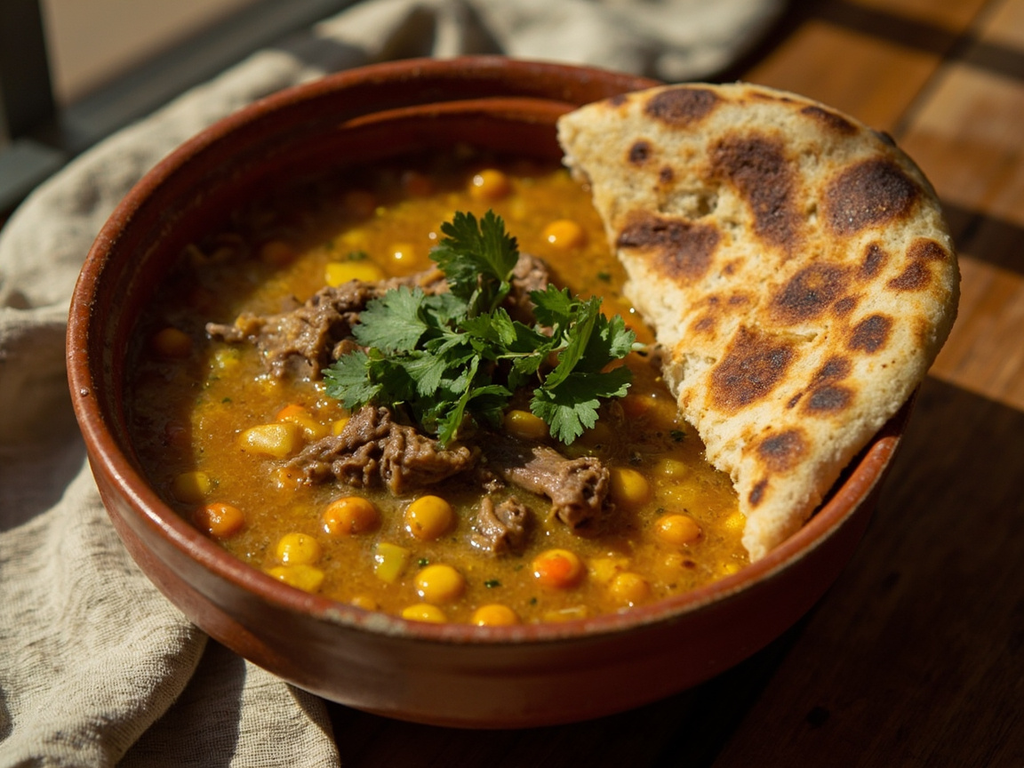
Why this dish? Even at court, on ordinary days and the many 'lean' days of the Christian calendar, they ate green porrays. Eleanor, who moved from castle to castle — Poitiers, Bordeaux, Rouen — found everywhere this broth of pot-herbs, the humble and comforting foundation of the medieval table.
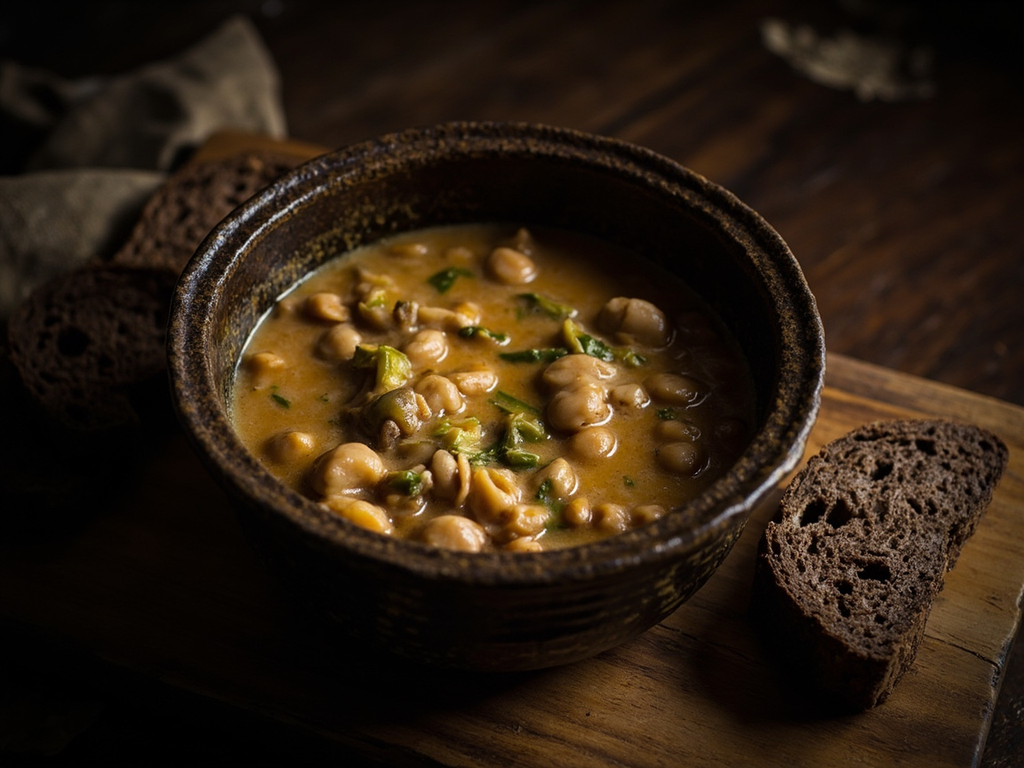
A thick pottage of leeks and chard ('porray') melted into a broth, thickened with bread and enlivened with a hint of spice. Nourishing, green and mild, it is the staple dish served on bread trenchers.
Approach, and do not be fooled by its simplicity. This porray, my cooks prepare it gently, as is fitting: leeks melted slowly in fat, chard added afterwards, and stale bread to thicken it all. On lean days, I want it with oil and herb broth; on others, a little bacon gives it a better complexion. Believe me, duchess or servant, no one scorns a good porray on a winter evening.
- •Leeks — a good bunch (mild base of the pottage)
- •Chard (Swiss chard) — as much as needed (greens)
- •Meat or herb broth — enough (liquid)
- •Bacon or oil — a piece (fat, depending on meat or lean day)
- •Stale bread — a few slices (thickener)
- •Ginger — a pinch (finishing spice)
Green porray of leeks and chard
A thick pottage of leeks and chard ('porray') melted into a broth, thickened with bread and enlivened with a hint of spice. Nourishing, green and mild, it is the staple dish served on bread trenchers.
Why this dish? Even at court, on ordinary days and the many 'lean' days of the Christian calendar, they ate green porrays. Eleanor, who moved from castle to castle — Poitiers, Bordeaux, Rouen — found everywhere this broth of pot-herbs, the humble and comforting foundation of the medieval table.
Approach, and do not be fooled by its simplicity. This porray, my cooks prepare it gently, as is fitting: leeks melted slowly in fat, chard added afterwards, and stale bread to thicken it all. On lean days, I want it with oil and herb broth; on others, a little bacon gives it a better complexion. Believe me, duchess or servant, no one scorns a good porray on a winter evening.
Ingredients (period version)
- Leeks — a good bunch (mild base of the pottage)
- Chard (Swiss chard) — as much as needed (greens)
- Meat or herb broth — enough (liquid)
- Bacon or oil — a piece (fat, depending on meat or lean day)
- Stale bread — a few slices (thickener)
- Ginger — a pinch (finishing spice)
Ingredients
- Leeks — 4 large (mild base of the pottage)
- Chard (ribs + leaves) — 500 g (greens)
- Chicken broth (or vegetable broth on lean days) — 1 L (liquid)
- Smoked bacon lardons (or 3 tbsp oil) — 100 g (fat)
- Stale country bread — 2 slices (thickener)
- Ground ginger — 1/2 tsp (finishing spice)
- Salt — to taste (seasoning)
Method
- Finely slice the leeks and gently sweat them in the fat (bacon or oil) without browning, for 10 minutes.
- Add the chard ribs cut into strips, moisten with broth, and cook for 15 minutes.
- Add the shredded chard leaves and crumbled bread; let thicken for 10 minutes, stirring.
- Season with ginger and salt, and serve hot, optionally on a slice of bread as a trencher.
How it was made : 'Porray' (from Latin *porrum*, leek) was the backbone of medieval diet, from peasant to king. They distinguished white porray, black (with bacon) and green (with herbs). Stale bread served as a universal thickener, long before the widespread use of flour roux.
The contemporary twist : A drizzle of Aquitaine walnut oil and a few golden croutons on top: the trencher becomes a garnish.
Eleanor of Aquitaine · Charactorium