 flip
flipMastava (Vizier's Herbed Rice Soup)
Mastava (Vizier's Herbed Rice Soup)
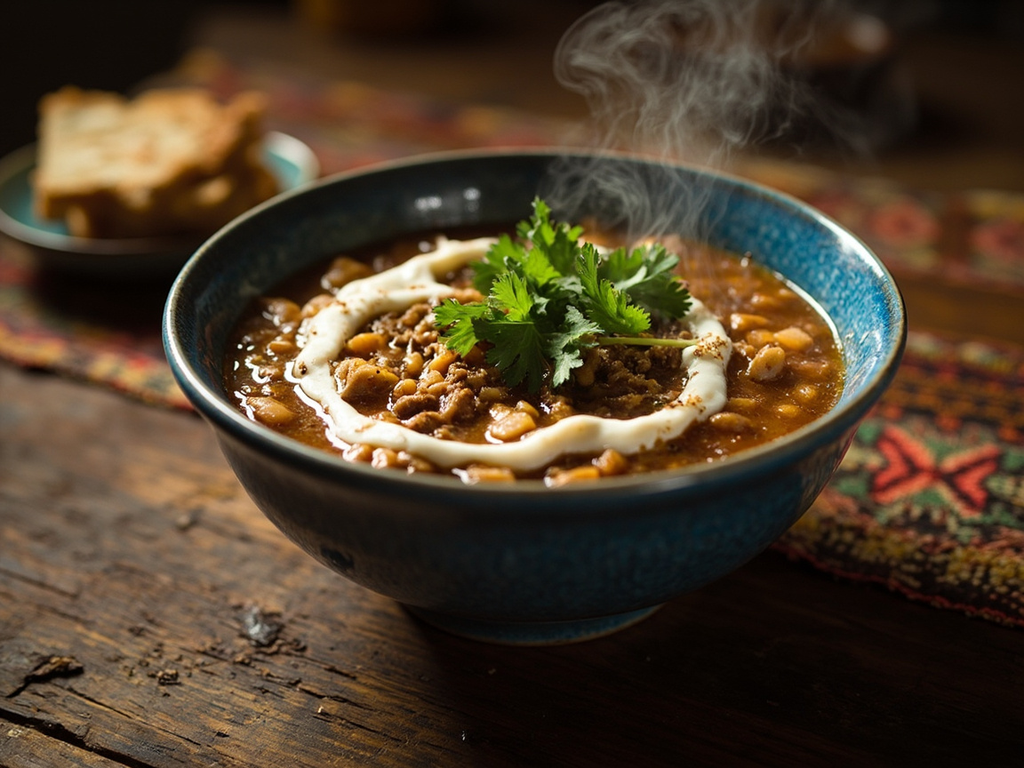
Why this dish? As a vizier bound to long days of administration and poetic composition, Navoi ate simple but nourishing meals in daily life. Mastava, a rice soup thickened with yogurt and scented with fresh herbs, is a staple dish of Khorasan that warms Herat's harsh winters while remaining light enough for the scholar's mind.
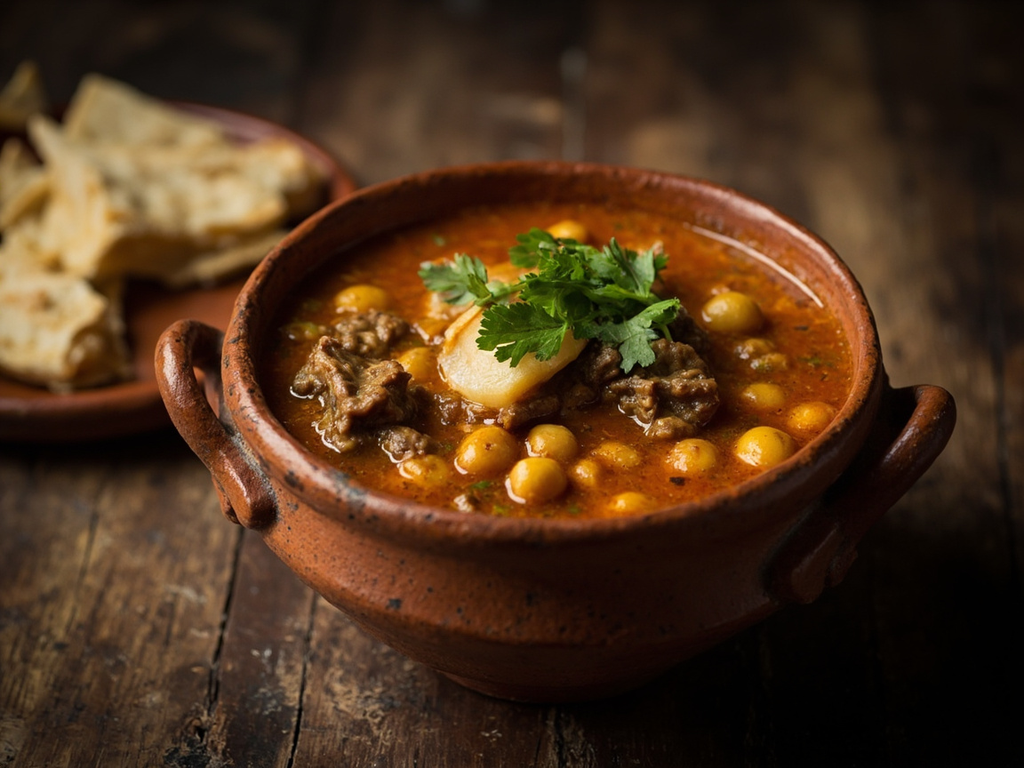
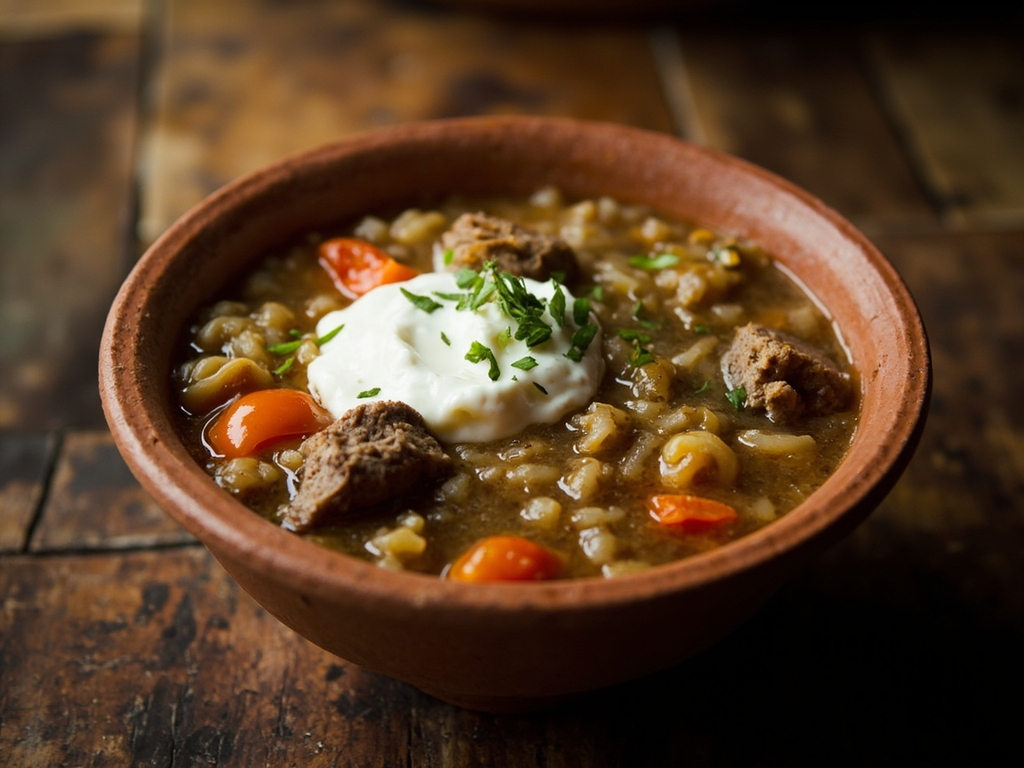
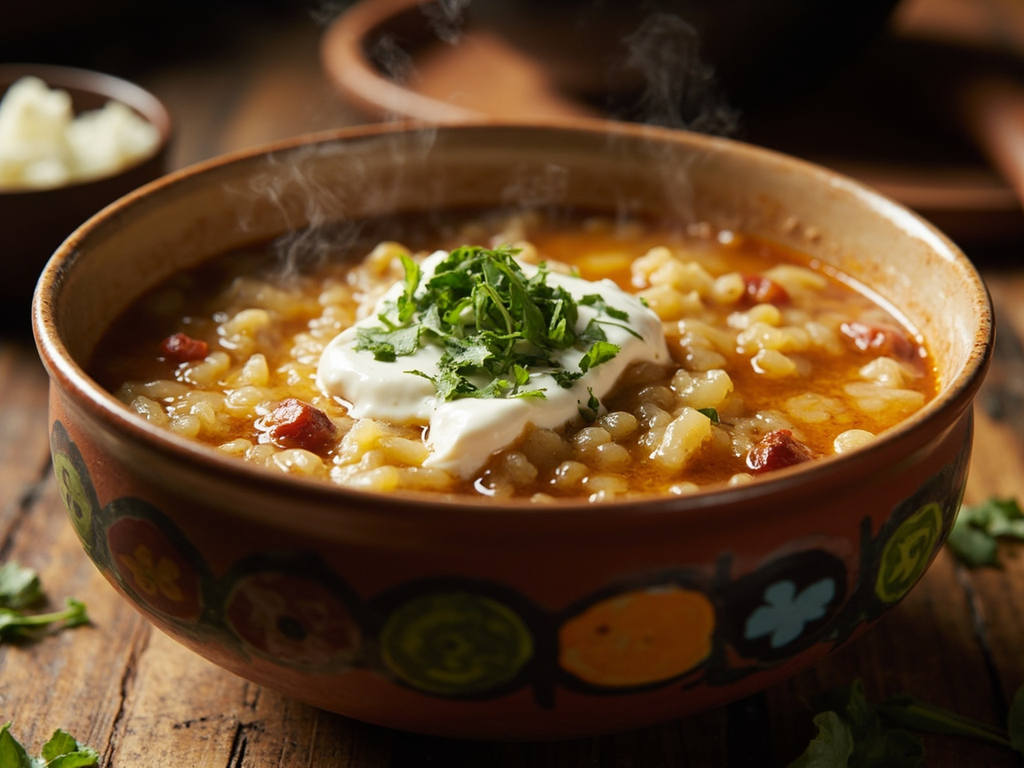
A hearty soup of rice, vegetables, and lamb, enriched with beaten yogurt and a bouquet of fresh herbs (coriander, mint, dill). The yogurt lends an acidity that balances the richness of the meat broth.
When Herat's cold numbs the fingers and the reed pen struggles to run across the paper, nothing restores the spirit like a bowl of steaming mastava. My servant prepares it simply: rice, a little lamb, herbs from the garden, and that curdled milk which makes the broth both creamy and lively. I sometimes drink it alone, in my study, between two ghazals, and the warmth rising from the bowl is like the very breath of the Turkic tongue I strive to ennoble. No need for saffron or splendor: mastava nourishes the man who labors.
- •Lamb (shoulder or neck) — a modest piece (Meat for the broth)
- •Rice — two handfuls (Body of the soup)
- •Onion — one (Aromatic)
- •Carrots — one or two (Vegetable)
- •Turnips — one small (Seasonal vegetable)
- •Soaked chickpeas — a handful (Thickener)
- •Yogurt (mast) — a bowl (Acidity and creaminess)
- •Fresh coriander, mint, dill — a bouquet (Aromatic herbs)
- •Salt, black pepper — to taste (Seasoning)
Mastava (Vizier's Herbed Rice Soup)
A hearty soup of rice, vegetables, and lamb, enriched with beaten yogurt and a bouquet of fresh herbs (coriander, mint, dill). The yogurt lends an acidity that balances the richness of the meat broth.
Why this dish? As a vizier bound to long days of administration and poetic composition, Navoi ate simple but nourishing meals in daily life. Mastava, a rice soup thickened with yogurt and scented with fresh herbs, is a staple dish of Khorasan that warms Herat's harsh winters while remaining light enough for the scholar's mind.
When Herat's cold numbs the fingers and the reed pen struggles to run across the paper, nothing restores the spirit like a bowl of steaming mastava. My servant prepares it simply: rice, a little lamb, herbs from the garden, and that curdled milk which makes the broth both creamy and lively. I sometimes drink it alone, in my study, between two ghazals, and the warmth rising from the bowl is like the very breath of the Turkic tongue I strive to ennoble. No need for saffron or splendor: mastava nourishes the man who labors.
Ingredients (period version)
- Lamb (shoulder or neck) — a modest piece (Meat for the broth)
- Rice — two handfuls (Body of the soup)
- Onion — one (Aromatic)
- Carrots — one or two (Vegetable)
- Turnips — one small (Seasonal vegetable)
- Soaked chickpeas — a handful (Thickener)
- Yogurt (mast) — a bowl (Acidity and creaminess)
- Fresh coriander, mint, dill — a bouquet (Aromatic herbs)
- Salt, black pepper — to taste (Seasoning)
Ingredients
- Braising lamb (neck or shoulder) — 300 g, in small dice (Meat)
- Round rice — 80 g (Thickener)
- Onion — 1, sliced (Aromatic)
- Carrots — 2, diced small (Vegetable)
- Turnip — 1 small, diced (Vegetable)
- Chickpeas (canned, drained) — 150 g (Legume)
- Plain full-fat yogurt — 150 g (Acidity)
- Fresh coriander — 1 small bunch (Herb)
- Fresh mint — a few leaves (Herb)
- Fresh dill — a few sprigs (Herb)
- Vegetable oil — 2 tbsp (Cooking)
- Water — 1.5 liters (Broth)
- Salt, black pepper — to taste (Seasoning)
Method
- Sauté the sliced onion in the oil until translucent. Add the lamb dice and sear for 5 minutes.
- Add the diced carrots and turnip, stir for 2 minutes.
- Pour in the water, bring to a boil, and skim. Add the chickpeas and simmer 30 minutes over low heat.
- Add the rice and continue cooking for 15 minutes until the rice is tender and the soup has thickened.
- Off the heat, whisk the yogurt with a ladleful of hot broth to temper it, then stir it into the soup.
- Season with salt and pepper. Serve in bowls, generously topped with chopped coriander, mint, and dill.
How it was made : Mastava is a traditional Central Asian soup, documented in Uzbek and Tajik culinary practice for centuries. Yogurt (mast in Persian) is the ingredient that gives it its name. Turnips, carrots, and chickpeas were the common winter vegetables of medieval Khorasan, long before the arrival of the potato.
The contemporary twist : Serve with a drizzle of dill-infused olive oil and a touch of sumac to sharpen the acidity.
Sources : Glenn R. Mack, Asele Surina, Food Culture in Russia and Central Asia, Greenwood Press, 2005
Alisher Navoi · Charactorium