 flip
flipMastava (Lamb and Rice Soup)
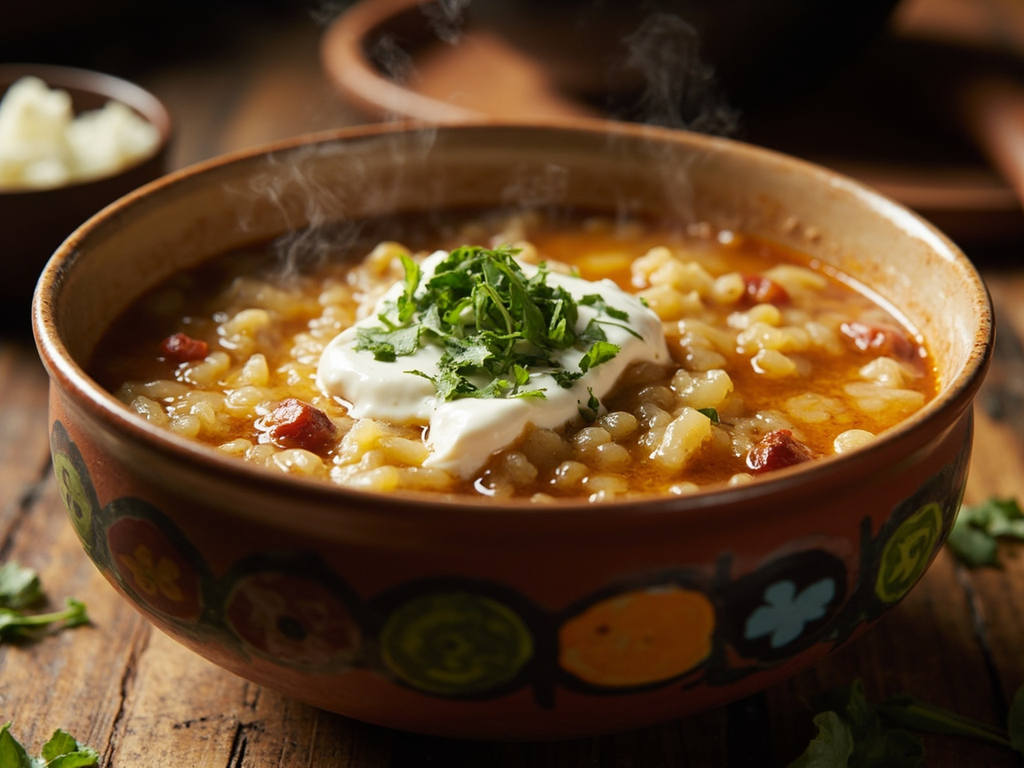
Mastava (Lamb and Rice Soup)
Why this dish? Mastava is a thick everyday soup in Samarkand, consumed in the morning or at the start of a meal. For a scholar like Ulugh Beg, spending long nights at the observatory, it was the ultimate comfort dish at daybreak, after a night of celestial observations in the cold of the Central Asian winter.
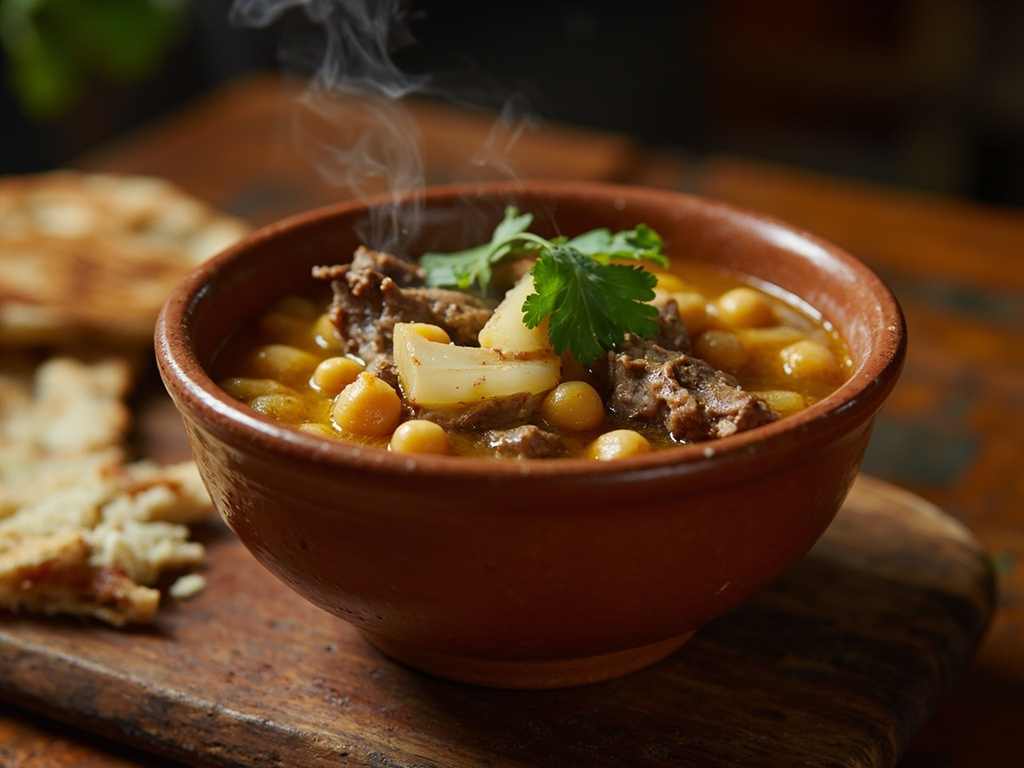
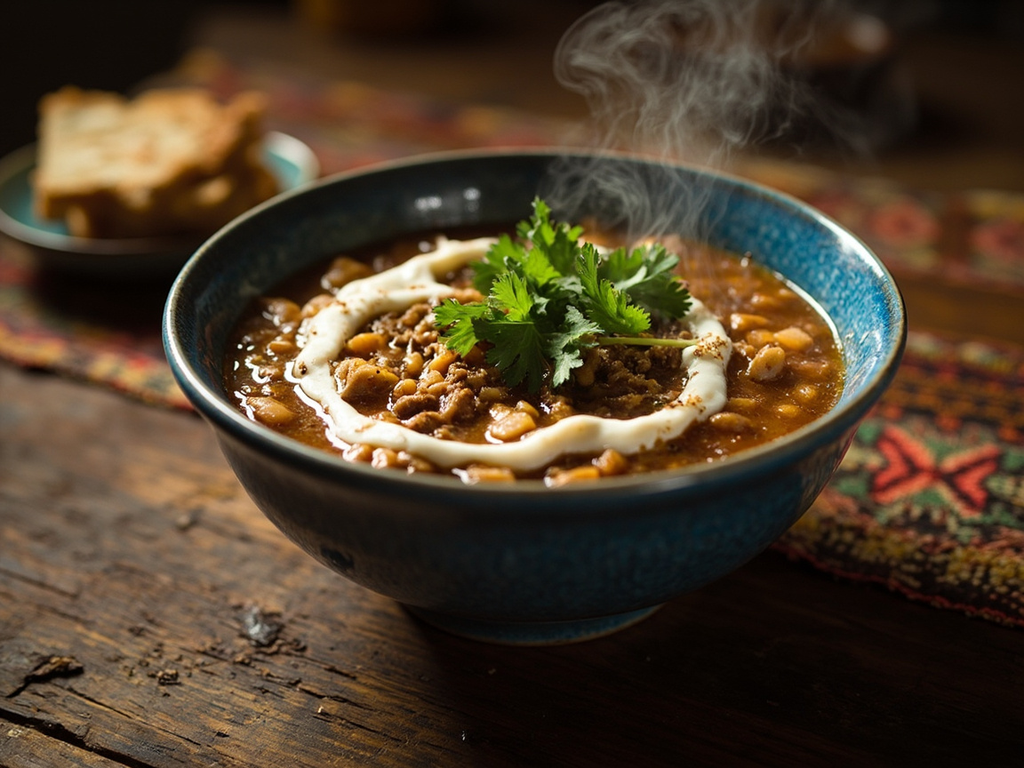
Thick soup based on rice, lamb pieces, onions, carrots, and turnips, enriched at the end of cooking with beaten yogurt which gives it its characteristic acidity. Perfumed with cumin and fresh coriander, it is a complete and fortifying dish, between soup and stew.
Winter in Samarkand is harsh, and the observatory is not heated — only the passion for measuring the sky warms us. When I descend at dawn, my fingers numb from the cold of the sextant, nothing restores strength like a bowl of mastava. The fatty broth, the rice that has drunk all the meat's essence, and that katyk poured in last, which gives the brew a sourness that awakens the mind. An astronomer who neglects his soup will soon neglect his calculations.
- •Lamb (breast or neck) — a portion with bone (Broth base and meat)
- •Rice — a measure (Thickener)
- •Onion — one large (Aromatic base)
- •Carrot — one (Root vegetable)
- •Turnip — one (Root vegetable)
- •Katyk (fermented yogurt) — a bowl (Tangy finish)
- •Cumin — a pinch (Spice)
- •Fresh coriander — a handful (Herb)
- •Sheep-tail fat — a piece (Cooking fat)
- •Salt — to taste (Seasoning)
Mastava (Lamb and Rice Soup)
Thick soup based on rice, lamb pieces, onions, carrots, and turnips, enriched at the end of cooking with beaten yogurt which gives it its characteristic acidity. Perfumed with cumin and fresh coriander, it is a complete and fortifying dish, between soup and stew.
Why this dish? Mastava is a thick everyday soup in Samarkand, consumed in the morning or at the start of a meal. For a scholar like Ulugh Beg, spending long nights at the observatory, it was the ultimate comfort dish at daybreak, after a night of celestial observations in the cold of the Central Asian winter.
Winter in Samarkand is harsh, and the observatory is not heated — only the passion for measuring the sky warms us. When I descend at dawn, my fingers numb from the cold of the sextant, nothing restores strength like a bowl of mastava. The fatty broth, the rice that has drunk all the meat's essence, and that katyk poured in last, which gives the brew a sourness that awakens the mind. An astronomer who neglects his soup will soon neglect his calculations.
Ingredients (period version)
- Lamb (breast or neck) — a portion with bone (Broth base and meat)
- Rice — a measure (Thickener)
- Onion — one large (Aromatic base)
- Carrot — one (Root vegetable)
- Turnip — one (Root vegetable)
- Katyk (fermented yogurt) — a bowl (Tangy finish)
- Cumin — a pinch (Spice)
- Fresh coriander — a handful (Herb)
- Sheep-tail fat — a piece (Cooking fat)
- Salt — to taste (Seasoning)
Ingredients
- Lamb neck or breast — 400 g (Broth and meat)
- Short-grain rice — 100 g (Thickener)
- Yellow onion — 1 large (Aromatic base)
- Carrot — 1 medium (Vegetable)
- Turnip — 1 small (Vegetable)
- Plain whole yogurt — 150 g (Tangy finish)
- Ground cumin — 1 tsp (Spice)
- Fresh coriander — 1 bunch (Finishing herb)
- Vegetable oil — 2 tbsp (Cooking fat)
- Salt and black pepper — to taste (Seasoning)
- Water — 1.5 liters (Broth)
Method
- Cut the lamb into medium pieces, dice the onion, and cube the carrot and turnip small.
- Heat the oil in a pot, sauté the onion until translucent, then add the lamb pieces and lightly brown.
- Add the carrot and turnip, cover with cold water (1.5 liters). Bring to a boil and skim thoroughly.
- Add salt and cumin, reduce heat, and simmer covered for 45 minutes.
- Add the rinsed rice and cook for another 20 minutes, until the rice is very tender and the soup has thickened.
- Off the heat, beat the yogurt with a ladle of hot broth to temper it, then stir into the soup. Do not boil again.
- Serve in bowls, generously sprinkled with chopped fresh coriander and a dash of cumin.
How it was made : Thick rice and yogurt soups have been a staple of Central Asian diet since pre-Islamic times. Katyk (fermented yogurt) is a constant in the sedentary cuisine of Transoxiana. Mastava remains an emblematic dish of Samarkand and Tashkent today, virtually unchanged in structure for centuries.
The contemporary twist : Serve in a blue Rishtan ceramic bowl with a drizzle of walnut oil and a few toasted cumin seeds on top.
Sources : Karim Mamedov, « La Cuisine d'Asie centrale » — Uzbek culinary traditions · Glenn R. Mack, Asele Surina, « Food Culture in Russia and Central Asia » (2005), Greenwood Press
Ulugh Beg · Charactorium