 flip
flipMostarda di Cremona (candied fruits with mustard essence)
Mostarda di Cremona (candied fruits with mustard essence)
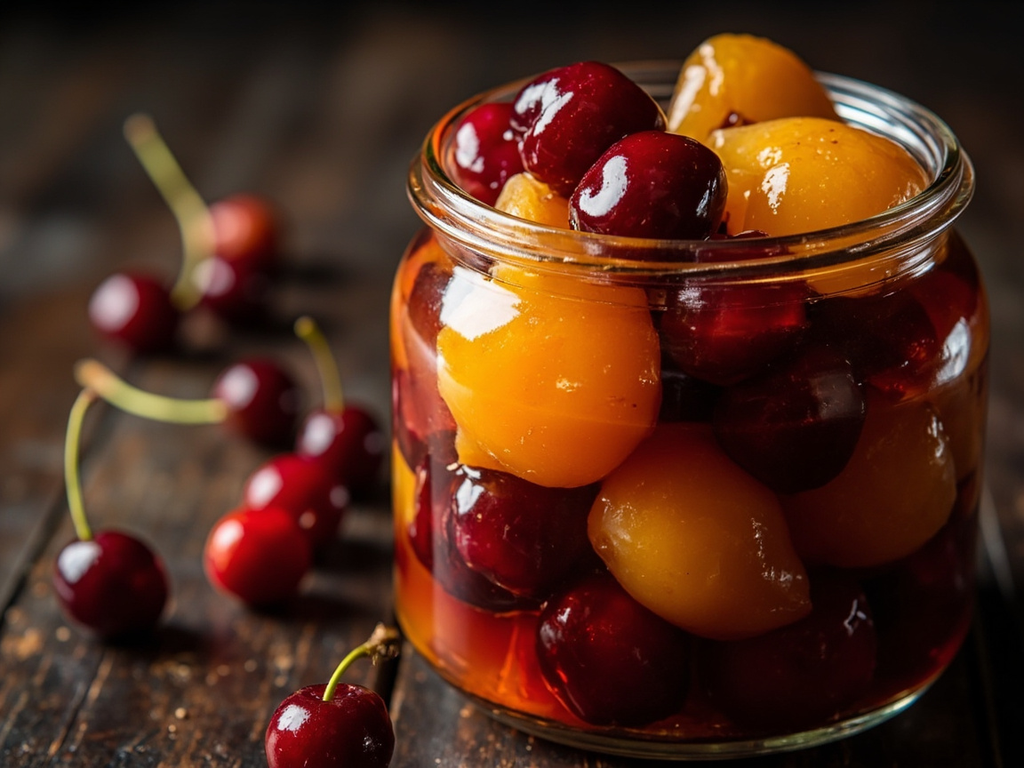
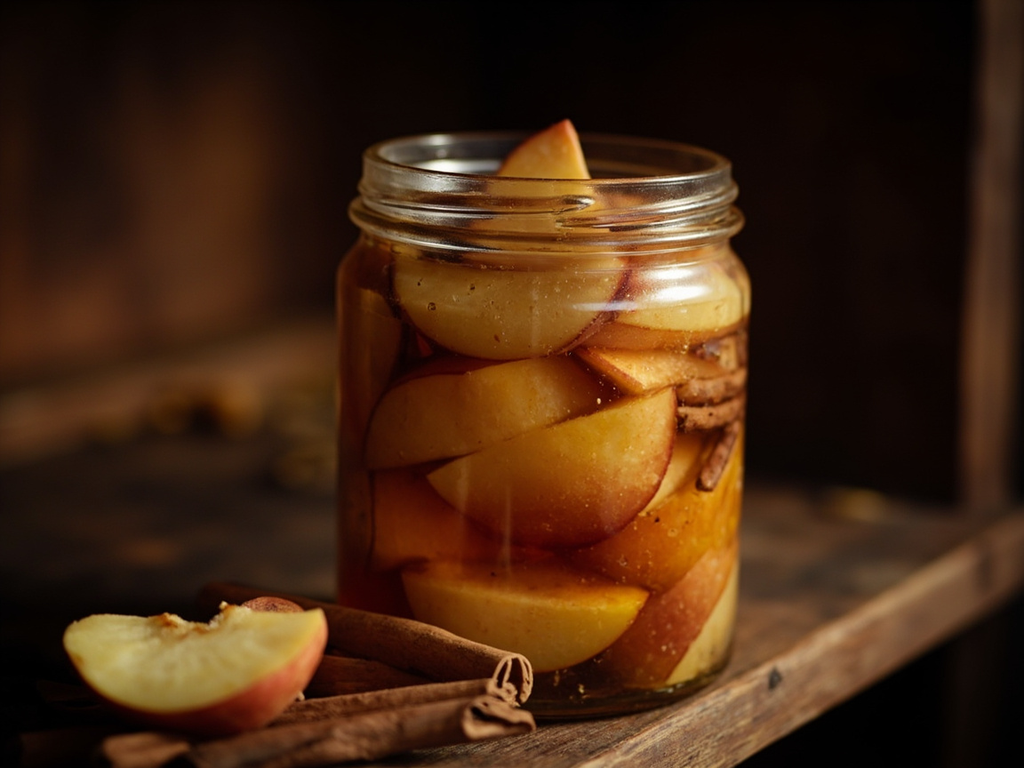
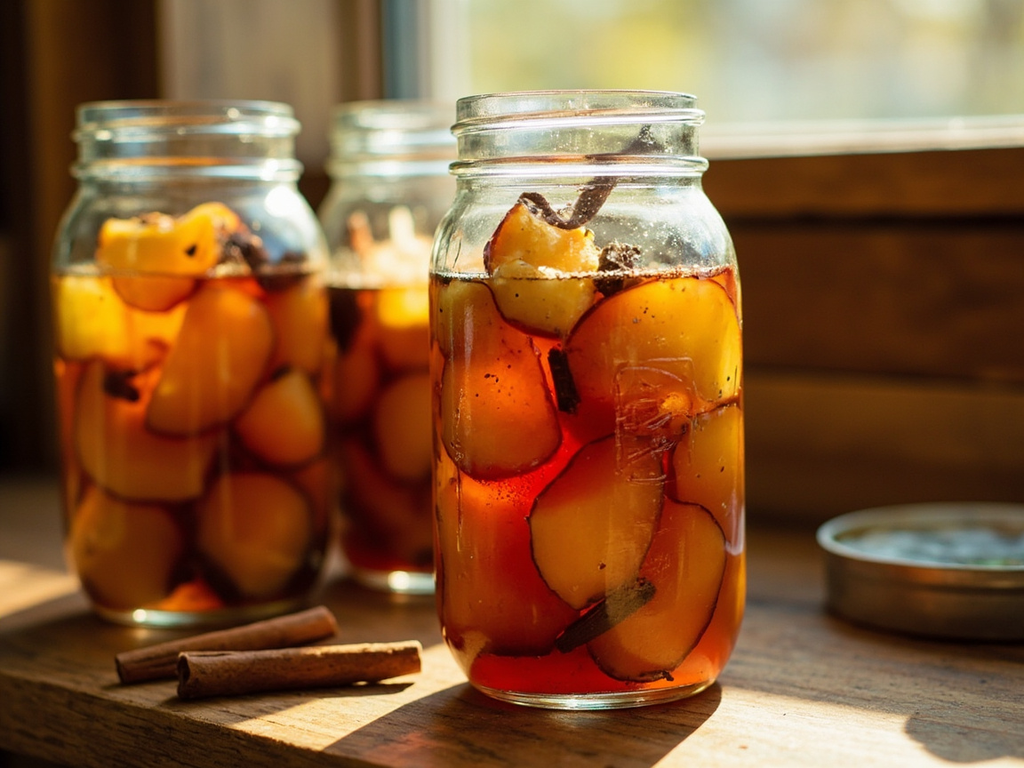
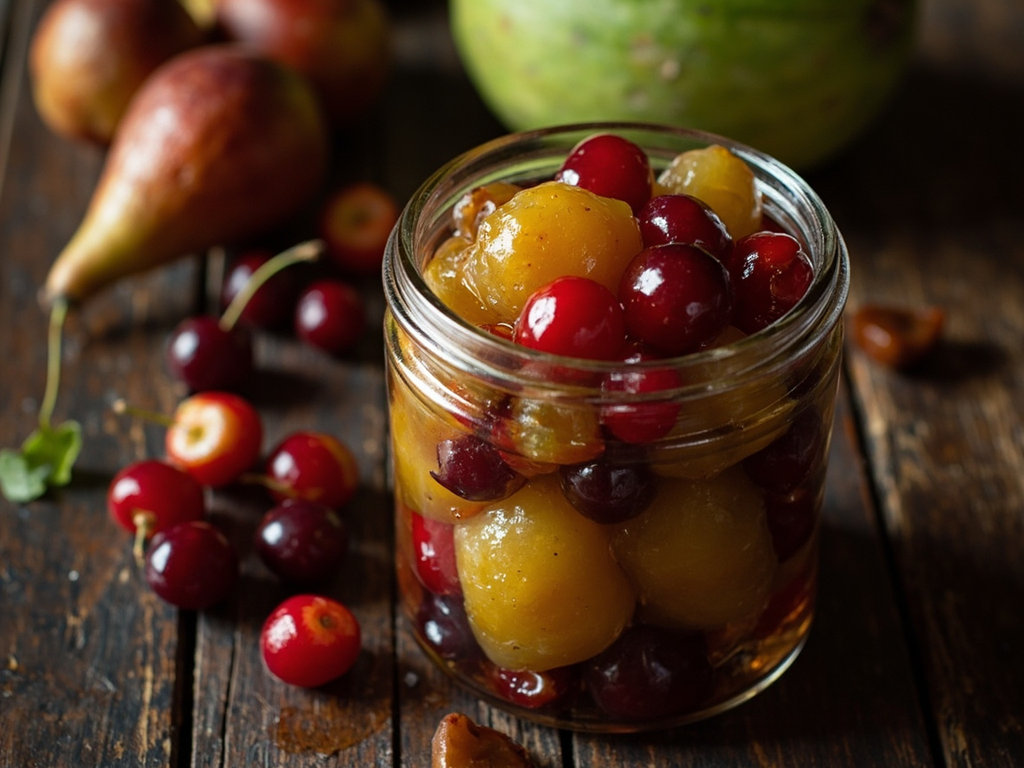
Why this dish? Mostarda is the preserved glory of Cremona, Ponchielli's city. Jars of whole fruits, brilliant like precious stones, that last through winter and accompany marubini and Christmas bolliti on Cremonese tables.
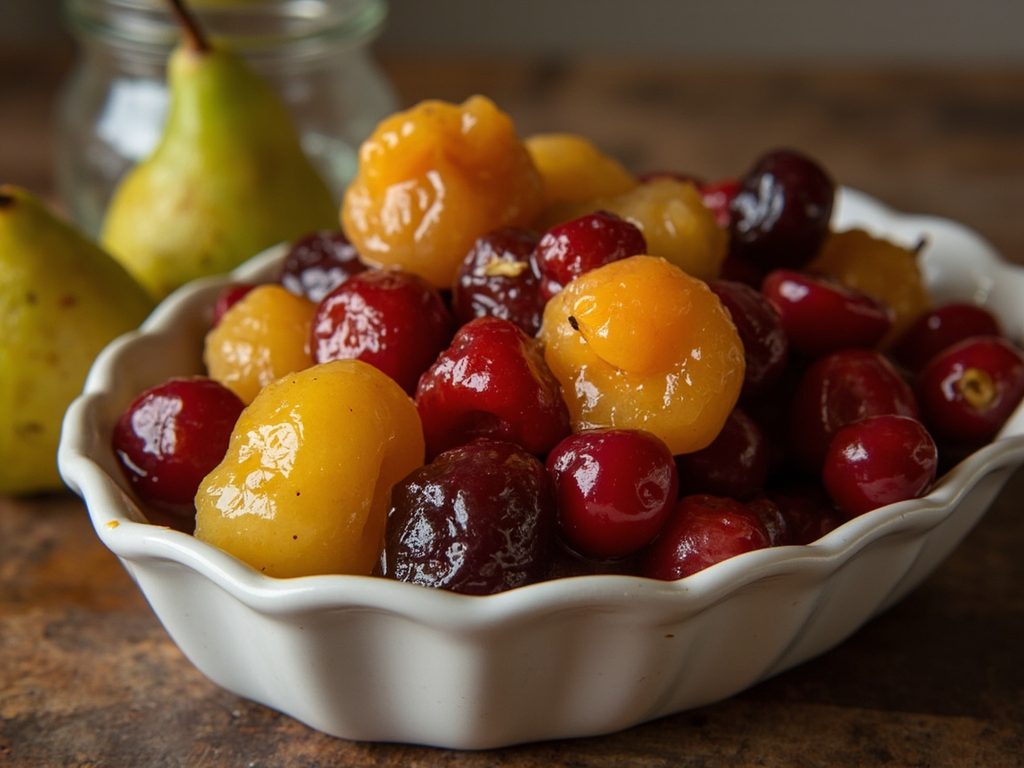
Whole fruits candied in a clear syrup, pungent with a mustard essence that awakens the palate. Sweet and burning at once, this preserved condiment makes boiled meat sing.
Ah, the mostarda! Do not be fooled by its confectionery shine: it bites. In Cremona, we candy whole fruits — cherry, pear, quince, fig, green melon — in a syrup that we warm each day, gently, like repeating a cadence until it sounds right. Then comes the mustard essence, just a few drops, that makes the eyes water and the tongue sing. We keep it all winter in jars, and on feast days, it accompanies the boiled meats: sweet and fire, sour and sugar, the whole opera in a spoonful.
- •Firm whole fruits (cherries, pears, quinces, figs, green melon) — assortment (candied base)
- •Sugar — equal weight to fruit (candying and preservation)
- •Mustard essence (mustard seeds) — a few drops (the pungency, the signature)
- •Water — for the syrup (syrup)
Mostarda di Cremona (candied fruits with mustard essence)
Whole fruits candied in a clear syrup, pungent with a mustard essence that awakens the palate. Sweet and burning at once, this preserved condiment makes boiled meat sing.
Why this dish? Mostarda is the preserved glory of Cremona, Ponchielli's city. Jars of whole fruits, brilliant like precious stones, that last through winter and accompany marubini and Christmas bolliti on Cremonese tables.
Ah, the mostarda! Do not be fooled by its confectionery shine: it bites. In Cremona, we candy whole fruits — cherry, pear, quince, fig, green melon — in a syrup that we warm each day, gently, like repeating a cadence until it sounds right. Then comes the mustard essence, just a few drops, that makes the eyes water and the tongue sing. We keep it all winter in jars, and on feast days, it accompanies the boiled meats: sweet and fire, sour and sugar, the whole opera in a spoonful.
Ingredients (period version)
- Firm whole fruits (cherries, pears, quinces, figs, green melon) — assortment (candied base)
- Sugar — equal weight to fruit (candying and preservation)
- Mustard essence (mustard seeds) — a few drops (the pungency, the signature)
- Water — for the syrup (syrup)
Ingredients
- Mixed firm fruits (pears, quinces, cherries, figs, apricots, green melon) — 1 kg (base)
- Sugar — 800 g (syrup and preservation)
- Water — 200 ml (syrup)
- Lemon juice — 1 (acid balance)
- Food-grade mustard essential oil — 10 to 20 drops to taste (characteristic pungency)
Method
- Wash and trim large fruits, keep small ones whole; briefly blanch the firmest (quinces, pears).
- Prepare a syrup with the sugar, water and lemon juice.
- Immerse the fruits, bring to a simmer, then let macerate 24 hours off the heat.
- For 3-4 days, reheat the syrup daily and pour it back over the fruits (slow candying method).
- On the last day, the syrup should coat the fruits and they should be translucent and firm.
- Off the heat, once warm, incorporate the mustard essential oil drop by drop, tasting carefully (the pungency should tingle without burning).
- Pack into sterilized jars, cover with syrup, seal. Wait a few days before tasting.
How it was made : Born from the medieval and Renaissance art of preserving fruits in sugar, Cremona's mostarda is distinguished by mustard essence (mostum ardens, 'burning must'). In the 19th century, it was a precious preserved condiment, served with festive boiled meats. Handling mustard essence required caution: its vapors are strongly pungent.
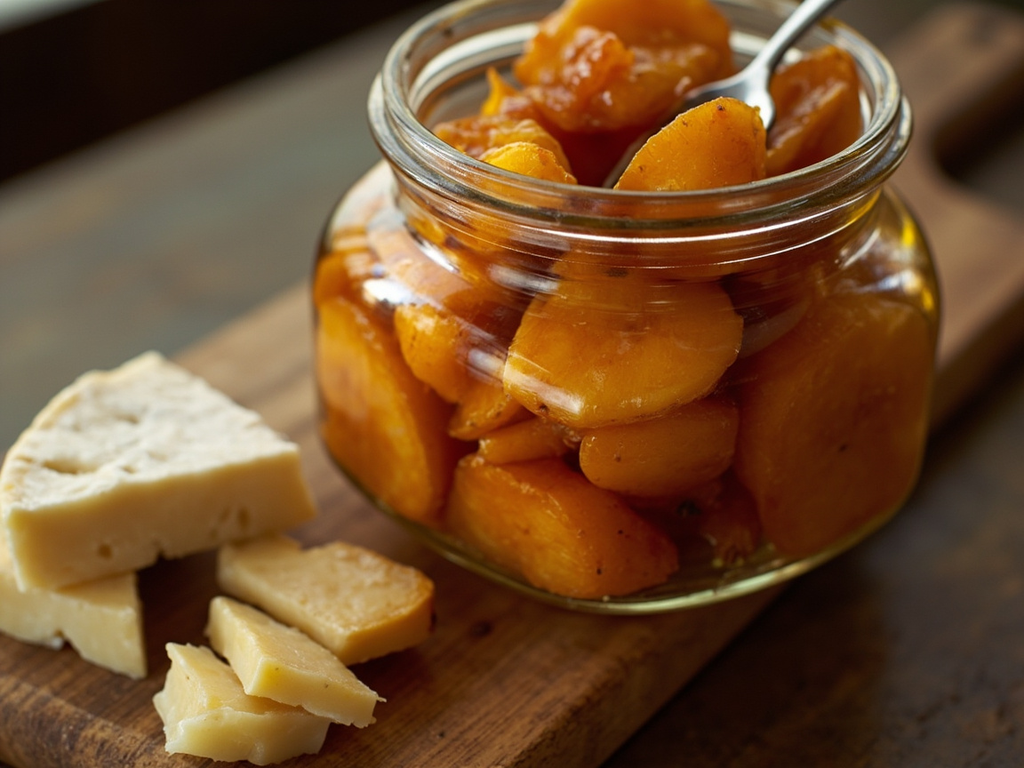
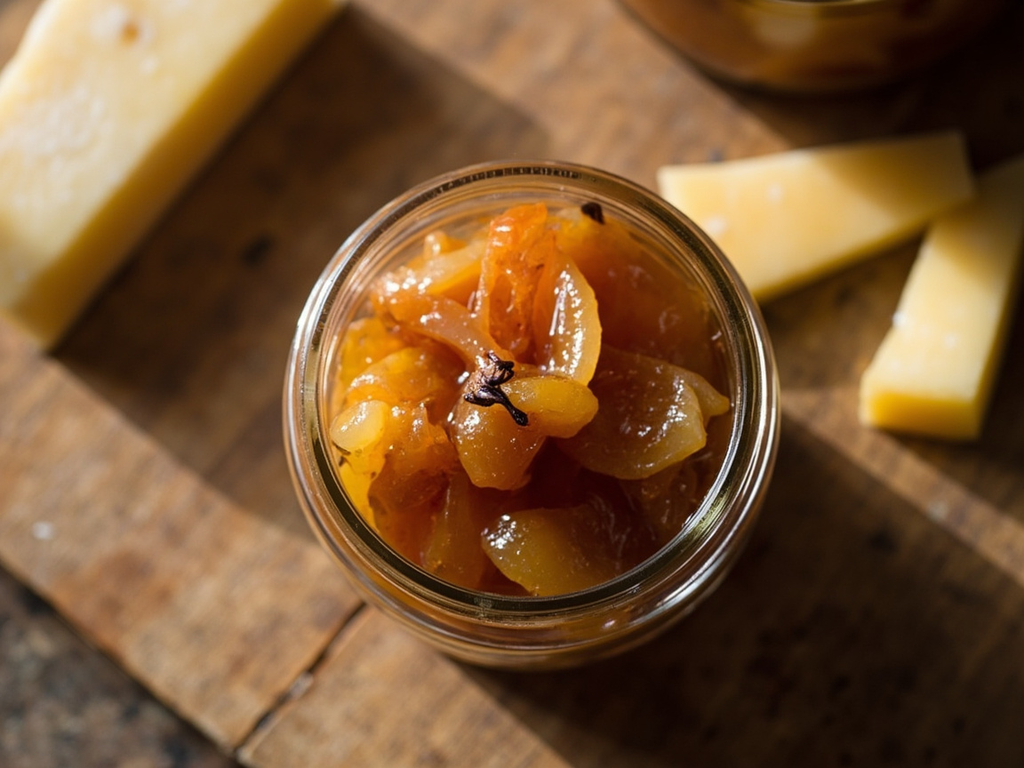
The contemporary twist : A single candied fruit, glistening, placed on a slice of grana, as a sweet-pungent contrast appetizer bite.
Sources : Tradition of mostarda di Cremona · Pellegrino Artusi, La scienza in cucina (1891)
Amilcare Ponchielli · Charactorium