 flip
flipFriday Evening Couscous with Lamb
Friday Evening Couscous with Lamb
Why this dish? The Friday evening couscous was the heart of the family meal at the Halimi home, a gathering moment that Gisèle described as a time of both replenishment and debate. Inspired by Sephardic Shabbat, without reproducing its ritual.
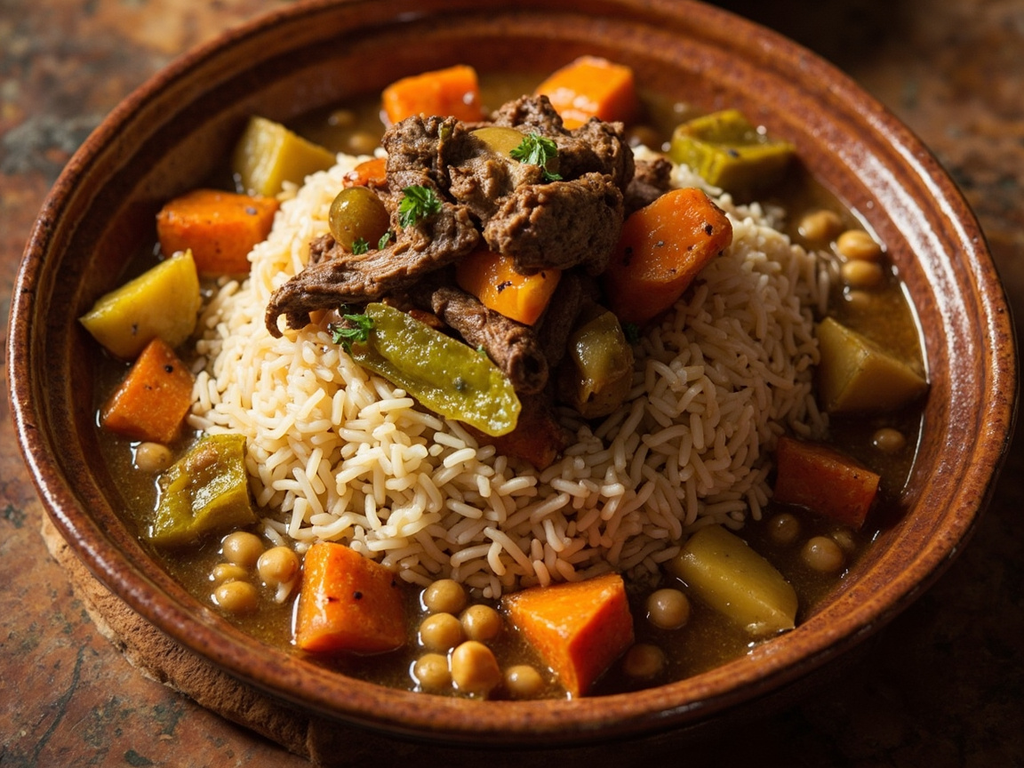
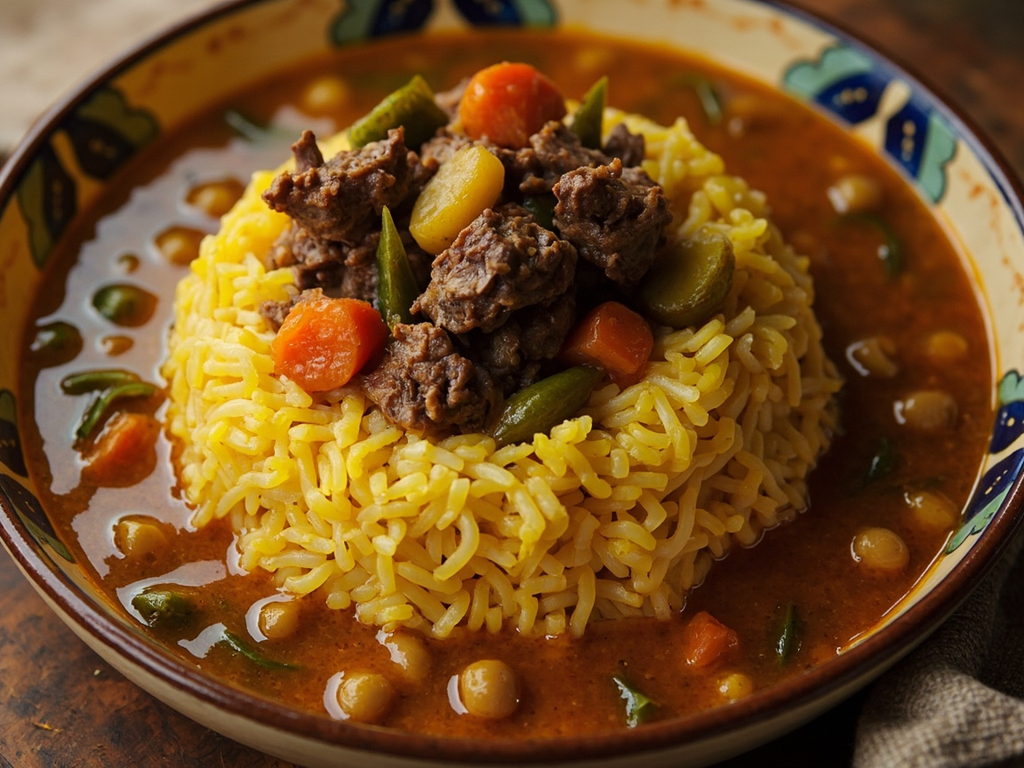
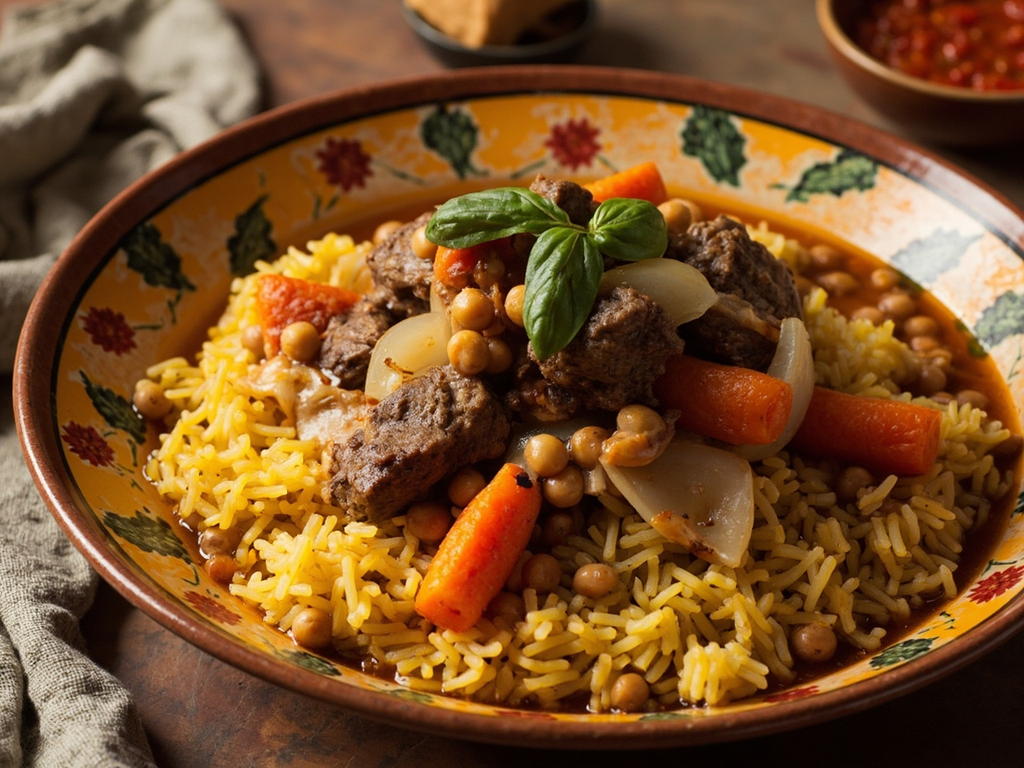
Rolled semolina steamed and served with a fragrant broth of vegetables, chickpeas and lamb, spiced with harissa. The festive dish par excellence, generous and colorful.
On Fridays, the whole house smelled of broth. My mother, Fritna, rolled the semolina by hand, grain by grain, and woe to anyone who touched the couscoussier before the time. We crowded around the dish, talked loudly, interrupted each other — that's where, as a little girl, I learned to plead. The semolina must be light, never pasty; you steam it three times, aerate it between your fingers moistened with salted water. And the harissa, you dilute it in a ladle of broth, on the side, for those who like the fire.
- •Durum wheat semolina — a large platter (base of the couscous)
- •Lamb or mutton — several pieces (meat for the broth)
- •Chickpeas — a bowl, soaked (legume)
- •Turnips, carrots, zucchini — according to season (broth vegetables)
- •Tomato (paste) — a spoonful (color and base — common in 20th-century Tunisia)
- •Harissa and tabil — to taste (signature spices)
- •Olive oil — generous (fat and binder for semolina)
Friday Evening Couscous with Lamb
Rolled semolina steamed and served with a fragrant broth of vegetables, chickpeas and lamb, spiced with harissa. The festive dish par excellence, generous and colorful.
Why this dish? The Friday evening couscous was the heart of the family meal at the Halimi home, a gathering moment that Gisèle described as a time of both replenishment and debate. Inspired by Sephardic Shabbat, without reproducing its ritual.
On Fridays, the whole house smelled of broth. My mother, Fritna, rolled the semolina by hand, grain by grain, and woe to anyone who touched the couscoussier before the time. We crowded around the dish, talked loudly, interrupted each other — that's where, as a little girl, I learned to plead. The semolina must be light, never pasty; you steam it three times, aerate it between your fingers moistened with salted water. And the harissa, you dilute it in a ladle of broth, on the side, for those who like the fire.
Ingredients (period version)
- Durum wheat semolina — a large platter (base of the couscous)
- Lamb or mutton — several pieces (meat for the broth)
- Chickpeas — a bowl, soaked (legume)
- Turnips, carrots, zucchini — according to season (broth vegetables)
- Tomato (paste) — a spoonful (color and base — common in 20th-century Tunisia)
- Harissa and tabil — to taste (signature spices)
- Olive oil — generous (fat and binder for semolina)
Ingredients
- Medium couscous semolina — 500 g (base)
- Lamb shoulder — 800 g cut into pieces (meat)
- Chickpeas — 200 g soaked (or 1 can) (legume)
- Carrots, turnips, zucchini — 2 each (vegetables)
- Tomato paste — 2 tbsp (broth base)
- Harissa — 1 to 2 tbsp (heat)
- Caraway, coriander, garlic — 1 tsp + 3 cloves (homemade tabil)
- Olive oil, salt — 50 ml + to taste (seasoning)
Method
- Brown the lamb in olive oil at the bottom of the couscoussier with the garlic, tomato paste, caraway and coriander.
- Cover with water, add the chickpeas and a spoonful of harissa. Bring to a simmer.
- Meanwhile, moisten the semolina with salted water, rub it with your hands, and steam it for the first time for 15 minutes.
- Turn it out into a dish, drizzle with a little oil and water, aerate it between your fingers, then steam again. Repeat a third time for light grains.
- Add the vegetables to the broth halfway through cooking, according to their firmness (turnips and carrots first, then zucchini).
- Mound the semolina into a dome, make a well in the center, arrange the meat and vegetables, and ladle over some broth.
- Serve the remaining broth and the diluted harissa on the side.
How it was made : The semolina was rolled and rubbed entirely by hand, and cooking was done exclusively by steaming in the couscoussier (keskes) over the broth. Preparing Friday's couscous was a whole morning affair, often involving all the women of the household.
The contemporary twist : An express version: use pre-cooked semolina hydrated with flavored broth, and present each guest with their own small pot of homemade harissa to dose themselves.
Sources : Sephardic cuisine of Tunisia — Shabbat couscous (family tradition) · Gisèle Halimi, Fritna, Plon, 1999 (portrait of her mother and the family home)
Gisèle Halimi · Charactorium