 flip
flipAreíto Fish Stew with Ají and Cassava Syrup
Areíto Fish Stew with Ají and Cassava Syrup
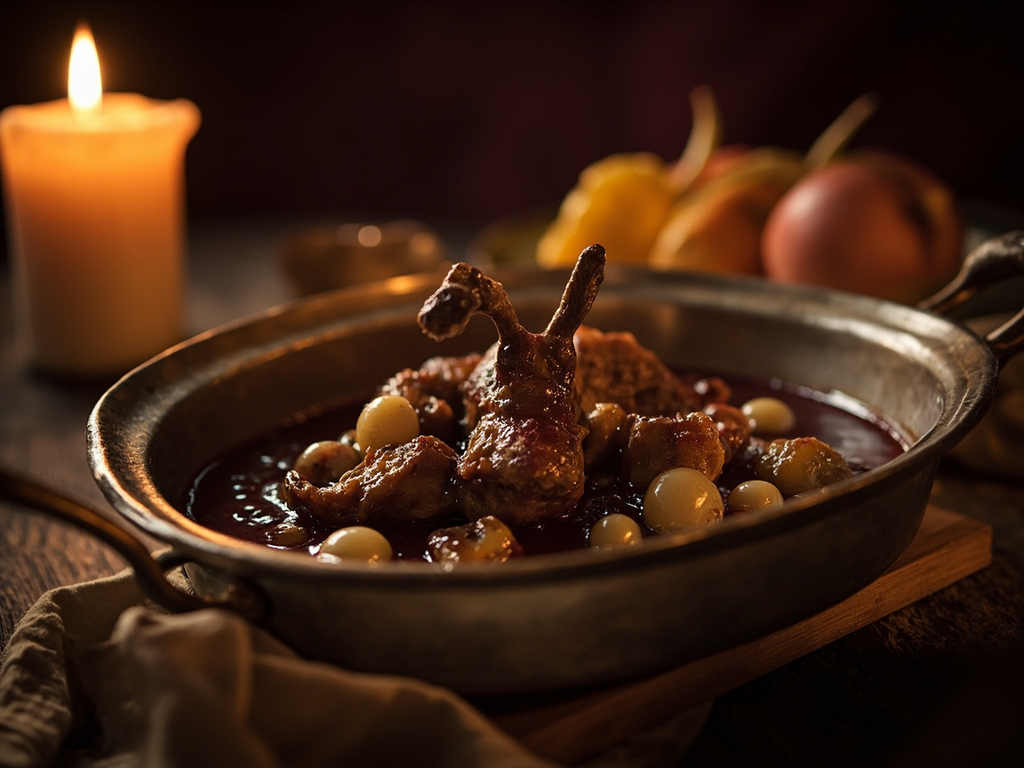
Why this dish? Anacaona organized great feasts gathering hundreds of guests during the areítos of Xaragua. At the heart of these celebrations sat the common pot, simmered for a long time, from which everyone drew — a living symbol of a queen's generosity.
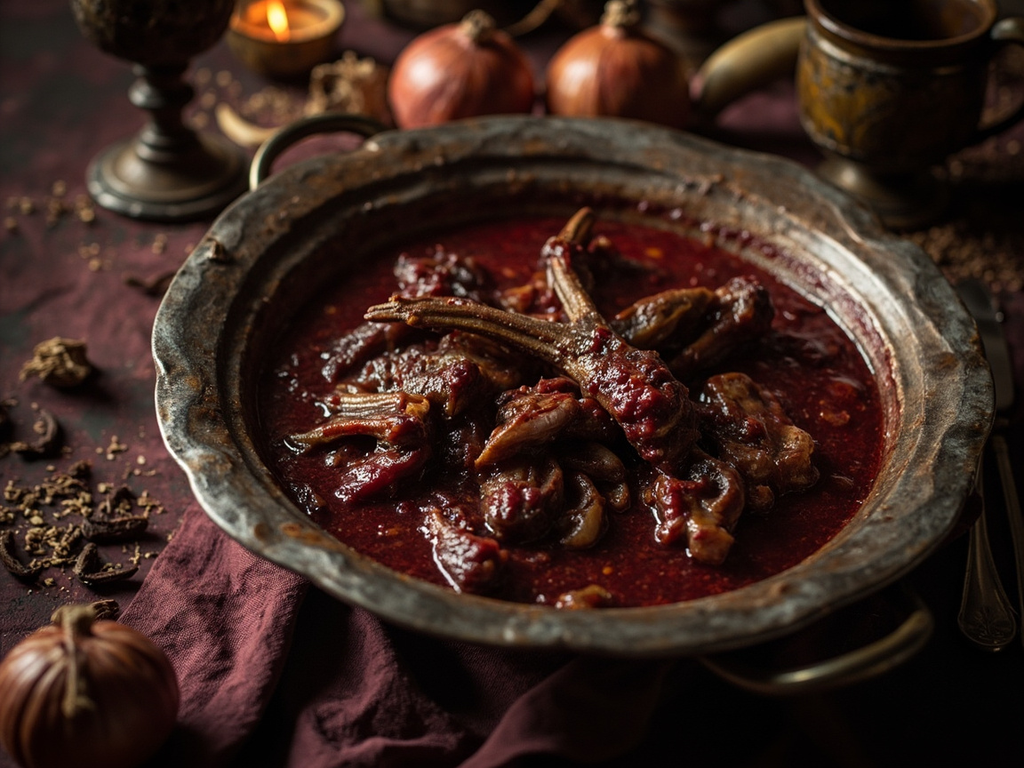
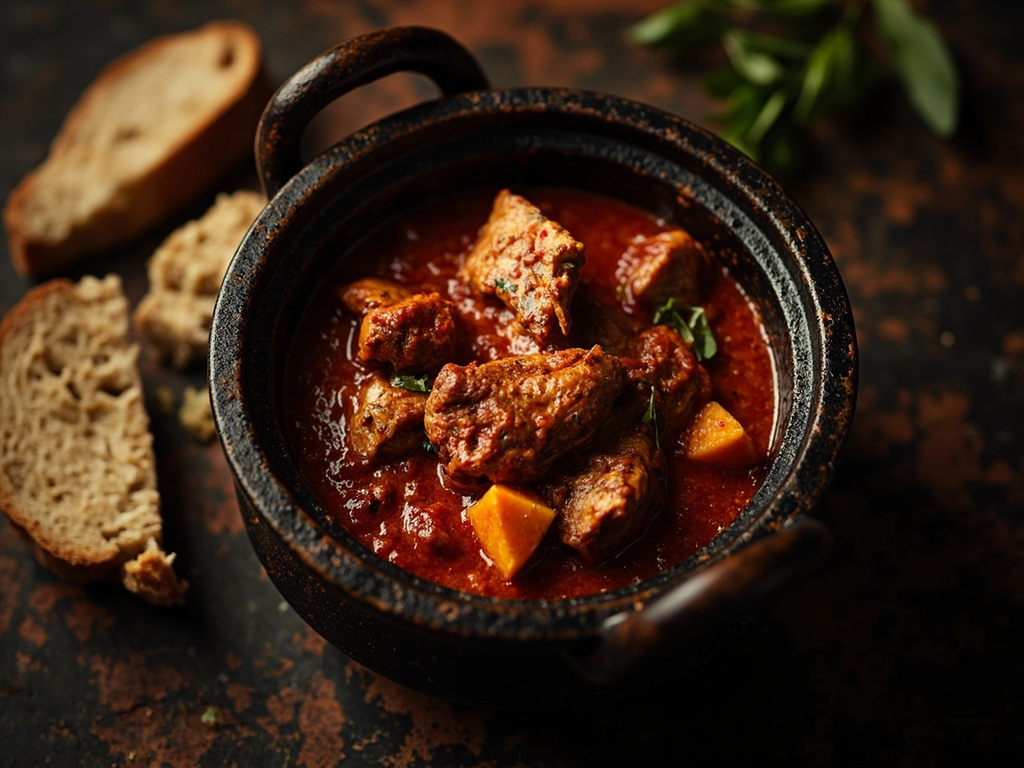
A deep, hearty stew, ancient ancestor of the Caribbean 'pepperpot': fish and crab simmered in casaripe, that dark syrup made from boiled cassava juice, spiked with fiery ají. A sharing dish, rich in umami, with a slight bitter undertone.
When the drum calls for the areíto, my pot never goes out. I drop in the fish from our coasts, the crab from the mangrove, and I feed the fire with casaripe, that black juice of cassava boiled long until sweet as a secret. A handful of ají, and the mouth burns as much as our songs. Come, dip your flatbread into the pot: at my table, everyone draws from the same broth, from the humblest to the cacique.
- •Sea fish and crabs — according to the catch (protein)
- •Casaripe (bitter cassava juice boiled down to syrup) — one bowl (aromatic base and preservative)
- •Ají (island chili pepper) — to taste (heat)
- •Sweet potato (batata) — a few roots (body of the stew)
- •Bija (achiote) — a pinch (color and fragrance)
Areíto Fish Stew with Ají and Cassava Syrup
A deep, hearty stew, ancient ancestor of the Caribbean 'pepperpot': fish and crab simmered in casaripe, that dark syrup made from boiled cassava juice, spiked with fiery ají. A sharing dish, rich in umami, with a slight bitter undertone.
Why this dish? Anacaona organized great feasts gathering hundreds of guests during the areítos of Xaragua. At the heart of these celebrations sat the common pot, simmered for a long time, from which everyone drew — a living symbol of a queen's generosity.
When the drum calls for the areíto, my pot never goes out. I drop in the fish from our coasts, the crab from the mangrove, and I feed the fire with casaripe, that black juice of cassava boiled long until sweet as a secret. A handful of ají, and the mouth burns as much as our songs. Come, dip your flatbread into the pot: at my table, everyone draws from the same broth, from the humblest to the cacique.
Ingredients (period version)
- Sea fish and crabs — according to the catch (protein)
- Casaripe (bitter cassava juice boiled down to syrup) — one bowl (aromatic base and preservative)
- Ají (island chili pepper) — to taste (heat)
- Sweet potato (batata) — a few roots (body of the stew)
- Bija (achiote) — a pinch (color and fragrance)
Ingredients
- Firm white fish (pollock, hake) + crab meat — 500 g + 150 g (protein)
- Dark cane molasses OR cassava syrup (if no casaripe) — 2 tbsp (sweet-bitter depth (modern substitute))
- Fresh chili like Scotch bonnet — 1/2 to 1, seeded (heat)
- Sweet potato — 2 medium, cubed (body)
- Annatto (achiote) powder — 1/2 tsp (color)
- Water — 500 ml (broth)
- Sea salt — to taste (seasoning)
Method
- Simmer the sweet potato cubes in water with annatto and a pinch of salt for about 12 minutes.
- Add the dark molasses (a nod to casaripe) and the whole or minced chili depending on desired heat; let reduce for 5 minutes so the broth darkens and thickens.
- Add the fish in large chunks and poach gently for 5 minutes without stirring to avoid breaking it.
- Add the crab meat at the end of cooking, just to warm through.
- Taste, adjust salt and bitterness: the stew should be dark, glossy, both spicy and deep.
- Serve steaming in a large shared dish, with casabe shards for dipping.
How it was made : The Caribbean Amerindians maintained 'pepperpots', perpetual stew pots that were replenished day after day, preserved thanks to casaripe — boiled cassava juice with antiseptic properties. During areítos, communal feasts could feed hundreds of people around these large shared dishes.
The contemporary twist : Present it in a cast-iron pot placed in the center of the table, with an assortment of casabe and lime wedges (introduced later) to share: everyone helps themselves, as in the areíto.
Sources : Sven Loven, Origins of the Tainan Culture, West Indies (1935) · Bartolomé de Las Casas, Apologética historia sumaria
Anacaona · Charactorium