 flip
flipCasabe, the Cassava Flatbread from the Budare
Casabe, the Cassava Flatbread from the Budare
Why this dish? Queen of Xaragua, Anacaona presided over tables of hundreds of guests: at each, the casabe was broken and shared, the foundation of all Taíno hospitality. No areíto, no reception of an important guest took place without this flatbread.
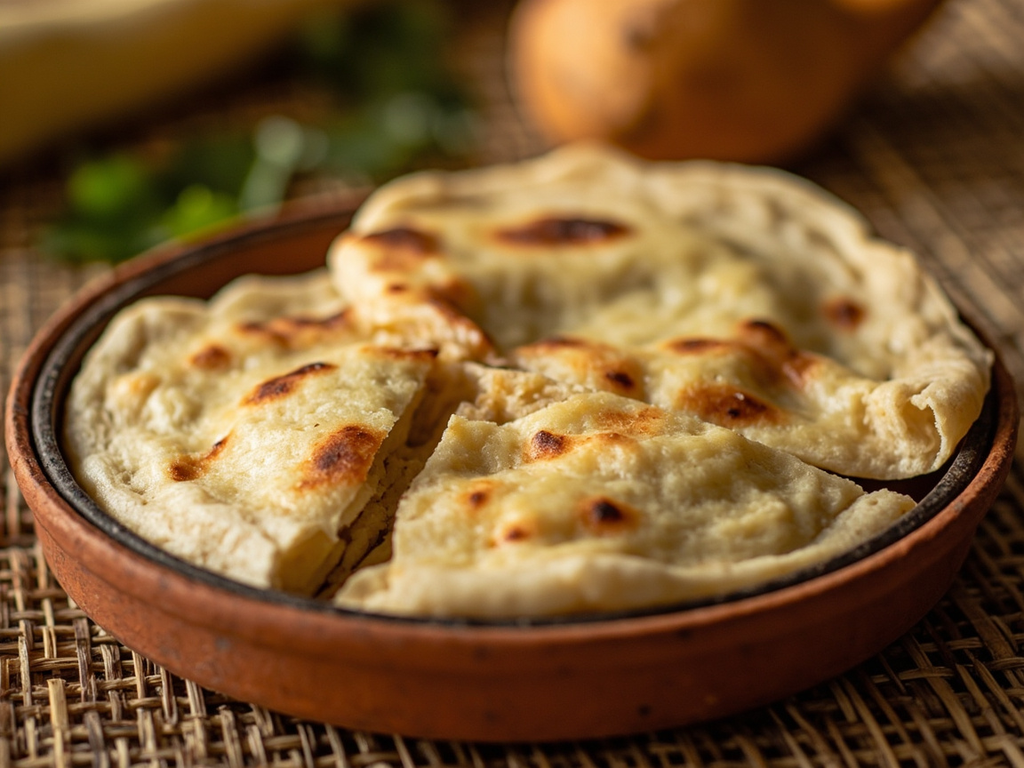
The flat, crispy cassava flatbread, the base of all Taíno cuisine. Plain, slightly bitter and toasted, it keeps for weeks and accompanies both the daily fish and court feasts.
You who come from afar, sit down: under my roof, no one leaves empty-handed. See my women grate the yuca, press in the cibucán the juice that kills, then pour the white flour onto the hot budare — and the flatbread forms, round like the moon of our songs. Break off a piece with your fingers, that is how we honor the guest in Xaragua. As long as there is casabe on my mat, there will be an areíto to dance.
- •Bitter cassava (yuca) — several roots (base, to be detoxified by pressing)
- •Sea salt — a pinch (light seasoning (optional))
Casabe, the Cassava Flatbread from the Budare
The flat, crispy cassava flatbread, the base of all Taíno cuisine. Plain, slightly bitter and toasted, it keeps for weeks and accompanies both the daily fish and court feasts.
Why this dish? Queen of Xaragua, Anacaona presided over tables of hundreds of guests: at each, the casabe was broken and shared, the foundation of all Taíno hospitality. No areíto, no reception of an important guest took place without this flatbread.
You who come from afar, sit down: under my roof, no one leaves empty-handed. See my women grate the yuca, press in the cibucán the juice that kills, then pour the white flour onto the hot budare — and the flatbread forms, round like the moon of our songs. Break off a piece with your fingers, that is how we honor the guest in Xaragua. As long as there is casabe on my mat, there will be an areíto to dance.
Ingredients (period version)
- Bitter cassava (yuca) — several roots (base, to be detoxified by pressing)
- Sea salt — a pinch (light seasoning (optional))
Ingredients
- Cassava flour (or fresh sweet cassava, grated and well pressed) — 300 g (base)
- Water — a few tablespoons if needed (binder)
- Fine salt — 1 pinch (seasoning)
Method
- If starting from fresh cassava: peel, grate finely, then press very firmly in a cloth to extract all the liquid (do not consume this juice). With store-bought cassava flour, skip this step.
- Sift the cassava flour to obtain a fine, homogeneous powder; lightly salt.
- Heat a griddle or heavy pan dry over medium heat.
- Pour an even layer of flour into a cooking ring placed on the griddle, press gently: the heat fuses the granules together, without adding fat.
- Let set for 3 to 4 minutes, flip the flatbread in one motion and cook the other side until firm, dry, and lightly golden.
- Let cool: the casabe should be brittle. Break it by hand to serve.
How it was made : The Taíno cultivated bitter cassava in mounds called conucos. The entire process — grating, pressing in the cibucán (braided sleeve), cooking on the clay budare — was a female skill passed down through generations. Casabe could be stored for months, making it the ideal reserve food of the islands.
The contemporary twist : Serve it in large shards, like crackers, around a guacamole (avocado, ahuácatl, is indeed a New World fruit): a 100% pre-Columbian appetizer.
Sources : Gonzalo Fernández de Oviedo, Historia general y natural de las Indias (1535) · Bartolomé de Las Casas, Apologética historia sumaria
Anacaona · Charactorium