 flip
flipTorta d'erbe — chard, herb, and cheese tart
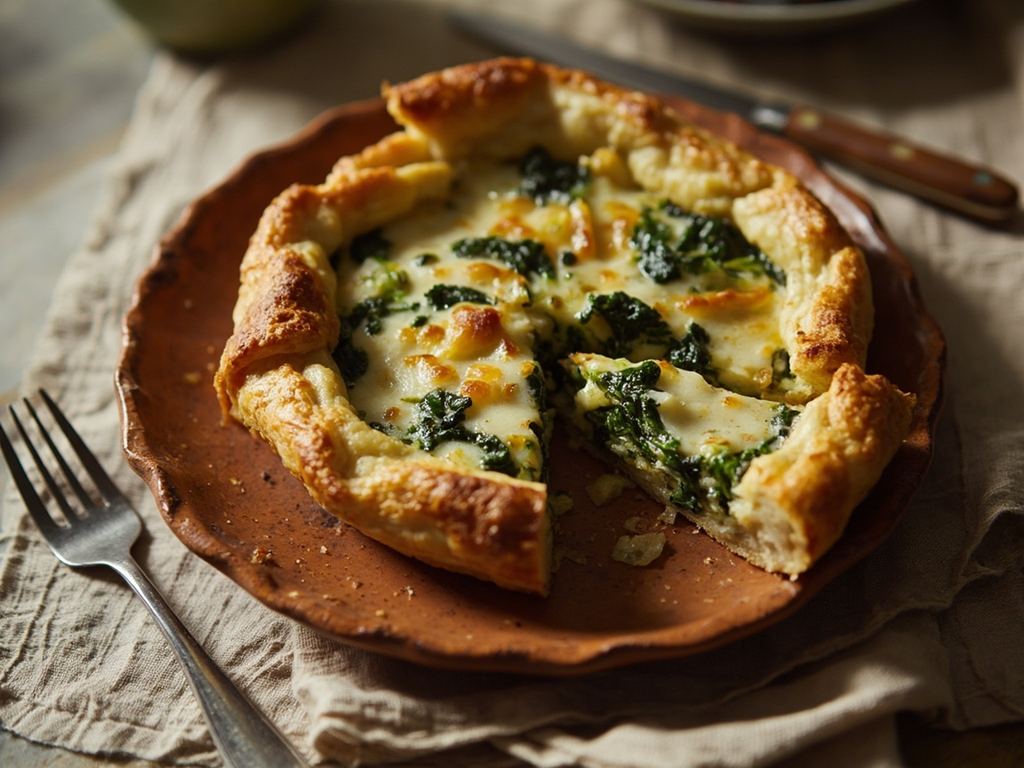
Torta d'erbe — chard, herb, and cheese tart
Why this dish? Between two state banquets, the court kitchen prepared green herb tarts — an ordinary, nourishing dish served cold from the sideboard. For Castiglione, a child of the Lombard countryside of Casatico before becoming a courtier, this was the familiar taste of kitchen gardens and days without pomp.
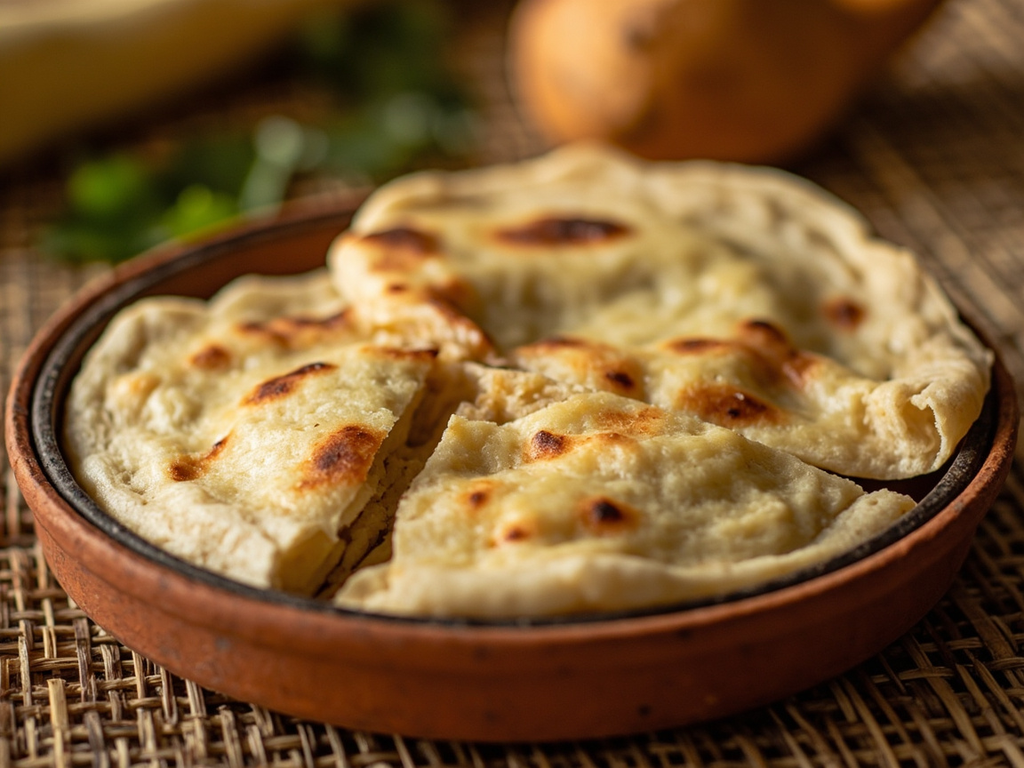
A tart filled with chopped chard, spinach, and borage, bound with eggs and fresh cheese, scented with mild herbs. The slight bitterness of the greens balances the saltiness of the cheese: a simple, green, and hearty dish.
Not everything is splendor at court, believe me. Here is the herb tart as we made it in the land of Casatico where I was born: one gathers chard, spinach, a little borage, chops them fine with fresh cheese and eggs, encloses all in the pastry, and bakes until golden. Cold, taken from the sideboard, it nourishes the sober man. The accomplished courtier knows how to enjoy this as well as the prince's venison.
- •Chard and spinach — a good armful (greens)
- •Borage (or other pot herbs) — a handful (mild herb)
- •Fresh cheese — a good piece (salty binder)
- •Eggs — a few (binder)
- •Pastry (flour, water, lard) — enough to line and cover (crust)
- •Pepper, a little saffron — to taste (seasoning and color)
Torta d'erbe — chard, herb, and cheese tart
A tart filled with chopped chard, spinach, and borage, bound with eggs and fresh cheese, scented with mild herbs. The slight bitterness of the greens balances the saltiness of the cheese: a simple, green, and hearty dish.
Why this dish? Between two state banquets, the court kitchen prepared green herb tarts — an ordinary, nourishing dish served cold from the sideboard. For Castiglione, a child of the Lombard countryside of Casatico before becoming a courtier, this was the familiar taste of kitchen gardens and days without pomp.
Not everything is splendor at court, believe me. Here is the herb tart as we made it in the land of Casatico where I was born: one gathers chard, spinach, a little borage, chops them fine with fresh cheese and eggs, encloses all in the pastry, and bakes until golden. Cold, taken from the sideboard, it nourishes the sober man. The accomplished courtier knows how to enjoy this as well as the prince's venison.
Ingredients (period version)
- Chard and spinach — a good armful (greens)
- Borage (or other pot herbs) — a handful (mild herb)
- Fresh cheese — a good piece (salty binder)
- Eggs — a few (binder)
- Pastry (flour, water, lard) — enough to line and cover (crust)
- Pepper, a little saffron — to taste (seasoning and color)
Ingredients
- Chard — 400 g (green)
- Spinach — 200 g (green)
- Fresh herbs (borage, parsley, marjoram) — 1 handful (flavor)
- Ricotta — 200 g (fresh binder)
- Grated cheese (Parmesan or pecorino) — 60 g (saltiness)
- Eggs — 3 (binder)
- Shortcrust pastry (or 1 bottom + 1 top crust) — 2 disks (crust)
- Saffron — 1 pinch (color)
- Salt, pepper — to taste (seasoning)
Method
- Wash and wilt the chard and spinach in a pan, drain and squeeze thoroughly, then chop.
- Mix the chopped greens with the chopped herbs, ricotta, grated cheese, eggs, saffron dissolved in a spoonful of hot water, salt, and pepper.
- Line a pie dish with one pastry disk, fill with the green mixture.
- Cover with the second disk, seal the edges, and prick the top with a few holes.
- Bake at 190°C for 35-40 minutes, until the crust is golden brown.
- Serve warm or cold, cut into wedges.
How it was made : Green herb tarts (*torte d'erbe verdes*) were a classic of Renaissance Italian cuisine, from peasant kitchens to noble sideboards. Borage, chard, and other garden herbs dominated; saffron was mainly used to give the prized golden color.
The contemporary twist : Baked as small individual tartlets and served warm as an appetizer, it becomes a perfect green bite for a Renaissance-inspired table.
Sources : Maestro Martino, *Libro de arte coquinaria* (c. 1465) · Bartolomeo Scappi, *Opera* (1570), herb tarts
Baldassare Castiglione · Charactorium