 flip
flipMinestra di pane e cavolo nero (bread and black kale soup)
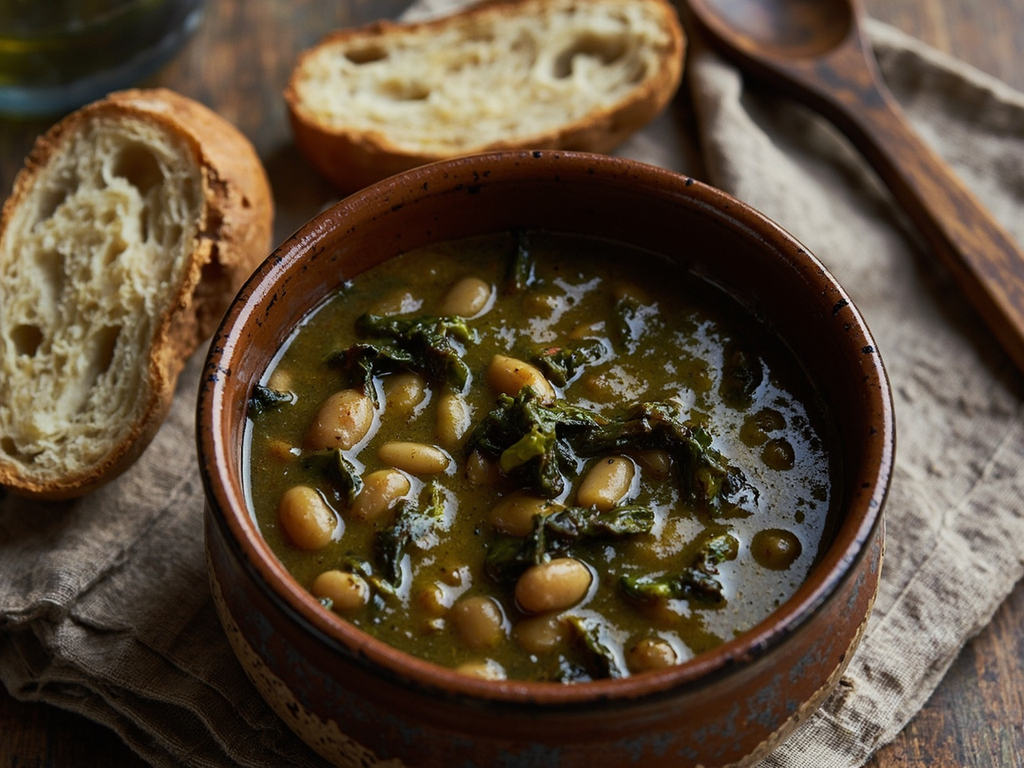
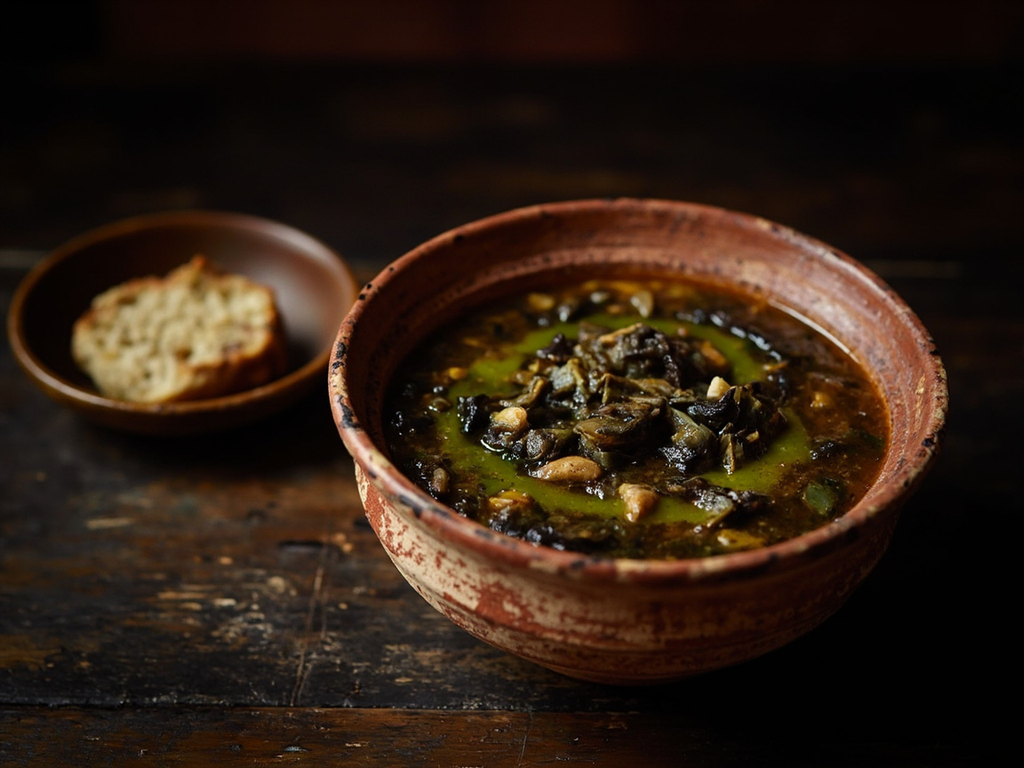
Minestra di pane e cavolo nero (bread and black kale soup)
Why this dish? Between sessions at the workshop on Via dei Pinti, one does not leave the brush for a banquet. This soup of stale bread and Tuscan black kale, drizzled with oil, is the warm, nourishing meal of working days—the one shared with apprentices grinding pigments.
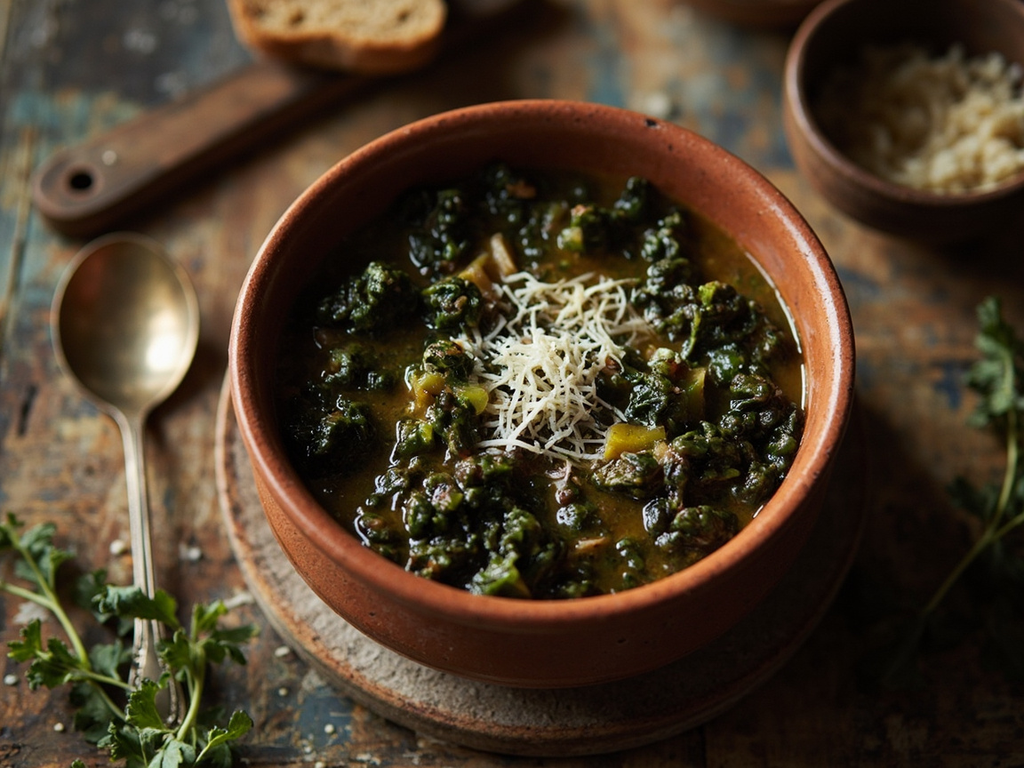
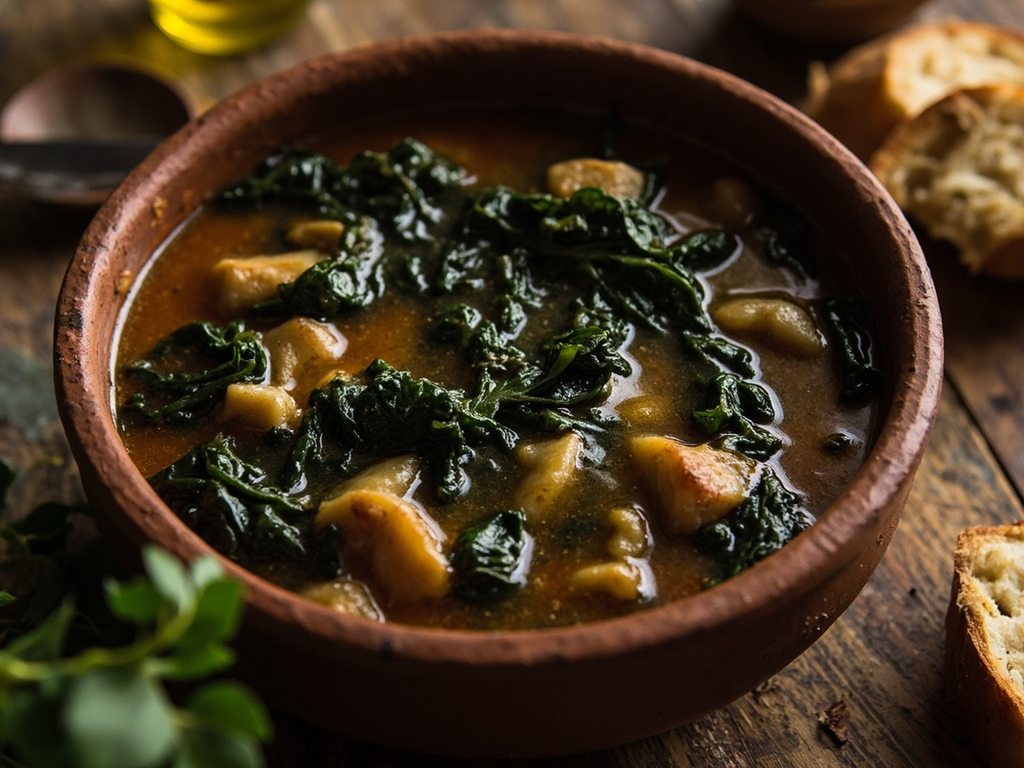
A thick soup of stale bread softened in vegetable broth, bound with Tuscan black kale (cavolo nero), flavored with garlic, onion, and a good drizzle of raw olive oil. Rustic, comforting, made to waste nothing.
Listen, friend: in the workshop, the belly cannot wait for feasts. When the bread hardens, we do not throw it away—we lay it in a hot broth with the black kale picked after the first frosts, which makes it sweeter. My boys pour new oil in a thread, and rub the pot with a garlic clove, as one prepares a ground before laying color. You call it poor? Nay: it is this bread that nourishes the hand that paints Venus.
- •Stale wheat bread — several slices (base, binder)
- •Tuscan black kale (cavolo nero) — one bunch (bitter seasonal vegetable)
- •Olive oil — as needed (fat, finishing)
- •Garlic and onion — a few cloves, one onion (aromatics)
- •Vegetable broth — as needed (liquid)
- •Salt, a little pepper — to taste (seasoning)
Minestra di pane e cavolo nero (bread and black kale soup)
A thick soup of stale bread softened in vegetable broth, bound with Tuscan black kale (cavolo nero), flavored with garlic, onion, and a good drizzle of raw olive oil. Rustic, comforting, made to waste nothing.
Why this dish? Between sessions at the workshop on Via dei Pinti, one does not leave the brush for a banquet. This soup of stale bread and Tuscan black kale, drizzled with oil, is the warm, nourishing meal of working days—the one shared with apprentices grinding pigments.
Listen, friend: in the workshop, the belly cannot wait for feasts. When the bread hardens, we do not throw it away—we lay it in a hot broth with the black kale picked after the first frosts, which makes it sweeter. My boys pour new oil in a thread, and rub the pot with a garlic clove, as one prepares a ground before laying color. You call it poor? Nay: it is this bread that nourishes the hand that paints Venus.
Ingredients (period version)
- Stale wheat bread — several slices (base, binder)
- Tuscan black kale (cavolo nero) — one bunch (bitter seasonal vegetable)
- Olive oil — as needed (fat, finishing)
- Garlic and onion — a few cloves, one onion (aromatics)
- Vegetable broth — as needed (liquid)
- Salt, a little pepper — to taste (seasoning)
Ingredients
- Stale country bread — 250 g (base, binder)
- Tuscan black kale (or curly kale) — 300 g (vegetable)
- Extra virgin olive oil — 6 tbsp (fat)
- Garlic — 2 cloves (aromatic)
- Onion — 1 (aromatic)
- Vegetable broth — 1.2 L (liquid)
- Salt and pepper — to taste (seasoning)
Method
- Finely chop the onion and garlic, gently sweat them in 3 tbsp of oil without browning.
- Strip the black kale leaves from the tough ribs, chiffonade the leaves and add them; cook for 5 minutes.
- Add the hot broth, salt, and simmer for 20 minutes until the kale is tender.
- Cut the bread into pieces, stir it in, remove from heat and let it swell for 10 minutes, covered.
- Coarsely mash with a spoon for a rustic texture. Serve warm, drizzled with raw oil and a grind of pepper.
How it was made : Stale bread soaked (called "panata" or "pancotto") is the foundation of Tuscan medieval and Renaissance peasant cooking, where nothing is wasted. Cavolo nero, an ancient kale from central Italy, becomes sweeter after frost. It was cooked over a wood fire in a single pot, with olive oil replacing the butter absent in the south.
The contemporary twist : Serve in a deep bowl, top with a poached egg and a few pecorino shavings: the "workshop ribollita" revisited, without beans to stay period.
Sources : Anonimo Toscano, Libro della cucina (14th c.) · Platina (Bartolomeo Sacchi), De honesta voluptate et valetudine, 1474
Sandro Botticelli · Charactorium