 flip
flipYam fufu & clear smoked-fish soup
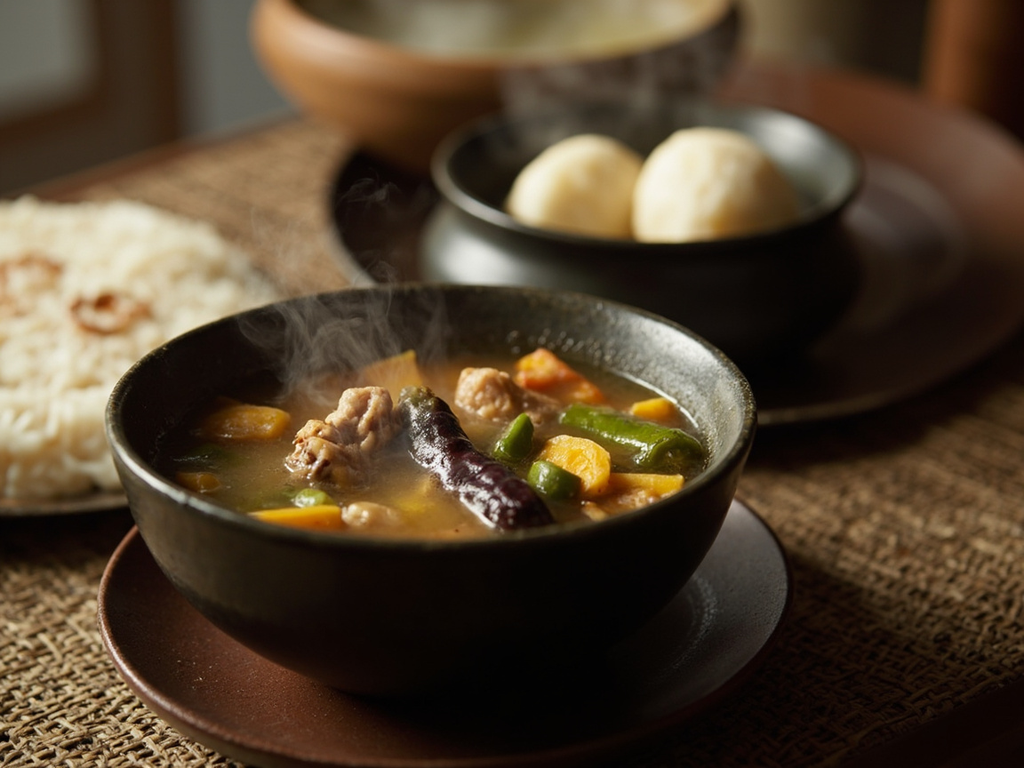
Yam fufu & clear smoked-fish soup
Why this dish? Anansi is a spider who haunts the kitchens of tales: he covets others' food and prefers a thousand tricks to honest work. Pounded fufu is THE daily gesture of the Ashanti country, and stories readily show him lurking around his neighbor's pot to invite himself to a meal he did not prepare.
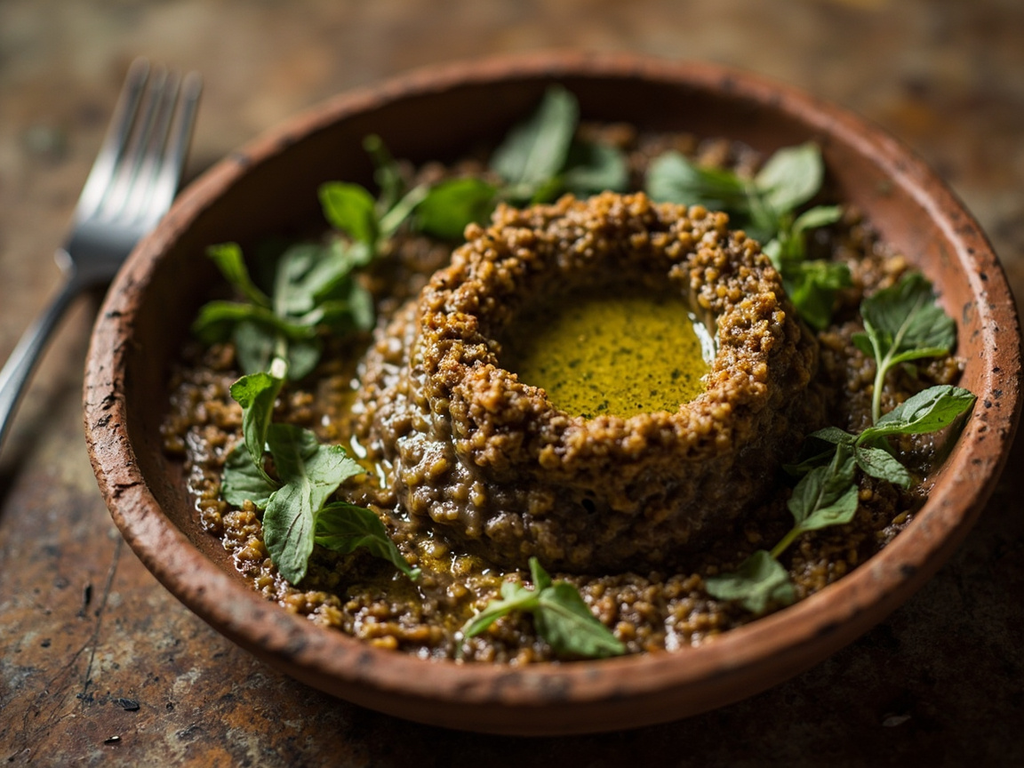
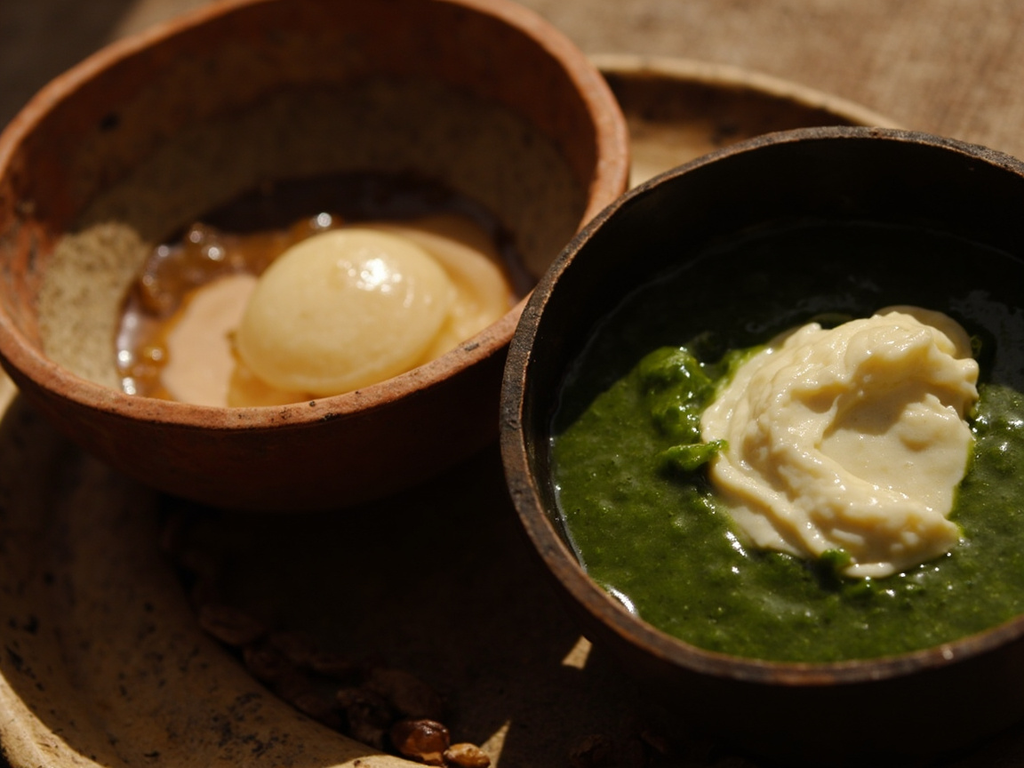
A ball of white yam pounded until elastic, dipped into a clear soup with smoked fish, okra, and garden eggs (African eggplant), spiked with a spoonful of fermented locust beans. The heart of the Akan table, eaten by hand at noon and night.
Come closer, little one, and watch how I, Kwaku Ananse, fill my belly without sweating a single drop. I stretched my web over my neighbor's mortar, and while she pounded the yam smooth as the moon, I slipped a bit of dawadawa into her pot so she would think me a good guest and invite me. You pinch the ball between two fingers, swallow it without chewing, and the smoked-fish soup follows behind — that's my whole secret. Work for honest folk, broth for me: that's how a clever spider gets through the dry season with a full stomach.
- •White yam (true African yam) — several tubers (starch base, pounded into fufu)
- •Smoked river fish — a handful (umami, soup base)
- •Fermented locust bean seeds (dawadawa) — a little (deep umami, fermented)
- •Fresh okra — a few pods (binder, texture)
- •Garden eggs (African eggplant) — a few (slightly bitter vegetable)
- •Melegueta pepper (grains of paradise) — a few grains (pungent African spice)
Yam fufu & clear smoked-fish soup
A ball of white yam pounded until elastic, dipped into a clear soup with smoked fish, okra, and garden eggs (African eggplant), spiked with a spoonful of fermented locust beans. The heart of the Akan table, eaten by hand at noon and night.
Why this dish? Anansi is a spider who haunts the kitchens of tales: he covets others' food and prefers a thousand tricks to honest work. Pounded fufu is THE daily gesture of the Ashanti country, and stories readily show him lurking around his neighbor's pot to invite himself to a meal he did not prepare.
Come closer, little one, and watch how I, Kwaku Ananse, fill my belly without sweating a single drop. I stretched my web over my neighbor's mortar, and while she pounded the yam smooth as the moon, I slipped a bit of dawadawa into her pot so she would think me a good guest and invite me. You pinch the ball between two fingers, swallow it without chewing, and the smoked-fish soup follows behind — that's my whole secret. Work for honest folk, broth for me: that's how a clever spider gets through the dry season with a full stomach.
Ingredients (period version)
- White yam (true African yam) — several tubers (starch base, pounded into fufu)
- Smoked river fish — a handful (umami, soup base)
- Fermented locust bean seeds (dawadawa) — a little (deep umami, fermented)
- Fresh okra — a few pods (binder, texture)
- Garden eggs (African eggplant) — a few (slightly bitter vegetable)
- Melegueta pepper (grains of paradise) — a few grains (pungent African spice)
Ingredients
- Yam — 800 g (or 250 g yam/fufu flour) (fufu)
- Smoked fish (mackerel or smoked herring) — 150 g (umami soup base)
- Dawadawa (or 1 tsp mild miso if unavailable) — 1 tbsp (fermented umami)
- Okra — 5-6 (light binder)
- Small eggplants (garden eggs if available) — 3 (vegetable)
- Onion — 1 (aromatic)
- Ground grains of paradise (or pepper) — 1/2 tsp (spice)
- Salt — to taste (seasoning)
Method
- Peel the yam, cut into pieces, and boil until completely tender (20-25 min).
- Pound the hot yam in a mortar (or use a powerful food processor) adding a splash of cooking water until you get a smooth, dense, elastic dough. Shape into balls.
- For the soup: sauté the onion, add the flaked smoked fish and quartered eggplants, and cover with water.
- Dissolve the dawadawa, add sliced okra, melegueta pepper, and salt; simmer for 15 min until a fragrant, slightly thickened soup.
- Serve a ball of fufu in a bowl, ladle hot soup over it. Eat with your hands, dipping pieces of fufu.
How it was made : Before 1492, the Akan had neither cassava, corn, chili, nor tomato (all arrived from the Americas). Fufu was then made from true yam or pounded plantain, and soups drew their depth from smoked fish, fermented locust beans, and palm oil. The pestle and large mortar, worked by two people in rhythm, remains a daily gesture accompanied by songs.
The contemporary twist : Shape the fufu into a neat quenelle using a spoon dipped in water, serve the soup separately in a small steaming glass — a 'bistrot akan' version.
Anansi · Charactorium