 flip
flipStone-Baked Barley Flatbreads
Stone-Baked Barley Flatbreads
Why this dish? Offerings made to Anat in the temples included barley flatbreads, the staple bread of the ancient Levant. Before she was the goddess of battlefields, she receives the humble bread of the people: these flatbreads are the daily link between the faithful of Ugarit and their fearsome goddess.
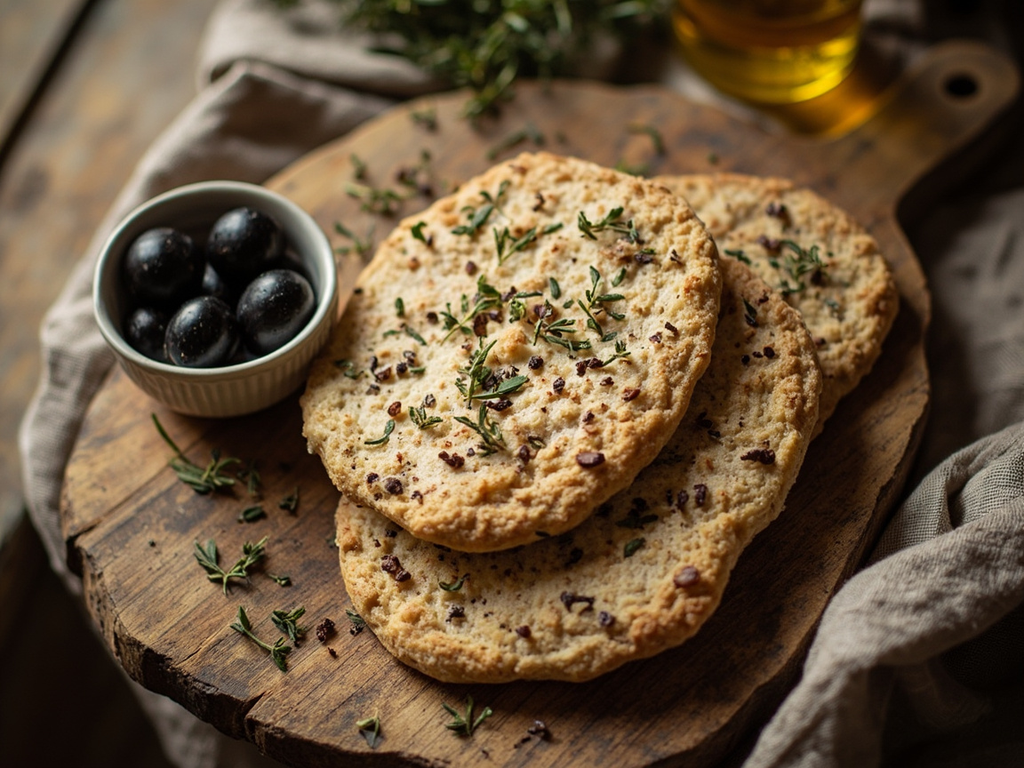
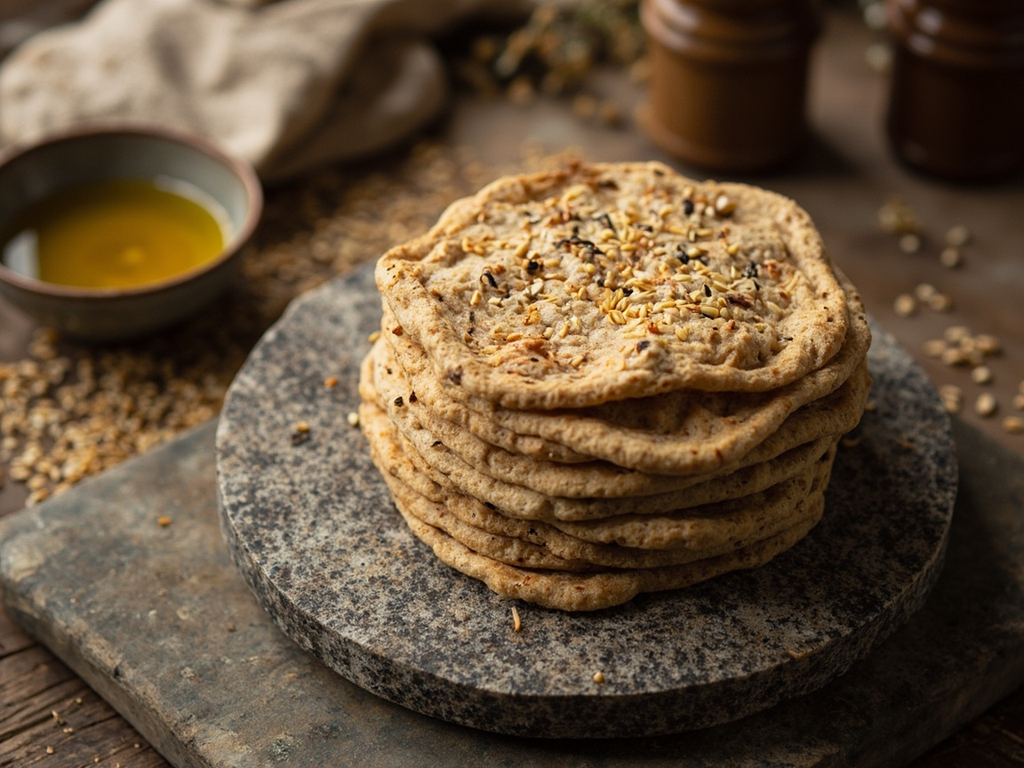
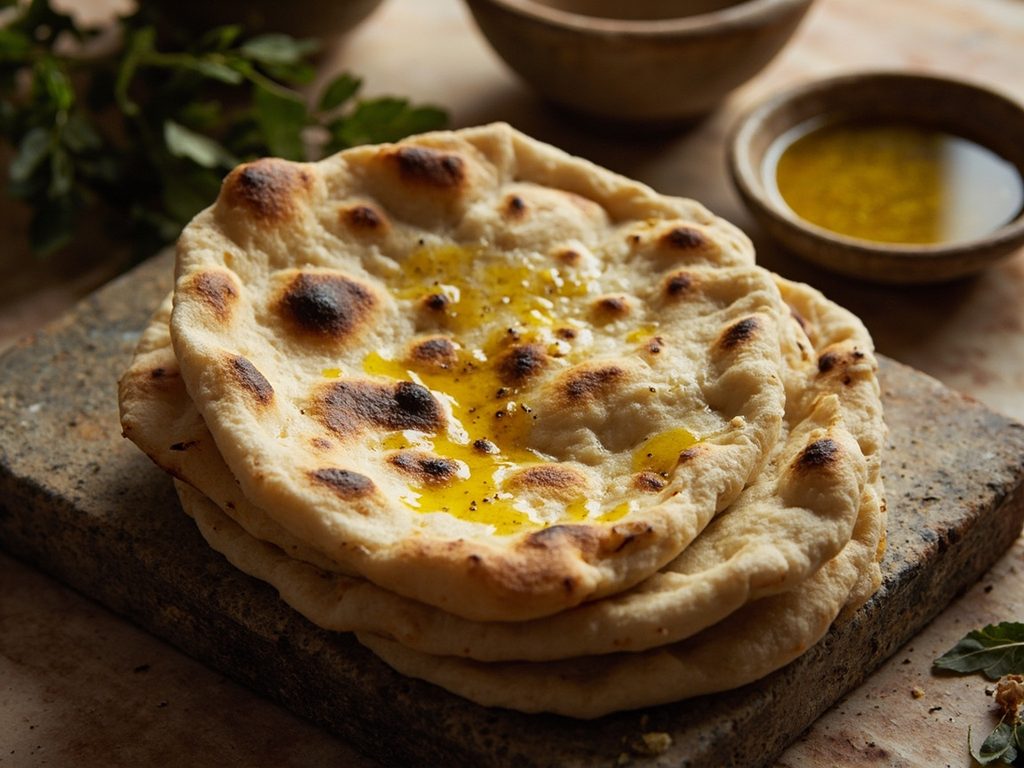
Flat barley and water flatbreads, barely salted, golden on a hot stone and then rubbed with olive oil—the daily bread placed on altars and in homes alike.
Blood is not my only food, mortal. On my clay table, they also bring me the poor bread, the one that women knead at dawn. Barley is crushed between two stones, the flour moistened with a little water and salt, and flattened with a broad palm. The hearthstone must burn like wrath; then the flatbread puffs, browns, and is drizzled with oil. Break off a piece and place it before me: even a war goddess remembers the taste of barley.
- •Barley flour — as needed (staple grain)
- •Water — enough (binder)
- •Salt — a pinch (seasoning)
- •Olive oil — to finish (flavor and softness)
Stone-Baked Barley Flatbreads
Flat barley and water flatbreads, barely salted, golden on a hot stone and then rubbed with olive oil—the daily bread placed on altars and in homes alike.
Why this dish? Offerings made to Anat in the temples included barley flatbreads, the staple bread of the ancient Levant. Before she was the goddess of battlefields, she receives the humble bread of the people: these flatbreads are the daily link between the faithful of Ugarit and their fearsome goddess.
Blood is not my only food, mortal. On my clay table, they also bring me the poor bread, the one that women knead at dawn. Barley is crushed between two stones, the flour moistened with a little water and salt, and flattened with a broad palm. The hearthstone must burn like wrath; then the flatbread puffs, browns, and is drizzled with oil. Break off a piece and place it before me: even a war goddess remembers the taste of barley.
Ingredients (period version)
- Barley flour — as needed (staple grain)
- Water — enough (binder)
- Salt — a pinch (seasoning)
- Olive oil — to finish (flavor and softness)
Ingredients
- Barley flour — 250 g (base)
- Whole wheat flour — 50 g (structure (barley rises little))
- Warm water — about 180 ml (hydration)
- Salt — 1 tsp (seasoning)
- Olive oil — 2 tbsp (finish)
Method
- Mix flours and salt, gradually add water until a soft, non-sticky dough forms.
- Knead 5 minutes, cover and rest 30 minutes.
- Divide into balls and roll each into a thin flatbread 3-4 mm thick.
- Heat a cast-iron pan or pizza stone strongly; cook each flatbread 1-2 minutes per side until it puffs and browns in spots.
- Brush with olive oil upon removal and keep warm under a cloth.
How it was made : Barley was the dominant cereal of the ancient Levant, hardier than wheat and tolerant of poor soils. It was ground by hand on a saddle quern, and the flatbreads were baked on a stone slab or against the wall of a clay oven (tannour). Bread also served as a common offering in temples.
The contemporary twist : Serve the flatbreads stacked with a bowl of fresh olive oil and za'atar, a nod to the Levantine heirs of this ancient bread.
Sources : Marguerite Yon, La cité d'Ougarit sur le tell de Ras Shamra · Daniel Bonnardel & coll., L'alimentation au Proche-Orient ancien (synthèses archéobotaniques)
Anat · Charactorium