 flip
flipPaximadion (Twice-Baked Barley Rusk, Campaign Bread)
Paximadion (Twice-Baked Barley Rusk, Campaign Bread)
Why this dish? Andronic III spent his reign in the saddle: civil war against his grandfather, campaigns in Thrace, the disaster of Pelekanos against the Ottomans in 1329 where he was wounded. Paximadion, a dried barley rusk that keeps for weeks, was THE bread of Byzantine soldiers and travelers — the one that followed the imperial armies.
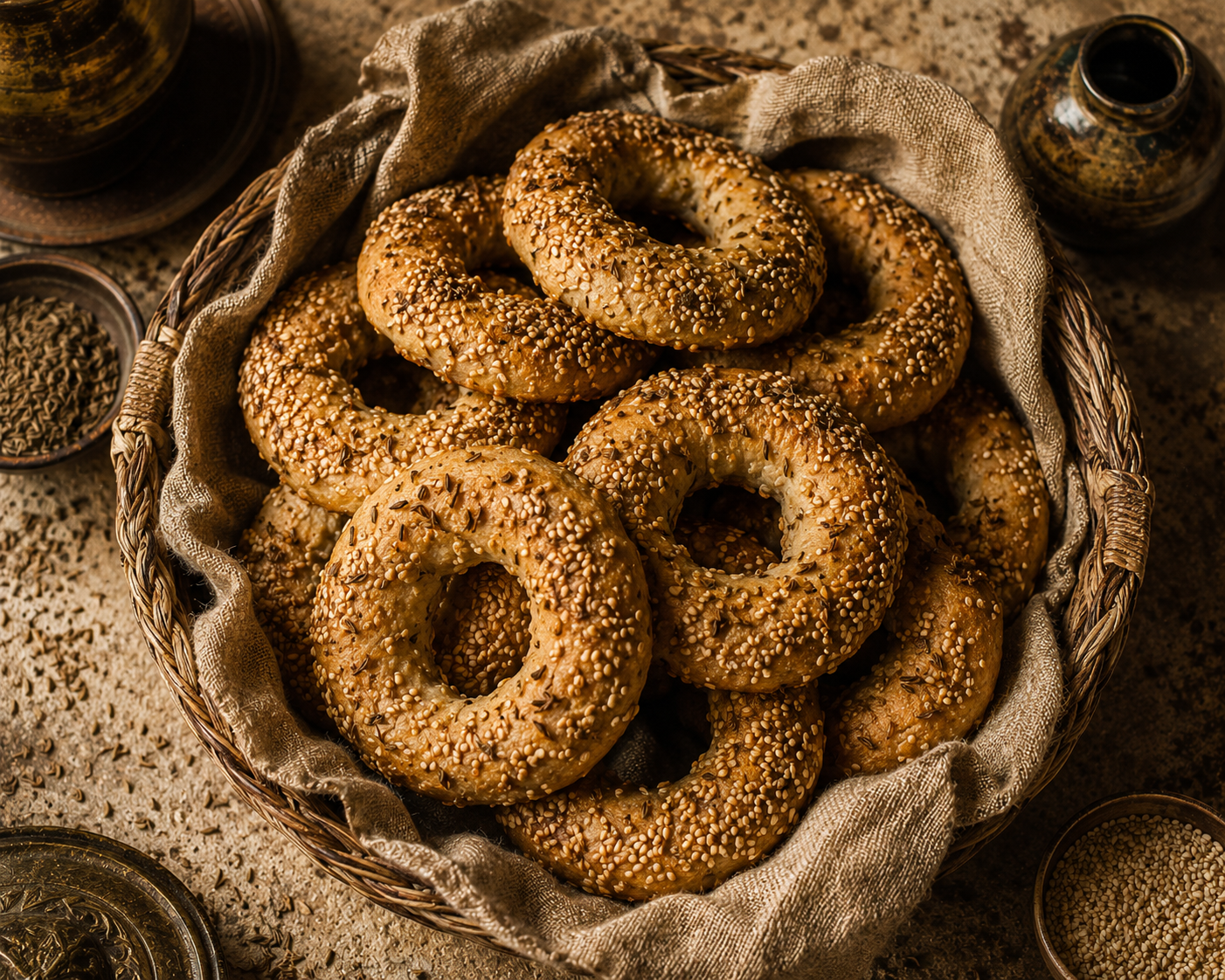
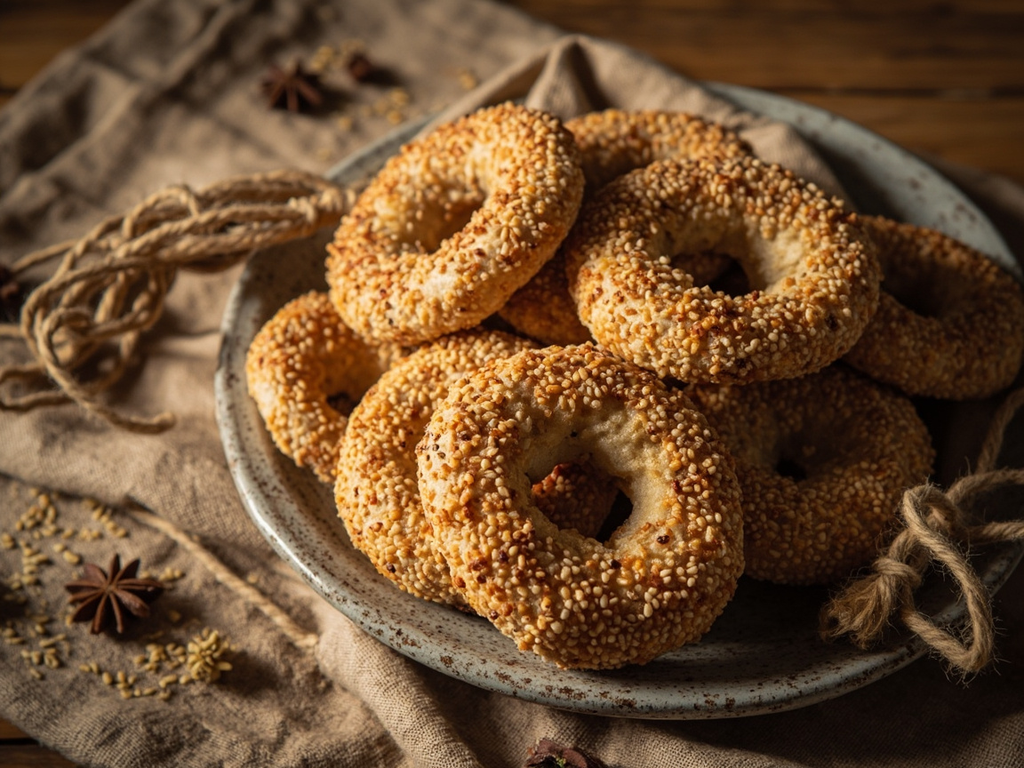
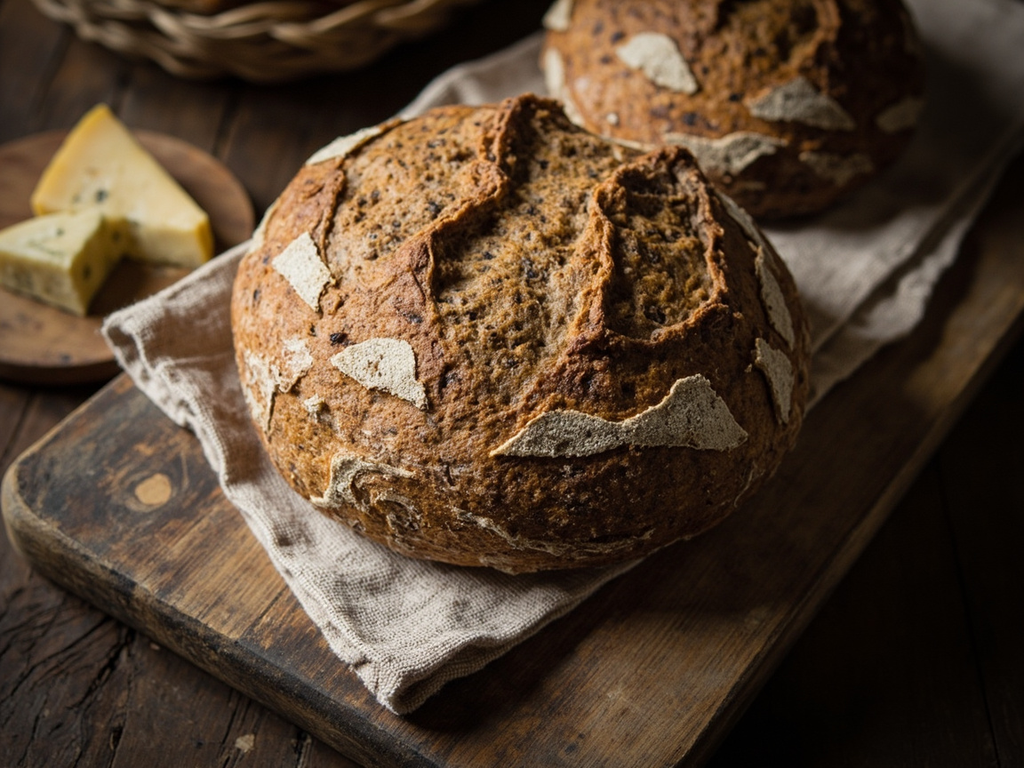
A barley (and wheat) flatbread baked once like bread, sliced, then long dried in the oven until hard as stone. It keeps indefinitely and softens by dipping in water, diluted wine, or phouska.
Trust an emperor who has slept more under canvas than under the palace gold: nothing feeds an army like paximadion. You bake it, slice it, then return it to a dying oven until it rings like a tile — thus it does not mold during the long marches of Thrace. At Pelekanos, wounded before the Turks, it was this hard bread soaked in vinegar water that I shared with My men. Bite it dry if you are in a hurry, or let it drink your beverage: it comes back to life.
- •Barley flour — half (soldier's grain)
- •Wheat flour — half (binder, structure)
- •Sourdough starter — a piece from yesterday (leavening)
- •Water — as needed (kneading)
- •Salt — a pinch (flavor and preservation)
Paximadion (Twice-Baked Barley Rusk, Campaign Bread)
A barley (and wheat) flatbread baked once like bread, sliced, then long dried in the oven until hard as stone. It keeps indefinitely and softens by dipping in water, diluted wine, or phouska.
Why this dish? Andronic III spent his reign in the saddle: civil war against his grandfather, campaigns in Thrace, the disaster of Pelekanos against the Ottomans in 1329 where he was wounded. Paximadion, a dried barley rusk that keeps for weeks, was THE bread of Byzantine soldiers and travelers — the one that followed the imperial armies.
Trust an emperor who has slept more under canvas than under the palace gold: nothing feeds an army like paximadion. You bake it, slice it, then return it to a dying oven until it rings like a tile — thus it does not mold during the long marches of Thrace. At Pelekanos, wounded before the Turks, it was this hard bread soaked in vinegar water that I shared with My men. Bite it dry if you are in a hurry, or let it drink your beverage: it comes back to life.
Ingredients (period version)
- Barley flour — half (soldier's grain)
- Wheat flour — half (binder, structure)
- Sourdough starter — a piece from yesterday (leavening)
- Water — as needed (kneading)
- Salt — a pinch (flavor and preservation)
Ingredients
- Barley flour — 250 g (grain)
- Whole wheat flour — 250 g (structure)
- Active sourdough starter (or 7 g dry yeast) — 100 g (leavening)
- Warm water — ~300 ml (kneading)
- Salt — 1.5 tsp (flavor)
Method
- Knead the flours, starter, water, and salt into a firm dough; let rise 2–3 hours.
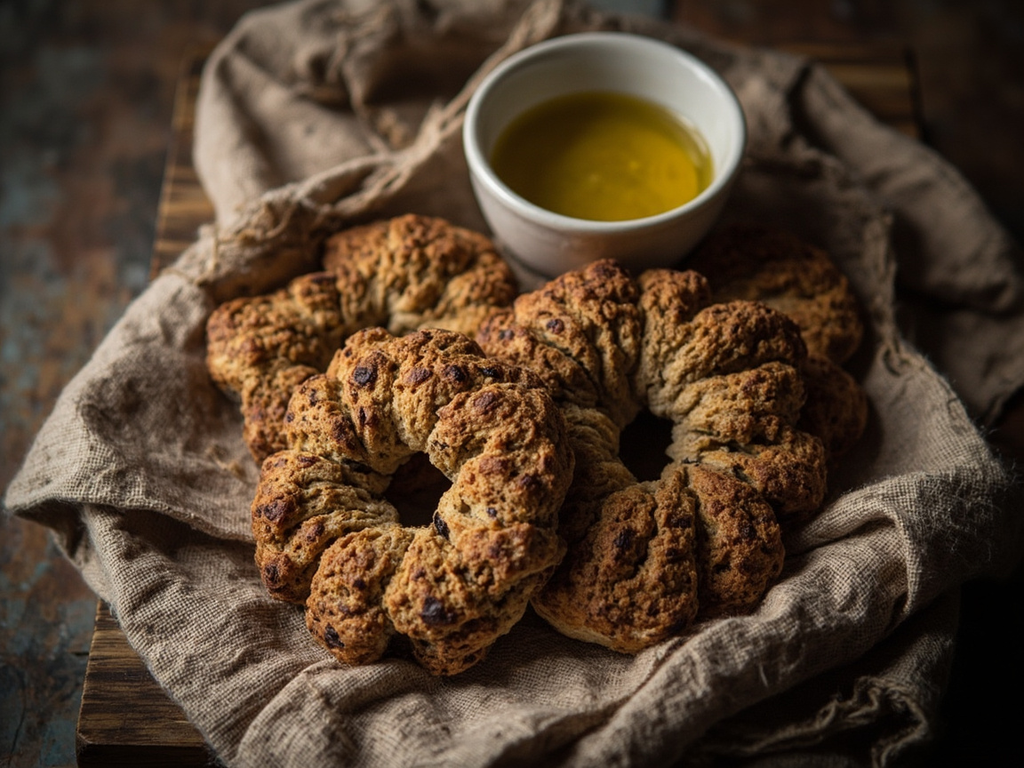
- Shape into flat loaves or rings, and bake at 220°C for about 25 minutes.
- Slice the still-warm loaves into large rusks.
- Return the slices to the oven at 100–120°C for 1.5 to 2 hours, until completely dry and hard.
- Store away from moisture; when eating, briefly dip in water, diluted wine, or phouska.
How it was made : Paximadion (which gave modern Cretan 'paximadi') is long documented as a basic ration of the Byzantine army and navy, and as a monastic food. Its double baking made it a very long-lasting food, indispensable for campaigns. It was systematically rehydrated before consumption.
The contemporary twist : Rubbed with olive oil, oregano, and a little grated sheep cheese, these rusks become a Byzantine 'dakos' to snack on with an aperitif.
Andronikos III Palaiologos · Charactorium