 flip
flipWhite Mochi with Kinako and Amazura Syrup
White Mochi with Kinako and Amazura Syrup
Why this dish? The round white mochi is the quintessential offering at Benzaiten shrines. Its roundness evokes the sacred mirror, its whiteness the serpent and the lotus. At Enoshima as at Chikubushima, these pounded rice cakes are stacked before the goddess of music for New Year and arts festivals.
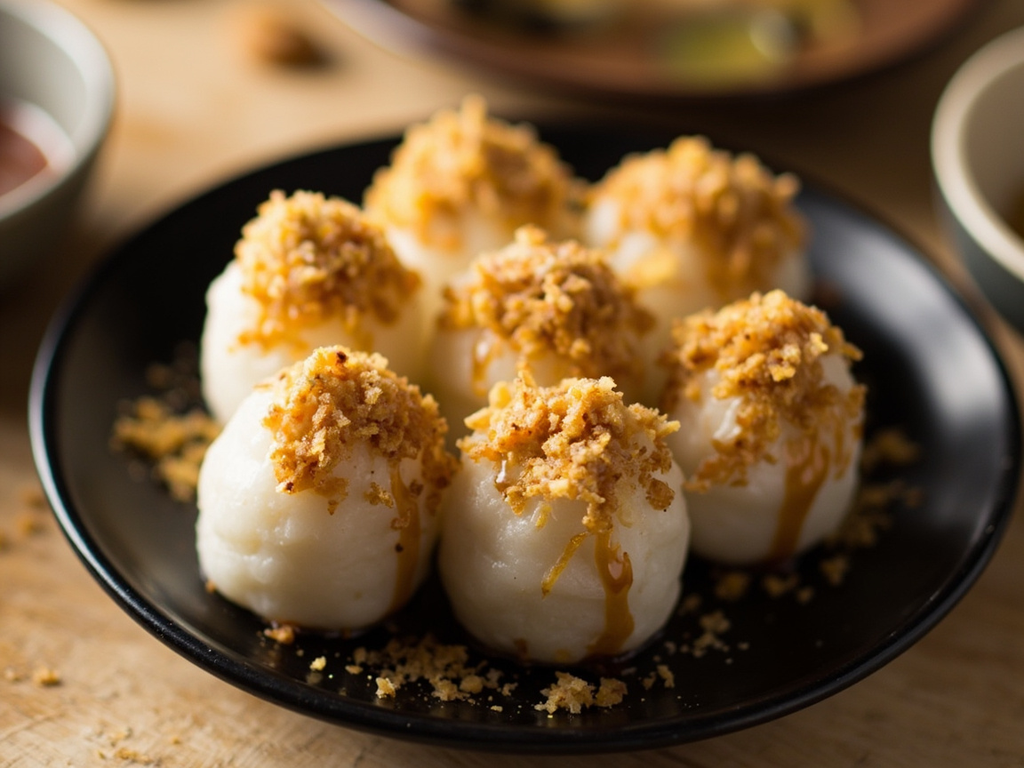
Pounded glutinous rice cakes, smooth and elastic, rolled in fragrant roasted soybean flour (kinako) and drizzled with vine syrup. Sweet, soft, slightly sticky — the confection of the gods.
See these cakes my maids have pounded in the mortar until the grain disappears: round as the mirror, white as my serpent's scales. They are placed before me on the first morning of the year, when the biwa resound. Roll them in roasted bean flour, pour a thread of vine syrup — and beware of speaking with your mouth full, for mochi mocks the careless.
- •Glutinous rice (mochigome) — as much as needed (mochi dough)
- •Roasted soybean flour (kinako) — a handful (fragrant coating)
- •Amazura syrup (reduced vine sap) — a drizzle (period sweetness)
White Mochi with Kinako and Amazura Syrup
Pounded glutinous rice cakes, smooth and elastic, rolled in fragrant roasted soybean flour (kinako) and drizzled with vine syrup. Sweet, soft, slightly sticky — the confection of the gods.
Why this dish? The round white mochi is the quintessential offering at Benzaiten shrines. Its roundness evokes the sacred mirror, its whiteness the serpent and the lotus. At Enoshima as at Chikubushima, these pounded rice cakes are stacked before the goddess of music for New Year and arts festivals.
See these cakes my maids have pounded in the mortar until the grain disappears: round as the mirror, white as my serpent's scales. They are placed before me on the first morning of the year, when the biwa resound. Roll them in roasted bean flour, pour a thread of vine syrup — and beware of speaking with your mouth full, for mochi mocks the careless.
Ingredients (period version)
- Glutinous rice (mochigome) — as much as needed (mochi dough)
- Roasted soybean flour (kinako) — a handful (fragrant coating)
- Amazura syrup (reduced vine sap) — a drizzle (period sweetness)
Ingredients
- Shiratamako or glutinous rice flour — 150 g (dough)
- Water — 120–140 ml (hydration)
- Kinako (roasted soybean flour) — 3 tbsp (coating)
- Mizuame (rice malt syrup) or honey — 2 tbsp (replaces amazura)
Method
- Mix glutinous rice flour with water until a soft, non-sticky dough forms.
- Shape small balls and poach in simmering water for 3–4 min: they float when ready.
- Immediately plunge into cold water, drain gently.
- Roll each ball in kinako to coat generously.
- At serving time, drizzle with mizuame or honey.
How it was made : Mochi was pounded in a mortar (usu) during communal ceremonies. In Heian, sugar being extremely rare, sweetness came from amazura — a syrup from vine sap, which Sei Shōnagon describes poured over shaved ice in The Pillow Book. Kinako, roasted and ground soy, has long been attested.
The contemporary twist : Arrange them in a small pyramid like a miniature kagami-mochi, with a dried lotus leaf underneath: a pocket-sized offering.
Sources : Makura no Sōshi (枕草子), Sei Shōnagon — mention of amazura · Engishiki (延喜式, 927) — pounded rice offerings
Benzaiten · Charactorium