 flip
flipBorscht with Smetana
Borscht with Smetana
Why this dish? Borscht was Anna's quintessential home dish: a simple, nourishing soup made in a large pot and reheated day after day. Between reporting trips to Chechnya, this kind of honest, unpretentious meal awaited her at home on Lesnaya Street in Moscow.
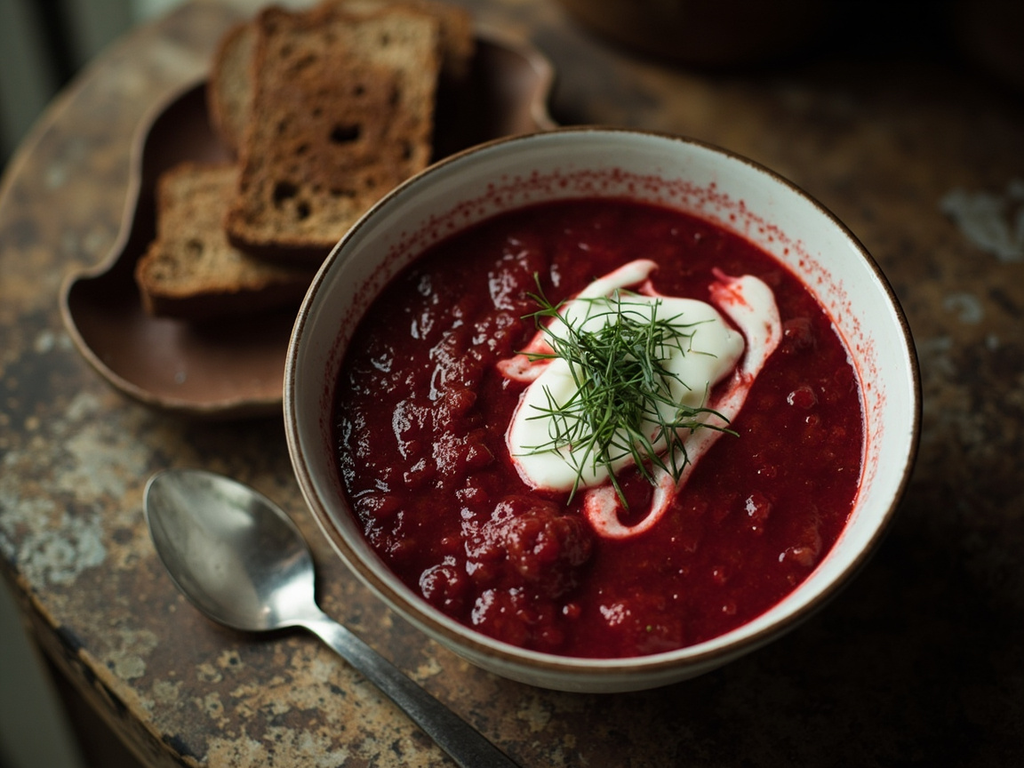
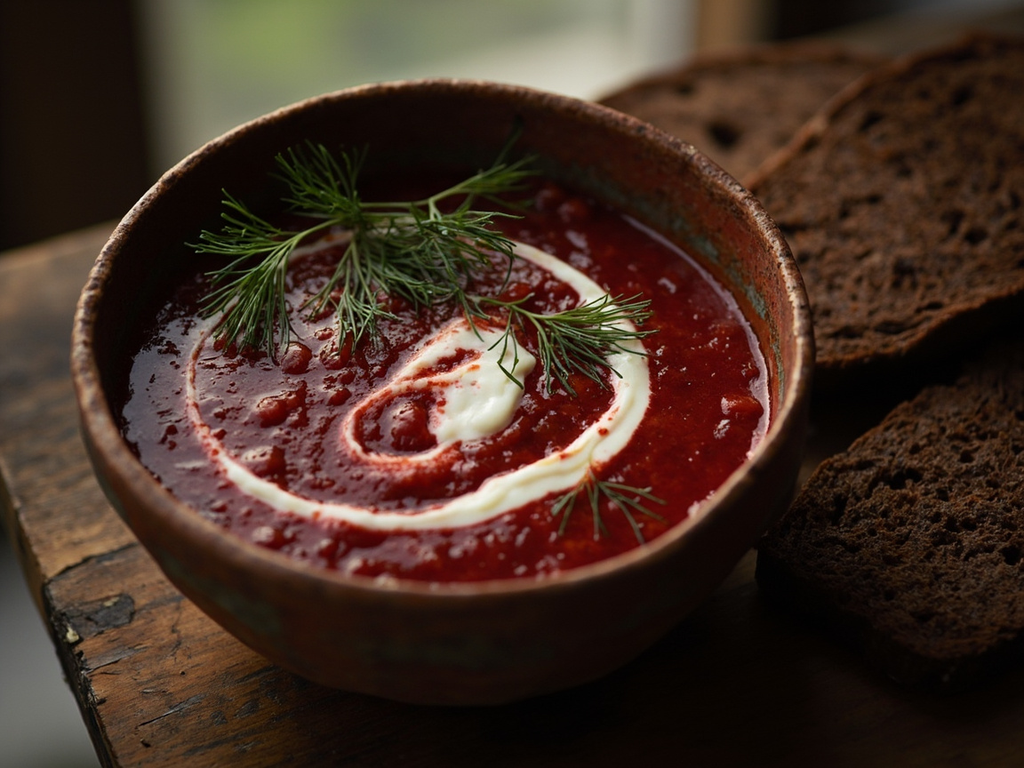
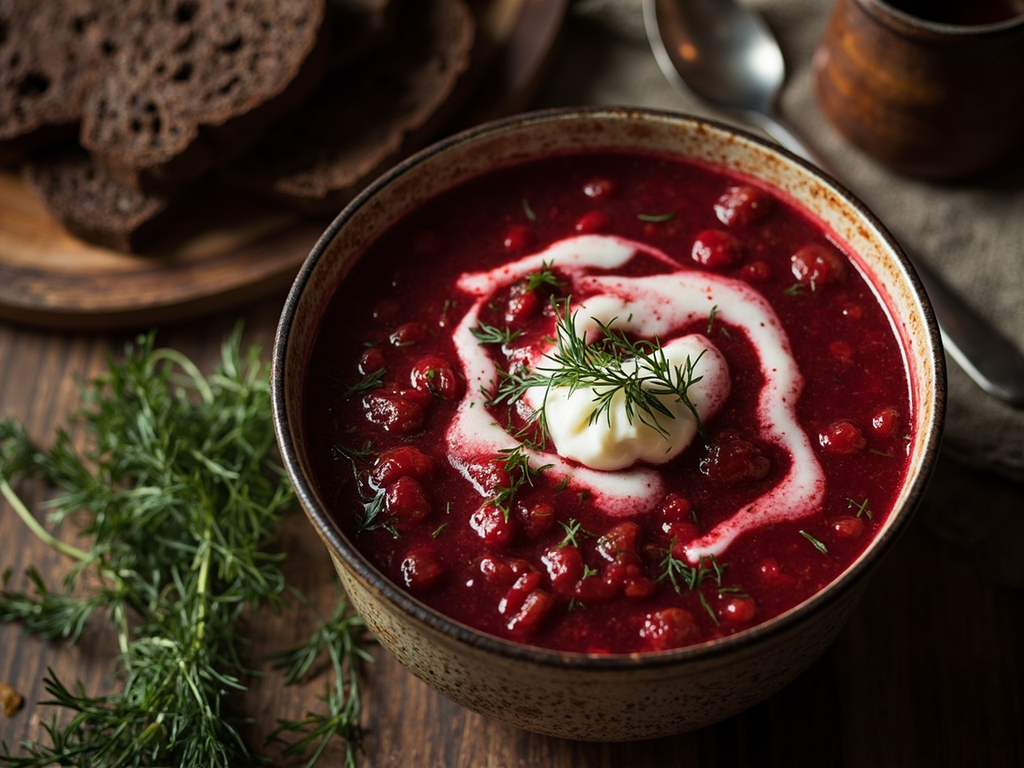
A scarlet soup of beetroot, cabbage, and root vegetables, tangy and deep, crowned with a generous spoonful of smetana that melts into the hot broth and turns it pink. The emblematic dish of every Russian and Ukrainian table.
You want to understand Russia? Start with its pot of borscht. You make it on Sunday, and it only gets better on Monday, Tuesday — patience is our only reliable spice. I always add a splash of vinegar at the end: beetroot alone is too sweet, you need that bite, that acidity that wakes you up, like a truth you refuse to soften. And on top, a spoonful of smetana: even in the worst winters, we save ourselves that little white tenderness.
- •Beetroots — a few, firm (color and earthy sweetness)
- •White cabbage — half a head (bulk and texture)
- •Potatoes — a handful (body)
- •Carrot and onion — what you have (aromatic base)
- •Beef broth — a large pot (foundation)
- •Vinegar or lemon juice — a splash (acidity, fixes color)
- •Smetana (sour cream) — as much as you like (signature garnish)
- •Fresh dill — a bunch (final aroma)
Borscht with Smetana
A scarlet soup of beetroot, cabbage, and root vegetables, tangy and deep, crowned with a generous spoonful of smetana that melts into the hot broth and turns it pink. The emblematic dish of every Russian and Ukrainian table.
Why this dish? Borscht was Anna's quintessential home dish: a simple, nourishing soup made in a large pot and reheated day after day. Between reporting trips to Chechnya, this kind of honest, unpretentious meal awaited her at home on Lesnaya Street in Moscow.
You want to understand Russia? Start with its pot of borscht. You make it on Sunday, and it only gets better on Monday, Tuesday — patience is our only reliable spice. I always add a splash of vinegar at the end: beetroot alone is too sweet, you need that bite, that acidity that wakes you up, like a truth you refuse to soften. And on top, a spoonful of smetana: even in the worst winters, we save ourselves that little white tenderness.
Ingredients (period version)
- Beetroots — a few, firm (color and earthy sweetness)
- White cabbage — half a head (bulk and texture)
- Potatoes — a handful (body)
- Carrot and onion — what you have (aromatic base)
- Beef broth — a large pot (foundation)
- Vinegar or lemon juice — a splash (acidity, fixes color)
- Smetana (sour cream) — as much as you like (signature garnish)
- Fresh dill — a bunch (final aroma)
Ingredients
- Raw beetroots — 500 g (color and sweetness)
- White cabbage — 300 g, shredded (texture)
- Potatoes — 2 medium, diced (body)
- Carrot — 1, grated (aromatic base)
- Onion — 1, chopped (aromatic base)
- Beef broth — 1.5 L (foundation)
- Tomato paste — 1 tbsp (depth, acidity)
- Wine vinegar — 1 tbsp (acidity, fixes red color)
- Smetana or thick crème fraîche — 4 tbsp (garnish)
- Fresh dill — a few sprigs (aroma)
Method
- Sauté onion and carrot in a little oil at the bottom of the pot.
- Add grated beetroots, tomato paste, and vinegar; let stew for 10 min (vinegar keeps the red bright).
- Pour in broth, add diced potatoes, cook 10 min.
- Add shredded cabbage, simmer another 15 min on low heat.
- Season with salt and pepper, adjust acidity. Ideally let rest a few hours or even a day.
- Serve piping hot with a large spoonful of smetana and a sprinkle of fresh dill.
How it was made : Borscht was made in very large quantities in cramped Soviet apartment kitchens, on tiny gas stoves, and kept for days in the cold of the window or refrigerator. Beetroots, cheap and available all winter, made it a democratic dish par excellence.
The contemporary twist : Serve it "inverted": put the smetana at the bottom of the bowl, then pour the scarlet broth over it at the table for the drama of the unfolding color.
Sources : Kniga o vkousnoï i zdorovoï pichtché (The Book of Tasty and Healthy Food), Soviet classic, 1939 and reprints · William Pokhliobkin, National History of Russian Cuisine
Anna Politkovskaya · Charactorium