 flip
flipFatta of the great days
Fatta of the great days
Why this dish? Sadat, a man attached to religious festivals and village reunions, would have known fatta as the dish for great occasions—Eid, a homecoming, a birth. Where foul spoke of daily frugality, fatta spoke of the generosity of days that matter.
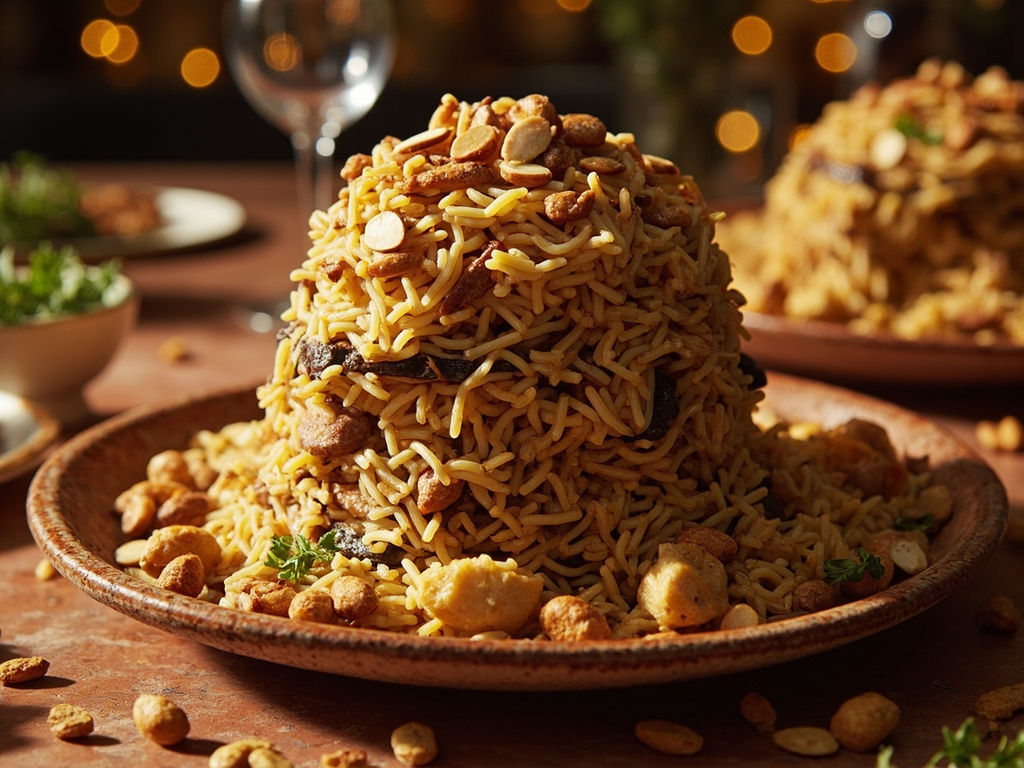
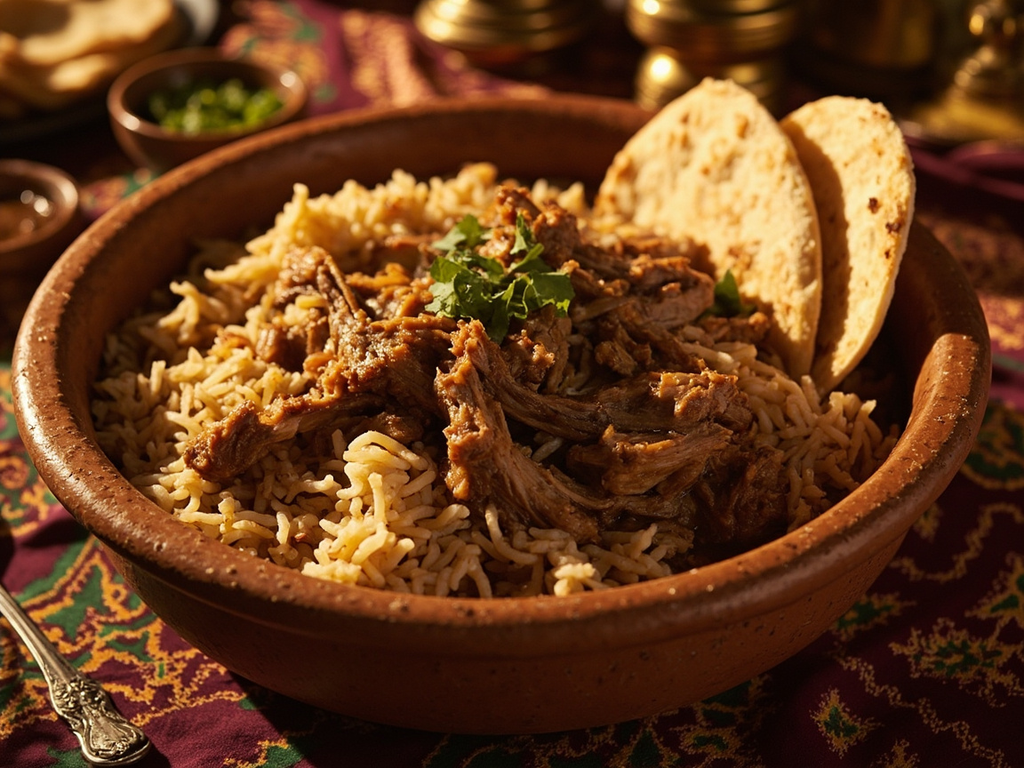
A layered construction: crispy bread at the bottom, rice on top, braised meat, all drizzled with a lively garlic and vinegar broth. The celebration dish, placed in the center of the sofra and shared.
When Eid came, or a son returned to the village, we didn't skimp: we slaughtered the beast and prepared the fatta. You line the dish with well-toasted stale bread, cover with rice, lay the meat that has simmered for hours, and over it you pour this boiling broth where garlic and vinegar crack like a whip. Each person dips their hand, we break the bread together, and that's where—around the same dish—you measure whether a house is generous. Believe me, a people is known by its feast-day table.
- •Stale flatbread — several loaves (crispy base)
- •Rice — a good measure (middle layer)
- •Meat (mutton or beef) on the bone — a nice piece (festive, broth)
- •Garlic — generously (signature of the broth)
- •Vinegar — a splash (sharp acidity)
- •Salt, pepper, cardamom — to taste (seasoning)
Fatta of the great days
A layered construction: crispy bread at the bottom, rice on top, braised meat, all drizzled with a lively garlic and vinegar broth. The celebration dish, placed in the center of the sofra and shared.
Why this dish? Sadat, a man attached to religious festivals and village reunions, would have known fatta as the dish for great occasions—Eid, a homecoming, a birth. Where foul spoke of daily frugality, fatta spoke of the generosity of days that matter.
When Eid came, or a son returned to the village, we didn't skimp: we slaughtered the beast and prepared the fatta. You line the dish with well-toasted stale bread, cover with rice, lay the meat that has simmered for hours, and over it you pour this boiling broth where garlic and vinegar crack like a whip. Each person dips their hand, we break the bread together, and that's where—around the same dish—you measure whether a house is generous. Believe me, a people is known by its feast-day table.
Ingredients (period version)
- Stale flatbread — several loaves (crispy base)
- Rice — a good measure (middle layer)
- Meat (mutton or beef) on the bone — a nice piece (festive, broth)
- Garlic — generously (signature of the broth)
- Vinegar — a splash (sharp acidity)
- Salt, pepper, cardamom — to taste (seasoning)
Ingredients
- Flatbread (pita), dried and cut up — 3 loaves (base)
- Rice — 400 g, cooked (layer)
- Beef or lamb shank or neck — 800 g (festive)
- Garlic — 6 cloves, minced (lively broth)
- White vinegar — 2 tbsp (acidity)
- Cardamom and bay leaf — 2 pods + 1 leaf (broth fragrance)
- Clarified butter (ghee/samna) — 2 tbsp (for sautéing garlic)
- Salt and pepper — to taste (seasoning)
Method
- Simmer the meat in water with cardamom, bay leaf, salt, and pepper for 2-3 hours until it falls apart. Reserve the meat and strain the broth.
- Toast or grill the cut bread until very crispy; arrange at the bottom of a large dish.
- Ladle a little hot broth over the bread to moisten it slightly, then cover with cooked rice.
- In a small pan, sauté the minced garlic in ghee, add the vinegar (watch for splatters), and pour this garlic-vinegar sauce over the rice.
- Arrange the meat on top, drizzle with a little more hot broth, and serve immediately at the center of the table.
How it was made : Fatta (from fatt, 'to crumble bread') is a festive dish rooted in rural and urban Egypt, especially associated with Eid al-Adha when the meat of the sacrifice is shared. The hot garlic-vinegar broth poured over bread and rice makes it a celebration dish, in contrast to everyday foul.
The contemporary twist : Serve it in individual transparent bowls so the three layers—golden bread, pearly rice, shredded meat—are visible, then pour the broth in front of the guest.
Anwar Sadat · Charactorium