 flip
flipSamovar Tea
Samovar Tea
Why this dish? The samovar is among Chekhov's iconic objects: at Melikhovo as in Yalta, tea flowed endlessly. His plays and stories are full of tea scenes—it is the warm, sonorous backdrop of all his work, the moment when his characters speak, hope, and fall silent.
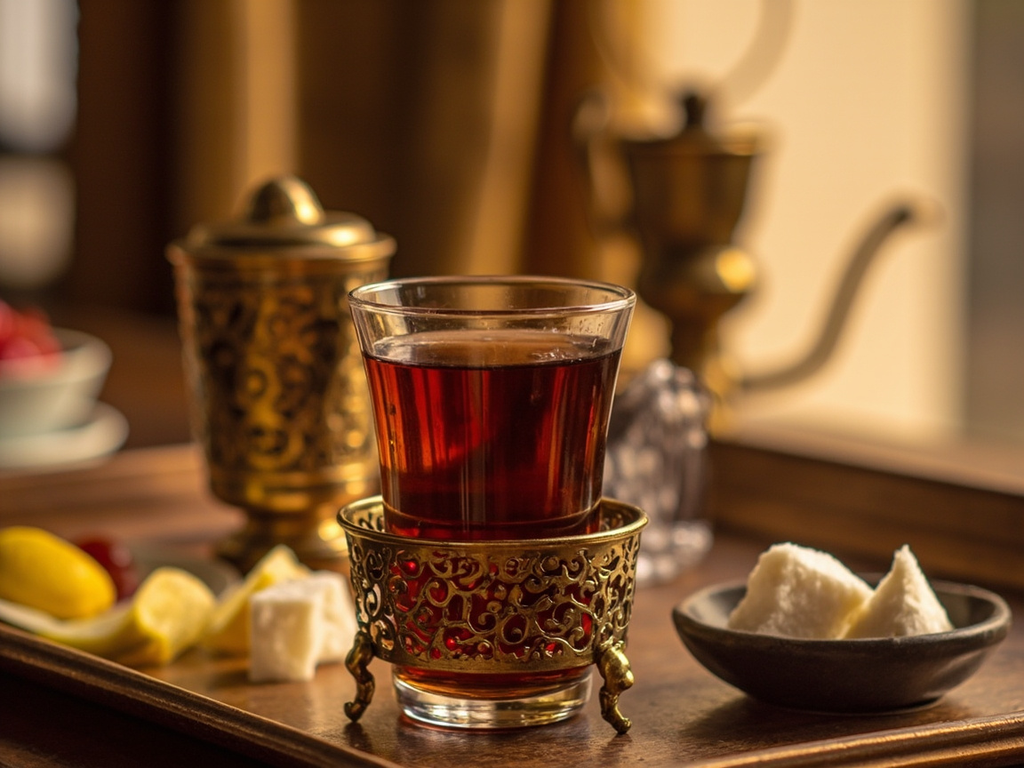
A strong black tea prepared using the samovar method: a very strong concentrate (zavarka) in a small teapot kept warm on top of the samovar, diluted in each glass with boiling water. It is drunk piping hot, sweetened, with a slice of lemon or, better, a spoonful of jam to bite between sips.
The samovar, you see, is the only family member that never complains and only sings. First you pour the zavarka, black as the ink I fill my notebooks with, then you cut it with boiling water according to each person's character—strong for insomniacs, pale for ladies. I drink it 'Russian style': without milk, with a lump of sugar held between the teeth, and a spoonful of sour cherry jam to melt on the tongue. Sit down, take a glass: one never refuses tea—it's almost a matter of honor.
- •Black leaf tea (China, via the caravan route) — generously (concentrated infusion)
- •Samovar water — as needed (boiling dilution)
- •Lump sugar — to bite (sweetness)
- •Lemon — in slices (acidity)
- •Jam (varenye) — one spoonful (sweet accompaniment)
Samovar Tea
A strong black tea prepared using the samovar method: a very strong concentrate (zavarka) in a small teapot kept warm on top of the samovar, diluted in each glass with boiling water. It is drunk piping hot, sweetened, with a slice of lemon or, better, a spoonful of jam to bite between sips.
Why this dish? The samovar is among Chekhov's iconic objects: at Melikhovo as in Yalta, tea flowed endlessly. His plays and stories are full of tea scenes—it is the warm, sonorous backdrop of all his work, the moment when his characters speak, hope, and fall silent.
The samovar, you see, is the only family member that never complains and only sings. First you pour the zavarka, black as the ink I fill my notebooks with, then you cut it with boiling water according to each person's character—strong for insomniacs, pale for ladies. I drink it 'Russian style': without milk, with a lump of sugar held between the teeth, and a spoonful of sour cherry jam to melt on the tongue. Sit down, take a glass: one never refuses tea—it's almost a matter of honor.
Ingredients (period version)
- Black leaf tea (China, via the caravan route) — generously (concentrated infusion)
- Samovar water — as needed (boiling dilution)
- Lump sugar — to bite (sweetness)
- Lemon — in slices (acidity)
- Jam (varenye) — one spoonful (sweet accompaniment)
Ingredients
- Strong black leaf tea (e.g., Keemun or Russian blend) — 3 heaped tsp (concentrate (zavarka))
- Simmering water — 1 liter (dilution)
- Lump sugar — to taste (sweetness)
- Organic lemon — 1, in slices (acidity)
- Sour cherry jam — by the spoonful (accompaniment)
Method
- Rinse a small teapot with boiling water, add the tea and cover with a little simmering water to make a concentrate (zavarka). Steep 5 min.
- Keep the teapot warm (on the samovar, or on a saucepan of hot water).
- In each glass, pour a little concentrate then top up with very hot water to the desired strength.
- Serve with sugar, lemon and a small pot of jam.
- Drink 'Russian style': hold a sugar lump between your teeth, or let a spoonful of jam melt in your mouth between sips.
How it was made : Tea arrived in Russia via the great caravan route from China, making it precious and earning it the nickname 'caravan tea,' sometimes with a slightly smoky flavor. The samovar, heated by charcoal in a central chimney, kept water simmering for hours; keeping house meant knowing how to 'put on the samovar.'
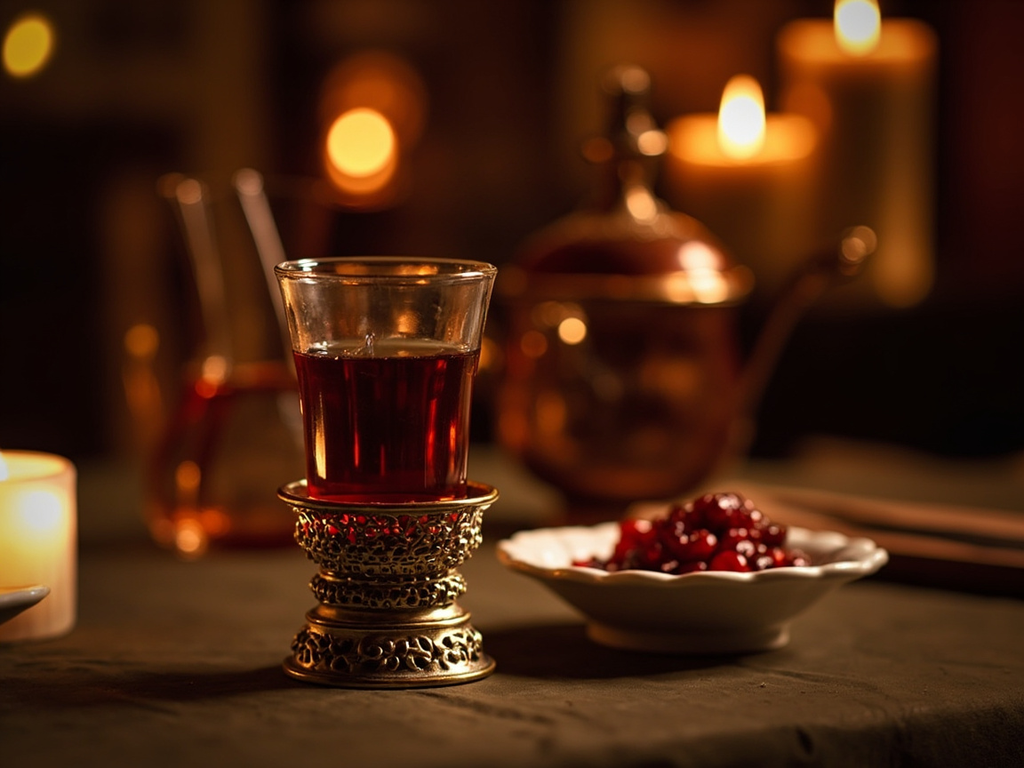
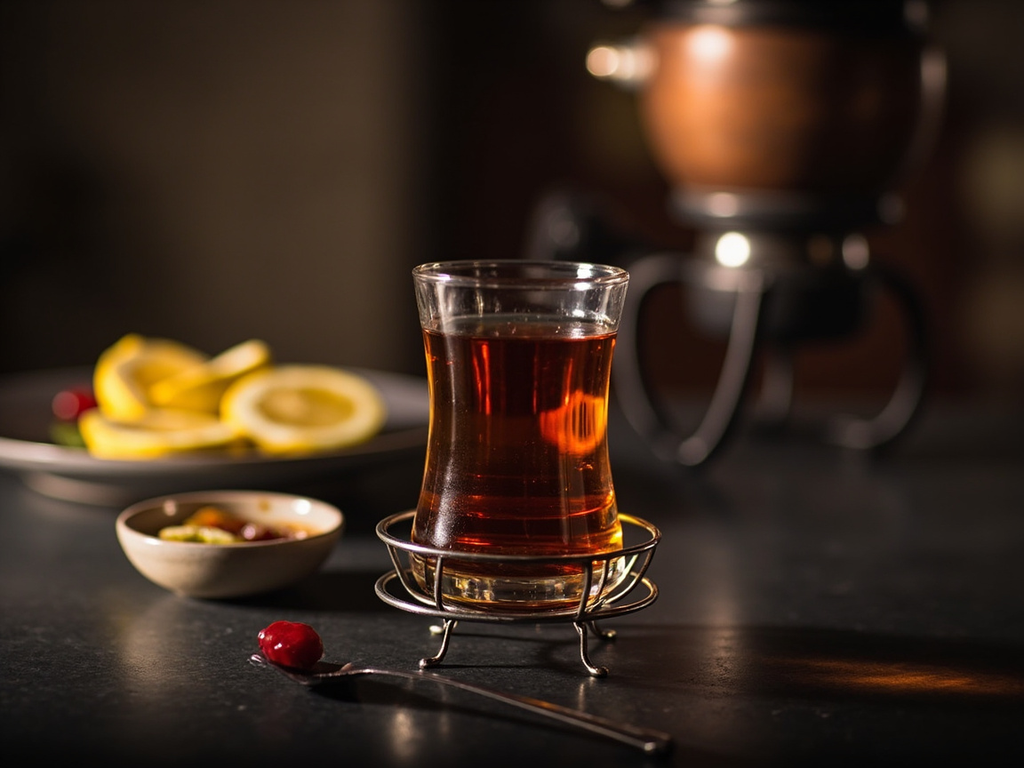
The contemporary twist : Serve in a glass with a podstakannik (engraved metal glass-holder) as on Russian trains—Chekhov, a great traveler all the way to Sakhalin, would have approved.
Sources : William Pokhlebkin, Tea: Its Types, Properties and Use (Чай), 1968 · Audra Yoder, Tea Time in Romanov Russia (historical study)
Anton Chekhov · Charactorium