 flip
flipEmmer Serpent Bread on the Table of Ra
Emmer Serpent Bread on the Table of Ra
Why this dish? Each night Apep threatens the solar barque; at dawn, the priests of Heliopolis and Karnak fashioned enemy figurines out of wax or dough to ritually destroy them. This bread shaped as a serpent, placed and then broken on the offering table, evokes these rites of "Overthrowing Apophis": one offers light (the golden grain) and breaks chaos (the reptile of crumb).
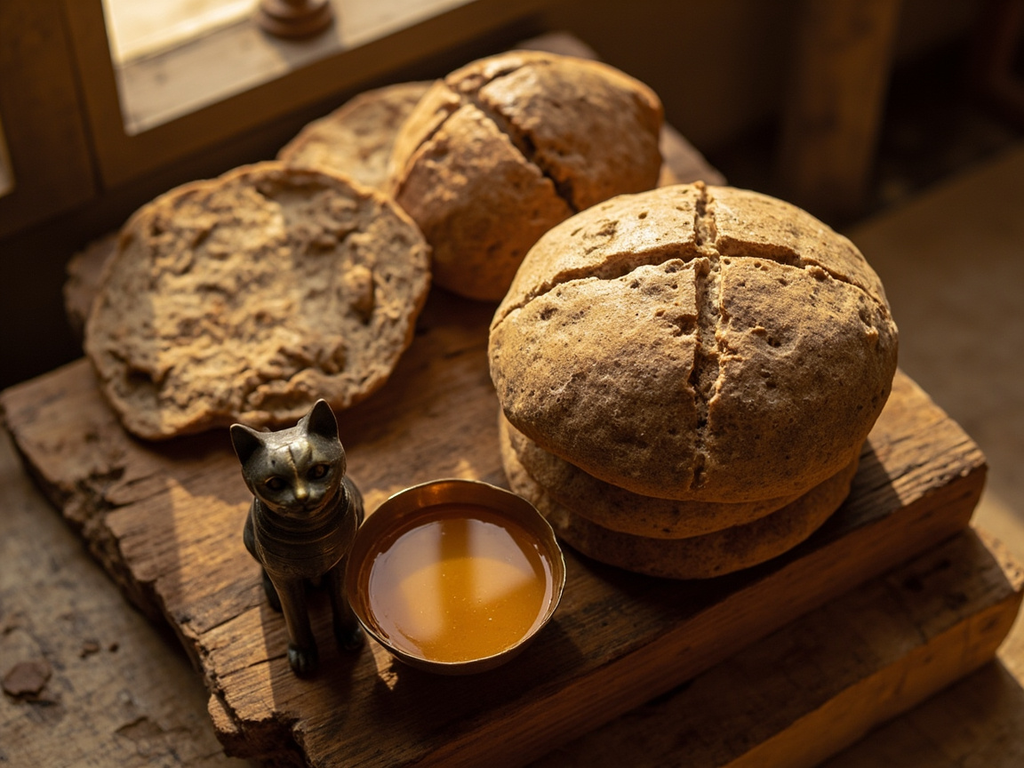
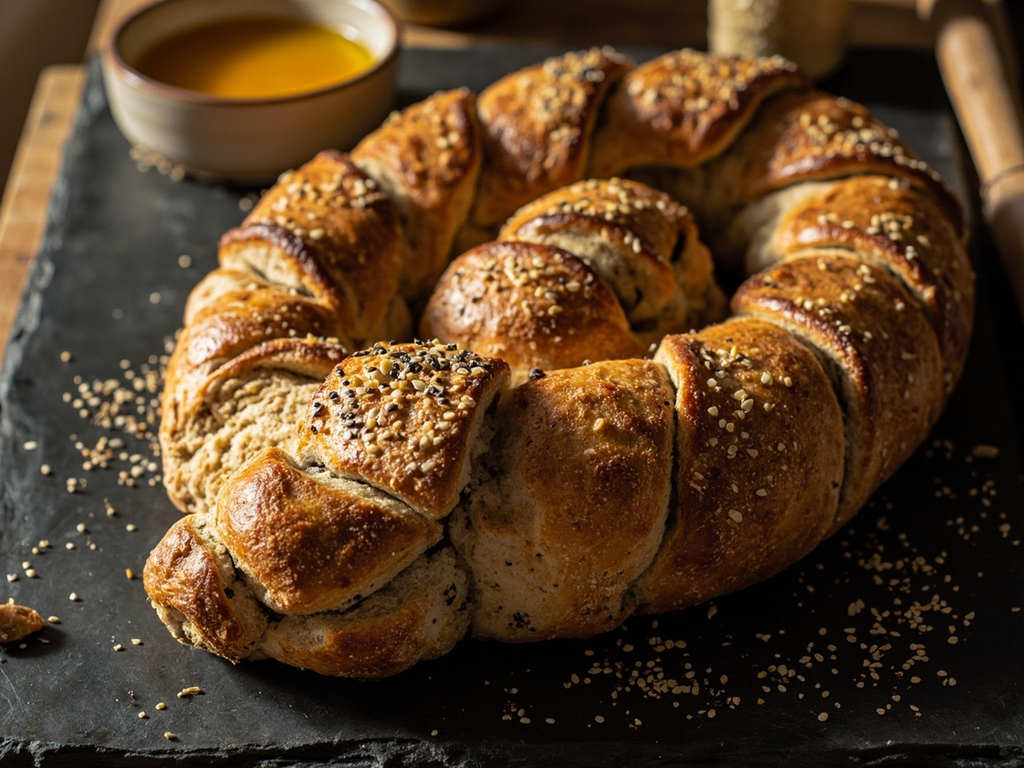
A dense loaf of emmer wheat shaped as a coiled serpent, golden crust scored with scales, shared as a gift to Ra. Bread is the first word of every Egyptian offering.
Mortals, you knead my form into your pale flour and think to extinguish me by breaking this crumb! Know this: I am before the grain, before the barque, before Ra himself. Your priests mold me each dawn and burn my effigy on the hot stone of Iunu — and each night I return to coil around the river of stars. Knead on, children of silt: as long as you tremble enough to shape me, you know that darkness hungers.
- •Emmer flour — as needed (ancient cereal, body of the bread)
- •Natural sourdough starter (yesterday's sour dough) — a handful (fermentation)
- •Nile water — as needed for dough (hydration)
- •Salt — a pinch (flavor and preservation)
Emmer Serpent Bread on the Table of Ra
A dense loaf of emmer wheat shaped as a coiled serpent, golden crust scored with scales, shared as a gift to Ra. Bread is the first word of every Egyptian offering.
Why this dish? Each night Apep threatens the solar barque; at dawn, the priests of Heliopolis and Karnak fashioned enemy figurines out of wax or dough to ritually destroy them. This bread shaped as a serpent, placed and then broken on the offering table, evokes these rites of "Overthrowing Apophis": one offers light (the golden grain) and breaks chaos (the reptile of crumb).
Mortals, you knead my form into your pale flour and think to extinguish me by breaking this crumb! Know this: I am before the grain, before the barque, before Ra himself. Your priests mold me each dawn and burn my effigy on the hot stone of Iunu — and each night I return to coil around the river of stars. Knead on, children of silt: as long as you tremble enough to shape me, you know that darkness hungers.
Ingredients (period version)
- Emmer flour — as needed (ancient cereal, body of the bread)
- Natural sourdough starter (yesterday's sour dough) — a handful (fermentation)
- Nile water — as needed for dough (hydration)
- Salt — a pinch (flavor and preservation)
Ingredients
- Spelt or einkorn flour (if emmer unavailable) — 500 g
- Active sourdough starter — 120 g (fermentation)
- Warm water — 300 ml (hydration)
- Salt — 9 g (flavor)
- Sesame or nigella seeds — 2 tbsp (decoration for 'scales')
Method
- Mix flour, starter, water and salt; knead 10 min until a supple dough forms, let rise 3-4 hours covered.
- Punch down, roll a long tapered rope (the head), coil into a serpent shape on a baking sheet.
- Score scales with a knife, sprinkle with sesame or nigella, let rise another 1 hour.
- Bake at 230°C with a water pan for steam, 30-35 min, until golden brown crust.
- Present whole, then break by hand for sharing (never with a knife, a gesture of respect).
How it was made : Emmer was THE wheat of pharaonic Egypt (modern wheat came much later). Dozens of bread shapes were baked, sometimes molded into ritual figures. The rites against Apophis, attested in the Papyrus Bremner-Rhind, involved making images of the enemy to destroy them — from dough, wax, or mixed wax.
The contemporary twist : Placed on a dark slate board circled with a line of golden sand, the serpent bread becomes a spectacular centerpiece for an Egyptian-themed evening.
Sources : Papyrus Bremner-Rhind (Book of Overthrowing Apophis), British Museum · Pierre Tallet, Histoire de la cuisine et de la gastronomie égyptiennes
Apep · Charactorium