 flip
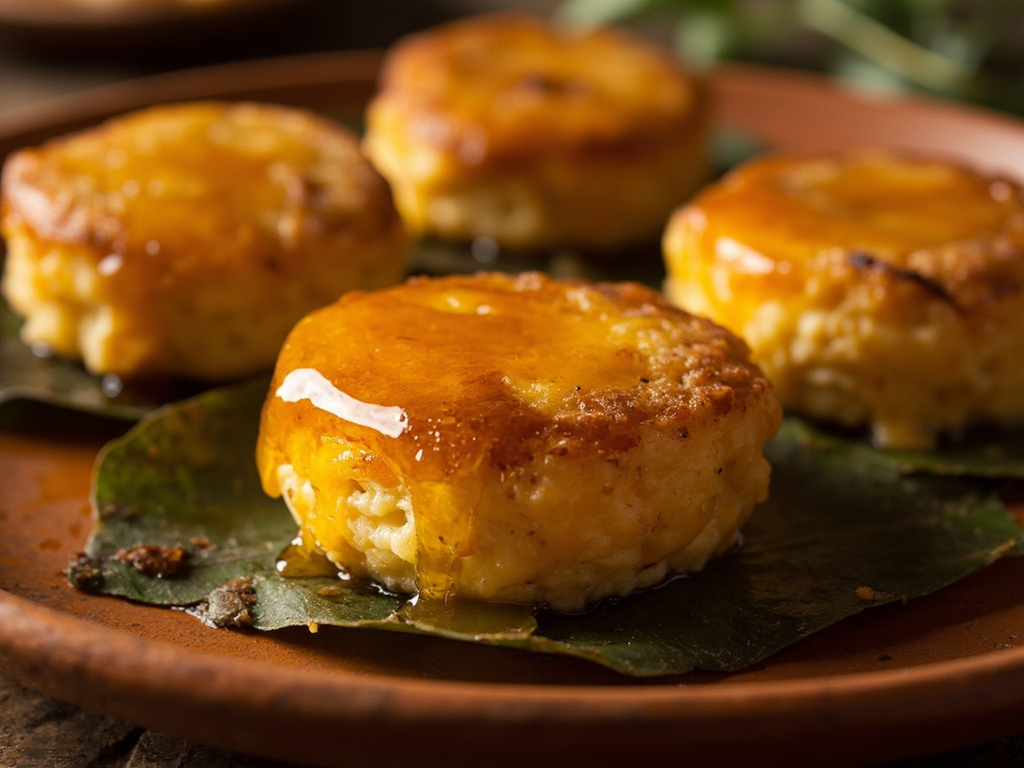
flipHoney and Fresh Cheese Plakous (Offering Cake)
Honey and Fresh Cheese Plakous (Offering Cake)
Why this dish? On the altars of Aphrodite, in Cyprus as in Corinth, cakes of flour, cheese, and honey were placed — food of the gods that smoke carried to Olympus. *Plakous* is the common ancestor of the honey cheese galette offered to divinities.
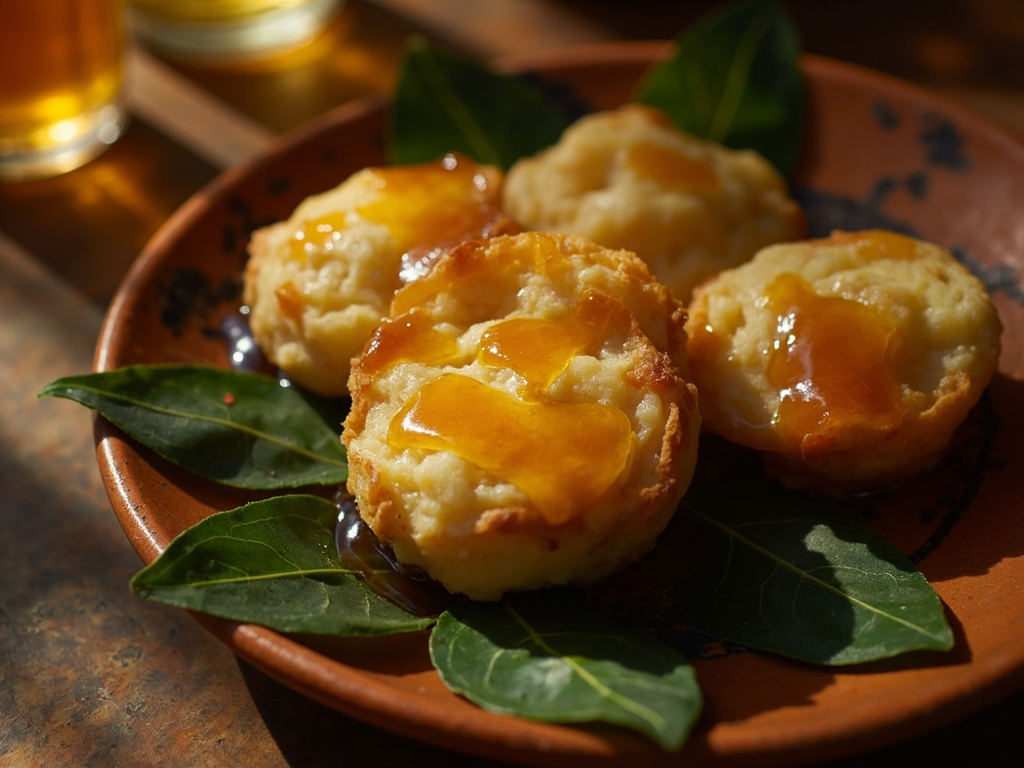
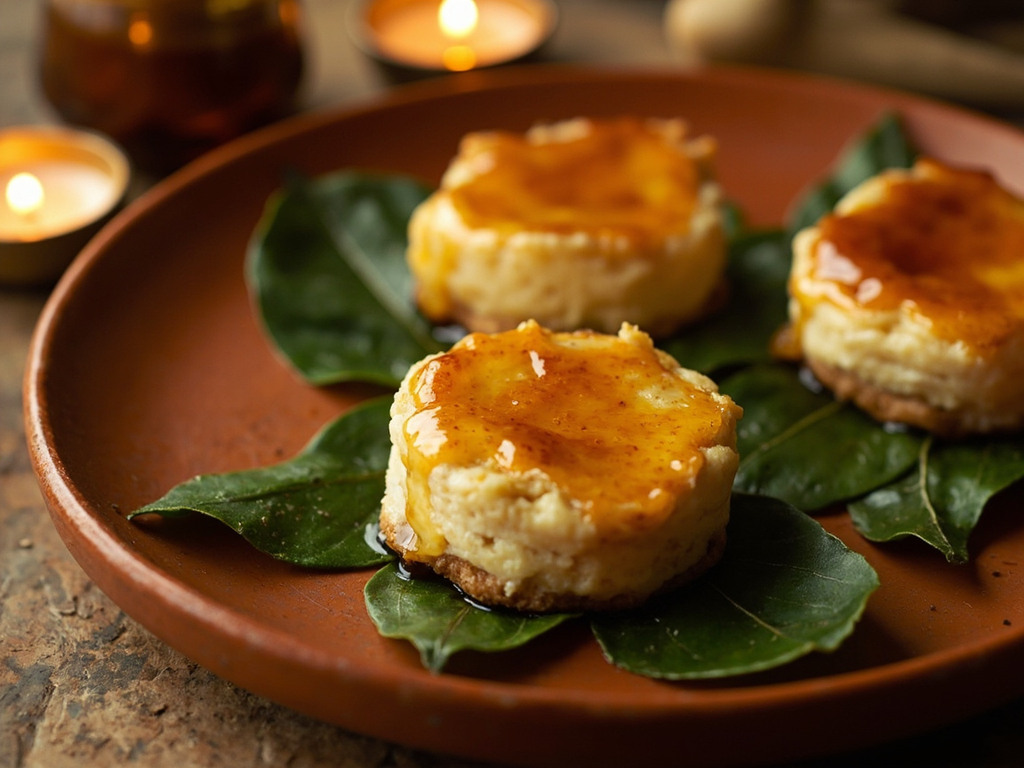
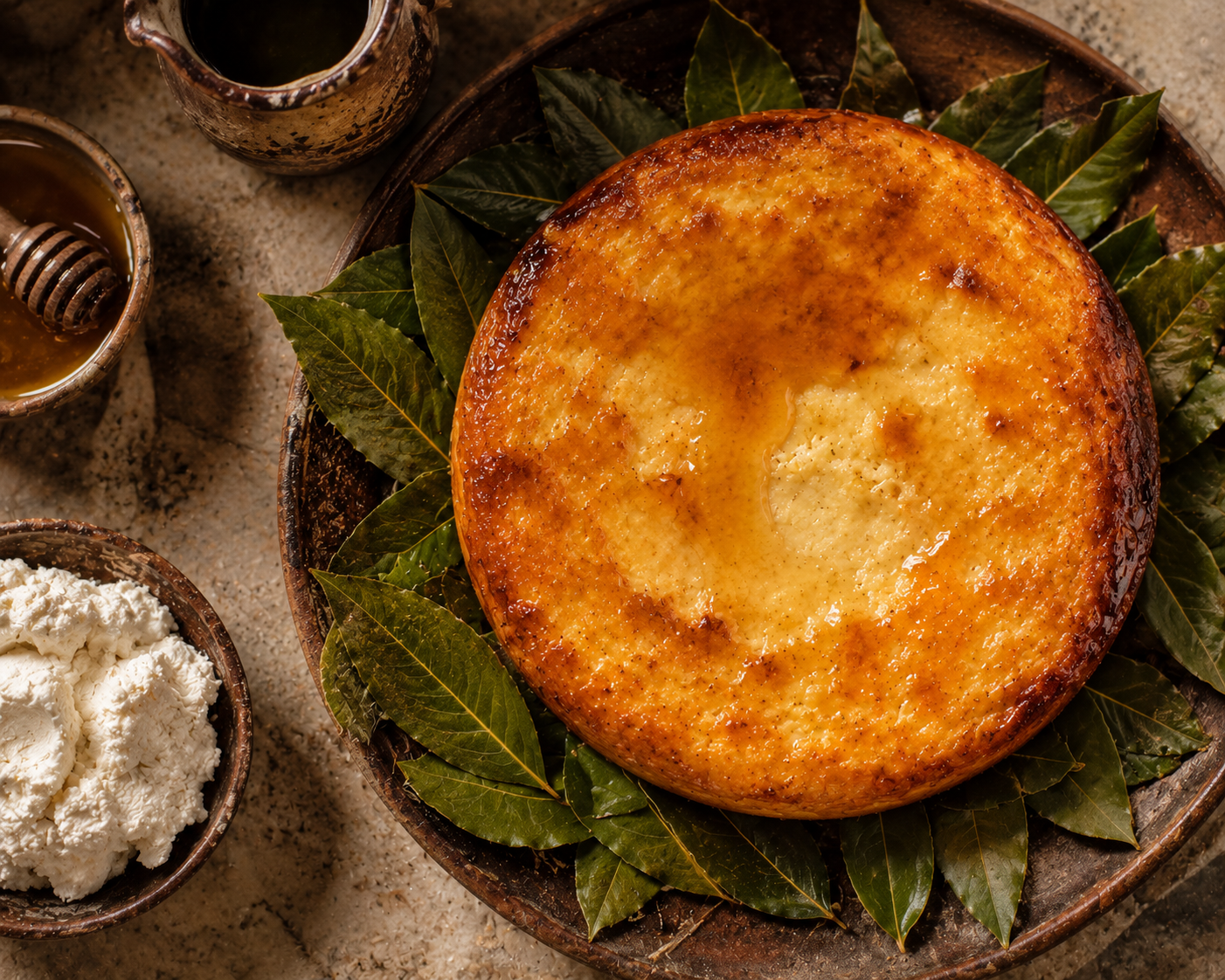
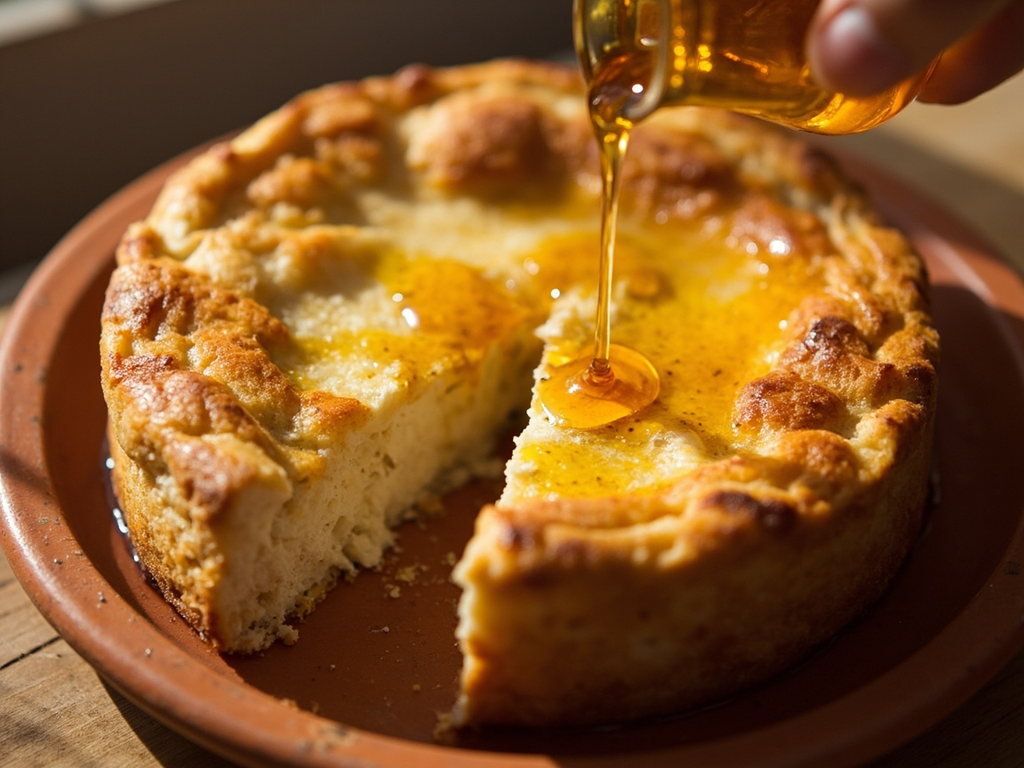
A flat galette of thin wheat dough filled with fresh sheep's cheese beaten with honey, baked until the edges turn golden. Tender, milky, and floral — inspired by ancient offerings, without reproducing a sacred rite.
Mortal, know that the Immortals do not eat your bread: we feed on nectar and ambrosia. But the smoke of your cakes is sweet to us, and this one pleased me above all. My attendants in Paphos beat the fresh sheep's cheese until it was light as a cloud, married it with honey, and wrapped it in a thin sheet of wheat. Place it on the warm stone thinking of me, and taste the share that falls to you — for what the gods disdain, they leave to men out of tenderness.
- •Wheat flour — enough for a thin sheet (wrapping)
- •Fresh sheep's cheese — a good lump (filling)
- •Honey — generously (to bind and sweeten)
- •Olive oil — a drizzle (to soften the dough)
Honey and Fresh Cheese Plakous (Offering Cake)
A flat galette of thin wheat dough filled with fresh sheep's cheese beaten with honey, baked until the edges turn golden. Tender, milky, and floral — inspired by ancient offerings, without reproducing a sacred rite.
Why this dish? On the altars of Aphrodite, in Cyprus as in Corinth, cakes of flour, cheese, and honey were placed — food of the gods that smoke carried to Olympus. *Plakous* is the common ancestor of the honey cheese galette offered to divinities.
Mortal, know that the Immortals do not eat your bread: we feed on nectar and ambrosia. But the smoke of your cakes is sweet to us, and this one pleased me above all. My attendants in Paphos beat the fresh sheep's cheese until it was light as a cloud, married it with honey, and wrapped it in a thin sheet of wheat. Place it on the warm stone thinking of me, and taste the share that falls to you — for what the gods disdain, they leave to men out of tenderness.
Ingredients (period version)
- Wheat flour — enough for a thin sheet (wrapping)
- Fresh sheep's cheese — a good lump (filling)
- Honey — generously (to bind and sweeten)
- Olive oil — a drizzle (to soften the dough)
Ingredients
- Thin dough like filo or olive oil dough — 200 g (wrapping)
- Brousse / sheep ricotta — 250 g (filling)
- Honey — 4 tbsp (+1 for drizzling) (sweetener and binder)
- Olive oil — 2 tbsp (brushing)
- Egg — 1 (optional) (to set the filling)
Method
- Beat the fresh cheese with 4 tbsp honey (and the egg if used) until smooth.
- Roll out the dough thinly, brush with olive oil.
- Spread the cheese cream on half the dough, fold into a flat galette and seal the edges.
- Brush with oil and bake at 190°C for 20-25 min, until the edges are golden.
- On removal, drizzle with the remaining honey, slightly warmed, and serve warm.
How it was made : The *plakous* (from which the Romans derived the word *placenta*, later used by Cato) designated a flaky cheese and honey galette. It was offered to the gods: only the smoke and aroma rose to Olympus, the edible part returning to the faithful during the sacrificial meal.
The contemporary twist : Serve as a deconstructed cheesecake: a quenelle of honey cheese on broken crispy galette, with lemon zest.
Aphrodite · Charactorium