 flip
flipLibum, the Offering Cake to the Household Gods
Libum, the Offering Cake to the Household Gods
Why this dish? Antoninus received the surname Pius, 'the Pious', for his scrupulous respect for the gods and rites. The libum, a small cake of cheese and flour placed on the household altar to honor the Lares and on birthdays, embodies precisely that daily piety that earned him his name.
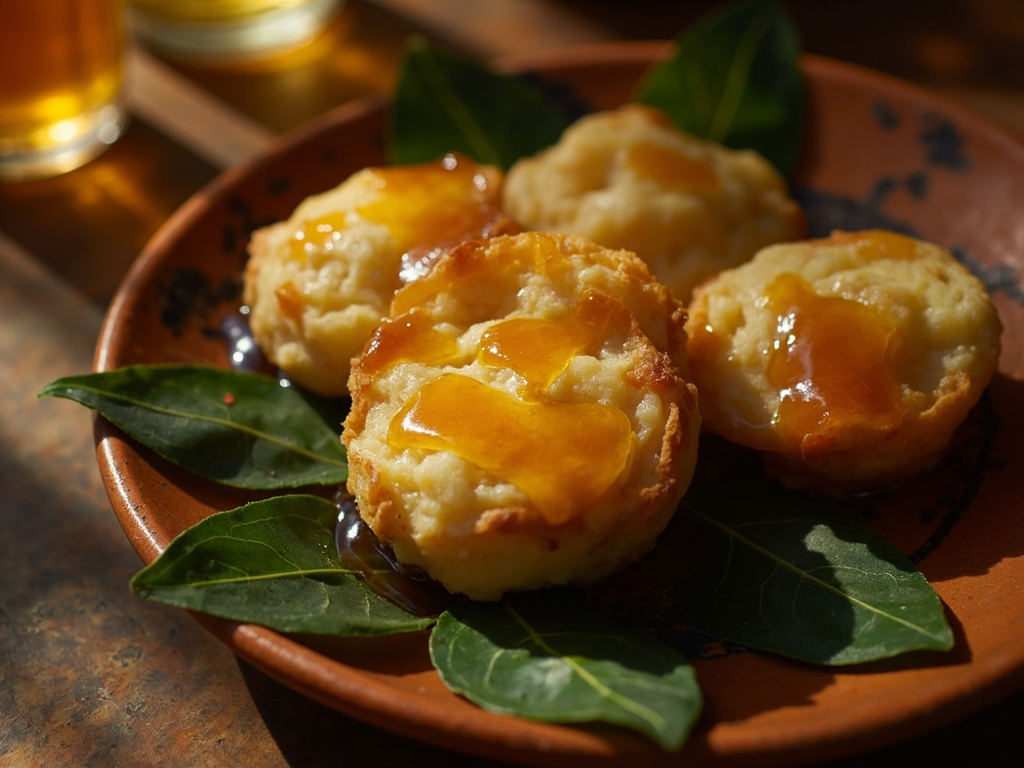
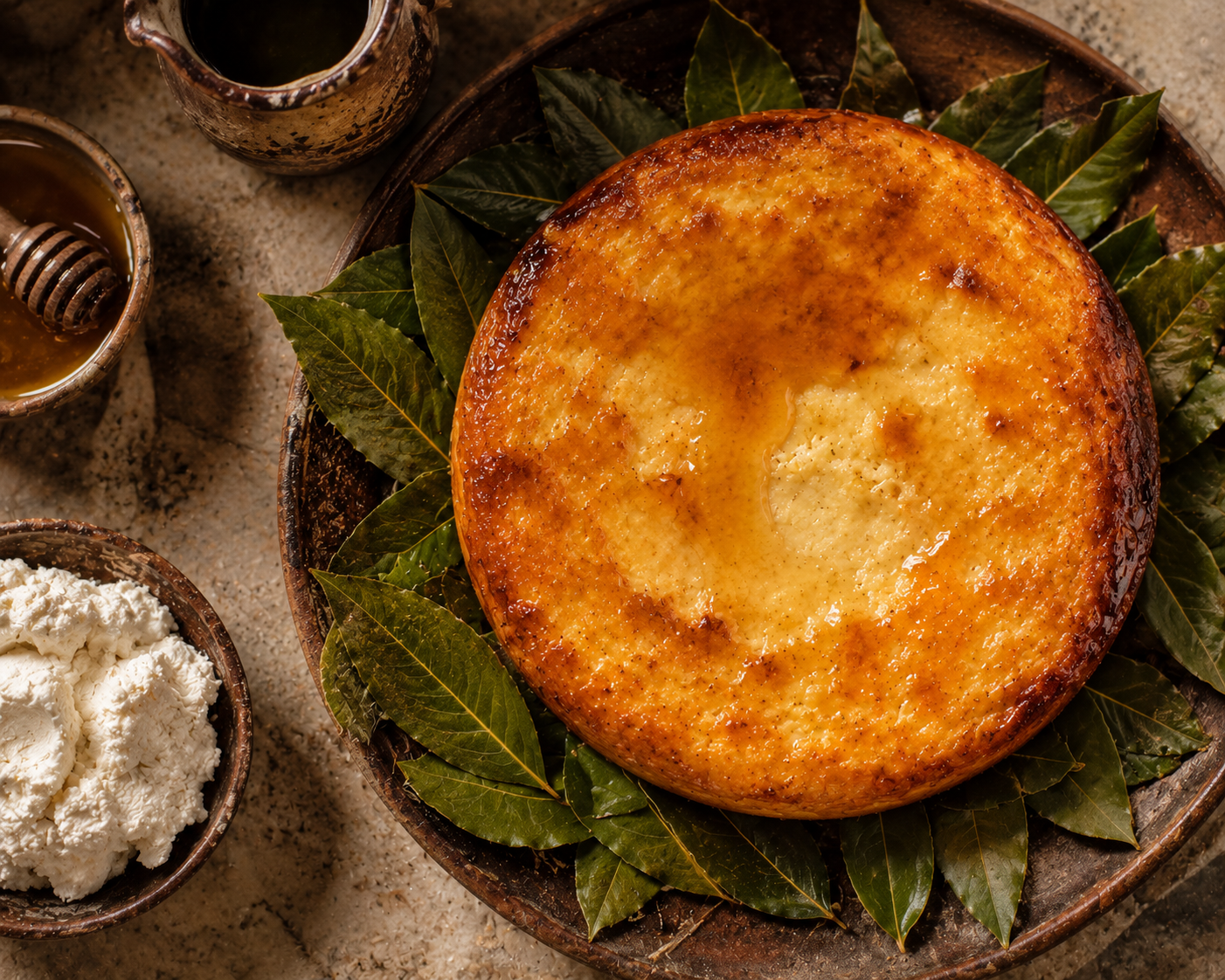
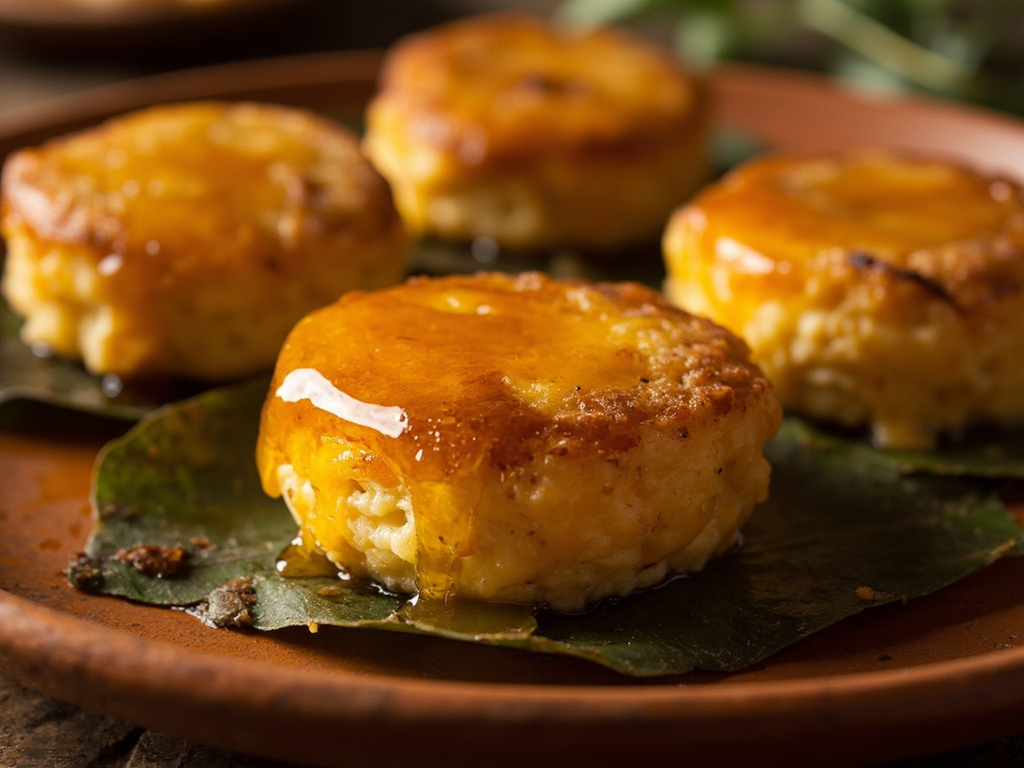
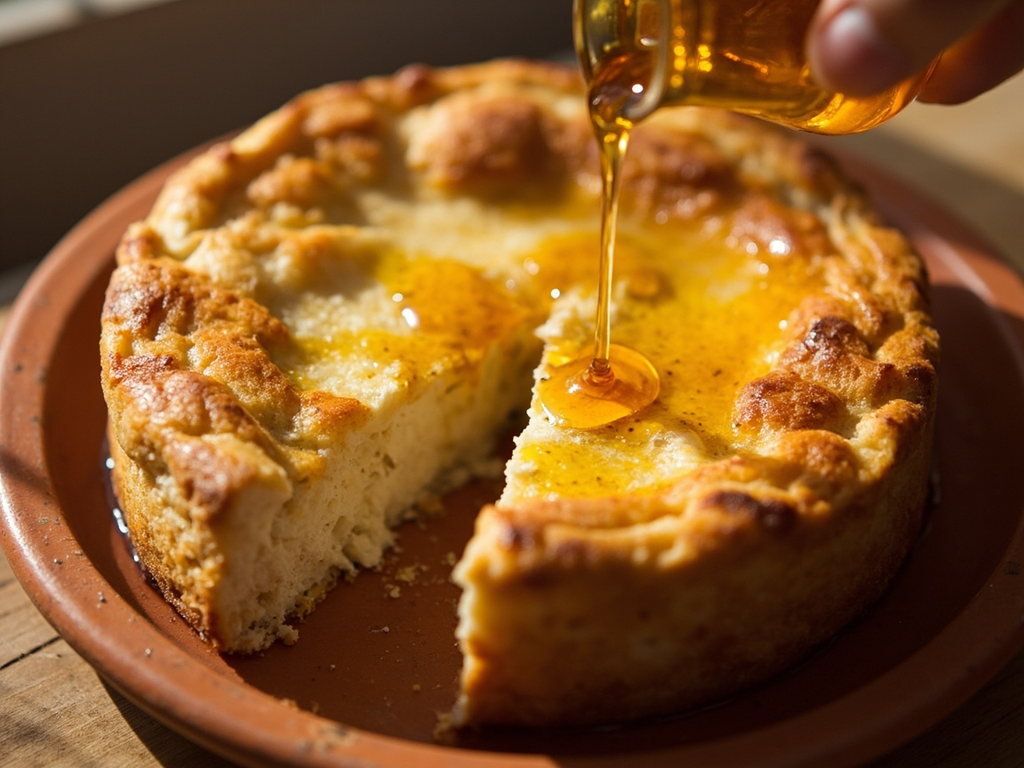
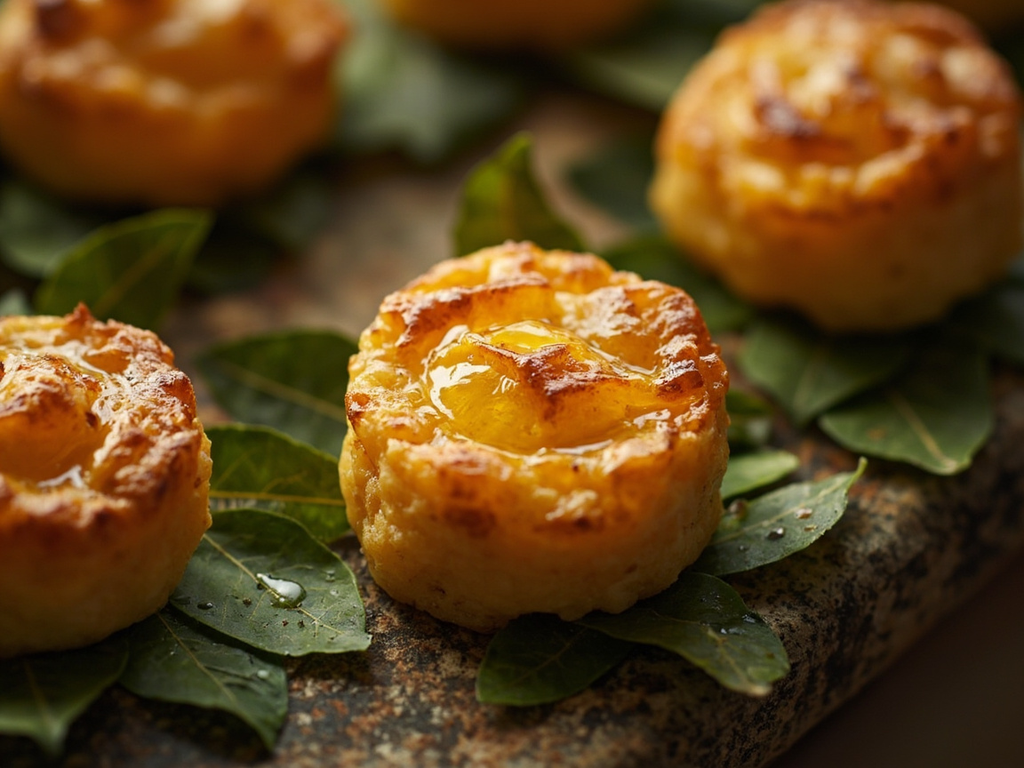
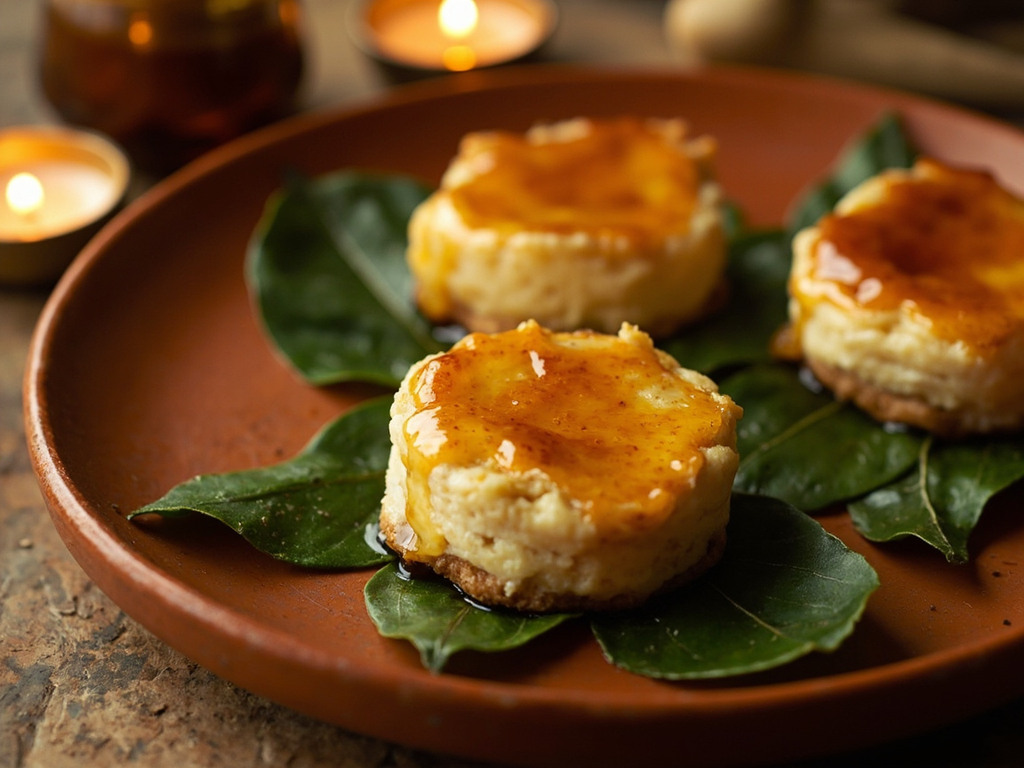
A soft cake of fresh cheese, flour, and egg, baked on bay leaves and glazed with warm honey. Offered to the household gods and then shared, it marries the sweetness of honey with the milky roundness of cheese.
They call me the Pious, and not for nothing: no day passes without my giving the gods their due. For the libum, one grinds fresh cheese, mixes it with fine flour and an egg, then shapes the cake and places it on bay leaves before covering it with a hot earthenware pot. When it has taken color, one pours honey over it. Present it first on the altar of the Lares — only then may you taste it without offending anyone.
- •Well-drained fresh cheese — two pounds (body of the cake)
- •Fine flour (spelt or wheat) — one pound (binder)
- •Egg — 1 (binder)
- •Bay leaves — a few (fragrant support for baking)
- •Honey — to taste (glaze)
Libum, the Offering Cake to the Household Gods
A soft cake of fresh cheese, flour, and egg, baked on bay leaves and glazed with warm honey. Offered to the household gods and then shared, it marries the sweetness of honey with the milky roundness of cheese.
Why this dish? Antoninus received the surname Pius, 'the Pious', for his scrupulous respect for the gods and rites. The libum, a small cake of cheese and flour placed on the household altar to honor the Lares and on birthdays, embodies precisely that daily piety that earned him his name.
They call me the Pious, and not for nothing: no day passes without my giving the gods their due. For the libum, one grinds fresh cheese, mixes it with fine flour and an egg, then shapes the cake and places it on bay leaves before covering it with a hot earthenware pot. When it has taken color, one pours honey over it. Present it first on the altar of the Lares — only then may you taste it without offending anyone.
Ingredients (period version)
- Well-drained fresh cheese — two pounds (body of the cake)
- Fine flour (spelt or wheat) — one pound (binder)
- Egg — 1 (binder)
- Bay leaves — a few (fragrant support for baking)
- Honey — to taste (glaze)
Ingredients
- Ricotta or well-drained fresh cheese — 250 g (body of the cake)
- Flour (wheat or spelt) — 125 g (binder)
- Egg — 1 (binder)
- Bay leaves — 6 to 8 (fragrant support)
- Honey — 4 tbsp (glaze)
Method
- Preheat the oven to 180°C (350°F).
- Mash the fresh cheese in a bowl until smooth.
- Add the flour, then the egg, and mix into a soft dough.
- Arrange the bay leaves on a baking sheet, place small hand-shaped cakes on top.
- Bake for 35 to 40 minutes until golden.
- Remove from oven, glaze with slightly warmed honey, and let cool slightly before serving.
How it was made : Cato the Elder gives the precise recipe for libum in his agricultural treatise (chapter 75): crushed cheese, flour, egg, baked under a hot bell (testum) on bay leaves. It was a sacred cake offered to the gods on birthdays and domestic festivals before being consumed by the household.
The contemporary twist : Serve the warm liba on a fresh bay leaf, with a spiral of honey and a few crushed walnuts: a miniature Roman cheesecake.
Sources : Cato the Elder, De agricultura, 75 · Historia Augusta, Life of Antoninus Pius
Antoninus Pius · Charactorium