 flip
flipLibum — The Cheese Cake Offered to the Gods
Libum — The Cheese Cake Offered to the Gods
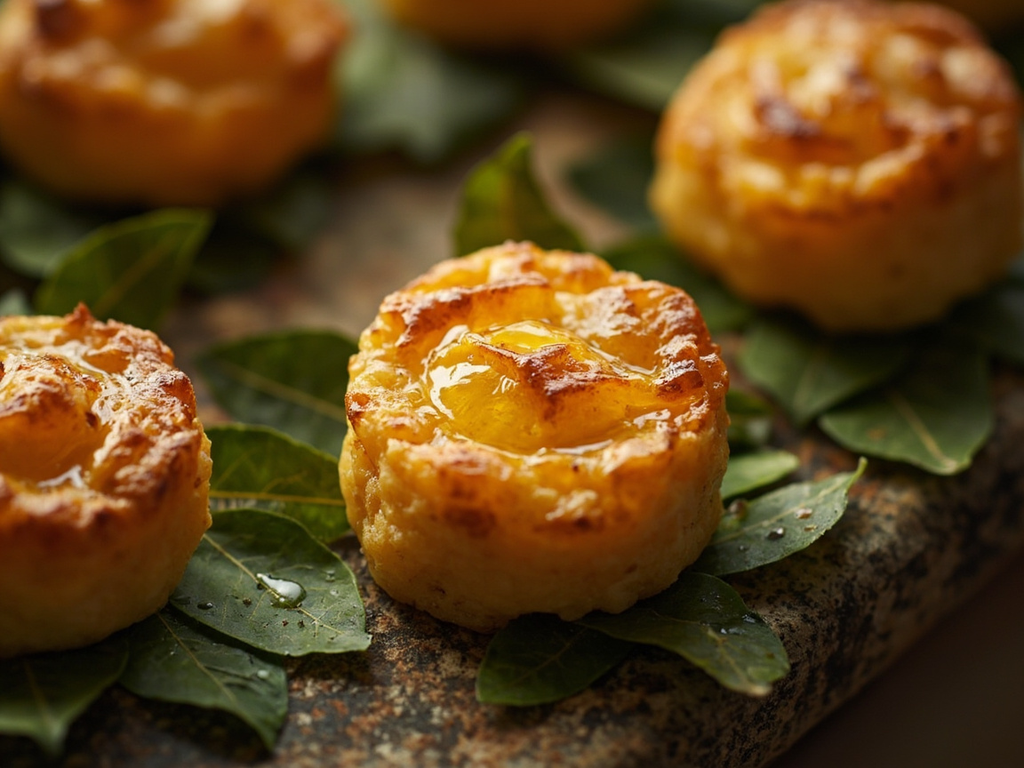
Why this dish? Caesar was Pontifex Maximus, high priest of Rome, guardian of public rites. The libum, a small cake of fresh cheese and honey baked on bay leaves, was the classic domestic offering to the household gods (Lares, Penates) on birthdays and festivals — and the bay leaf recalls the very crown that encircled his brow.
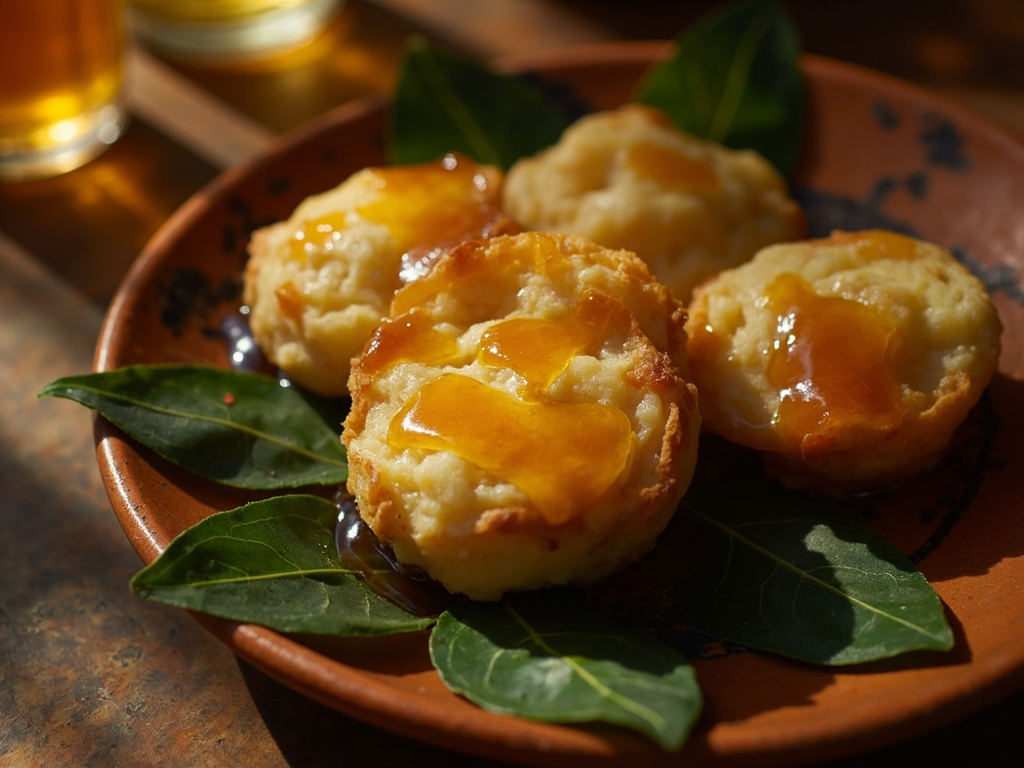
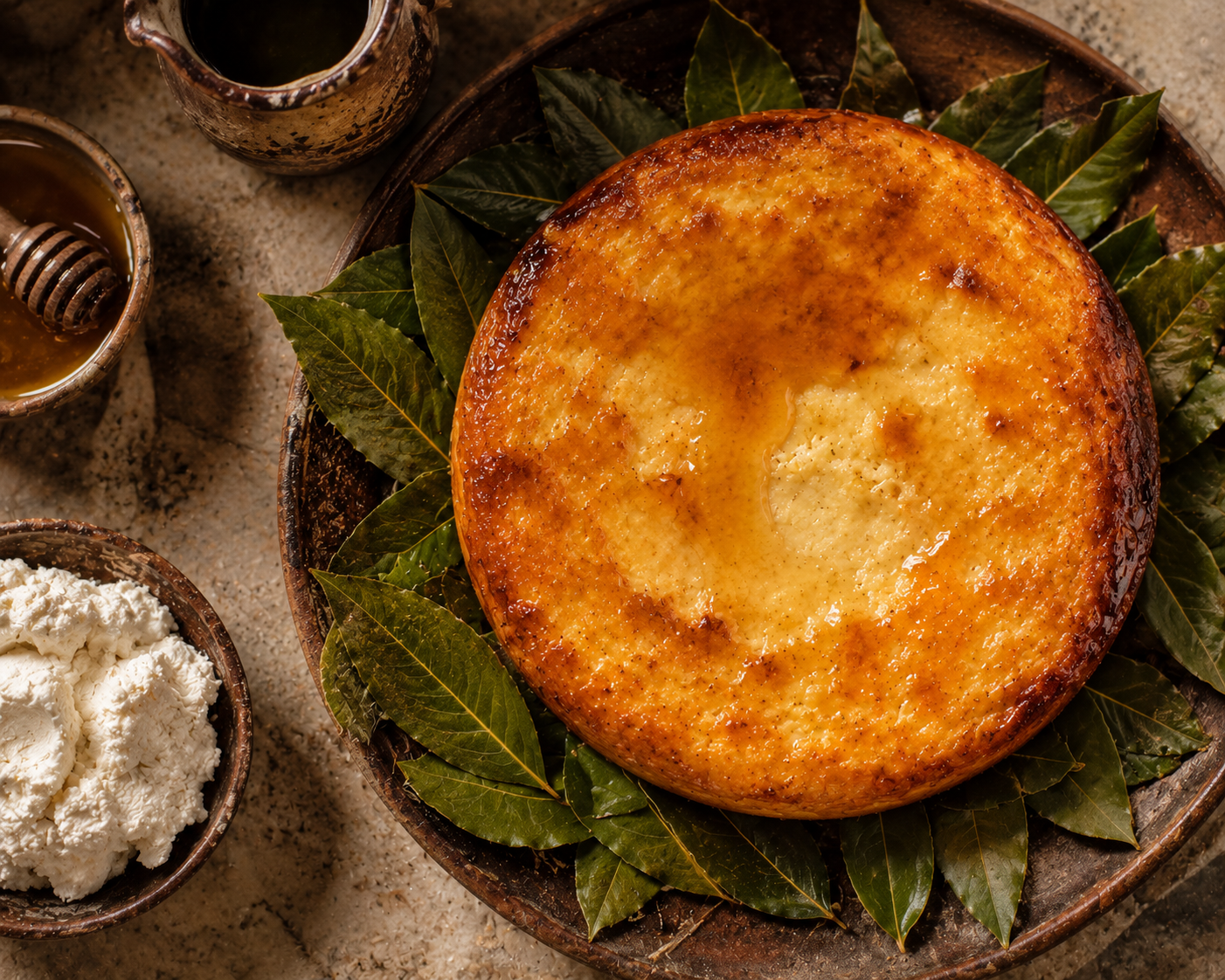
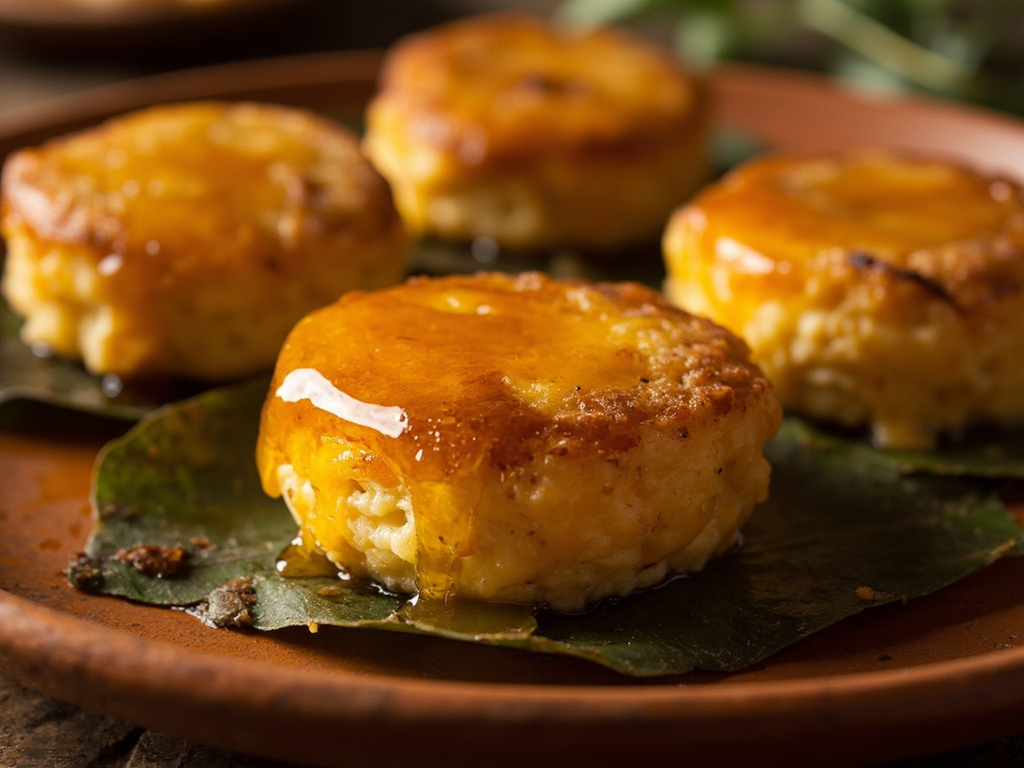
A small, soft cake of fresh cheese bound with egg and flour, slowly baked on a bed of bay leaves, then drizzled with warm honey. Tender and fragrant, halfway between flan and cheesecake: the Roman ancestor of cheesecake. Recipe inspired by a domestic offering, to be enjoyed as a sweet.
As Pontifex Maximus, I have overseen the rites that bind Rome to her gods, and the libum is one of those placed on the altar of the Lares on feast days. Mash the fresh cheese until smooth, bind it with an egg and a little flour, set the dough on bay leaves — those same leaves that crown the victor's brow — and cook covered over gentle heat. Drizzled with warm honey, it honors the gods as much as it delights men. Taste it: the bay leaf leaves its fragrance, like a blessing.
- •Fresh sheep cheese — one pound (base)
- •Wheat flour — a portion (binder)
- •Egg — one (binder)
- •Bay leaves — a few (aroma and baking support)
- •Honey — generously (signature topping)
Libum — The Cheese Cake Offered to the Gods
A small, soft cake of fresh cheese bound with egg and flour, slowly baked on a bed of bay leaves, then drizzled with warm honey. Tender and fragrant, halfway between flan and cheesecake: the Roman ancestor of cheesecake. Recipe inspired by a domestic offering, to be enjoyed as a sweet.
Why this dish? Caesar was Pontifex Maximus, high priest of Rome, guardian of public rites. The libum, a small cake of fresh cheese and honey baked on bay leaves, was the classic domestic offering to the household gods (Lares, Penates) on birthdays and festivals — and the bay leaf recalls the very crown that encircled his brow.
As Pontifex Maximus, I have overseen the rites that bind Rome to her gods, and the libum is one of those placed on the altar of the Lares on feast days. Mash the fresh cheese until smooth, bind it with an egg and a little flour, set the dough on bay leaves — those same leaves that crown the victor's brow — and cook covered over gentle heat. Drizzled with warm honey, it honors the gods as much as it delights men. Taste it: the bay leaf leaves its fragrance, like a blessing.
Ingredients (period version)
- Fresh sheep cheese — one pound (base)
- Wheat flour — a portion (binder)
- Egg — one (binder)
- Bay leaves — a few (aroma and baking support)
- Honey — generously (signature topping)
Ingredients
- Ricotta or well-drained fresh sheep cheese — 250 g (base)
- Wheat flour — 60 g (binder)
- Egg — 1 (binder)
- Fresh bay leaves — 6–8 (aroma and support)
- Honey — 4 tbsp (signature topping)
Method
- Preheat oven to 180°C.
- Mash the fresh cheese with a fork until smooth.
- Incorporate flour, then egg, to form a soft dough.
- Arrange bay leaves on a baking sheet; place a dome of dough on each.
- Cover with a dish or cloche and bake for 35–40 minutes, until golden and firm.
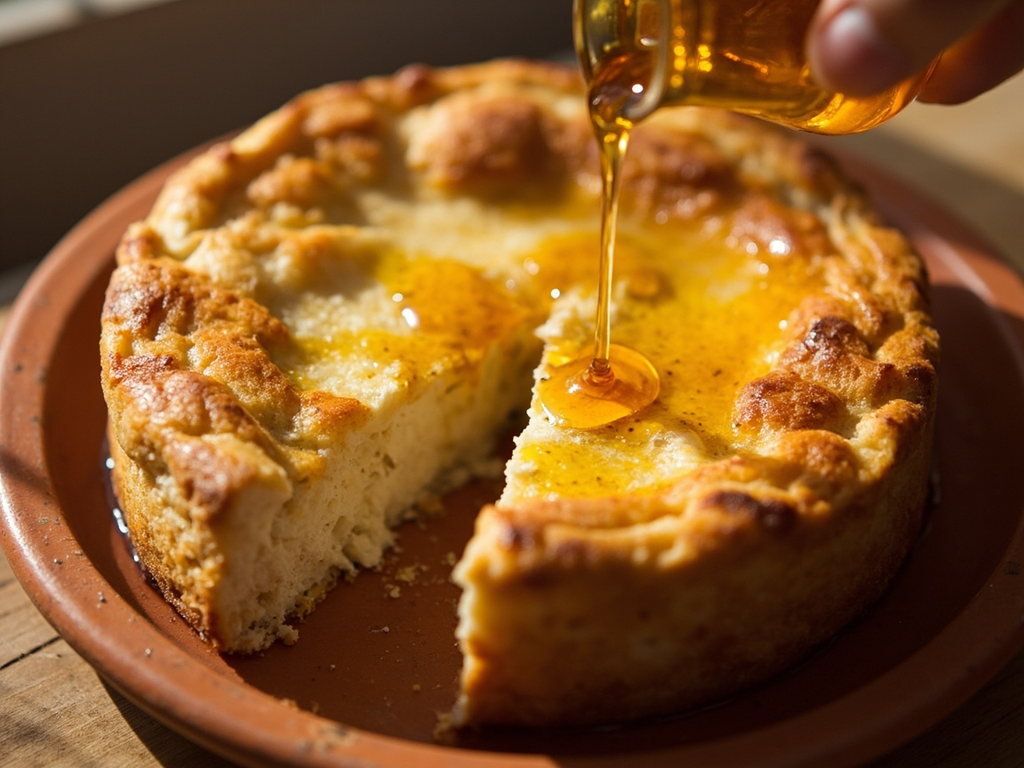
- Warm the honey, generously drizzle over the hot cakes, and serve.
How it was made : Cato the Elder handed down the exact recipe for libum: cheese kneaded with flour and egg, slowly baked 'under a hot cloche' (under a test, a terracotta lid) on bay leaves. It was both a festive cake and an offering placed on the domestic altar.
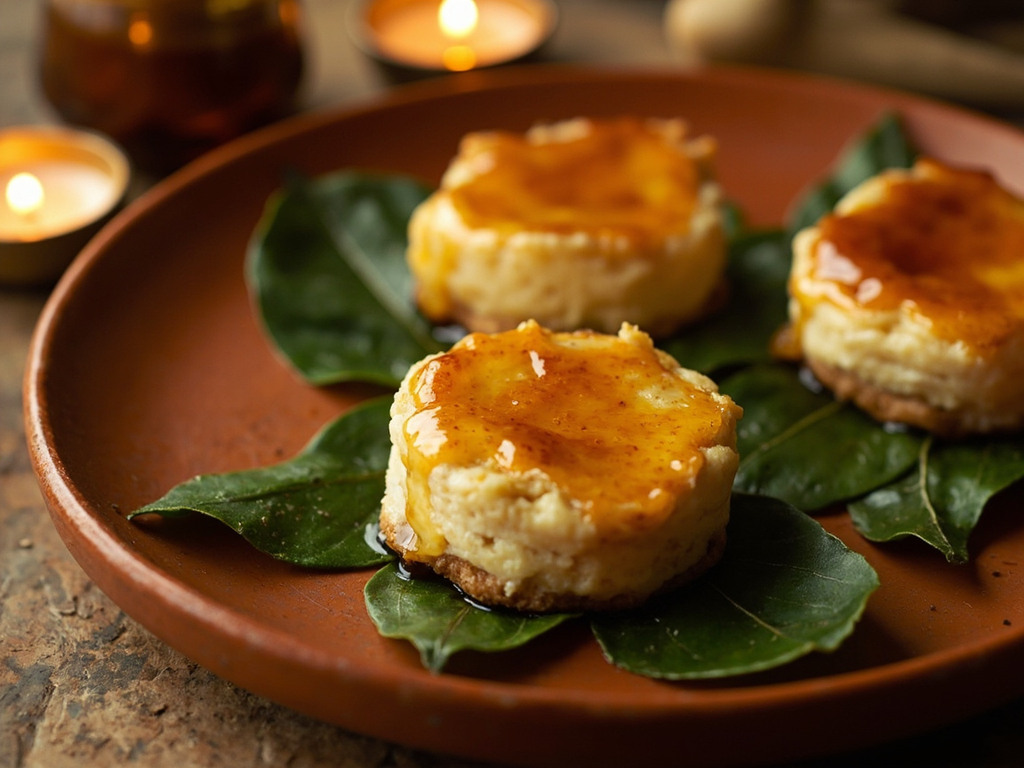
The contemporary twist : Served as mini individual cheesecakes, drizzled with chestnut honey and a sliver of candied bay leaf — a '2000-year-old cheesecake' to talk about at the table.
Sources : Cato the Elder, De agricultura, 75 (libum recipe)
Julius Caesar · Charactorium