 flip
flipRoasted kid goat with herbs from Parnassus, the sacrificial portion
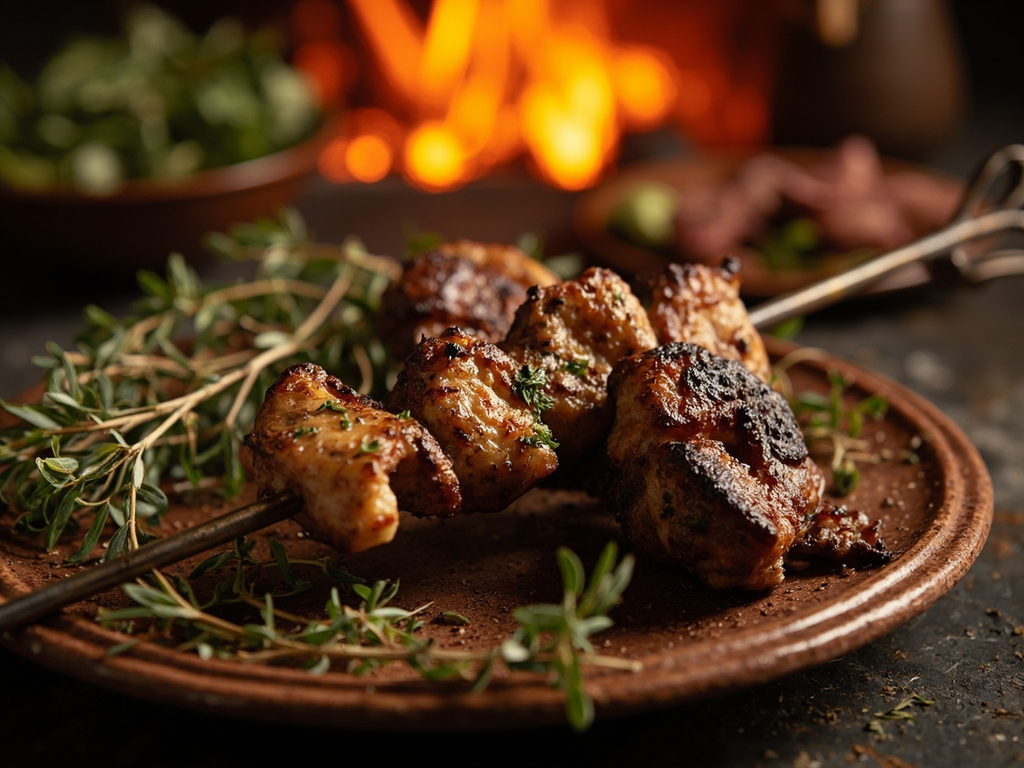
Roasted kid goat with herbs from Parnassus, the sacrificial portion
Why this dish? Apollo received as sacrifice the animals sacred to him, including goat and lamb. During the great festivals at Delphi, after the portion burned for the god, the faithful roasted the meat and shared it in a banquet: eating was communing with Apollo.
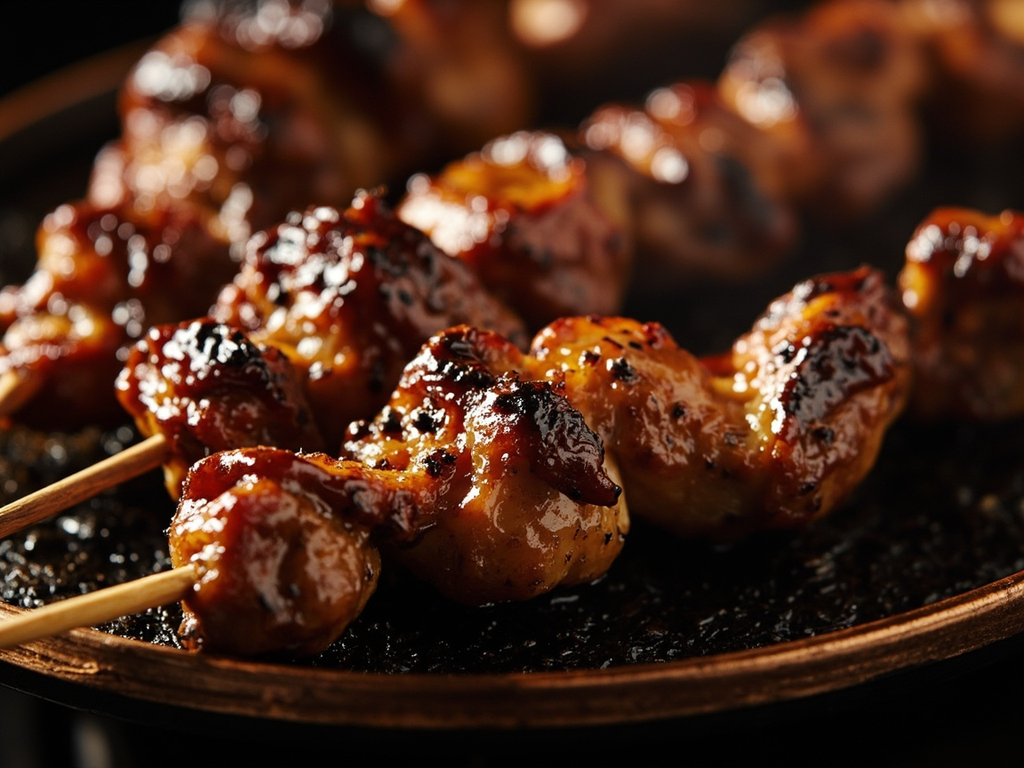
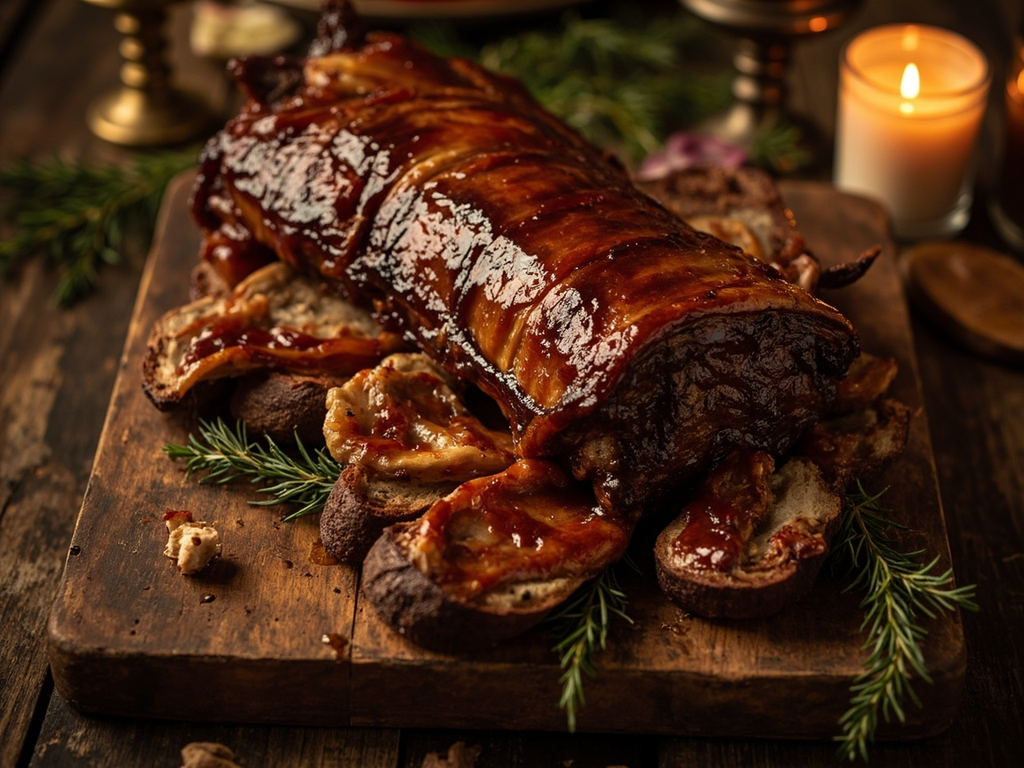
Pieces of kid goat rubbed with oil, salt and wild herbs (thyme, oregano, fennel), skewered and roasted over the flame, perfumed with a bay leaf. The most festive meat in the Greek world, born from the sacrificial rite.
When the smoke of the thigh wrapped in fat rises straight to heaven, know that I have accepted your offering. Keep the flesh for your table: that is how I intended it for men. Rub the kid with salt and the herbs that my sun has dried on the mountain, slip in a leaf of my laurel, and turn it over the embers until it sings. Eat in my honor, and let your joy be my sweetest portion.
- •Kid goat (or lamb) in pieces — a shoulder (sacrificial meat)
- •Olive oil — generously (cooking and herb binder)
- •Thyme, oregano, wild fennel — by the handful (mountain fragrance)
- •Bay leaves — a few (Apollo's signature)
- •Sea salt — as needed (seasoning and preservation)
- •Honey — a drizzle (glaze at end of cooking (optional))
Roasted kid goat with herbs from Parnassus, the sacrificial portion
Pieces of kid goat rubbed with oil, salt and wild herbs (thyme, oregano, fennel), skewered and roasted over the flame, perfumed with a bay leaf. The most festive meat in the Greek world, born from the sacrificial rite.
Why this dish? Apollo received as sacrifice the animals sacred to him, including goat and lamb. During the great festivals at Delphi, after the portion burned for the god, the faithful roasted the meat and shared it in a banquet: eating was communing with Apollo.
When the smoke of the thigh wrapped in fat rises straight to heaven, know that I have accepted your offering. Keep the flesh for your table: that is how I intended it for men. Rub the kid with salt and the herbs that my sun has dried on the mountain, slip in a leaf of my laurel, and turn it over the embers until it sings. Eat in my honor, and let your joy be my sweetest portion.
Ingredients (period version)
- Kid goat (or lamb) in pieces — a shoulder (sacrificial meat)
- Olive oil — generously (cooking and herb binder)
- Thyme, oregano, wild fennel — by the handful (mountain fragrance)
- Bay leaves — a few (Apollo's signature)
- Sea salt — as needed (seasoning and preservation)
- Honey — a drizzle (glaze at end of cooking (optional))
Ingredients
- Lamb or kid goat shoulder, cut into pieces — 1.2 kg (main meat)
- Olive oil — 5 tbsp (marinade and cooking)
- Dried thyme and oregano — 2 tbsp total (aromatics)
- Fennel seeds — 1 tsp (anise flavor)
- Bay leaves — 3 (aromatic signature)
- Salt and a little honey — to taste + 1 tbsp (seasoning and glaze)
Method
- Mix the olive oil, thyme, oregano, crushed fennel seeds and salt.
- Coat the meat pieces with this marinade, tuck in the bay leaves, and let rest at least 1 hour (ideally overnight).
- Cook in the oven at 200°C, or better over embers, turning regularly, for 45 to 60 minutes.
- Halfway through, reduce to 180°C so the meat stays tender.
- In the last 5 minutes, brush with a drizzle of honey to caramelize.
- Let rest 10 minutes before serving, sprinkled with fresh oregano.
How it was made : The Greek sacrifice (thysia) followed a precise protocol: the thigh bones wrapped in fat burned for the god (the 'smelled' portion), while the edible meat went to the faithful, roasted on spits (obeloi) or boiled. Meat was mainly festive fare: it was rarely eaten outside of sacrifices.
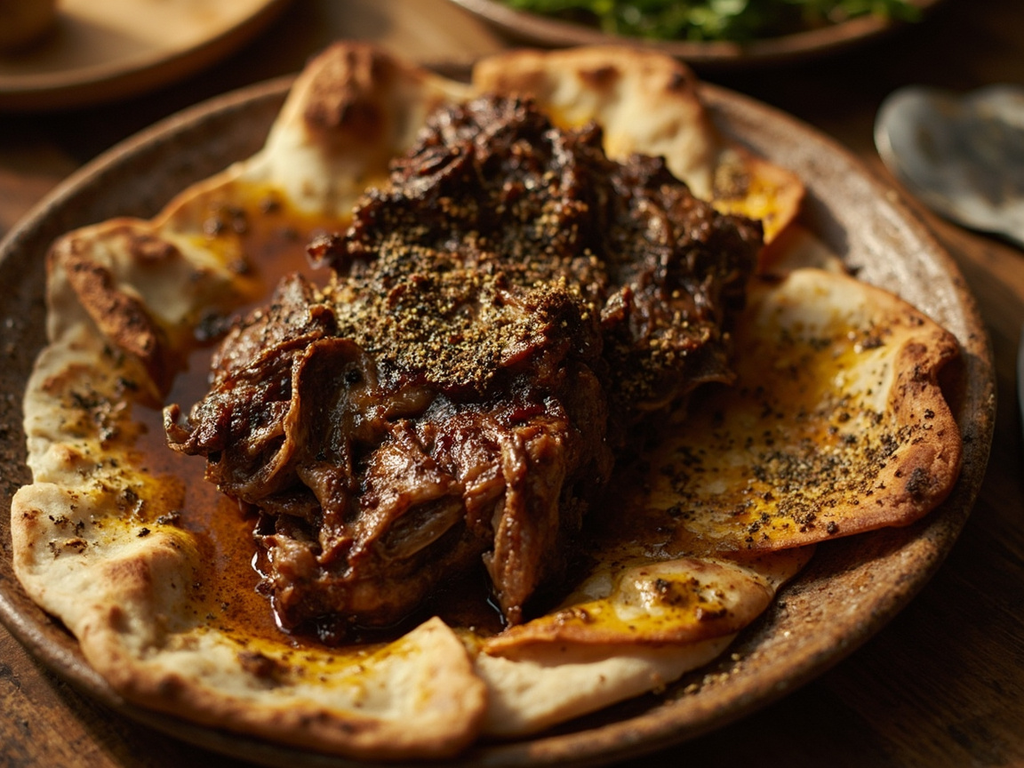
The contemporary twist : Serve in an open pita with lemon yogurt and herbs — a nod to Greek souvlaki, direct descendant of ancient skewered meat.
Sources : Homer, Iliad (description of sacrifices and spit-roasting) · Marcel Detienne & Jean-Pierre Vernant, The Cuisine of Sacrifice among the Greeks (University of Chicago Press, 1989)
Apollo · Charactorium