 flip
flipPelanos to the Muses, Offering Cake
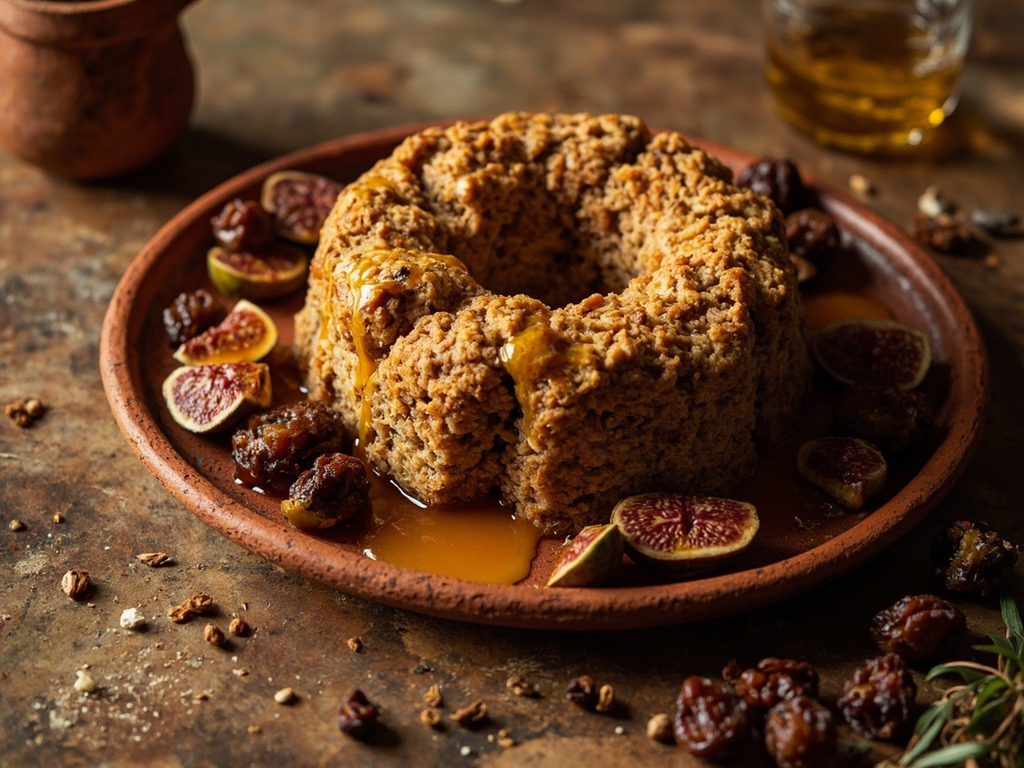
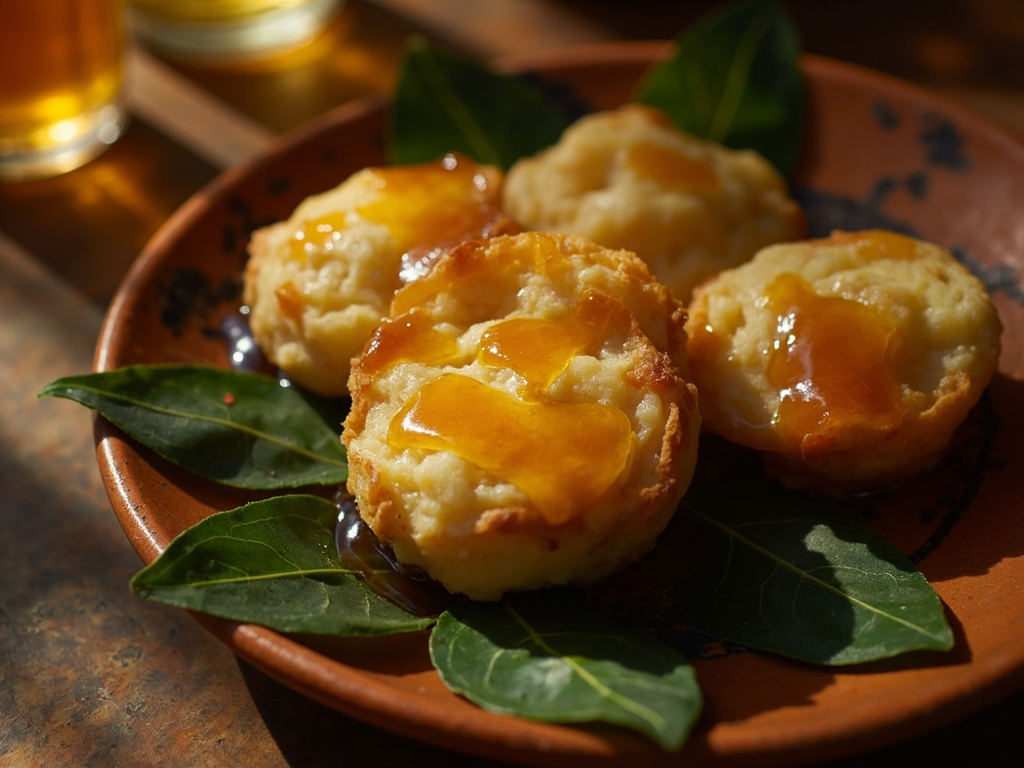
Pelanos to the Muses, Offering Cake
Why this dish? An epic poet begins nothing without invoking the Muse — and the *Argonautica* opens precisely with that call. The *pelanos*, a modest cake of barley, honey, and oil, is the offering that every literate Greek makes to win the favor of the goddesses of song before taking up the reed pen.
A small offering cake kneaded with barley, honey, and oil, shaped by hand and placed as a tribute to the divinities — here the Muses, patrons of poets. Inspired by attested Greek offerings, to be prepared with respect: one imagines it, one does not reenact a sacred rite.
Before tracing the first verse, I honor the Muses: 'Beginning with you, Phoebus, I will recall the deeds of heroes of old.' I knead for them a *pelanos*, this simple cake of barley, oil, and honey that the pious place on the altar. Modest, certainly — but the goddesses look at the heart, not the expense. Shape it with your hands, set it down, and may the song come to you more easily.
- •Barley flour — two handfuls (base)
- •Honey — generously (sweetness)
- •Olive oil — a drizzle (binder)
- •Water — enough (binder)
- •Sesame seeds — a pinch (finish)
Pelanos to the Muses, Offering Cake
A small offering cake kneaded with barley, honey, and oil, shaped by hand and placed as a tribute to the divinities — here the Muses, patrons of poets. Inspired by attested Greek offerings, to be prepared with respect: one imagines it, one does not reenact a sacred rite.
Why this dish? An epic poet begins nothing without invoking the Muse — and the *Argonautica* opens precisely with that call. The *pelanos*, a modest cake of barley, honey, and oil, is the offering that every literate Greek makes to win the favor of the goddesses of song before taking up the reed pen.
Before tracing the first verse, I honor the Muses: 'Beginning with you, Phoebus, I will recall the deeds of heroes of old.' I knead for them a *pelanos*, this simple cake of barley, oil, and honey that the pious place on the altar. Modest, certainly — but the goddesses look at the heart, not the expense. Shape it with your hands, set it down, and may the song come to you more easily.
Ingredients (period version)
- Barley flour — two handfuls (base)
- Honey — generously (sweetness)
- Olive oil — a drizzle (binder)
- Water — enough (binder)
- Sesame seeds — a pinch (finish)
Ingredients
- Barley flour — 120 g (base)
- Honey — 3 tbsp (sweetness)
- Olive oil — 2 tbsp (binder)
- Water — about 5 cl (binder)
- Sesame seeds — 1 tbsp (finish)
Method
- Preheat the oven to 170°C.
- Mix the barley flour, honey, and oil, then add water little by little until a soft dough forms.
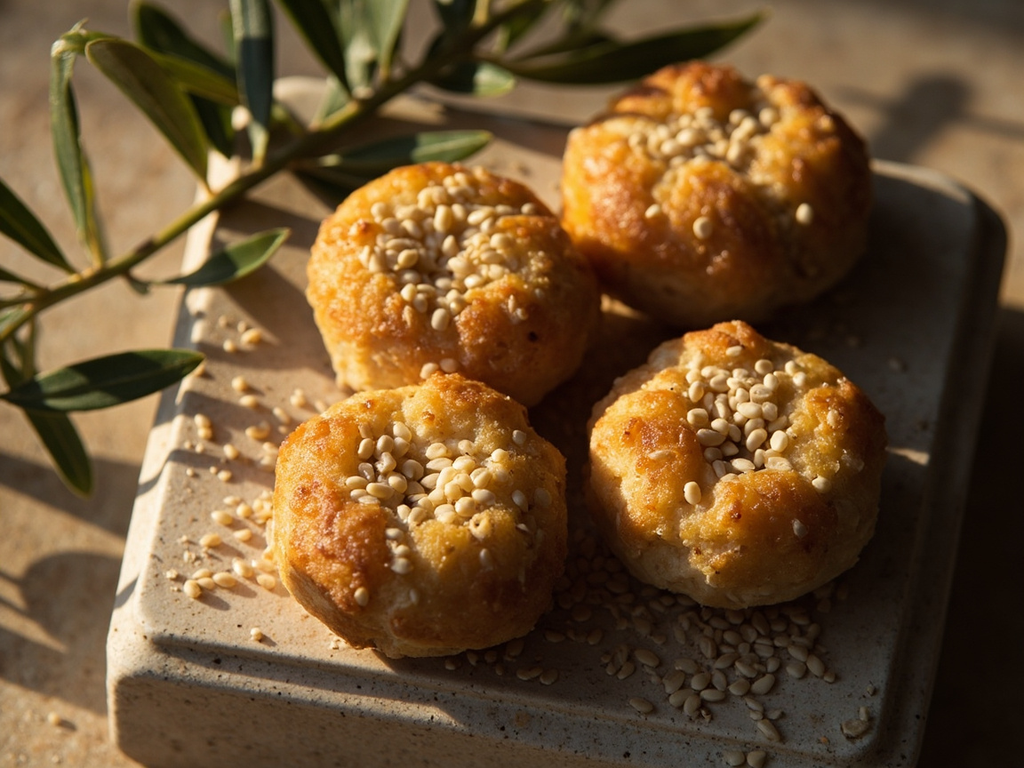
- Shape small round cakes by hand and sprinkle with sesame seeds.
- Place on an oiled baking sheet and bake for 15 to 20 minutes until lightly golden.
- Let cool slightly: eat plain, or place symbolically as an homage before a festive meal.
How it was made : The *pelanos* referred to offerings made of flour (often barley), honey, and oil, placed on Greek altars — sometimes liquid, sometimes as cakes. Simple foods were offered to the gods: the value lay in the intention, not the luxury. The Muses, daughters of Mnemosyne, presided over the epic poetry invoked by Apollonius.
The contemporary twist : Shaped into small medallions stamped with a lyre using a cookie cutter, like a 'poet's shortbread' to give to a reading friend.
Sources : Apollonius of Rhodes, *Argonautica*, Book I (invocation to the Muses) · W. Burkert, *Greek Religion* (1985)
Apollonius of Rhodes · Charactorium