 flip
flipLentil and Fava Etnos — the pot for long days
Lentil and Fava Etnos — the pot for long days
Why this dish? The legume puree, *etnos*, was the pot dish of the common Greek: cheap, nourishing, long-simmered while working. For a spinner like Arachne who spent her days at her craft, this is the meal that cooks by itself on the fire's edge while hands remain on the wool.
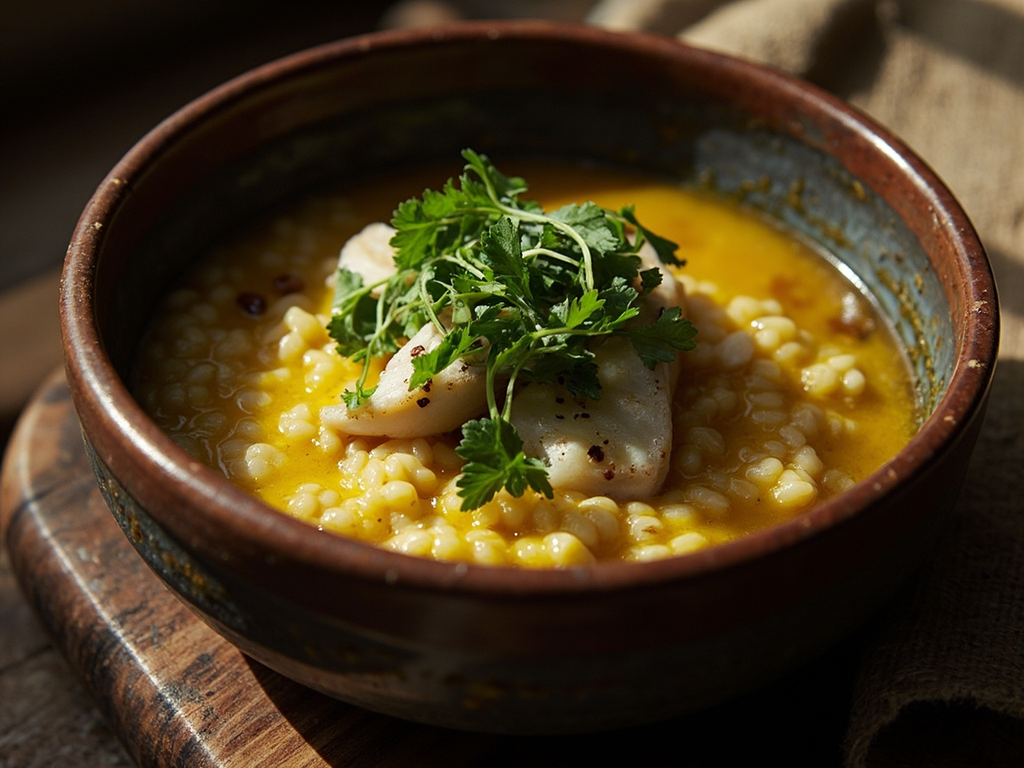
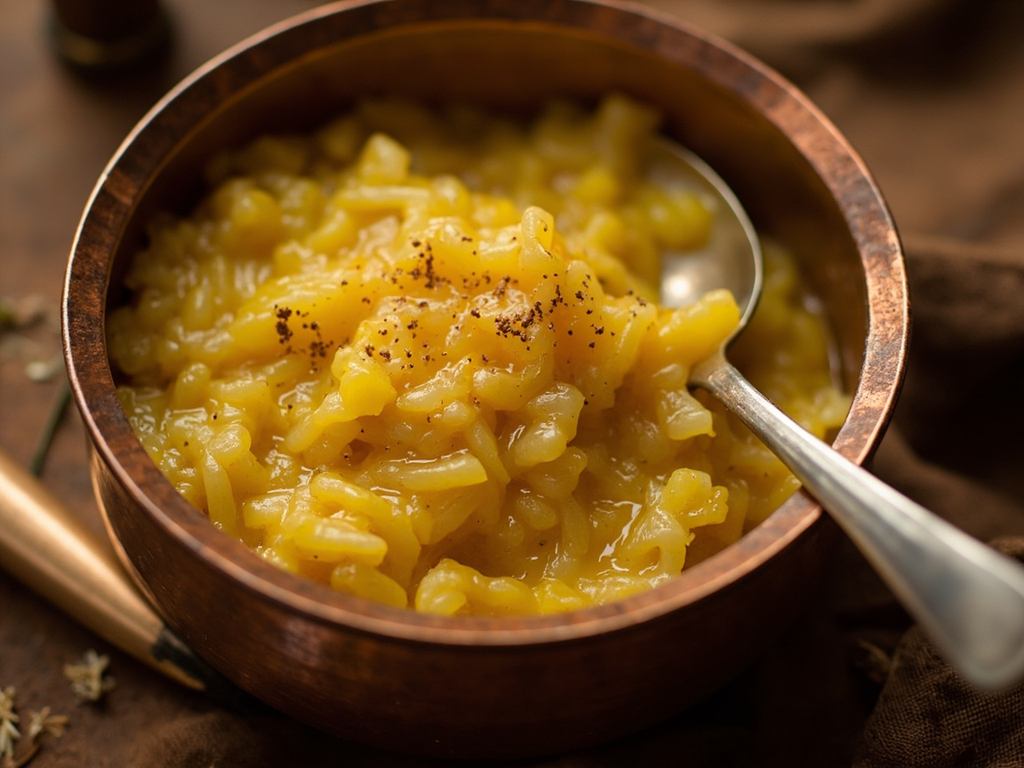
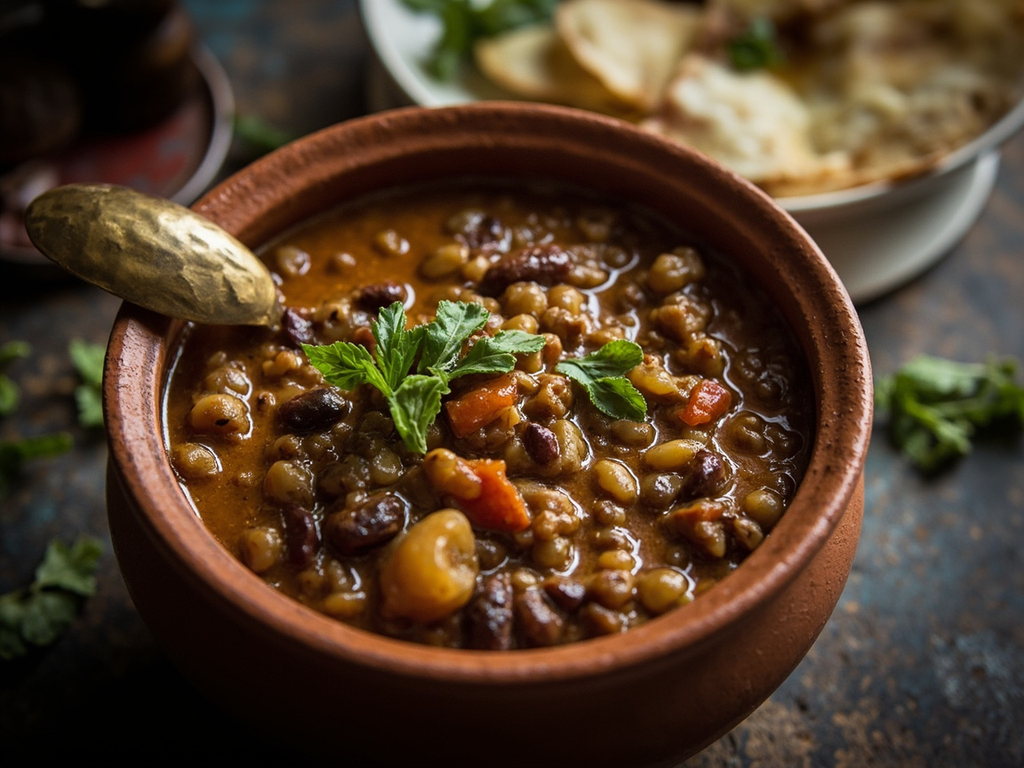
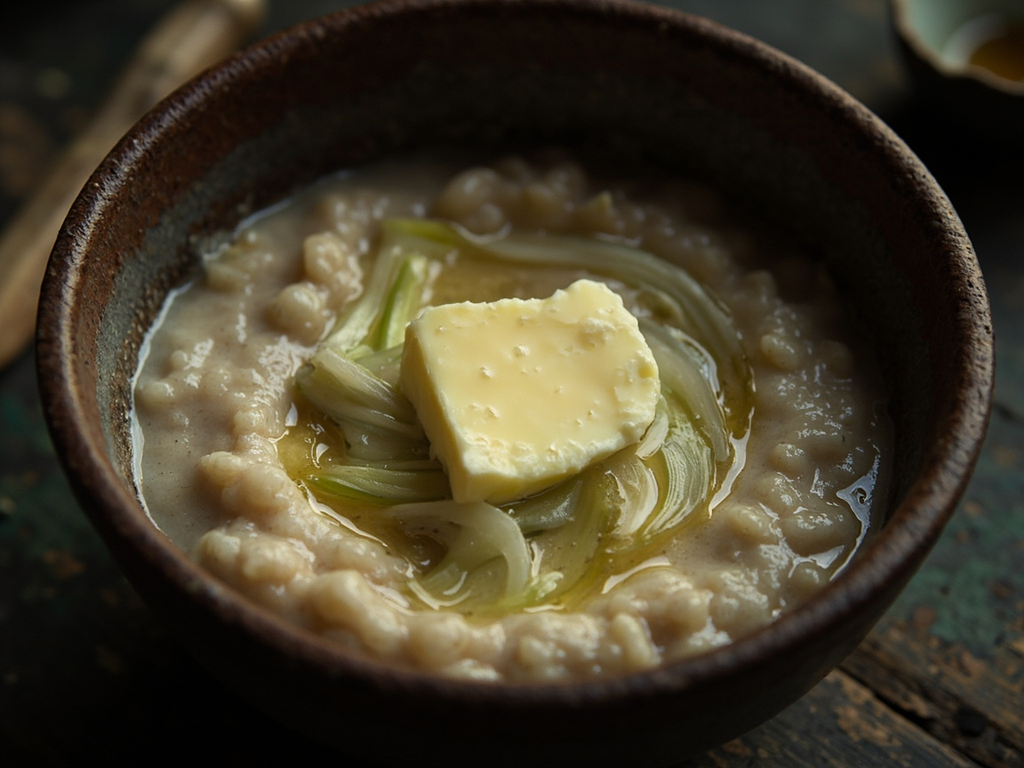
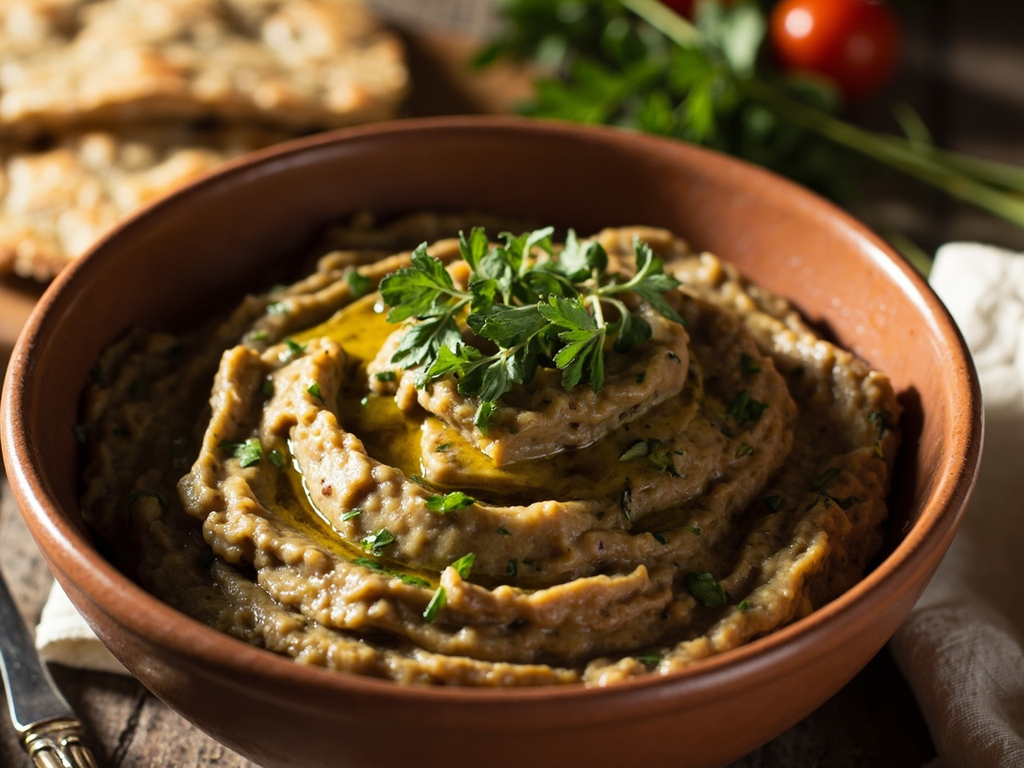
A creamy puree of lentils and fava beans, scented with onion, herbs, and olive oil, to be dipped with *maza*. The comfort of modest tables in Greek Asia Minor.
While my fingers ran across the weft, my pot cooked alone on the embers: lentils and split fava beans, an onion, a sprig of garden herbs, and plenty of oil. At evening, I dipped my barley flatbread and ate without lifting my eyes from my work. It is a dish for working people — and I, you see, never stopped working, even against a goddess.
- •Lentils — two handfuls (base of puree)
- •Dried split fava beans — a handful (body and creaminess)
- •Onion — one (aromatic)
- •Olive oil — generously (binder and fat)
- •Herbs (coriander, savory) — a few sprigs (flavor)
- •Wine vinegar — a dash (acidic touch)
- •Salt — to taste (seasoning)
Lentil and Fava Etnos — the pot for long days
A creamy puree of lentils and fava beans, scented with onion, herbs, and olive oil, to be dipped with *maza*. The comfort of modest tables in Greek Asia Minor.
Why this dish? The legume puree, *etnos*, was the pot dish of the common Greek: cheap, nourishing, long-simmered while working. For a spinner like Arachne who spent her days at her craft, this is the meal that cooks by itself on the fire's edge while hands remain on the wool.
While my fingers ran across the weft, my pot cooked alone on the embers: lentils and split fava beans, an onion, a sprig of garden herbs, and plenty of oil. At evening, I dipped my barley flatbread and ate without lifting my eyes from my work. It is a dish for working people — and I, you see, never stopped working, even against a goddess.
Ingredients (period version)
- Lentils — two handfuls (base of puree)
- Dried split fava beans — a handful (body and creaminess)
- Onion — one (aromatic)
- Olive oil — generously (binder and fat)
- Herbs (coriander, savory) — a few sprigs (flavor)
- Wine vinegar — a dash (acidic touch)
- Salt — to taste (seasoning)
Ingredients
- Green lentils — 200 g (base of puree)
- Dried split fava beans (or split peas) — 100 g (body and creaminess)
- Onion — 1 large (aromatic)
- Olive oil — 4 tbsp (binder and fat)
- Fresh coriander and savory — 1 small bunch (flavor)
- Red wine vinegar — 1 tbsp (acidic touch)
- Salt — to taste (seasoning)
Method
- Rinse lentils and fava beans. Cook them in a large pot of unsalted water with the chopped onion, 35-45 min, until tender.
- Salt at the end of cooking (salt hardens legumes if added too early).
- Coarsely mash with a fork or pestle for a rustic texture.
- Stir in olive oil generously and chopped herbs.
- Add a dash of vinegar just before serving.
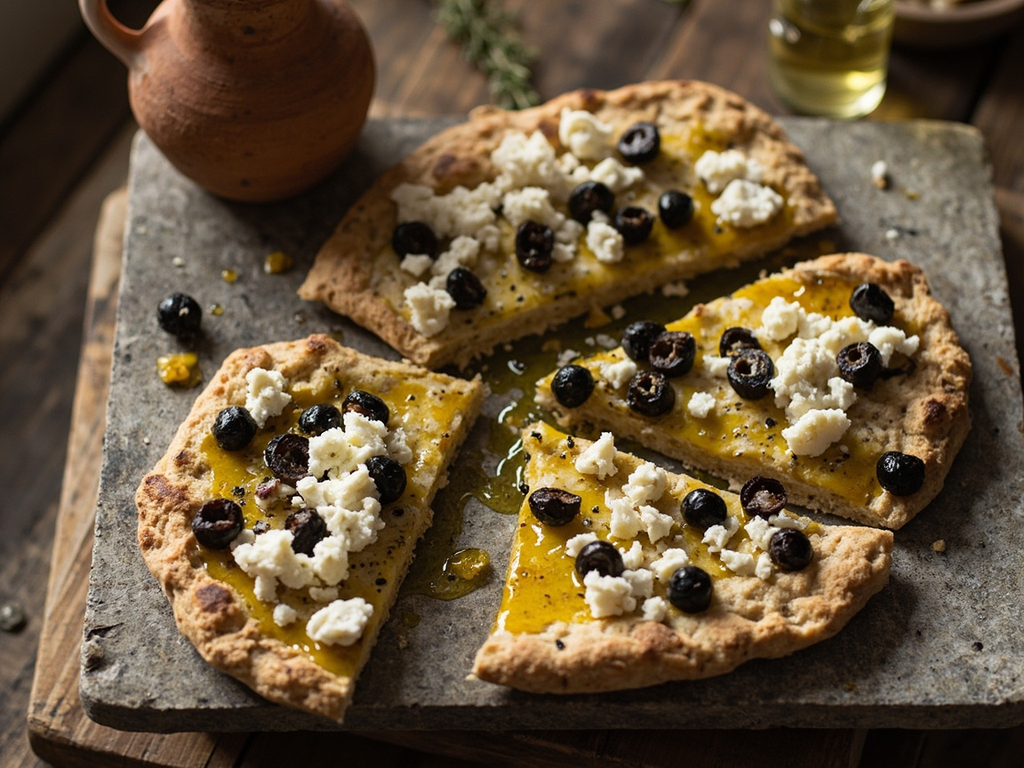
- Serve warm, to be dipped with barley *maza* (recipe r1).
How it was made : *Etnos* (ἔτνος), legume puree, was a popular Greek dish attested from the Classical period, often made with lentils, fava beans, or peas. Legumes provided most of the protein for the common people, meat being reserved for sacrifices and festivals. It was flavored with savory, coriander, and vinegar, and olive oil replaced any animal fat.
The contemporary twist : Served as a smooth quenelle, scored with a fork to evoke the weft of a weave, and crowned with a drizzle of oil and coriander shoots.
Sources : Aristophanes, comedies (mentions of pea *etnos*) · Andrew Dalby, Siren Feasts, Routledge, 1996
Arachne · Charactorium