 flip
flipYellow fava bean puree with fennel
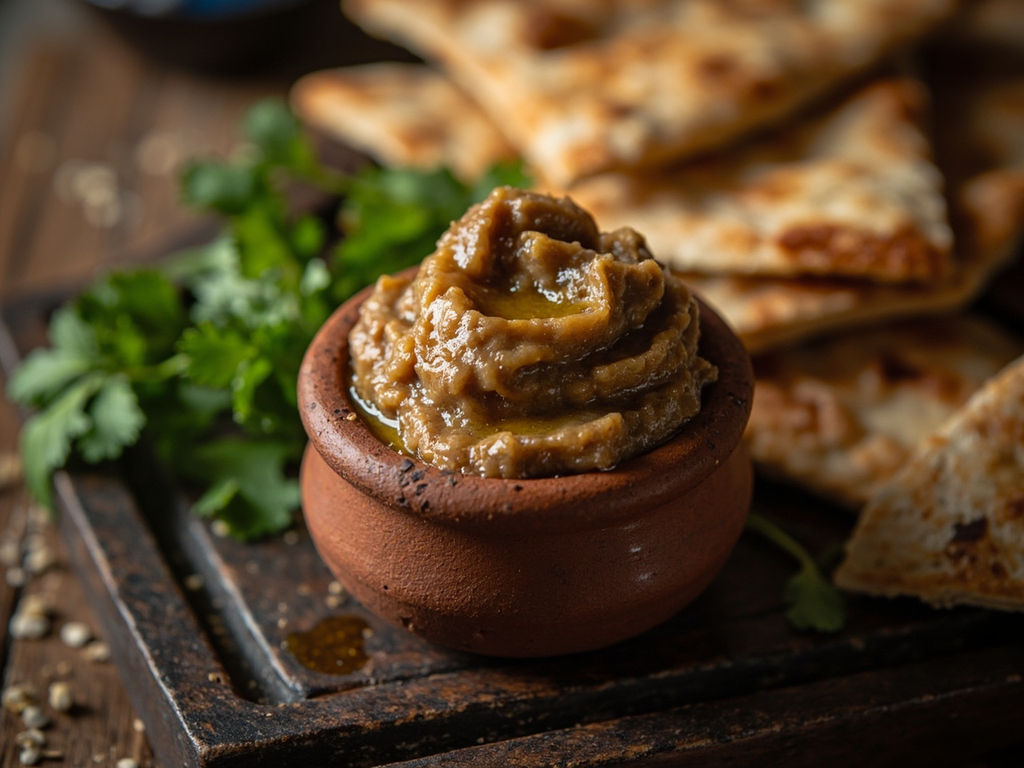
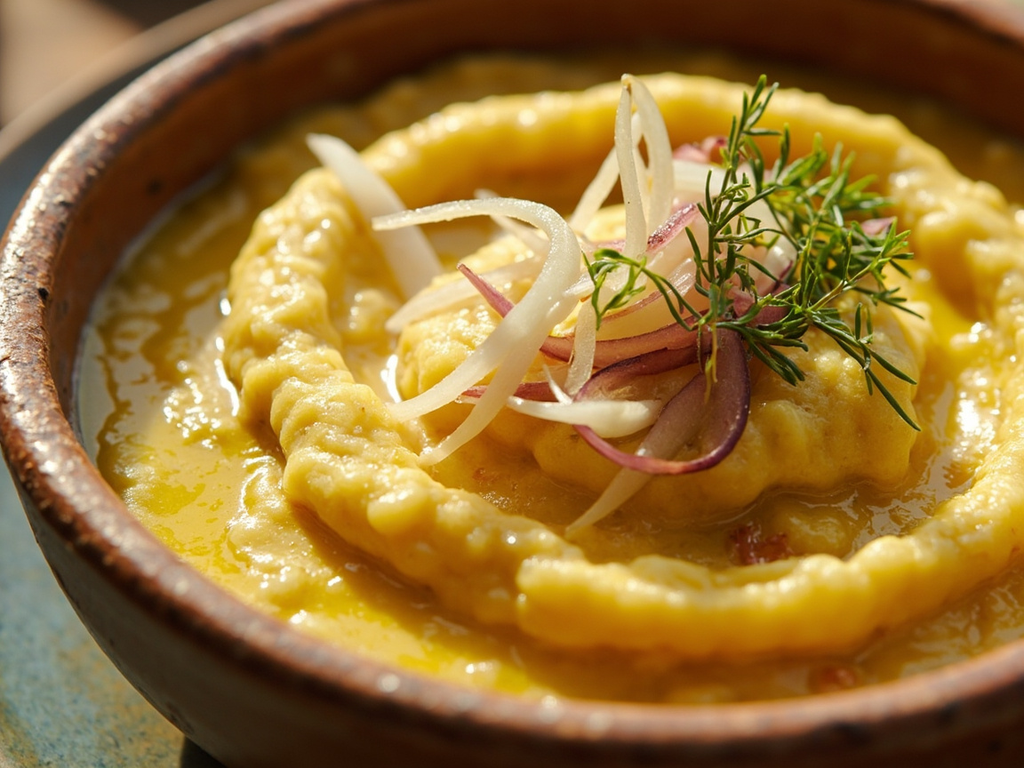
Yellow fava bean puree with fennel
Why this dish? Dried legumes were the pantry of the Greek islands: they were stored for months to get through winter and sea voyages. Ariadne, princess of a trading island, knew these reserves that fed the palace as well as sailors setting out for Naxos.
A creamy puree of yellow fava beans (or yellow split peas from the Cyclades) long-simmered, mashed with olive oil, seasoned with fennel and sweet onion. The sober comfort of days without fresh fish.
Always keep dried fava beans at the bottom of your jar, traveler: the sea is capricious and fish is not always caught. On the hot stones of Naxos where I was abandoned, it was this golden porridge that kept me standing, slowly simmered with fennel that grows freely near the shore. Mash the beans well until they become soft as salted honey, and drown them in new oil. Here is a dish that does not betray: it waits, patient, in the jar, and feeds you when all else is lacking.
- •Dried yellow fava beans (or split peas) — one measure (base)
- •Onion — one, sliced (aromatic base)
- •Olive oil — generously (creaminess)
- •Wild fennel seeds and shoots — a handful (anise aroma)
- •Sea salt — to taste (seasoning)
Yellow fava bean puree with fennel
A creamy puree of yellow fava beans (or yellow split peas from the Cyclades) long-simmered, mashed with olive oil, seasoned with fennel and sweet onion. The sober comfort of days without fresh fish.
Why this dish? Dried legumes were the pantry of the Greek islands: they were stored for months to get through winter and sea voyages. Ariadne, princess of a trading island, knew these reserves that fed the palace as well as sailors setting out for Naxos.
Always keep dried fava beans at the bottom of your jar, traveler: the sea is capricious and fish is not always caught. On the hot stones of Naxos where I was abandoned, it was this golden porridge that kept me standing, slowly simmered with fennel that grows freely near the shore. Mash the beans well until they become soft as salted honey, and drown them in new oil. Here is a dish that does not betray: it waits, patient, in the jar, and feeds you when all else is lacking.
Ingredients (period version)
- Dried yellow fava beans (or split peas) — one measure (base)
- Onion — one, sliced (aromatic base)
- Olive oil — generously (creaminess)
- Wild fennel seeds and shoots — a handful (anise aroma)
- Sea salt — to taste (seasoning)
Ingredients
- Yellow fava from Cyclades (or yellow split peas) — 250 g (base)
- Sweet onion — 1 large, sliced (aromatic base)
- Extra virgin olive oil — 6 tbsp (creaminess)
- Fresh fennel, sliced + seeds — 1/2 bulb + 1 tsp (anise aroma)
- Water — 750 ml (cooking)
- Salt — to taste (seasoning)
Method
- Rinse the yellow fava beans and place them in a pot with the water and half the onion.
- Bring to a simmer, skim, then cook over low heat for 45 to 60 minutes until the beans fall apart.
- Salt at the end of cooking, add fennel seeds, then mash or blend into a smooth puree with 3 tbsp of oil.
- Gently melt the remaining onion and fresh fennel in the remaining oil.
- Serve the puree warm, make a well, top with the onion-fennel confit and a drizzle of oil.
How it was made : Fava (legume puree, from Greek phabos via Latin faba) is one of the oldest and most continuous dishes of the Aegean; on Santorini, it is still made with a local variety of Lathyrus cultivated since the Bronze Age. Dried, these legumes could be stored for entire seasons — essential for an island and maritime civilization.
The contemporary twist : A turn of the mill of toasted fennel seeds and a few capers on top: the Santorinian fava served today in every taverna of the Cyclades.
Sources : Andrew Dalby, Food in the Ancient World from A to Z (2003) · Ethnobotanical studies on Santorini fava (Lathyrus clymenum)
Ariadne · Charactorium