 flip
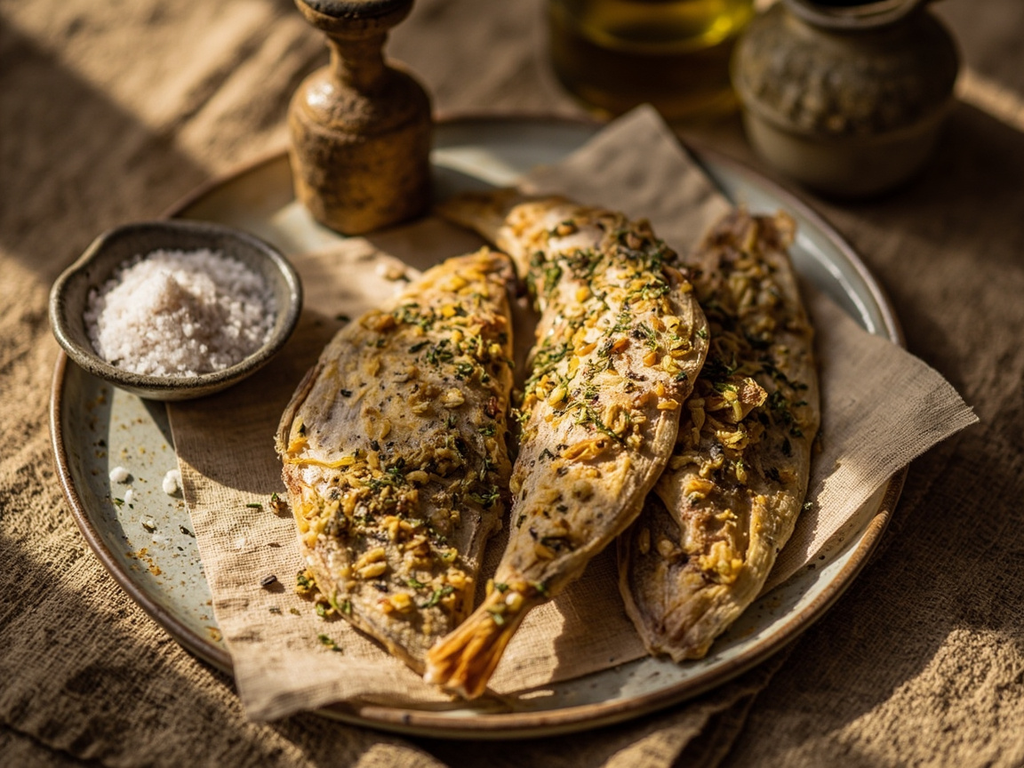
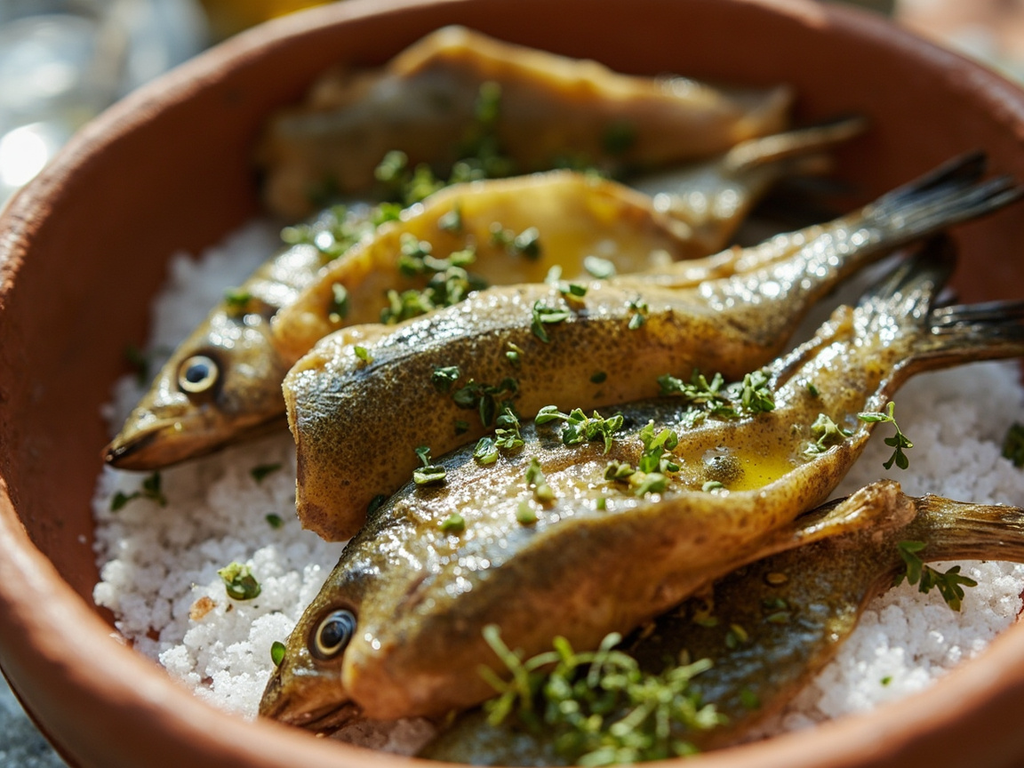
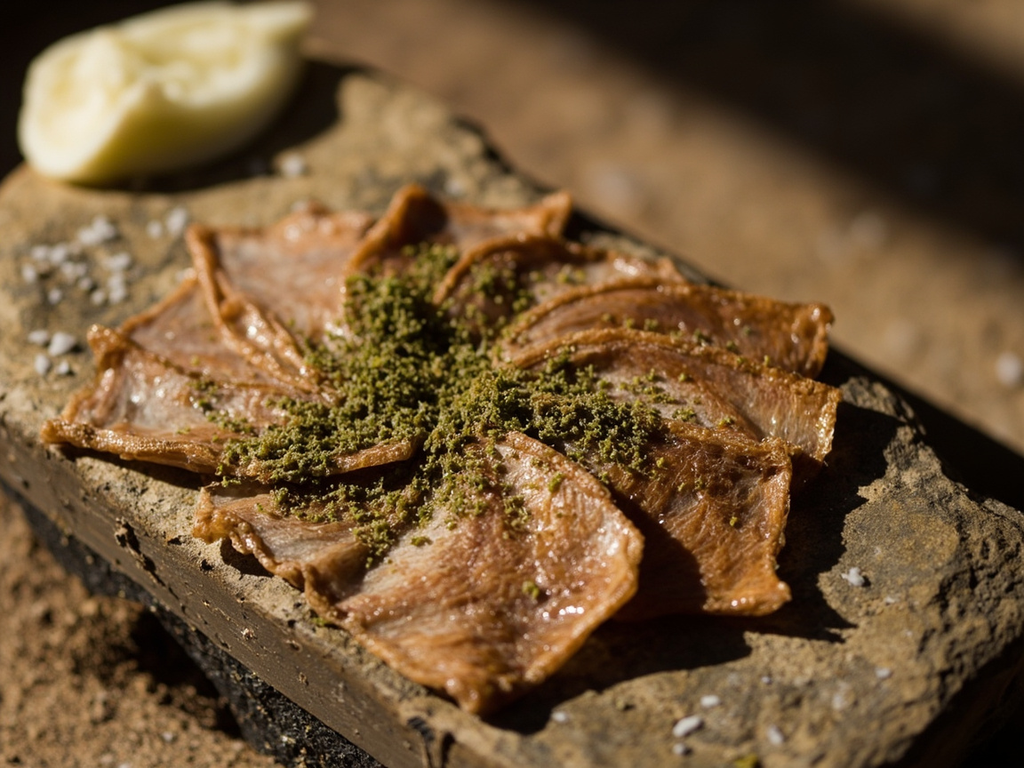
flipTarichos — Hellespont Dried Fish with Oil and Thyme
Tarichos — Hellespont Dried Fish with Oil and Thyme
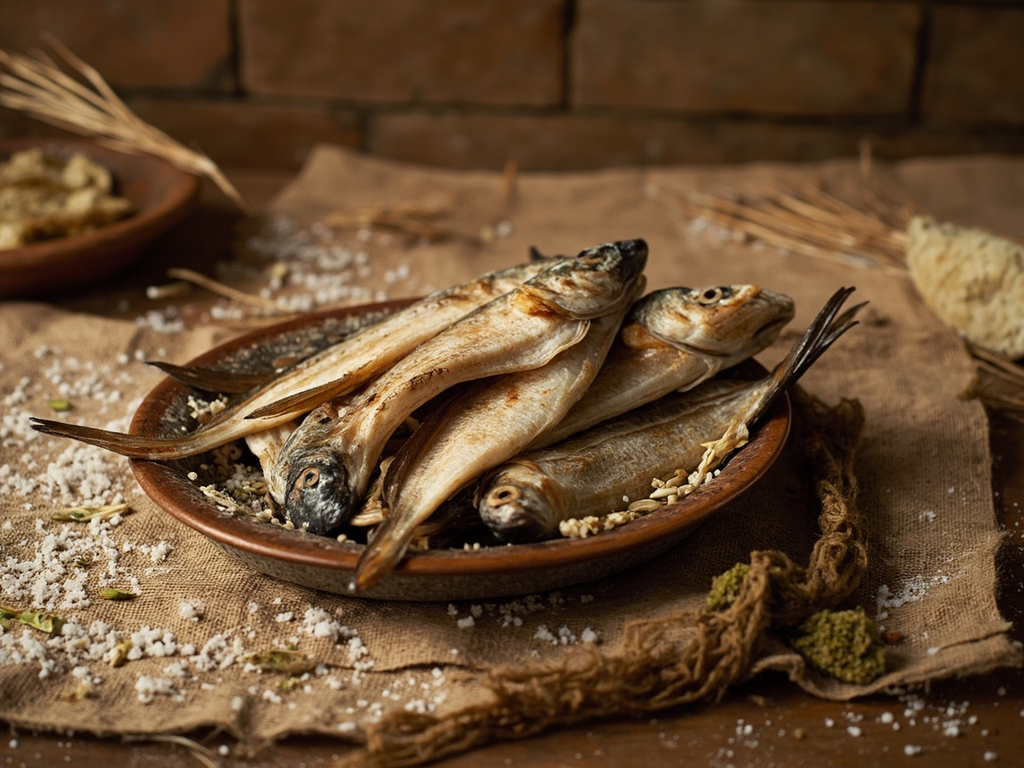
Why this dish? The shores of the Hellespont and the sea around Clazomenae teemed with fish that was salted and dried — tarichos — to last through seasons and journeys. Anaxagoras, exiled from Athens and ending his days at Lampsacus on the strait, knew this food of sailors and migrants: robust, durable, salty as sea spray.
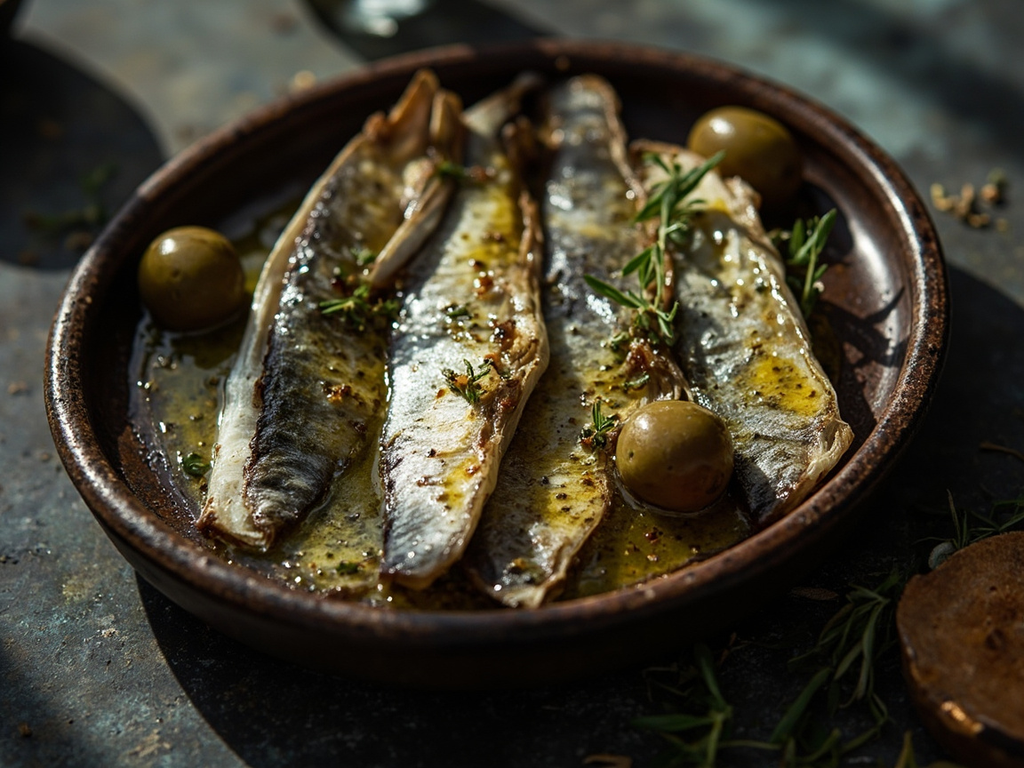
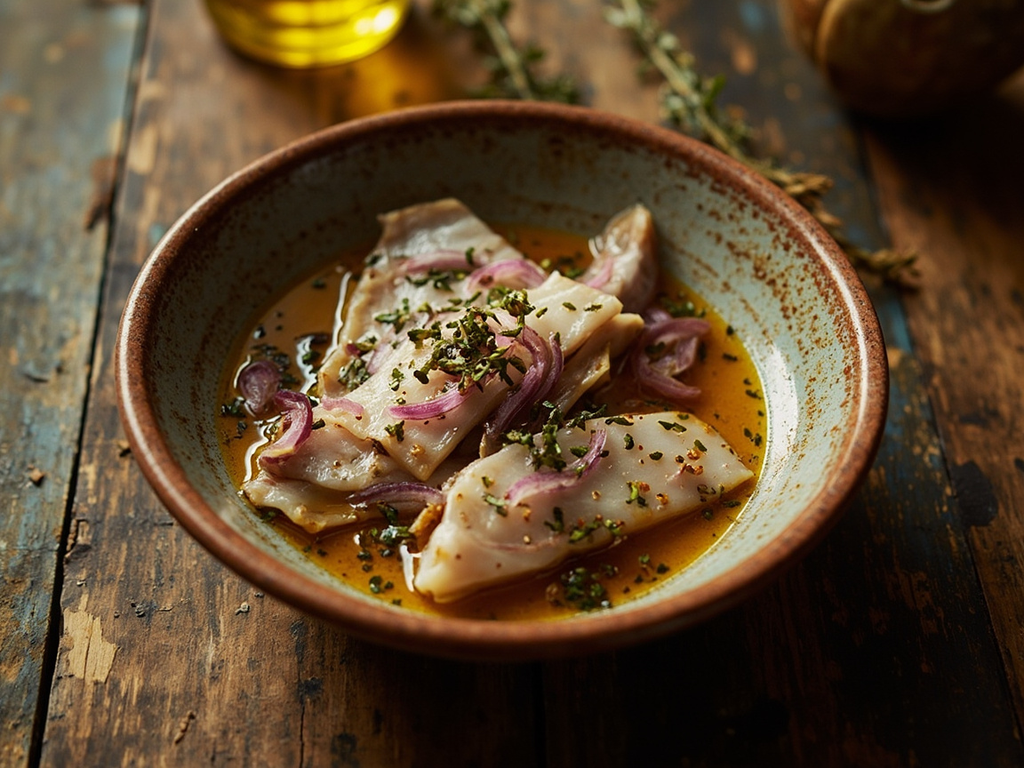
Dried and salted fish, rehydrated and relaxed in olive oil, oregano, and vinegar, eaten as opson on maza. The concentrated, deep flavor — umami before its time — of the sea preserved.
The sea of my homeland gives more than it takes back, to those who know how to keep its gifts. See this fish: I salted it, I left it to the wind and salt, and now it defies the months. When exile drove me from Athens to the strait, it was this food that followed me. I undo it in oil, I toss in the oregano of the hills and a splash of vinegar, and it becomes almost alive again on my tongue. Nothing is born nor perishes truly, you see: everything is composed and recomposed — even the flesh of this fish.
- •Dried and salted fish (mackerel, tuna or sardine) — a few pieces (base)
- •Olive oil — to cover (softener and flavor)
- •Dried oregano — a pinch (flavor)
- •Wine vinegar — a splash (acidity)
- •Onion or garlic — a little (enhancer)
Tarichos — Hellespont Dried Fish with Oil and Thyme
Dried and salted fish, rehydrated and relaxed in olive oil, oregano, and vinegar, eaten as opson on maza. The concentrated, deep flavor — umami before its time — of the sea preserved.
Why this dish? The shores of the Hellespont and the sea around Clazomenae teemed with fish that was salted and dried — tarichos — to last through seasons and journeys. Anaxagoras, exiled from Athens and ending his days at Lampsacus on the strait, knew this food of sailors and migrants: robust, durable, salty as sea spray.
The sea of my homeland gives more than it takes back, to those who know how to keep its gifts. See this fish: I salted it, I left it to the wind and salt, and now it defies the months. When exile drove me from Athens to the strait, it was this food that followed me. I undo it in oil, I toss in the oregano of the hills and a splash of vinegar, and it becomes almost alive again on my tongue. Nothing is born nor perishes truly, you see: everything is composed and recomposed — even the flesh of this fish.
Ingredients (period version)
- Dried and salted fish (mackerel, tuna or sardine) — a few pieces (base)
- Olive oil — to cover (softener and flavor)
- Dried oregano — a pinch (flavor)
- Wine vinegar — a splash (acidity)
- Onion or garlic — a little (enhancer)
Ingredients
- Mackerel or sardines (fresh or semi-dried salted) — 300 g (base)
- Coarse salt (for home salting) — 200 g (preservation)
- Extra virgin olive oil — 5 tbsp (softener and flavor)
- Dried oregano — 1 tsp (flavor)
- Wine vinegar — 1 tbsp (acidity)
- Red onion, thinly sliced — ½ (enhancer)
Method
- Home salting: completely cover the fillets with coarse salt in a dish, cover, and leave for 12-24 hours in a cool place, then rinse and pat dry.
- Dry the salted fillets for a day on a rack, in the air, in a cool, ventilated spot (or skip using already salted fish from the store).
- Before serving, if the fish is very salty, desalt it for 1-2 hours in cold water, then pat dry.
- Cut into strips and arrange them in a bowl.
- Cover with olive oil, add oregano, vinegar, and sliced onion.
- Marinate for at least 1 hour and serve cold, on maza or bread.
How it was made : Tarichos (salted/dried fish) was a major trade item in the Greek world, imported in bulk from the Black Sea and the Hellespont. It was the opson of the poor as well as the traveler's reserve: it was salted dry or in brine, dried in the wind, and could travel for months. It prefigures garum and the entire Mediterranean cuisine of preserved fish.
The contemporary twist : Serve it 'meze style' with lemon wedges (introduced later, so a deliberate wink) and a veil of fresh oregano — or remain strictly ancient with a simple splash of vinegar.
Anaxagoras of Clazomenae · Charactorium