 flip
flipPuls Militaris — the Legionary's Porridge
Puls Militaris — the Legionary's Porridge
Why this dish? Aurelian rose through every rank from the ranks: he ate this cereal porridge squatting by the campfire for decades of campaigns along the Danube. As emperor, his renowned frugality made him prefer this puls to refined dishes—it is the dish of his soldier's life.
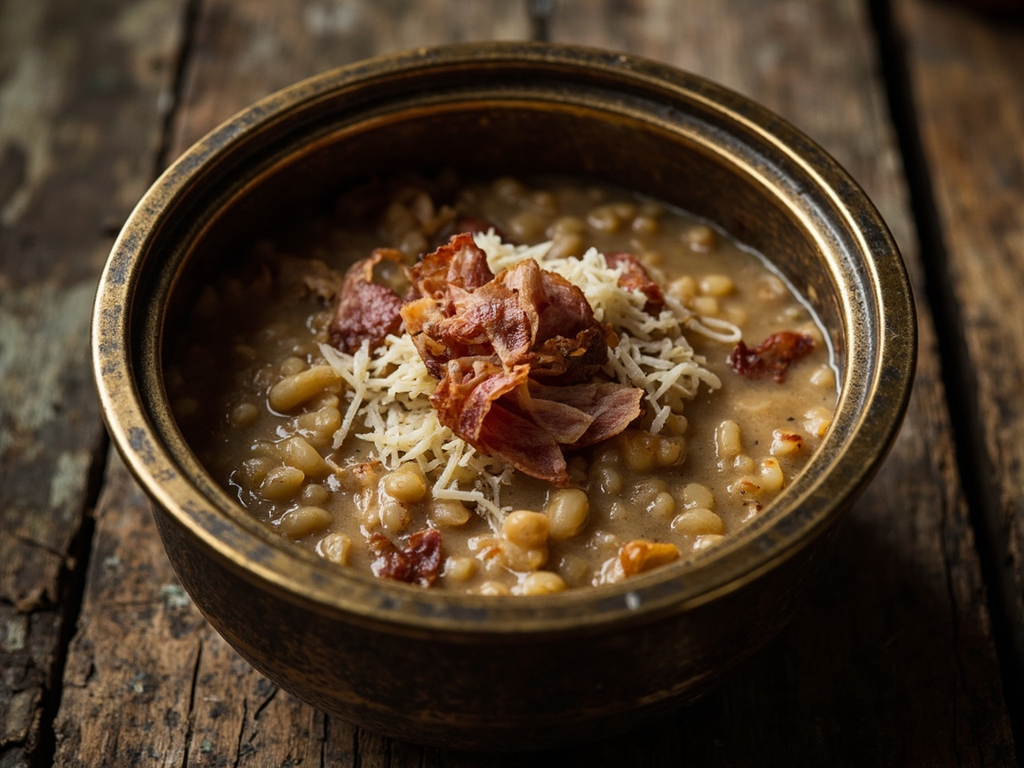
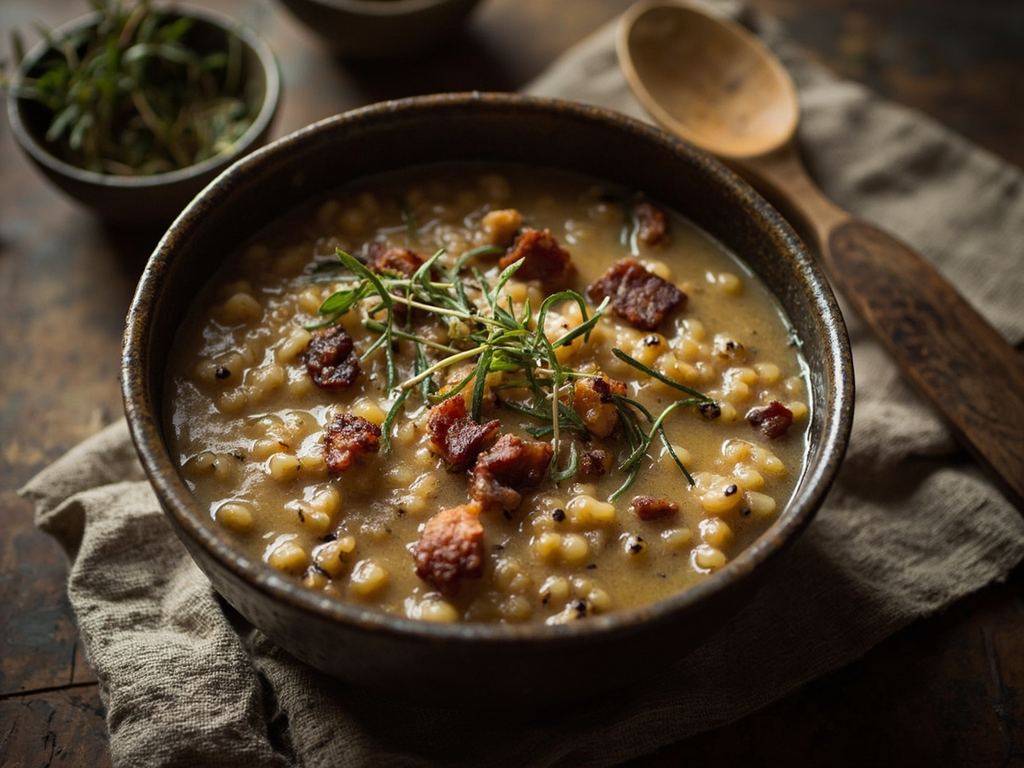
A thick porridge of crushed spelt, enriched with salted pork and sharpened with a dash of garum. It was the fuel of the Roman army: nourishing, simple, made from the grain ration that each man ground and cooked himself.
Soldier, listen well: it is this porridge that kept the Danube legions standing, and me too. The grain is distributed per head, you grind it on the hand mill, toss it into boiling water, and stir without pause until the spoon stands upright in it. A sliver of lard, three drops of garum, and you have enough to march thirty miles. I never asked my table for better than what the last of my men ate—that is how one commands Romans.
- •Far (spelt) or crushed alica — two handfuls per man (cereal base of the ration)
- •Spring water — as needed (cooking)
- •Laridum (salted pork) — a small piece (fat and flavor)
- •Garum — a dash (salty umami)
- •Salt — a pinch (seasoning)
Puls Militaris — the Legionary's Porridge
A thick porridge of crushed spelt, enriched with salted pork and sharpened with a dash of garum. It was the fuel of the Roman army: nourishing, simple, made from the grain ration that each man ground and cooked himself.
Why this dish? Aurelian rose through every rank from the ranks: he ate this cereal porridge squatting by the campfire for decades of campaigns along the Danube. As emperor, his renowned frugality made him prefer this puls to refined dishes—it is the dish of his soldier's life.
Soldier, listen well: it is this porridge that kept the Danube legions standing, and me too. The grain is distributed per head, you grind it on the hand mill, toss it into boiling water, and stir without pause until the spoon stands upright in it. A sliver of lard, three drops of garum, and you have enough to march thirty miles. I never asked my table for better than what the last of my men ate—that is how one commands Romans.
Ingredients (period version)
- Far (spelt) or crushed alica — two handfuls per man (cereal base of the ration)
- Spring water — as needed (cooking)
- Laridum (salted pork) — a small piece (fat and flavor)
- Garum — a dash (salty umami)
- Salt — a pinch (seasoning)
Ingredients
- Crushed spelt (or farro/small spelt) — 150 g (base)
- Water — 700 ml (cooking)
- Smoked lardons (or diced salt pork belly) — 80 g (fat and flavor)
- Garum (or nuoc-mâm, or 3 crushed anchovy fillets) — 1 teaspoon (salty umami)
- Salt — to taste (seasoning)
- Grated pecorino (optional) — 30 g (binding and richness)
Method
- Sauté the lardons dry in a heavy-bottomed pot until they release their fat.
- Add the crushed spelt, stir to coat, then add the water.
- Simmer over low heat for 30 to 40 minutes, stirring often, until thick and creamy.
- Off the heat, add the garum and taste before salting (garum is already salty).
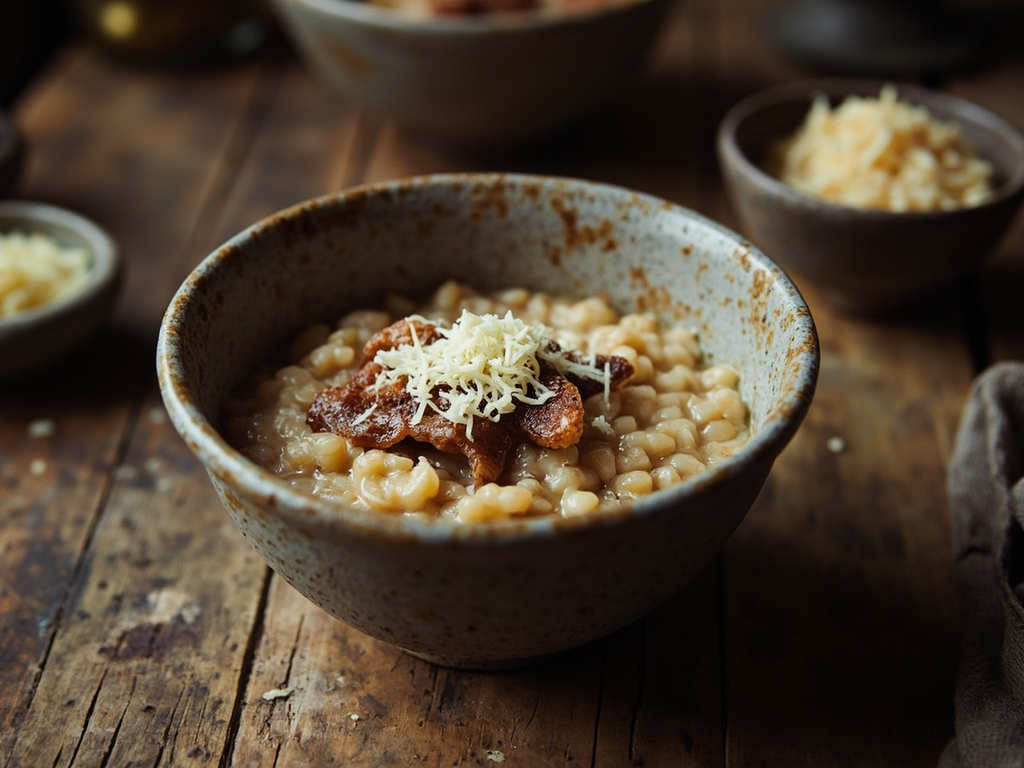
- Serve piping hot, optionally sprinkled with pecorino. The spoon should stand almost upright in the porridge.
How it was made : Puls was the Roman national dish before bread: Pliny reminds us that Romans lived on puls rather than panis for a long time. Each legionary received his grain ration (frumentum) and processed it himself using a small hand mill carried by the contubernium (the eight-man mess unit).
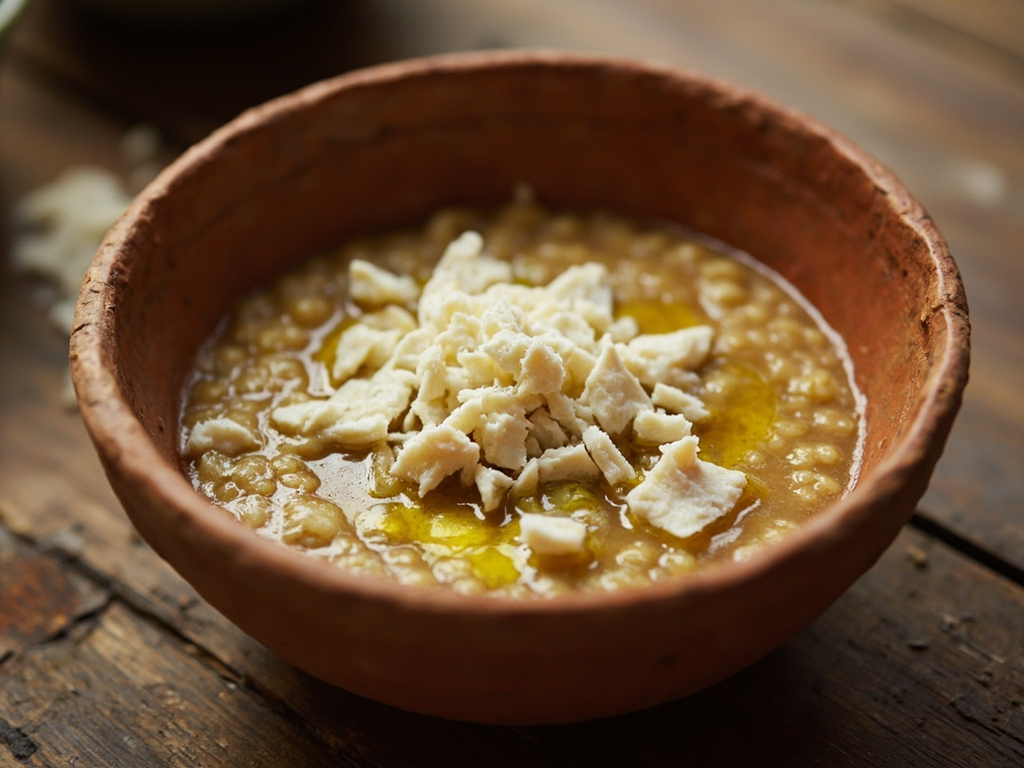
The contemporary twist : Serve it in an earthenware bowl with a poached egg on top: a 'spelt risotto' legio-style that surprises comfort food lovers.
Sources : Pliny the Elder, Natural History, XVIII · Apicius, De re coquinaria (puls and tractae)
Aurelian · Charactorium